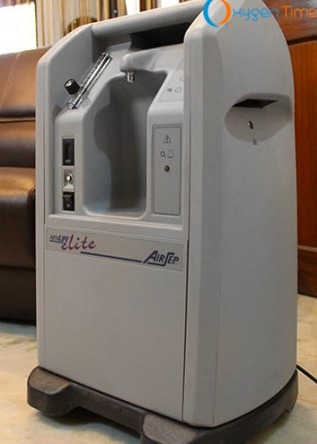
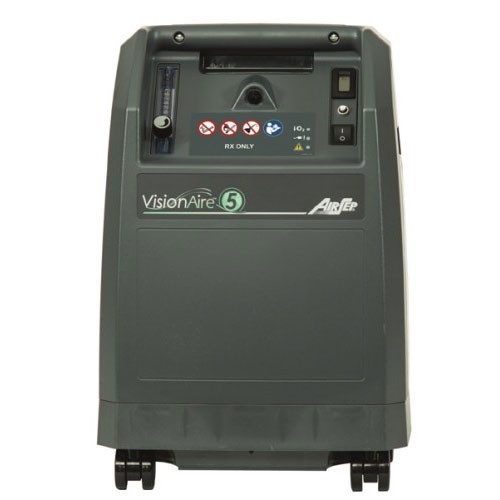
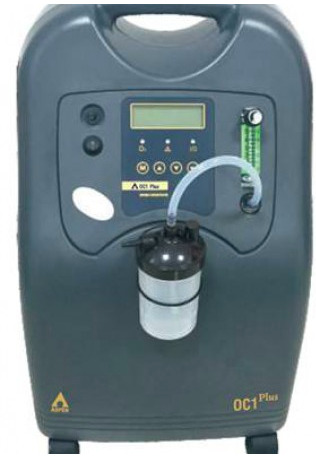
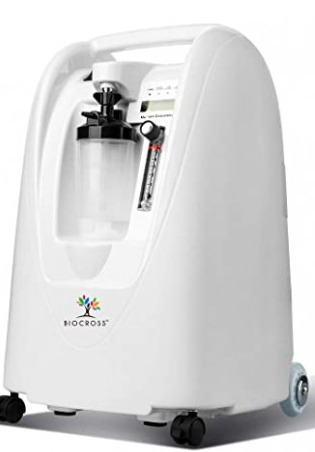
My Home Plus
Specifications
| Note | No published spec sheet on surveyed Indian collateral at time of review |
|---|
Pros and cons
PROS
- Appears in Indian oxygen-concentrator listings and comparison searches
- May be available through local sellers who can demonstrate the unit in person
CONS
- No model-specific published specification sheet found in the collateral HHZ surveyed
- Flow, full-flow purity, weight, sound, power draw and alarms are not verifiable
- Regulatory status, warranty scope and authorised service route are unclear
Short answer
The My Home Plus oxygen concentrator is not currently a defensible purchase for prescribed home oxygen because the basic evidence a buyer needs is missing. HHZ could not verify a model-specific technical sheet covering continuous-flow range, oxygen purity at maximum flow, alarm set, power draw, sound level, weight, regulatory registration, warranty or service network.
That does not prove the machine cannot produce oxygen. It means the buyer cannot establish what it will deliver, how failure will be signalled, or who will support it after purchase.
What should be published before you buy
| Required evidence | Why it matters |
|---|---|
| Continuous-flow range | Confirms the machine can supply the prescribed LPM continuously |
| Purity at maximum rated flow | A large front-panel litre number is meaningless if purity falls at higher flow |
| Oxygen-purity indicator or analyser | Warns the household when sieve performance deteriorates |
| Power-failure, no-flow and system alarms | Makes common delivery failures visible |
| Power draw and Indian-voltage rating | Needed for inverter sizing and safe home use |
| CDSCO registration / importer details | Establishes the accountable Indian supply route |
| Written warranty and service location | Determines whether the machine can be repaired when oxygen is needed |
If a seller supplies these documents, check that the model name and serial family match the unit being quoted. A generic brand brochure is not enough.
Why search listings are not sufficient evidence
Marketplace copy is often duplicated across several concentrators and may describe the category rather than the exact machine. Claims such as “up to 7 litres,” “93% oxygen” or “medical use” need a test condition. The useful statement is oxygen purity across the entire continuous-flow range, supported by the model manual or technical sheet.
For long-term oxygen therapy, missing documentation is itself a purchasing risk. Sieve beds and compressors wear; tubing can disconnect; purity can drift. The buyer needs alarms, parts and a service route, not just a machine that looks functional on delivery day.
Better-documented alternatives
For a 5 LPM prescription, compare the Home Medix HM-KV and Oxymed Mini 5 LPM where local service is confirmed. The best 5 LPM oxygen concentrators in India ranks documented models using the same rubric, while the oxygen concentrator price guide explains realistic buying bands.
The alternative is not automatically “buy the most expensive imported brand.” It is to choose a machine whose flow, purity, alarms, warranty and service can all be verified for the buyer’s pincode.
Questions to put to the seller
- What is the exact model number and rated continuous-flow range?
- What purity is guaranteed at the highest flow setting?
- Does the unit have an OPI, live purity display, no-flow alarm and power-failure alarm?
- What is the CDSCO registration or accountable importer detail?
- Who handles warranty service in my pincode?
- Are compressor and sieve-bed spares stocked in India?
- Will all answers and the serial number appear on the GST invoice or written quotation?
Verdict
My Home Plus currently has a documentation problem, not a price-positioning problem. Until model-specific evidence is available, HHZ would not shortlist it for prescribed oxygen. If the seller cannot produce the technical sheet and service proof before payment, move to a documented 5 LPM alternative.