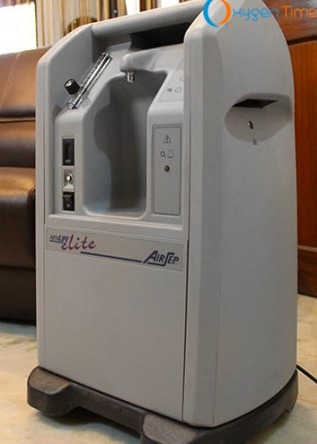
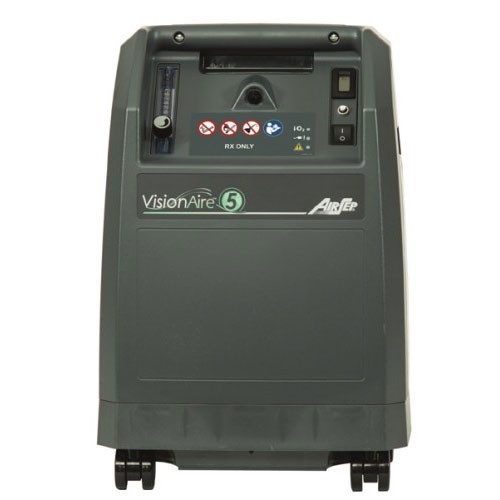
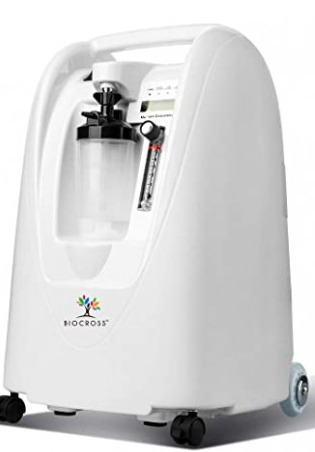
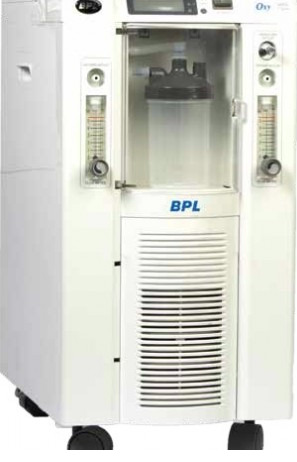
Aspen 5 LPM
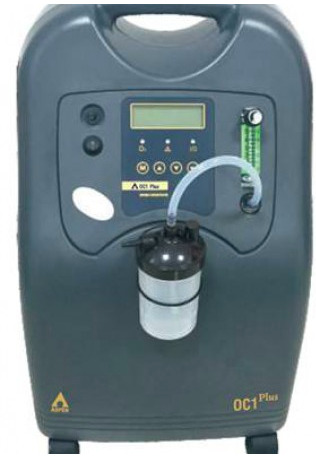
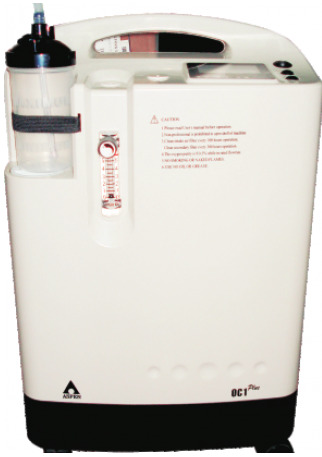
Key features
- Purity 90-95%
- Type Home Stationary
- Continuous Flow 0.5-5LPM
- Weight 21kg
- Oxygen Purity Indicator (OPI) No
- Power consumption 350watts
Specifications
| Purity | 90-95% |
|---|---|
| Type | Home Stationary |
| Continuous Flow | 0.5-5LPM |
| Weight | 21kg |
| Power consumption | 350watts |
| Sound level | 40db |
| Dimensions | 24.4H x 15.3W x 13.26Dinch |
| Outlet pressure | 5.5psi |
| Loss of Power Alarm | Yes |
|---|---|
| System Malfunction Alarm | Yes |
| Indian Voltage Model | Yes |
| Company Headquarters | China |
Pros and cons
PROS
- 40 dB published sound is class-leading quiet, better than most Chinese-OEM 5 LPM units
- 350 W power draw matches Philips EverFlo efficiency
- Dual alarms confirmed — loss-of-power and system-malfunction
- Indian voltage confirmed
CONS
- 21 kg chassis is heavy for a 5 LPM, harder to relocate between rooms
- No OPI on the brochure — critical gap for LTOT
- No CE, FDA, CDSCO certifications
- ₹40,320 priced at the Home Medix and Jumao benchmark with less-documented service network
The Aspen 5 LPM is a ₹40,320 Chinese-OEM stationary concentrator with an interesting headline spec — a published 40 dB sound level that, if accurate, puts it in the Nidek Nuvo Lite class for bedroom-quietness and a step above most competitors at this price. The rest of the specs read more conventional: 0.5–5 LPM continuous flow, 90–95% purity, 21 kg chassis, 350 W power draw, 5.5 psi outlet pressure. Two alarms are confirmed (loss-of-power and system-malfunction), but the OPI is missing. At ₹40,320 Aspen competes directly with Home Medix 5 LPM and Jumao 5 LPM; of the three, Aspen has the best sound spec and Home Medix has the best certification story.
What the specs mean
The 0.5–5 LPM flow range with 90–95% purity is the class baseline. 0.5 LPM minimum supports paediatric prescriptions.
The 40 dB published sound level is the differentiating spec. If the number is accurate in real-world operation (we cannot bench-verify), it puts Aspen among the quietest 5 LPM stationaries on the Indian market — matching Nidek Nuvo Lite (40 dB) and beating Philips EverFlo (45 dB), Vandelay (45 dB), GVS (43 dB), and every other Chinese-OEM 5 LPM at this price point. For shared-bedroom overnight use, a 40 dB machine is tolerable; a 50 dB machine is not. This is the product’s real strength.
The 350 W power draw matches Philips EverFlo and is mid-pack among Chinese-OEM competitors. At 16 hours/day × ₹9/kWh this is roughly ₹1,550/month — reasonable but not the lowest available.
The 21 kg chassis is heavier than the class average of 15-17 kg. Comparable to Healthgenie (21 kg) and materially heavier than Home Medix HM-KV (13 kg), Nareena (15 kg), or Vandelay (14.5 kg). One adult can lift it but it requires more effort than the lightweight 5 LPM models. For buyers who need to move the machine between rooms multiple times a day, this is a friction. For fixed-placement use it does not matter.
Dimensions at 24.4H x 15.3W x 13.26D inches are standard for the class.
Outlet pressure at 5.5 psi is on the low end of the category. Most 5 LPM units run 5-8 psi; at 5.5 psi, Aspen is delivering the minimum for standard nasal cannula use. Longer tubing runs or mask delivery may see flow problems.
Alarm suite: loss-of-power and system-malfunction confirmed. No no-flow alarm. This is a two-alarm configuration, which is above the one-alarm floor of most Chinese-OEM units but below the three-alarm Dr Diaz or Philips/Nidek standard.
The critical gap: no OPI confirmed. For ₹40,320 this is the same weakness that affects Home Medix, Jumao, S.Cure, and Veayva at similar prices. The combination of good sound spec and absent OPI is an odd packaging choice — the product is clearly engineered for quiet operation but foregoes the single most important patient-safety feature.
No altitude rating published.
No CE, no FDA, no CDSCO. Indian voltage confirmed. China HQ.
Who should buy it
Buyers who specifically prioritise low noise over everything else. The 40 dB spec is genuinely better than competitors at this price, and if the real-world performance is close to the published number, Aspen is the quietest sub-₹45,000 5 LPM available. For patients who must share a bedroom and cannot tolerate overnight machine noise, this is the differentiator.
Short-term use (3-9 months) where the missing OPI is less consequential.
Buyers who have a local Aspen dealer with documented service commitment.
Who shouldn’t
Long-term LTOT patients — no OPI means no day-to-day purity assurance.
Patients who need to move the machine between rooms frequently — 21 kg is heavy.
Buyers who need longer-tubing or mask delivery setups — 5.5 psi outlet pressure is marginal.
Buyers who want CDSCO paperwork.
Head-to-head alternatives
Home Medix HM-KV 5 LPM (₹37,800). Home Medix publishes ≤40 dB field-verified sound, 13 kg weight, 320 VA draw, OPI, live purity analyzer, integrated nebulization, CDSCO + ISO 9001 + ISO 13485 documentation, and a 3-year / 10,000-hour warranty. Against Aspen, Home Medix is lighter, more efficient, stronger on alarms and paperwork, and less expensive at current indicative retail.
Dr Diaz 5 LPM (₹29,759 current / ₹40,320 MRP). Same MRP as Aspen. Dr Diaz has an OPI, three alarms, India HQ, 12,000 ft altitude rating, 13 psi outlet pressure. Against Aspen, Dr Diaz is discounted ₹10,561 cheaper and materially better on OPI, alarms, and certification trail. Worse on noise (48 dB vs 40 dB) but the OPI delta matters more than the noise delta for most buyers. At current street prices, Dr Diaz wins.
Oxymed Mini 5 LPM (₹32,000-38,000). Indian-brand, Chennai-manufactured, usually OPI-equipped, stronger service network. Against Aspen, Oxymed is ₹2,320-8,320 cheaper and better-supported for warranty claims. For practical ownership, Oxymed wins.
Nidek Nuvo Lite 5 LPM (₹55,000-65,000). Same 40 dB sound spec as Aspen, but with OPI, full alarms, 290 W power draw, 14 kg chassis, Japanese build, metro service network. Against Aspen, Nidek is 37-62% more expensive but dramatically better on every axis except sound (where they tie). For long-term use, Nidek is the correct pick.
Indian-market considerations
Aspen has thin Indian market presence. No widely-documented authorised-service-centre network, no clear dealer directory. The spec sheet identifies China HQ. Warranty-claim reality depends on the specific seller.
Stock: out of stock on source listing. Inconsistent availability.
Spare parts: not publicly documented in Indian distribution. Post-warranty repair availability uncertain.
Warranty: not explicitly stated. 1 year from seller is the category expectation.
Voltage: Indian voltage confirmed. 500 VA stabiliser adequate at 350 W draw.
Altitude: not listed.
CDSCO: not indicated.
Practical ownership: if you buy Aspen, you are buying from the dealer, not from the brand. Get the dealer’s written service commitment, spare-parts-availability assurance, and replacement unit commitment (if applicable) before purchase. If the dealer cannot specify these terms, walk.
Additional Aspen-specific considerations
Verifying the 40 dB claim. The 40 dB spec on Aspen’s brochure is the single most important number for the buyer to validate because it is the product’s only real differentiator. Published sound-level specs on Chinese-OEM concentrators range from accurate (within 1-2 dB of measured) to wildly optimistic (5-10 dB below real-world performance). For Aspen specifically, the 40 dB number is plausible — it is not a Home Medix-style “36 dB” that is almost certainly wrong, but it is also at the low end of physically achievable for a 5 LPM compressor. Ask the dealer for a test unit at the point of purchase, measure with a smartphone dB meter app at 1 m distance in a typical room, and compare against another brand’s unit in the same environment. If Aspen measures within 2 dB of published spec, the product is delivering on its promise. If it measures 45+ dB, the spec sheet is overstated and the buyer’s value proposition collapses.
The 5.5 psi outlet pressure limitation. For a standard 1.5-2 m nasal cannula at 2-4 LPM continuous flow, 5.5 psi is adequate — the patient receives the prescribed flow with minimal back-pressure loss. For longer tubing runs (3+ m, common in hospital-setting or multi-room home setups), the pressure drops meaningfully at the cannula tip, reducing effective flow by 10-20%. For mask-based delivery (Venturi masks, simple face masks), 5.5 psi is below the recommended 7-10 psi minimum and can produce clinically inadequate oxygenation. For ventilator-assisted delivery, 5.5 psi is well below the 20+ psi typically required.
Implication: if the prescription is standard nasal cannula at 2-4 LPM in a normal home setup, the 5.5 psi is fine. If the setup involves longer tubing, masks, or any downstream equipment, choose a higher outlet-pressure unit like Biocross 5 LPM (12 psi), Dr Diaz 5 LPM (13 psi), or Keyhub 5 LPM (13 psi).
The 21 kg weight in practice. For a machine that lives in one fixed location — a bedroom corner, a living room shelf, a hallway alcove — 21 kg is not a problem. The machine is positioned once by a family member or delivery person and stays there. For a patient who needs to move the machine between rooms (typical pattern: living room during the day, bedroom at night), 21 kg is at the boundary of what a single adult can carry safely. A wheeled trolley (₹800-1,500 for a basic medical equipment trolley) is a sensible accessory that solves the mobility problem and reduces the risk of accidental drops.
The 24.4H x 15.3W x 13.26D form factor. Taller than it is wide, which is appropriate for 5 LPM PSA architecture where the sieve towers need vertical height. The 15.3-inch width requires more horizontal space than a narrow 10-inch-deep Dr Trust. In small Indian flat layouts with narrow corridors, check that the machine physically fits into the intended placement space before purchase.
Accessory bundle not documented. The source description field is empty. Standard category expectation includes humidifier bottle, nasal cannula, power cord, and user manual. Whether Aspen ships a nebulizer kit or additional filters should be confirmed with the dealer.
Compressor longevity. Chinese-OEM 5 LPM compressors typically have rated lifespans of 15,000-25,000 hours of operation. At 16 hours/day continuous use, this works out to 2.5-4.3 years of service before major compressor service or replacement is needed. Aspen’s 350 W compressor is at the efficient end of the category, suggesting a modern direct-drive design that should hit the upper end of that service-life range if run with proper voltage regulation and periodic filter maintenance. Without an OPI to catch sieve degradation, however, the patient-safety service window may be shorter than the mechanical service window.
Cross-brand spec positioning
Aspen’s 40 dB + 350 W + 5.5 psi + 2-alarm configuration puts it in a specific sub-niche of the ₹40,000 segment: optimised for quiet operation at the cost of outlet pressure and alarm completeness. This is a legitimate product-design trade-off, not a flaw. The buyer who specifically wants the quietest sub-₹45K 5 LPM with standard nasal-cannula use is the correct Aspen customer.
For context, the six ₹40K-₹45K Chinese-OEM-in-India 5 LPM units we cover have distinct spec signatures:
- Home Medix HM-KV (₹37,800): CDSCO + ISO documentation, ≤40 dB field-verified, 320 VA, OPI, live purity analyzer, 3-year / 10,000-hour warranty
- Jumao (₹40,320): 52 dB (loudest), 390 W, 0 alarms confirmed
- Dr Trust (₹40,320): 46 dB, 390 W, 0 alarms confirmed, brand-recognition focus
- Aspen (₹40,320): 40 dB (quietest), 350 W, 2 alarms, 5.5 psi
- S.Cure (₹44,160): 48 dB, 285 W, 2 alarms, no altitude
- Keyhub (₹42,240): 48 dB, 320 W, 2 alarms, 13 psi outlet, CE
Aspen is the sound-optimised pick. Keyhub is the outlet-pressure-plus-CE pick. S.Cure is overpriced for what it delivers. Home Medix is the CE-certified pick (though the 36 dB claim is dubious). Dr Trust is the brand-recognition pick. Jumao is the weakest of the lot.
Verdict
The Aspen 5 LPM has one real differentiator — the 40 dB published sound level, which if accurate makes it the quietest sub-₹45,000 5 LPM on the Indian market. That matters genuinely for shared-bedroom use. Everything else is mid-pack: the 21 kg weight is heavy, the 5.5 psi outlet pressure is marginal, the missing OPI is a gap, and the service network is invisible. At ₹40,320 the better-value alternatives are Dr Diaz 5 LPM (discounted to ₹29,759 with more features) or Oxymed Mini 5 LPM (₹32-38K with Indian service network). Aspen is only the correct pick if sound is the dominant criterion and the buyer has confirmed Aspen actually delivers 40 dB in their specific environment. Score: 6.1/10.