My Home Plus vs Oxymed Mini (5L) Oxygen Concentrator
My Home Plus
- Brand
- My Home
- Category
- 5 LPM
Price on request
Indicative pricing based on market intelligence. Varies by dealer, city, bundle, and period — confirm with a local authorised seller before buying.
HHZ SCORE 3.0/10
EDITORIAL PICK
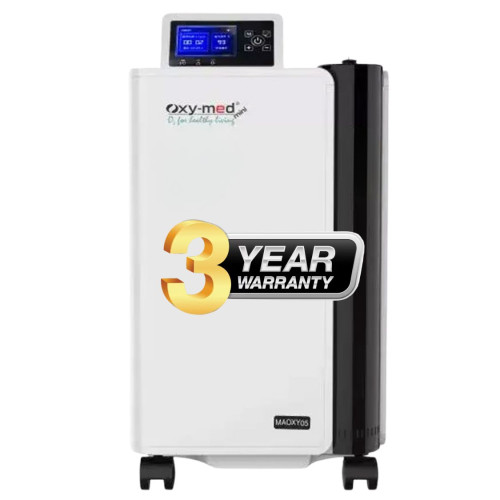
Oxymed Mini (5L) Oxygen Concentrator
- Brand
- Oxymed
- Category
- 5 LPM
₹35,400₹59,900
Indicative pricing based on market intelligence. Varies by dealer, city, bundle, and period — confirm with a local authorised seller before buying.
HHZ SCORE 7.2/10
Specifications compared
| Specification | My Home Plus | Oxymed Mini (5L) Oxygen Concentrator |
|---|---|---|
| Overview | ||
| Brand | My Home | Oxymed |
| Category | 5 LPM | 5 LPM |
| Price | — | ₹35,400.00 |
| MRP | — | 59,900.00 |
| Stock | Unknown | In Stock |
| Key features | ||
| Purity | — | 90-96% |
| Type | — | Home Stationary |
| Continuous Flow | — | 1-5LPM |
| Weight | — | 13.9kg |
| Oxygen Purity Indicator (OPI) | — | Yes |
| Power consumption | — | 390watts |
| Additional details | ||
| Note | No published spec sheet on surveyed Indian collateral at time of review | — |
| Oxygen Purity % Analyzer | — | Yes |
| Loss of Power Alarm | — | Yes |
| System Malfunction Alarm | — | Yes |
| No Flow Alarm | — | Yes |
| Indian Voltage Model | — | Yes |
| Company Headquarters | — | India |
| Technical details | ||
| Purity | — | 90-96% |
| Type | — | Home Stationary |
| Continuous Flow | — | 1-5LPM |
| Weight | — | 13.9kg |
| Oxygen Purity Indicator (OPI) | — | Yes |
| Power consumption | — | 390watts |
| Sound level | — | 45db |
| Dimensions | — | 20.27H x 12.36W x 9.4Dinch |
| Operating altitude | — | 7500feet |
| Outlet pressure | — | 10psi |
Analysis
The My Home Plus versus Oxymed Mini 5 LPM comparison is unusual among the matchups in this review set, because one of the two units has almost no publicly documented specifications that HHZ Editorial can verify against Indian manufacturer brochures or e-commerce product listings. The My Home Plus appears in comparison listings across the Indian oxygen-concentrator catalog, but a full technical spec sheet — flow range, purity, weight, sound level, power consumption, OPI status, alarm coverage, certifications — is not visible on the surveyed collateral at time of writing. The Oxymed Mini 5 LPM, by contrast, is one of the best-documented units in the Indian 5 LPM market.
This matters. A comparison writeup that invents specifications for an undocumented unit in the interest of “balance” would be dishonest. The honest writeup is the one that names the information gap as the deciding factor.
What we can verify about the Oxymed Mini 5 LPM
Street price: Rs. 35,400.00 against an MRP of Rs. 59,900. In Stock on surveyed Indian e-commerce listings.
Flow: 1 to 5 LPM continuous. Purity: 90-96%. Weight: 13.9 kg. Sound level: 45 dB. Power consumption: 390 W. Dimensions: 20.27H x 12.36W x 9.4D inch. Operating altitude: 7,500 feet. Outlet pressure: 10 psi.
Oxygen Purity Indicator: Yes. Oxygen Purity Analyzer: Yes. Loss of Power Alarm: Yes. System Malfunction Alarm: Yes. No Flow Alarm: Yes. CDSCO registered (no CE or US FDA on record). Indian Voltage Model: Yes. Company Headquarters: India.
Warranty: 3 years. Ratings: 1,062 verified customer reviews at 4.9 average on Indian e-commerce. The manufacturer’s description claims 40+ service centres across India and home installation in approximately 50 cities. The unit includes an in-built nebulizer, a digital flow meter adjustable in 0.5 LPM increments in addition to a ball-type flow meter, wheel locks on the front wheels, and a folding screen display showing flow rate, purity, timer, and hour meter.
This is a complete, verifiable, well-documented specification package. The Oxymed Mini 5 LPM is one of the most thoroughly specced Indian-manufactured 5 LPM concentrators in the market at this price band.
What we cannot verify about My Home Plus
The My Home Plus appears in Indian oxygen-concentrator catalog comparisons as a named SKU. A full technical brochure, a structured spec sheet with flow-rate, purity, OPI status, and alarm coverage, a stated warranty period, a country-of-manufacture declaration, a CE or FDA certification mark, verified customer ratings in any volume — these are not available on the surveyed Indian collateral at time of writing.
HHZ Editorial will not guess at these values. A home medical device for prescribed oxygen therapy cannot be evaluated on vibes. Every technical claim on a concentrator spec sheet — whether it reports 5 LPM flow, 45 dB sound, 90% purity, or any other number — is a claim the manufacturer has made on paper and can be held to, at minimum in a warranty dispute. A unit for which those claims are not visible on surveyed collateral is a unit for which the buyer has no paperwork to point to when something fails.
What this means for the buyer
For a post-discharge LTOT purchase, the practical decision rule is simple: pick the unit whose specifications you can read, verify, and check against your prescription. The Oxymed Mini 5 LPM’s documentation meets that bar. The My Home Plus’s does not — at least not through the public collateral channels HHZ Editorial has surveyed.
This is not a judgement on whether the My Home Plus is a good machine or a bad one. It is a judgement on whether the purchase is defensible given the evidence available. If the physical unit, upon inspection, turns out to be adequate for the patient’s prescription, that is a separate matter — but the buyer will have inspected it after paying for it, which is not the right order for a medical device.
If a prospective buyer is genuinely considering the My Home Plus, the appropriate response is to ask the seller for:
- A complete manufacturer brochure with flow range, purity claim, weight, noise, and power draw.
- A CE or other regulatory certification number, verifiable against the issuing authority.
- A warranty card with a documented warranty period and service procedure.
- A country-of-manufacture declaration.
- An OPI and alarm feature list.
- A demonstration of the unit running before purchase, with a pulse oximeter on the patient showing a stable SpO2 rise.
If the seller can provide all of that, the unit becomes comparable to the Oxymed Mini on its paperwork merits and the comparison can be redone honestly. If the seller cannot, the appropriate purchase decision is to walk.
The wider pattern in Indian oxygen-concentrator retail
The information gap around the My Home Plus is not unique. The Indian oxygen-concentrator market includes a long tail of re-labelled Chinese OEM units sold through e-commerce aggregators and local medical-equipment dealers, often with incomplete or absent published specifications. During the 2020-2021 demand surge around the COVID-19 second wave, this long tail expanded sharply as new importer-dealers entered the market with branded variants of generic PSA concentrators produced by a handful of Chinese manufacturers. Some of those units are functionally adequate; many are not. The common thread is that without a complete manufacturer spec sheet, the buyer cannot distinguish between the two before purchase.
For an LTOT buyer, the conservative rule is to treat any unit without a published flow range, purity claim, OPI status, alarm list, and certification mark as outside the decision set until that information is available. This rule eliminates a large fraction of the cheapest-possible units on Indian e-commerce, but it also eliminates the ones whose real-world failure modes are not knowable in advance.
The Oxymed Mini in context
At Rs. 35,400 in stock with complete documentation, the Oxymed Mini 5 LPM is one of the strongest value picks in the Indian 5 LPM market. Its specifications compare favourably to Philips Everflo (Rs. 43,699, 14 kg, 45 dB, 350 W, FDA approved, CE certified) and Nidek Nuvo Lite (Rs. 57,599, 13.6 kg, 40 dB, 290 W, FDA approved, CE certified) — both of which are meaningful benchmarks for the Indian 5 LPM market.
The Oxymed Mini is lighter than the Everflo (13.9 kg vs 14 kg). It ties the Everflo on sound level (both at 45 dB). It draws more power than the Nuvo Lite (390 W vs 290 W) but matches the Everflo’s 350 W within a rounding error. It carries neither CE nor US FDA, which places it below the Everflo and Nuvo Lite on the export-relevant certification axis; for Indian domestic sale, CDSCO registration is the gate the Oxymed clears. On alarm coverage, the Oxymed Mini matches both — full OPI plus four-alarm coverage, which is the clinical baseline.
Where the Oxymed Mini materially outperforms both Western brands is on price. At Rs. 35,400 it undercuts the Everflo by Rs. 8,299 (19 percent) and the Nuvo Lite by Rs. 22,199 (39 percent). On the India-specific service-network axis, the Oxymed’s 40+ service centre claim is stronger than the third-party dealer-reliant Philips and Nidek channels that operate through Indian importer partners rather than factory-backed Indian operations.
The Oxymed Mini’s three-year warranty matches the Philips Everflo and Nidek Nuvo Lite warranty periods. The 1,062 verified customer ratings at 4.9 average is the deepest Indian-market track record in the 5 LPM budget band.
A documented alternative: Home Medix HM-KV
If the concern with My Home Plus is the absence of verifiable product information, the Home Medix HM-KV is the relevant alternative rather than another opaque marketplace listing. HHZ can compare its 13 kg weight, field-verified sound at or below 40 dB, live purity display, alarm suite, integrated nebulization, and 3-year / 10,000-hour warranty against a published Indian-market record.
Oxymed still has the more extensive service footprint, so HM-KV should be shortlisted where Home Medix confirms local warranty handling. The dedicated HM-KV vs Oxymed Mini comparison covers that final choice.
Verdict
The Oxymed Mini 5 LPM is the correct choice over the My Home Plus for any serious home LTOT use, on the simple basis that the Oxymed has complete, verifiable documentation and a strong Indian-market track record, while the My Home Plus does not have a visible spec sheet on surveyed collateral. A medical device for prescribed oxygen therapy should not be purchased against an undocumented competitor; the asymmetry of information here is the deciding factor.
If future publication by the My Home Plus manufacturer closes the documentation gap, this comparison can be revisited. Until then, the Oxymed Mini wins by default, and the default is the correct outcome given the evidence.
For buyers who want to widen the search: the Oxymed Mini’s main competitors at the Rs. 35,000-Rs. 45,000 price band are the Nareena 5 LPM Single Flow (Rs. 35,510, Indian-made, OPI and loss-of-power alarm, missing no-flow and system-malfunction alarms), the Nidek Nuvo Standard 5 LPM if budget stretches, and the Philips Everflo at Rs. 43,699 for buyers who want FDA approval. The Oxymed Mini is competitive against all of these and superior to most budget-tier alternatives on alarm coverage and service network.
Provenance note: all Oxymed Mini specifications referenced in this writeup are drawn from the Oxymed Mini manufacturer brochure and Indian e-commerce product listings surveyed in April 2026. No bench testing has been conducted by HHZ Editorial; no clinical claims are made beyond what manufacturer documentation supports. The My Home Plus specifications could not be verified against surveyed collateral at time of writing. Indian LTOT decisions should be made in consultation with the prescribing physician.