BPL Oxy 5 Neo 5 LPM vs Oxymed Mini (5L) Oxygen Concentrator
BPL Oxy 5 Neo 5 LPM
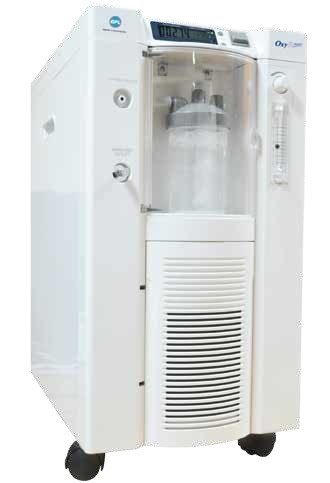
- Brand
- BPL
- Category
- 5 LPM
₹31,966.08₹62,400
Indicative pricing based on market intelligence. Varies by dealer, city, bundle, and period — confirm with a local authorised seller before buying.
HHZ SCORE 6.6/10
EDITORIAL PICK
Oxymed Mini (5L) Oxygen Concentrator
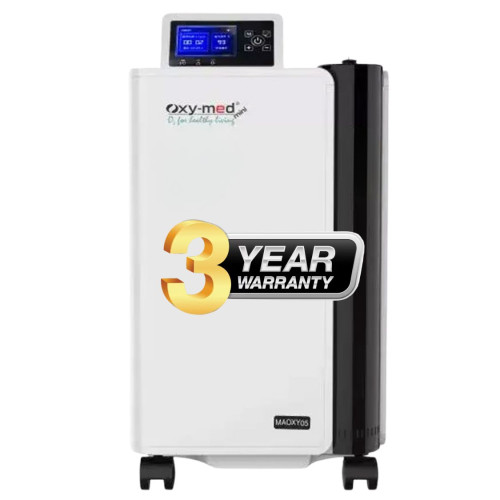
- Brand
- Oxymed
- Category
- 5 LPM
₹35,400₹59,900
Indicative pricing based on market intelligence. Varies by dealer, city, bundle, and period — confirm with a local authorised seller before buying.
HHZ SCORE 7.2/10
Specifications compared
| Specification | BPL Oxy 5 Neo 5 LPM | Oxymed Mini (5L) Oxygen Concentrator |
|---|---|---|
| Overview | ||
| Brand | BPL | Oxymed |
| Category | 5 LPM | 5 LPM |
| Price | ₹31,966.08 | ₹35,400.00 |
| MRP | 62,400.00 | 59,900.00 |
| Stock | In Stock | In Stock |
| Key features | ||
| Purity | 90-96% | 90-96% |
| Type | Home Stationary | Home Stationary |
| Continuous Flow | 1-5LPM | 1-5LPM |
| Weight | 25kg | 13.9kg |
| Oxygen Purity Indicator (OPI) | Yes | Yes |
| Power consumption | 400watts | 390watts |
| Technical details | ||
| Purity | 90-96% | 90-96% |
| Type | Home Stationary | Home Stationary |
| Continuous Flow | 1-5LPM | 1-5LPM |
| Weight | 25kg | 13.9kg |
| Oxygen Purity Indicator (OPI) | Yes | Yes |
| Power consumption | 400watts | 390watts |
| Sound level | 55db | 45db |
| Dimensions | 21.8H x 11.22W x 18.5Dinch | 20.27H x 12.36W x 9.4Dinch |
| Operating altitude | 6000feet | 7500feet |
| Outlet pressure | 7.25psi | 10psi |
| Additional details | ||
| Oxygen Purity % Analyzer | — | Yes |
| Loss of Power Alarm | Yes | Yes |
| System Malfunction Alarm | Yes | Yes |
| No Flow Alarm | — | Yes |
| Indian Voltage Model | Yes | Yes |
| Company Headquarters | India | India |
Analysis
Two domestic brands, two different deployment assumptions
The BPL Oxy 5 Neo and the Oxymed Mini 5 LPM are both Indian-headquartered 5 LPM concentrators, both CDSCO-registered, both priced in the sub-₹40,000 band — and yet they are designed with very different deployment assumptions. The BPL is built like a hospital-floor workhorse: 25 kg heavy-duty steel chassis, cylinder-desk styling, 55 dB sound, 2-year warranty. The Oxymed Mini is built for the bedroom: 13.9 kg ultralight polymer chassis, 45 dB sound, live percent purity analyzer, 3-year warranty. At a ₹3,434 price gap (₹31,966 vs ₹35,400 indicative retail), the two units chase different buyer profiles.
Headline specs: BPL Oxy 5 Neo at 25 kg, 400 W, 55 dB sound, 6,000 ft altitude, 7.25 psi outlet, 1–5 LPM flow, OPI light, loss-of-power and system-malfunction alarms but no no-flow alarm, 2-year warranty, no CE/FDA certification, In Stock. Oxymed Mini at 13.9 kg, 390 W, 45 dB sound, 7,500 ft altitude, 10 psi outlet, 1–5 LPM flow, live percent purity analyzer plus OPI, full alarm suite (loss-of-power / system-malfunction / no-flow), 3-year warranty, CDSCO registered (no CE or US FDA on record), In Stock.
HHZ’s verdict: for home-bedroom use — the default case for a prescribed LTOT concentrator in India — the Oxymed Mini is the correct pick. The BPL wins only in specific non-home contexts.
At-a-glance differences
- Price: BPL ₹31,966 vs Oxymed ₹35,400 — BPL is ₹3,434 (11%) cheaper
- Weight: Oxymed 13.9 kg vs BPL 25 kg — Oxymed is 11.1 kg lighter (44% less), the single biggest spec gap
- Sound: Oxymed 45 dB vs BPL 55 dB — Oxymed is 10 dB quieter, roughly half the perceived loudness
- Purity monitoring: Oxymed has live percent analyzer plus OPI; BPL has OPI light only
- Alarm suite: Oxymed runs three alarms (loss-of-power, system-malfunction, no-flow); BPL runs two (no no-flow alarm)
- Altitude: Oxymed 7,500 ft vs BPL 6,000 ft — Oxymed covers more hill stations
- Outlet pressure: Oxymed 10 psi vs BPL 7.25 psi — Oxymed has more cannula headroom
- Warranty: Oxymed 3 years vs BPL 2 years
- Regulatory: Both CDSCO registered; neither carries CE or US FDA on record.
Both are India-HQ, both ship Indian-voltage, both are 1–5 LPM continuous flow, and both are In Stock on primary Indian e-commerce channels.
Where the Oxymed Mini wins
11.1 kg lighter — 13.9 kg vs 25 kg. This is the headline difference. 25 kg is genuinely heavy for a 5 LPM stationary — among the heaviest in the Indian market. The BPL requires two people to lift, cannot be moved into a car boot by a single caregiver, and realistically lives wherever it is first installed. The Oxymed Mini at 13.9 kg is in the lightest tier of the 5 LPM class and can be moved between rooms by a single adult. For any joint-family setup where the concentrator alternates between the patient’s bedroom and a shared day-use area, the Oxymed wins unambiguously.
10 dB quieter — 45 dB vs 55 dB. 10 dB is roughly a doubling of perceived loudness. The BPL at 55 dB is at the upper threshold of what WHO community-noise guidelines consider acceptable for bedroom sleep environments. The Oxymed Mini at 45 dB is well inside the acceptable band. For night-time oxygen where the concentrator is in the same room as the sleeping patient, the BPL is noticeably louder — many households end up installing the BPL in an adjacent room with cannula routing through a door, which imposes its own set of problems (cannula catch-points, cold oxygen delivery, difficult caregiver access).
Live oxygen purity percent analyzer. The Oxymed Mini’s front-panel percent readout is a more informative feedback mechanism than the BPL’s amber OPI light. The OPI only triggers below a threshold (typically 82–86%); the percent analyzer reads out the actual value at all times. For a home caregiver monitoring sieve-bed condition over months and years, the percent reading is the early-warning signal.
Full alarm suite — no-flow alarm included. The Oxymed runs the no-flow alarm that catches kinked cannulas and disconnected tubing. The BPL’s spec table records loss-of-power and system-malfunction alarms but no no-flow alarm — meaning a disconnected cannula will not trigger an audible warning. In practice, a disconnected cannula with a conscious patient is rapidly noticed; for a sleeping or cognitively-impaired patient, a no-flow alarm is material safety infrastructure.
3-year warranty vs BPL’s 2 years. An extra year of factory coverage at a similar price tier is a straightforward value-add. The Oxymed’s service centres (40+ authorised locations) are additionally better-positioned for in-warranty claims than BPL’s mixed service-centre footprint — BPL’s Indian service network is broad for the company’s consumer-electronics product lines but uneven for the respiratory-equipment subdivision.
Domestic regulatory depth. Both units publish CDSCO registration — the applicable Indian regulatory gate — and neither carries CE or US FDA on record. Oxymed’s CDSCO paperwork comes with an invoice-traceable manufacturer record that CGHS/ECHS/ESIC tenders typically expect for reimbursement claims; BPL’s respiratory subdivision is similarly documented on GEM portal. This is a wash at the Indian regulatory floor; it would only differentiate them if one were chasing CE or FDA for export or institutional procurement, which neither clears.
Higher outlet pressure and altitude envelope. Oxymed’s 10 psi outlet pressure accommodates longer cannula runs; 7,500 ft altitude covers Manali, Mussoorie, Gangtok, Shimla. BPL’s 7.25 psi and 6,000 ft are both tighter envelopes.
Where the BPL Oxy 5 Neo wins
Price — ₹3,434 cheaper. At ₹31,966, the BPL is 11% below the Oxymed Mini. For institutional buyers (nursing homes, hospitals, clinics, tender-based procurement) where price-per-unit dominates the decision and where 25 kg immobility is not a drawback, the BPL wins on this single axis. The BPL was historically the default tender-winner in India for government hospital respiratory-equipment procurement, and that legacy positioning still drives its availability and pricing.
Robust steel chassis. The BPL is genuinely over-engineered. The 25 kg weight is largely structural — reinforced cabinet, heavy compressor mounts, industrial-grade wheels. For a hospital ward or nursing-home floor where the machine will be moved via floor-wheeling only, bumped against bed frames and cylinder trolleys, and serviced intermittently by rotating technical staff, the build tolerance is higher than a lightweight home unit. This is real, and it matters in institutional deployment.
BPL brand depth in India. BPL has been an Indian medical-equipment brand since the 1980s, with strong presence in hospital procurement. For institutional buyers, the brand itself has procurement-compliance meaning — BPL products are routinely listed on GEM portal for government purchase and have auditor-friendly paperwork trails. Oxymed is a specialist but smaller brand with less government-tender presence.
In-built storage for accessories. The BPL cabinet has a dedicated storage compartment for cannulas, humidifier bottles, extra filters, and user manual — a neat touch for institutional deployments where accessories travel with the machine.
Indian-market context
Both brands are Indian-HQ and CDSCO-registered. BPL operates primarily through a hospital-supply and institutional-tender channel; its retail e-commerce presence is secondary. Oxymed Medical operates primarily through a direct-dealer and e-commerce channel with authorised service in 40+ cities — more consumer-facing than BPL’s model.
Warranty reality differs. BPL’s 2-year warranty is honoured through BPL’s mixed service-centre footprint; respiratory-equipment service depth within BPL is smaller than the company’s consumer-electronics arm. Oxymed’s 3-year warranty is honoured through a respiratory-specialist authorised-dealer network with in-house trained technicians on the Oxymed compressor platform — the warranty experience is generally better-rated in home-care contexts.
GST at 12% applies to both. Both are Indian-voltage; both need a 1.5–2 kVA servo stabiliser in areas with 160V mains drops. The BPL’s 400 W power draw is slightly higher than the Oxymed’s 390 W — a negligible difference at Indian tariffs (₹25 per month at 24-hour use).
Channel pricing reality: BPL’s retail-channel price (₹31,966) is below its government-tender price (typically ₹35,000–₹40,000 for 2-year contracts), meaning retail buyers are actually getting a better deal than tender buyers — unusual but true for this platform. Oxymed’s retail price (₹35,400) is close to its direct-sale price with little channel arbitrage.
For altitude, the BPL at 6,000 ft is tighter than most 5 LPM competitors — hill-station use above 6,000 ft is outside its envelope, which is relevant for buyers in Shimla (7,220 ft), Darjeeling (6,710 ft), Manali (6,725 ft), Mussoorie (6,560 ft), Ooty (7,220 ft), Munnar (4,920 ft — inside BPL envelope). The Oxymed at 7,500 ft covers all of these except for Leh.
Also consider Home Medix HM-KV for bedroom use
For a home rather than a tender or ward deployment, the Home Medix HM-KV deserves a place beside the Oxymed Mini. Its 13 kg body and field-verified sound at or below 40 dB improve on the BPL’s bulky, noisy profile while its live purity display, alarm suite, integrated nebulization, and 3-year / 10,000-hour warranty make it a serious overnight-LTOT option.
This does not erase Oxymed’s service-network advantage. HM-KV is the better value-spec alternative only where Home Medix can prove local support; otherwise Oxymed remains the more serviceable home pick. See HM-KV vs Oxymed Mini for the direct decision.
Verdict — who should pick which
Pick the Oxymed Mini 5 LPM if: you are buying for a home prescription (the default case), you want a light chassis that moves between rooms, the concentrator will live in the patient’s bedroom during sleep hours, you need the full alarm suite and a live purity readout, or you want the 3-year warranty depth. The ₹3,434 premium over the BPL is a small price for 10 dB of noise reduction, 11.1 kg of weight saving, a full alarm suite, and an extra year of warranty. For any Indian home-prescription buyer in Tier-1 or Tier-2 cities, this is the better pick.
Pick the BPL Oxy 5 Neo if: you are buying for institutional deployment (nursing home, hospital ward, clinic, NGO-run elder-care), tender-backed procurement, or a non-bedroom home placement where 25 kg weight and 55 dB noise are acceptable; the unit will be installed once and not moved; and the ₹3,434 saving is material at the deployment scale. Bulk institutional buyers should also consider that BPL’s GEM-portal presence simplifies government procurement paperwork, which can be worth more than the specific hardware differences.
Consider alternatives if: the home-prescription buyer wants to step up from the Oxymed Mini. The Philips Everflo at ₹43,699 adds FDA approval and Philips Respironics India service for an ₹8,299 premium over the Oxymed — the canonical next step. The DeVilbiss at ₹45,984 adds US-origin FDA build and 13,123 ft altitude for ₹10,584 more. Below the Oxymed, the BPL is the cheapest serious option; the Veayva (₹27,840), Vandelay (₹33,600), and S.Cure (₹44,160) are weaker on qualification.
HHZ’s firm pick for home use is the Oxymed Mini 5 LPM. The BPL is a viable choice for institutional or non-bedroom deployment and an unambiguous loser for home bedroom use where weight, noise, and full alarms are the operational differentiators. Consult your treating pulmonologist before finalising the prescription flow rate — the 5 LPM class buys headroom, and the titration is what matters clinically.