BPL Oxy 5 Neo 5 LPM vs Home Medix HM-KV 5 LPM
BPL Oxy 5 Neo 5 LPM
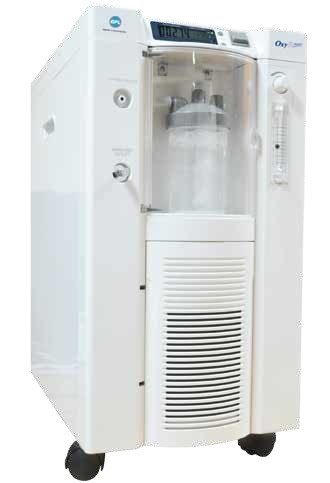
- Brand
- BPL
- Category
- 5 LPM
₹31,966.08₹62,400
Indicative pricing based on market intelligence. Varies by dealer, city, bundle, and period — confirm with a local authorised seller before buying.
HHZ SCORE 6.6/10
EDITORIAL PICK
Home Medix HM-KV 5 LPM
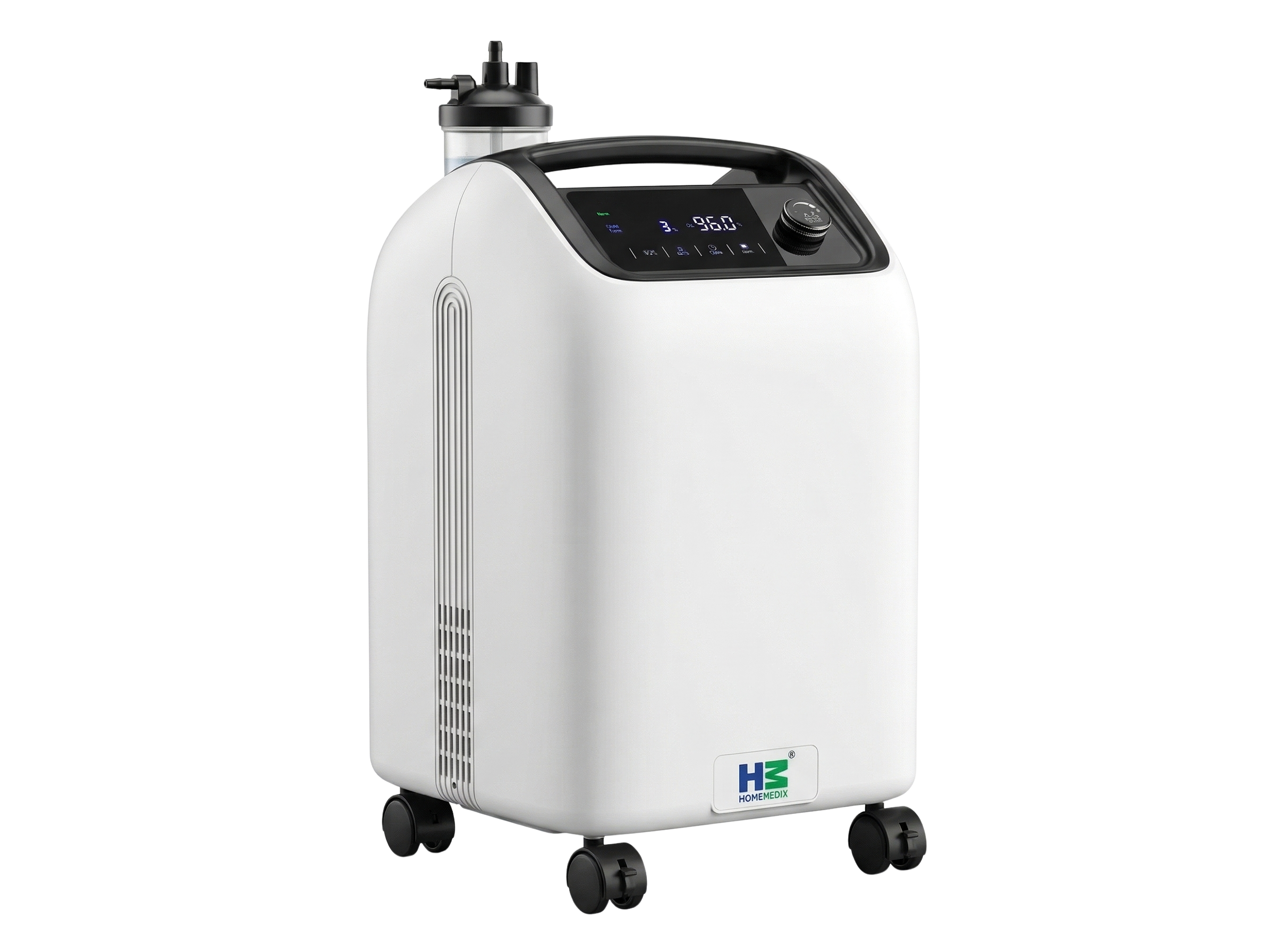
- Brand
- Home Medix
- Category
- 5 LPM
₹37,800₹54,000
Indicative pricing based on market intelligence. Varies by dealer, city, bundle, and period — confirm with a local authorised seller before buying.
HHZ SCORE 7.7/10
Specifications compared
| Specification | BPL Oxy 5 Neo 5 LPM | Home Medix HM-KV 5 LPM |
|---|---|---|
| Overview | ||
| Brand | BPL | Home Medix |
| Category | 5 LPM | 5 LPM |
| Price | ₹31,966.08 | ₹37,800 |
| MRP | 62,400.00 | 54,000 |
| Stock | In Stock | In Stock |
| Key features | ||
| Purity | 90-96% | 93% ± 3% |
| Type | Home Stationary | Home Stationary |
| Continuous Flow | 1-5LPM | 0.5–5 L/min |
| Weight | 25kg | 13 kg (lightest in the 5 LPM class) |
| Oxygen Purity Indicator (OPI) | Yes | Yes |
| Power consumption | 400watts | 320 VA |
| Technical details | ||
| Purity | 90-96% | 93% ± 3% |
| Type | Home Stationary | Home Stationary |
| Continuous Flow | 1-5LPM | 0.5–5 L/min |
| Weight | 25kg | 13 kg (lightest in the 5 LPM class) |
| Oxygen Purity Indicator (OPI) | Yes | Yes |
| Power consumption | 400watts | 320 VA |
| Sound level | 55db | ≤ 40 dB (field-verified) |
| Dimensions | 21.8H x 11.22W x 18.5Dinch | Compact floor-standing form factor |
| Operating altitude | 6000feet | — |
| Outlet pressure | 7.25psi | 0.04–0.06 MPa |
| Additional details | ||
| Oxygen Purity % Analyzer | — | Yes |
| Loss of Power Alarm | Yes | Yes |
| System Malfunction Alarm | Yes | Yes (High Temperature) |
| No Flow Alarm | — | Yes (Low/No Flow) |
| Indian Voltage Model | Yes | Yes |
| Company Headquarters | India | India |
| Home Medix differentiators | ||
| Integrated Nebulization | — | Yes |
| Precise Electronic Flowmeter | — | Yes |
| One-Touch SOS Alert | — | Yes — high-volume audible alarm button for summoning a nearby attendant (local siren; no mobile app or telecom channel) |
| Hour Counter | — | User-visible running-hour display |
| Working Voltage | — | AC 230V / 50Hz, ±10% tolerance (207–253 V) |
| Industrial-Grade Compressor | — | Yes |
| ISO 9001 | — | Yes |
| ISO 13485 | — | Yes |
| CDSCO | — | Approved |
| Warranty | — | 3 years or 10,000 hours of operation, whichever comes first |
Analysis
Two Indian-brand 5 LPMs, two different deployment assumptions
The BPL Oxy 5 Neo and the Home Medix HM-KV 5 LPM are both Indian-headquartered 5 LPM home stationary concentrators, both CDSCO-registered, both sold through retail and institutional channels — and yet they target very different buyers. The BPL is built like a hospital-floor workhorse: 25 kg reinforced steel chassis, 55 dB sound, 2-year warranty, cylinder-desk styling. The HM-KV is built for the bedroom: 13 kg polymer chassis, ≤ 40 dB field-verified sound, 3-year / 10,000-hour warranty, full alarm suite including Low/No Flow. The ₹5,834 price gap (₹31,966 vs ₹37,800 indicative retail, roughly 2026 street pricing) buys materially different operating characteristics.
Headline positioning: the BPL wins on sticker price and chassis robustness for institutional deployment; the HM-KV wins on every spec axis that matters for a home LTOT patient — weight, sound, alarm completeness, voltage-tolerance documentation, warranty length.
At-a-glance differences
- Price: BPL ₹31,966 (listed MRP ₹62,400) vs HM-KV ₹37,800 (listed MRP ₹54,000) — BPL is ₹5,834 cheaper at current retail
- Weight: HM-KV 13 kg vs BPL 25 kg — HM-KV is 12 kg lighter (48% less), the headline gap
- Sound: HM-KV ≤ 40 dB(A) field-verified vs BPL 55 dB — HM-KV is roughly 15 dB quieter, well past a doubling of perceived loudness
- Oxygen flow: Both 0.5–5 L/min continuous
- Oxygen concentration: HM-KV 93% ± 3%; BPL 90–96% (same practical band)
- Outlet pressure: HM-KV 0.04–0.06 MPa (roughly 5.8–8.7 psi); BPL 7.25 psi
- Power: HM-KV 320 VA at AC 230V ±10% tolerance (207–253 V, documented); BPL 400 W with no published AC tolerance band
- Alarm suite: HM-KV runs Low Oxygen, Power Failure, High Temperature, and Low/No Flow — full coverage. BPL runs Loss of Power and System Malfunction only (no-flow alarm not listed in the spec table)
- Hour counter: HM-KV has a user-visible running-hour display on the control panel; BPL has a screen display that doubles as an hour meter
- Warranty: HM-KV 3 years or 10,000 hours (whichever comes first); BPL 2 years
- Regulatory: Both CDSCO-approved / CDSCO-registered. Neither carries CE or US FDA on record. HM-KV additionally documents ISO 9001 + ISO 13485
Both are In Stock through primary Indian e-commerce channels. Both ship Indian-voltage.
Where the HM-KV wins
12 kg lighter — 13 kg vs 25 kg. This is the most consequential spec gap in the matchup. 25 kg genuinely needs two people to lift and is effectively immobile once placed. 13 kg is in the lightest tier of the 5 LPM class and can be relocated between rooms by a single adult. For an Indian joint-family setup where the concentrator moves between a bedroom at night and a shared living area during the day, the BPL is a non-starter and the HM-KV is built for exactly that use case.
Roughly 15 dB quieter — ≤ 40 dB(A) field-verified vs 55 dB. 10 dB is a doubling of perceived loudness; 15 dB is more than that. 55 dB sits at the upper threshold of bedroom-acceptable community noise; many households end up installing a BPL in an adjacent room with cannula routing through a doorway, which introduces cannula catch-points and complicates caregiver access. The HM-KV at ≤ 40 dB is quietly usable at the bedside during sleep. The “field-verified” qualifier in the Home Medix spec sheet is the honest way to frame it — a meaningful distinction in a market where paper-spec dB figures often don’t match real rooms.
Full alarm suite — Low/No Flow included. The HM-KV runs the Low/No Flow alarm that catches tubing kinks, blocked filters, and disconnected cannulas — the one that matters most for sleeping or cognitively-impaired patients. The BPL’s spec table records Loss of Power and System Malfunction only; no-flow detection is not listed. For a conscious, alert patient a disconnected cannula is noticed quickly; for an LTOT patient who may be asleep or drowsy, a no-flow alarm is material safety infrastructure.
Documented AC ±10% voltage tolerance. The HM-KV specifies AC 230V / 50Hz with ±10% tolerance (207–253 V) as a published spec. The BPL’s data sheet quotes a 400 W power draw but does not publish an equivalent tolerance band. In Indian Tier-2 and Tier-3 cities where mains voltage commonly dips below 200 V or spikes above 250 V, the published tolerance band is operationally useful — the HM-KV will shut down cleanly rather than damage the compressor. Both units still benefit from a servo stabiliser; the HM-KV just comes with a spec’d envelope, not dealer-discretion.
User-visible hour counter on the control panel. The HM-KV’s running-hour display means the patient can see how close they are to the 10,000-hour warranty clause without calling the service centre. The BPL’s screen doubles as an hour meter, but the 10,000-hour clause is HM-KV-specific — the HM-KV’s warranty is explicit about the hour-count trigger, which matters for households running the concentrator 16+ hours a day.
Extra year of warranty — 3 years vs 2. At a similar tier, an extra year of factory coverage is a clean value-add. Combined with the documented 10,000-hour threshold, the HM-KV’s paper warranty framework is the more buyer-friendly of the two.
ISO 9001 + ISO 13485 documentation. Both units are CDSCO-registered, which is the Indian regulatory gate. The HM-KV additionally documents ISO 9001 (quality management) and ISO 13485 (medical device quality management). This is not a difference that matters for a retail home buyer, but it matters for institutional procurement where ISO paperwork is a tender prerequisite.
Where the BPL Oxy 5 Neo wins
₹5,834 cheaper — ₹31,966 vs ₹37,800. 15% below the HM-KV at current retail. For institutional buyers where per-unit price is the dominant decision variable and where 25 kg immobility is not a drawback, the BPL wins on this single axis. Bulk nursing-home, NGO-run elder-care, and tender-based hospital procurement frequently price purely on sticker.
Robust steel chassis. The 25 kg weight is largely structural — reinforced cabinet, heavy compressor mounts, industrial-grade wheels. For a hospital ward or nursing-home floor where the machine will be bumped against bed frames and cylinder trolleys, serviced intermittently by rotating technical staff, and never single-person-lifted, the build tolerance is higher than any 13 kg polymer-chassis unit. This is real, and it matters in the institutional-deployment profile the BPL is designed for.
BPL brand depth in Indian institutional procurement. BPL has been an Indian medical-equipment brand since the 1980s with strong presence in hospital procurement channels and routine listing on GEM portal for government purchase. For institutional buyers, that brand depth has procurement-compliance meaning — auditor-friendly paperwork, tender-eligibility history. Home Medix is a newer brand with growing but shallower institutional footprint.
In-built accessory storage. The BPL cabinet has a dedicated compartment for cannulas, humidifier bottles, extra filters, and user manuals — a neat touch for institutional contexts where accessories travel with the machine.
Indian-market considerations
Stabiliser sizing. The HM-KV draws 320 VA; size a servo stabiliser at roughly 1.5× — 500 VA minimum, 750 VA where mains regularly swings outside 207–253 V. The BPL at 400 W similarly wants a ~600 VA stabiliser, sized with the same rule of thumb. In Indian Tier-2 cities where 160–260 V swings are real, the stabiliser is non-optional for either unit; the HM-KV’s published tolerance band just makes the sizing conversation less guess-work.
Altitude. The BPL’s data sheet lists a 6,000 ft operating altitude — tighter than most 5 LPM competitors. That rules out Shimla (7,220 ft), Ooty (7,220 ft), Darjeeling (6,710 ft), Manali (6,725 ft), and Mussoorie (6,560 ft), though Munnar (4,920 ft) and Gangtok (~5,250 ft) are inside the envelope. The HM-KV’s published spec does not quote an altitude ceiling; PSA concentrators generally derate 2–4 percentage points of purity per 1,000 m of elevation — verify in-use for any hill-station installation.
Humidifier budget. Both units support humidifier bottles via the standard outlet; factor ₹800–₹1,500 for a CE-grade humidifier bottle and allow for quarterly cleaning cycles in coastal humidity zones (Mumbai, Chennai, Kolkata, Kochi).
GST and reimbursement. 12% GST applies to both. Home-medical-equipment reimbursement under CGHS / ECHS / ESIC / private insurance requires GST-compliant invoicing from an authorised dealer; both brands can provide this through their authorised channels.
Service reach. BPL operates through a mixed hospital-supply and institutional-tender channel; the respiratory-equipment service footprint is smaller than the broader BPL consumer-electronics arm. Home Medix’s service network is concentrated in South and West India and thins out in the North-East and parts of the hill belt. For buyers in Chennai, Bengaluru, Hyderabad, Mumbai, Pune, or Ahmedabad, Home Medix service reach is reasonable. For buyers in Guwahati, Shillong, Itanagar, or parts of rural UP/Bihar, verify authorised-service pincode coverage before buying either unit — this is the single biggest execution variable for an Indian LTOT prescription.
Who should pick which
Pick the Home Medix HM-KV 5 LPM if: you are buying for a home prescription (the default case for LTOT in India), you want a light chassis that moves between rooms, the concentrator will live in the patient’s bedroom during sleep hours, you need the full alarm suite (including Low/No Flow), you want the 3-year / 10,000-hour warranty framework, or you want documented AC voltage tolerance for Tier-2/3 mains conditions. For any Indian home-prescription buyer in a Home-Medix-served metro or Tier-1 city, the HM-KV is the better pick — the ₹5,834 premium over the BPL buys 12 kg of weight saving, ~15 dB of noise reduction, a full alarm suite, and an extra year of warranty.
Pick the BPL Oxy 5 Neo if: you are buying for institutional deployment (nursing home, hospital ward, clinic, NGO elder-care), tender-backed procurement where GEM-portal listing matters, or a fixed non-bedroom placement where 25 kg weight and 55 dB sound are acceptable; the unit will be installed once and never relocated; and the ₹5,834 per-unit saving multiplies meaningfully at deployment scale.
Verdict
For home LTOT — the default 5 LPM use case — the Home Medix HM-KV is the correct pick over the BPL Oxy 5 Neo. The BPL’s sticker price is genuinely cheaper, but the HM-KV’s 12 kg weight saving, ~15 dB noise reduction, full alarm suite (including Low/No Flow), documented AC ±10% tolerance, user-visible hour counter, and extra year of warranty collectively earn the ₹5,834 premium. The BPL remains a viable choice only for institutional deployment and non-bedroom placements where its steel chassis and procurement-channel depth offset its weight and noise disadvantages.
Consult your treating pulmonologist before finalising the prescription flow rate — 5 LPM buys clinical headroom, and titration is what matters at the bedside.