BPL Oxy 5 Neo 5 LPM vs Nareena 5 LPM Single Flow
BPL Oxy 5 Neo 5 LPM
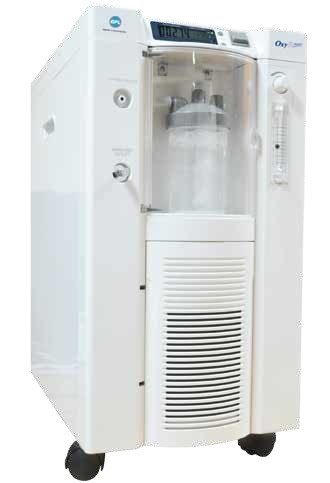
- Brand
- BPL
- Category
- 5 LPM
₹31,966.08₹62,400
Indicative pricing based on market intelligence. Varies by dealer, city, bundle, and period — confirm with a local authorised seller before buying.
HHZ SCORE 6.6/10
EDITORIAL PICK
Nareena 5 LPM Single Flow
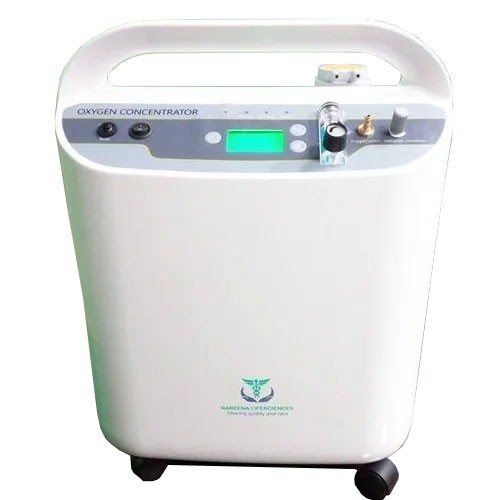
- Brand
- Nareena Lifesciences
- Category
- 5 LPM
₹35,510.40₹67,200
Indicative pricing based on market intelligence. Varies by dealer, city, bundle, and period — confirm with a local authorised seller before buying.
HHZ SCORE 7.0/10
Specifications compared
| Specification | BPL Oxy 5 Neo 5 LPM | Nareena 5 LPM Single Flow |
|---|---|---|
| Overview | ||
| Brand | BPL | Nareena Lifesciences |
| Category | 5 LPM | 5 LPM |
| Price | ₹31,966.08 | ₹35,510.40 |
| MRP | 62,400.00 | 67,200.00 |
| Stock | In Stock | In Stock |
| Key features | ||
| Purity | 90-96% | 90-96% |
| Type | Home Stationary | Home Stationary |
| Continuous Flow | 1-5LPM | 1-5LPM |
| Weight | 25kg | 15kg |
| Oxygen Purity Indicator (OPI) | Yes | Yes |
| Power consumption | 400watts | 550watts |
| Technical details | ||
| Purity | 90-96% | 90-96% |
| Type | Home Stationary | Home Stationary |
| Continuous Flow | 1-5LPM | 1-5LPM |
| Weight | 25kg | 15kg |
| Oxygen Purity Indicator (OPI) | Yes | Yes |
| Power consumption | 400watts | 550watts |
| Sound level | 55db | 50db |
| Dimensions | 21.8H x 11.22W x 18.5Dinch | 23.6H x 14.7W x 14.3Dinch |
| Operating altitude | 6000feet | — |
| Outlet pressure | 7.25psi | — |
| Additional details | ||
| Loss of Power Alarm | Yes | Yes |
| System Malfunction Alarm | Yes | — |
| Indian Voltage Model | Yes | Yes |
| Company Headquarters | India | India |
Analysis
The BPL Oxy 5 Neo 5 LPM and the Nareena 5 LPM Single Flow are both Indian-manufactured 5 LPM stationary concentrators in the budget tier, both priced under Rs. 36,000, both carrying OPI as a documented feature. But they diverge sharply on weight and noise in a way that matters enormously for the lived experience of home LTOT. The BPL is 25 kg — one of the heaviest 5 LPM units in the surveyed Indian market. The Nareena is 15 kg. The BPL runs at 55 dB; the Nareena at 50 dB. These two numbers reshape the purchase decision in favour of the lighter, quieter option.
Price and availability
BPL Oxy 5 Neo 5 LPM: Rs. 31,966.08 street price against an MRP of Rs. 62,400 (49 percent discount). In Stock on the surveyed Indian e-commerce listing. 18 verified customer ratings at 4.1 average.
Nareena 5 LPM Single Flow: Rs. 35,510.40 street price against an MRP of Rs. 67,200. In Stock. 26 verified customer ratings at 4.2 average.
The BPL is Rs. 3,544.32 cheaper than the Nareena, an 11 percent price advantage. Both are in stock. Both have modest but real customer rating signals. Both are manufactured in India.
On price and availability alone, this is a narrow win for the BPL.
Flow, purity, and weight
Both units deliver 1 to 5 LPM continuous (BPL’s key-features block and brochure description both indicate 0.5-5 LPM, but the normalised flow_min is 1 LPM; Nareena is 1 LPM floor). Both claim 90-96% purity. Matched on the two headline clinical parameters.
Weight is where the matchup decisively splits. BPL Oxy 5 Neo: 25 kg. Nareena 5 LPM Single Flow: 15 kg.
25 kg is exceptional for the 5 LPM class. Most stationary 5 LPM units cluster between 14 kg (Philips Everflo) and 16 kg (Jumao, Biocross, S.Cure, Dr Diaz, Dr Trust, Keyhub, GVS Oxypure). The 15-16 kg band is where the 5 LPM market lives. The BPL at 25 kg is a full 10 kg heavier than the Nareena — a 67 percent weight penalty — and 11 kg heavier than the Philips Everflo benchmark.
The practical consequence: the BPL is not a machine a single caregiver can easily shift between rooms. A 25 kg concentrator on wheels can still roll, but lifting it over a threshold, up a step, or into a car for transport to a relative’s house is a two-person operation. For households where the oxygen patient is bedbound and the machine stays in one place permanently, the weight is a set-up-once concern. For households that need any mobility at all — moving between bedroom and living room for daytime activities, taking the machine to a medical visit, temporary relocation during travel — the BPL’s weight is a structural problem.
The BPL’s brochure description acknowledges this by emphasising its wheels: “comes with wheels for easy transportation within the house.” Wheels help but do not overcome the fundamental weight class.
Footprint: BPL 21.8H x 11.22W x 18.5D inch. Nareena 23.6H x 14.7W x 14.3D inch. The BPL is narrower but substantially deeper (18.5 inches versus 14.3 inches). The Nareena is wider but shallower. For Indian bedside placement against a wall, the Nareena’s shallower depth is more practical; the BPL’s 18.5-inch depth will intrude into the room more noticeably.
Sound
BPL: 55 dB. Nareena: 50 dB.
55 dB is the loudest sound level in the entire review set — louder than every other 5 LPM unit HHZ Editorial has surveyed for this series. It exceeds the Jumao’s 52 dB, exceeds the 48 dB cluster (Biocross, S.Cure, Dr Trust, Dr Diaz, Keyhub), and is markedly louder than the 45 dB cluster (Philips Everflo, Oxymed Mini) or the 40 dB class (Nidek Nuvo Lite).
5 dB is approaching perceptual doubling. For a patient on nocturnal LTOT, the difference between the BPL’s 55 dB and the Nareena’s 50 dB — and the Nareena is not itself a quiet machine — is not marginal. 55 dB is loud enough that many households will notice it from an adjacent room, and the patient sleeping in the same room will have their sleep measurably disrupted unless they are habituated or hearing-impaired.
For a device that will run 8-14 hours per day in a bedroom, 55 dB is a genuine quality-of-life problem.
Power
BPL: 400 W. Nareena: 550 W.
The BPL draws 150 W less than the Nareena — 27 percent lower. At 14 hours per day on Mumbai residential rates, the BPL runs at approximately Rs. 1,340 per month versus the Nareena’s Rs. 1,850. Monthly difference is approximately Rs. 510, or Rs. 6,100 per year.
Over a three-to-five-year LTOT horizon, the power savings on the BPL amount to Rs. 18,000-30,000 — a real economic argument, though not as large as the Dynmed or S.Cure power advantages covered elsewhere in this review series.
OPI and alarms
BPL Oxy 5 Neo spec sheet: Oxygen Purity Indicator Yes. Loss of Power Alarm Yes. System Malfunction Alarm Yes. No Flow Alarm blank. Oxygen Purity Analyzer blank. Indian Voltage Model Yes. India HQ.
Nareena 5 LPM Single Flow spec sheet: Oxygen Purity Indicator Yes. Loss of Power Alarm Yes. System Malfunction Alarm blank. No Flow Alarm blank. Oxygen Purity Analyzer blank. Indian Voltage Model Yes. India HQ.
The BPL has three of five safety rows populated versus the Nareena’s two. The BPL’s extra populated row is system-malfunction alarm, which catches compressor and controller fault conditions. This is a real, if modest, feature advantage for the BPL.
Both units cover the two most critical features — OPI and loss-of-power — so the essential clinical baseline is met by both.
Certifications
BPL: US FDA blank, FAA blank, CE blank. India HQ.
Nareena: US FDA blank, FAA blank, CE blank. India HQ.
Neither carries Western certifications. Both are Indian-manufactured with no CE or FDA mark. On this axis, they are tied.
Operating envelope
BPL: Operating altitude 6,000 feet. Outlet pressure 7.25 psi.
Nareena: Operating altitude not stated on the surveyed sheet. Outlet pressure not stated on the surveyed sheet.
The BPL’s 6,000-feet altitude cap is below the typical 7,500 feet class standard. This is a real limitation for hill-region use — even routine hill-station elevations like Shimla (7,234 feet) and Manali (6,725 feet) exceed the BPL’s documented cap. For plains use in major Indian cities, both units are fine.
The BPL documents altitude and outlet pressure; the Nareena does not. On paperwork completeness, the BPL edges ahead.
Warranty and service
BPL: 2-year warranty per the manufacturer description.
Nareena: 1-year warranty per the manufacturer description.
The BPL doubles the Nareena’s warranty period — a real advantage. BPL is a well-known Indian healthcare brand with a visible service network across major Indian cities; the Nareena’s service reachability is more variable and dealer-dependent.
BPL also provides an in-built storage compartment for accessories (cannula tubes, humidifier bottles, extra air filters, user manuals) per the manufacturer description — a modest utility advantage.
Rating signal
BPL: 18 ratings at 4.1 average. Nareena: 26 ratings at 4.2 average.
Both have modest review signals. The Nareena’s volume is slightly higher and the average slightly better, but both sit in the narrow range where rating differences are within the noise of small-sample variance.
Which trade-off for which household
Choose the BPL Oxy 5 Neo if:
- The machine will stay in one fixed room for the duration of the patient’s LTOT (reducing the 25 kg weight penalty)
- The household is not heavily disturbed by 55 dB bedroom operation (e.g., the patient and caregiver are hearing-habituated or use a separate room)
- The 2-year warranty versus the Nareena’s 1-year is valuable
- The system-malfunction alarm adds meaningful safety
- Budget constraint is real and Rs. 3,544 matters
- Plains use only — the 6,000 feet altitude cap excludes most Indian hill stations
Choose the Nareena 5 LPM Single Flow if:
- Household needs any mobility of the machine (between rooms, for travel, for relative visits)
- Nocturnal LTOT where the 5 dB difference materially affects sleep
- Altitude up to a documented cap is not a binding constraint (the Nareena simply doesn’t state its altitude, which is its own risk — but the BPL’s documented 6,000 feet is itself restrictive)
- The system-malfunction alarm gap is acceptable
Verdict
The Nareena 5 LPM Single Flow wins this matchup for typical Indian home LTOT. The BPL Oxy 5 Neo’s 25 kg weight and 55 dB noise level are real practical problems for a device that lives in a bedroom and occasionally needs to move. The BPL’s advantages — Rs. 3,544 lower price, 2-year warranty (vs 1-year), system-malfunction alarm, and 27 percent lower power draw — are meaningful but not enough to compensate for the weight and noise penalties for a typical household.
For a buyer in a static-placement setting where weight and noise genuinely don’t matter — a patient in a dedicated oxygen room with the door closed, or an outbuilding installation — the BPL’s economic case becomes stronger. But that profile is not the median Indian home LTOT setup.
Neither unit is optimal. Buyers in this price band should seriously consider the Oxymed Mini 5 LPM at Rs. 35,400 — 13.9 kg (lighter than both), 45 dB (quieter than both by 5-10 dB), full five-row alarm coverage, CDSCO registered, 3-year warranty, 1,062 verified Indian ratings. It beats both units on the axes that matter most for bedroom LTOT.
Provenance note: all product specifications referenced in this writeup are drawn from the respective manufacturer brochures and Indian e-commerce product listings surveyed in April 2026. No bench testing has been conducted by HHZ Editorial; no clinical claims are made beyond what manufacturer documentation supports. Indian LTOT decisions should be made in consultation with the prescribing physician.