Airsep Visionaire 5 vs Nareena 5 LPM Single Flow
EDITORIAL PICK
Airsep Visionaire 5
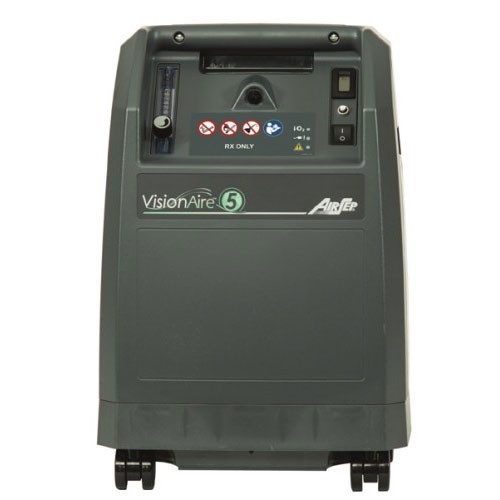
- Brand
- AirSep
- Category
- 5 LPM
₹54,999₹80,640
Indicative pricing based on market intelligence. Varies by dealer, city, bundle, and period — confirm with a local authorised seller before buying.
HHZ SCORE 8.0/10
Nareena 5 LPM Single Flow
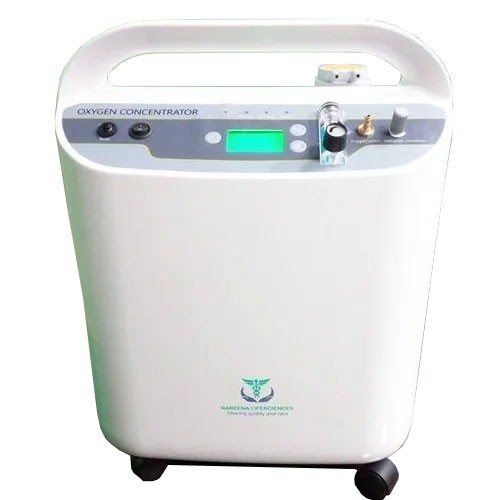
- Brand
- Nareena Lifesciences
- Category
- 5 LPM
₹35,510.40₹67,200
Indicative pricing based on market intelligence. Varies by dealer, city, bundle, and period — confirm with a local authorised seller before buying.
HHZ SCORE 7.0/10
Specifications compared
| Specification | Airsep Visionaire 5 | Nareena 5 LPM Single Flow |
|---|---|---|
| Overview | ||
| Brand | AirSep | Nareena Lifesciences |
| Category | 5 LPM | 5 LPM |
| Price | ₹54,999.00 | ₹35,510.40 |
| MRP | 80,640.00 | 67,200.00 |
| Stock | In Stock | In Stock |
| Key features | ||
| Purity | 90-96% | 90-96% |
| Type | Stationary | Home Stationary |
| Continuous Flow | 0.5-5LPM | 1-5LPM |
| Weight | 13.6kg | 15kg |
| Oxygen Purity Indicator (OPI) | Yes | Yes |
| Power consumption | 290watts | 550watts |
| Technical details | ||
| Purity | 90-96% | 90-96% |
| Type | Stationary | Home Stationary |
| Continuous Flow | 0.5-5LPM | 1-5LPM |
| Weight | 13.6kg | 15kg |
| Oxygen Purity Indicator (OPI) | Yes | Yes |
| Power consumption | 290watts | 550watts |
| Sound level | 45db | 50db |
| Dimensions | 20.8H x 14.1W x 11.5Dinch | 23.6H x 14.7W x 14.3Dinch |
| Operating altitude | 10000feet | — |
| Outlet pressure | 8psi | — |
| Additional details | ||
| Loss of Power Alarm | Yes | Yes |
| System Malfunction Alarm | Yes | — |
| No Flow Alarm | Yes | — |
| Indian Voltage Model | Yes | Yes |
| Company Headquarters | USA | India |
| US FDA Approved | Yes | — |
| CE Certified | Yes | — |
Analysis
The matchup
The Airsep Visionaire 5 and the Nareena 5 LPM Single Flow are sometimes cross-shopped by Indian buyers looking at 5 LPM stationaries under ₹60,000, but on published specs they are not a close matchup. The Visionaire is a US FDA approved, CE certified, 290 W stationary with a 10,000 ft altitude envelope, 13.6 kg weight, and a full alarm suite including loss-of-power, system-malfunction, and no-flow alarms. The Nareena 5 LPM Single Flow is an Indian-origin unit at ₹35,510 indicative retail with a 550 W power draw, 50 dB sound rating, 1-year warranty, and a partial alarm suite covering only loss-of-power (no system-malfunction or no-flow alarm published in the technical specs). For any prescription expected to run beyond 12 months, the spec sheet does not favour the Nareena. Our verdict: the Visionaire wins decisively on every dimension that matters for long-term clinical outcomes. The Nareena is defensible only as a short-duration, plains-only, price-constrained purchase.
At-a-glance spec differences
- Price (indicative retail): Visionaire ₹54,999 vs Nareena ₹35,510 — a ₹19,489 gap
- Power draw (published): Visionaire 290 W vs Nareena 550 W — the Nareena consumes nearly double the power at full flow; on a 24x7 prescription, the gap is ₹1,700+ per month at ₹9/kWh
- Sound (published): Visionaire 45 dB vs Nareena 50 dB — the Nareena sits at the edge of bedroom-disruptive
- Altitude envelope (published): Visionaire 10,000 ft; Nareena does not publish an altitude specification in technical details
- Weight (published): Visionaire 13.6 kg vs Nareena 15 kg — a 1.4 kg gap
- Warranty: Visionaire typically 3-year manufacturer warranty; Nareena 1-year manufacturer warranty as documented in product description
- Certifications: Visionaire US FDA approved and CE certified; Nareena neither FDA nor CE
- Alarm suite: Visionaire publishes loss-of-power, system-malfunction, and no-flow alarms all as “Yes”; Nareena publishes only loss-of-power alarm
Where the Airsep Visionaire 5 wins
Power draw is the single biggest long-term cost advantage. At 290 W published vs 550 W published, the Visionaire draws roughly 47% less power than the Nareena at full flow. On a 24x7 prescription at a ₹9/kWh commercial tariff, the Visionaire runs to roughly ₹1,880/month in electricity while the Nareena runs to roughly ₹3,564/month — a gap of ₹1,684 every month. Over a three-year prescription that compounds to roughly ₹60,000 in electricity — more than three times the upfront price gap between the two machines. The Nareena is not a cheaper machine in any meaningful total-cost-of-ownership sense; it is an expensive machine with a low upfront sticker.
Sound is meaningfully quieter. 45 dB vs 50 dB is a 5 dB gap, which is perceptually “noticeably quieter” rather than “fractionally quieter.” For bedside placement at night, the Visionaire sits comfortably below disruption; the Nareena is on the wrong side of the disruptive threshold. Indian bedrooms are typically smaller than US or European bedrooms, so sound at source translates more directly to sound at the patient. A 5 dB gap matters.
Alarm suite is complete on the Visionaire. Unattended overnight operation is the standard use case for a 5 LPM home stationary. The Visionaire publishes loss-of-power, system-malfunction, and no-flow alarms all as “Yes” — the full envelope of failure modes that the patient or caregiver must hear alerted. The Nareena publishes only loss-of-power. A failed compressor or a kinked cannula on the Nareena produces no audible alarm; those failure modes are not monitored in the documented spec sheet. For unattended operation that is a real clinical risk.
Certifications, again, carry weight. The Visionaire is US FDA approved and CE certified; the Nareena is neither. Institutional, physician, and insurance-panel signals all favour the Visionaire here. For buyers who care about these signals, the question closes quickly.
Warranty is 3 years vs 1 year. The Visionaire’s 3-year manufacturer warranty matches the Indian 5 LPM class default and covers the period during which sieve-bed degradation typically begins. The Nareena’s 1-year warranty leaves the buyer exposed for year 2 and year 3 — precisely the years in which a well-built machine earns its upfront premium. Extended-warranty options are available at additional cost, but the published 1-year baseline is a meaningfully weaker coverage envelope.
Where the Nareena 5 LPM Single Flow wins
Upfront price is ₹19,000 lower. At ₹35,510 indicative retail vs ₹54,999 on the Visionaire, the Nareena is roughly 35% cheaper. For Indian buyers where the purchase is self-funded and the cash is not easily available — which is the majority of Indian home-oxygen buyers, given that durable-medical-equipment insurance coverage is thin — this gap is the question. Monthly-running-cost arithmetic matters less than monthly-out-of-pocket-for-the-machine arithmetic when the buyer is financing the purchase.
Indian manufacture and Indian-channel service. Nareena Lifesciences is headquartered in India with an Indian service chain. For straightforward parts replacements — filters, hoses, humidifier bottles — the Nareena’s supply chain is shorter than Airsep’s via its Indian distributor. For buyers in tier-2 cities where Airsep/CAIRE’s service footprint is thin, a Nareena machine may be easier to keep running than a Visionaire with a longer parts chain.
Slightly higher flow minimum may be fine for adults. The Nareena’s 1 LPM flow minimum is identical to the Philips Everflo and Oxymed Mini and adequate for the overwhelming majority of adult prescriptions. This is not a win over the Visionaire (which publishes 0.5 LPM) but it is a non-disadvantage for adult buyers.
Dimensions are comparable. At 23.6H x 14.7W x 14.3D inches and 15 kg, the Nareena is larger than the Visionaire but still falls within the 5 LPM stationary form factor envelope. For a home with typical room space — not a tiny bedroom — the Nareena’s size is not a practical disadvantage.
Indian-market context
Both machines publish Indian Voltage Model status and run on 230 V / 50 Hz. A voltage stabiliser is advisable for both in tier-2 cities where supply voltage sags or spikes are routine — the Visionaire’s tighter tolerance on imported compressor electronics makes a stabiliser closer to mandatory, while the Nareena’s Indian-manufactured compressor is more tolerant of dirty supply. Neither is FAA approved, so neither travels on flights. Both are stationary home units.
On service channels: the Nareena is supplied through Indian dealer and online channels with direct Nareena-branded service. The Visionaire is typically an online purchase through a handful of Indian distributors with Airsep/CAIRE authorised service running through a smaller dealer network. Mumbai, Delhi-NCR, Bangalore, Chennai, Hyderabad, Pune, Kolkata all have viable Visionaire service; tier-2 cities are thin. Nareena has broader but shallower coverage — present in more cities but with less technician depth.
On pricing mechanics: the Nareena is typically discounted 30–45% from its ₹67,200 MRP at online retail, bringing it to the ₹35,510 indicative retail point. Dealer-channel pricing varies by city; Nareena runs modest dealer margins of 5–10% above online in tier-2 cities. The Visionaire is typically discounted 25–35% from its ₹80,640 MRP to the ₹54,999 point; dealer margins above online are rare because most Visionaire purchases are direct-to-consumer online.
Hospital rental fleets in Indian metros carry the Visionaire alongside Philips Everflo and DeVilbiss as typical imported stationary options; Nareena is uncommon in rental fleets because the 1-year warranty and higher running cost do not amortise well across fleet use.
Verdict
Our recommendation is the Airsep Visionaire 5 for virtually any long-horizon home oxygen prescription. The running-cost gap alone (roughly ₹60,000 over three years favouring the Visionaire) swamps the ₹19,000 upfront saving on the Nareena. Add the full alarm suite, the 3-year warranty vs 1-year warranty, the FDA approval, the 5 dB sound advantage, and the 2,500+ foot altitude envelope (where documented), and the Visionaire wins every dimension that matters for any use expected to run beyond six months.
Buy the Nareena 5 LPM Single Flow instead only in three narrow situations. First, short-duration post-surgical recovery where the machine will be used for weeks to at most three months — at that horizon, the ₹19,000 upfront saving is real and the running-cost gap is small enough to absorb. Second, buyers where the upfront cash is the binding constraint and ₹55,000 is simply not available — in that case a Nareena at ₹35,510 is better than no machine at all, and cylinder-top-up coverage at 2 AM is worse than a cheaper concentrator. Third, buyers in a tier-2 or tier-3 city where Airsep service is genuinely absent and Nareena service is present — the practical service reality beats the published certification advantage.
For any other case, the Visionaire is the pick. The ₹19,000 gap looks large at purchase and looks like a rounding error by year two of 24x7 operation. A gets the win, and this is not a close call — it is one of the clearer 5 LPM recommendations in the Indian market.