Airsep Visionaire 5 vs DeVilbiss 5 LPM
Airsep Visionaire 5
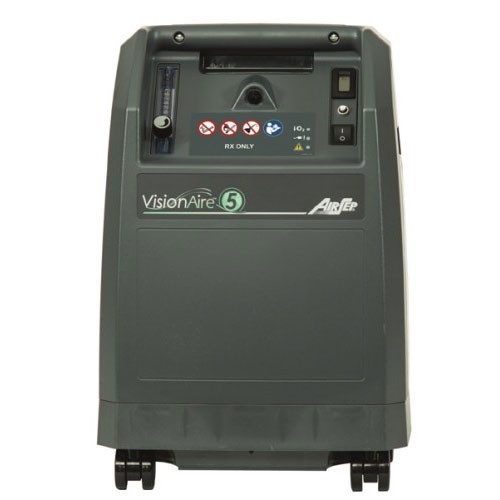
- Brand
- AirSep
- Category
- 5 LPM
₹54,999₹80,640
Indicative pricing based on market intelligence. Varies by dealer, city, bundle, and period — confirm with a local authorised seller before buying.
HHZ SCORE 8.0/10
EDITORIAL PICK
DeVilbiss 5 LPM
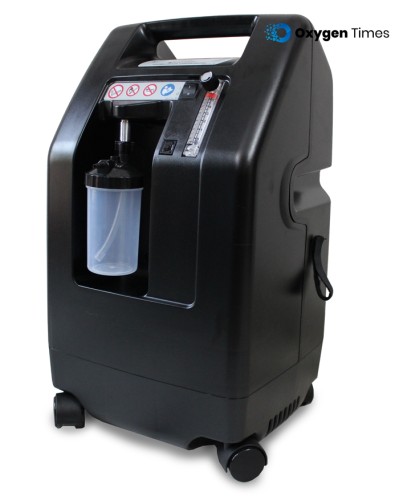
- Brand
- Drive DeVilbiss
- Category
- 5 LPM
₹45,984₹86,400
Indicative pricing based on market intelligence. Varies by dealer, city, bundle, and period — confirm with a local authorised seller before buying.
HHZ SCORE 8.0/10
Specifications compared
| Specification | Airsep Visionaire 5 | DeVilbiss 5 LPM |
|---|---|---|
| Overview | ||
| Brand | AirSep | Drive DeVilbiss |
| Category | 5 LPM | 5 LPM |
| Price | ₹54,999.00 | ₹45,984.00 |
| MRP | 80,640.00 | 86,400.00 |
| Stock | In Stock | In Stock |
| Key features | ||
| Purity | 90-96% | 90-96% |
| Type | Stationary | Home Stationary |
| Continuous Flow | 0.5-5LPM | 1-5LPM |
| Weight | 13.6kg | 16.3kg |
| Oxygen Purity Indicator (OPI) | Yes | Yes |
| Power consumption | 290watts | 310watts |
| Technical details | ||
| Purity | 90-96% | 90-96% |
| Type | Stationary | Home Stationary |
| Continuous Flow | 0.5-5LPM | 1-5LPM |
| Weight | 13.6kg | 16.3kg |
| Oxygen Purity Indicator (OPI) | Yes | Yes |
| Power consumption | 290watts | 310watts |
| Sound level | 45db | 48db |
| Dimensions | 20.8H x 14.1W x 11.5Dinch | 24.4H x 13.4W x 12Dinch |
| Operating altitude | 10000feet | 13123feet |
| Outlet pressure | 8psi | 8.5psi |
| Additional details | ||
| Loss of Power Alarm | Yes | Yes |
| System Malfunction Alarm | Yes | Yes |
| No Flow Alarm | Yes | Yes |
| Indian Voltage Model | Yes | Yes |
| Company Headquarters | USA | USA |
| US FDA Approved | Yes | Yes |
| CE Certified | Yes | Yes |
Analysis
Two American 5 LPMs, one ₹9,000 gap
The Airsep Visionaire 5 and the Drive DeVilbiss Compact 525 sit in the same sub-category of the Indian 5 LPM market: imported, US-designed, FDA-approved, CE-certified stationaries sold with 3-year Indian warranty support and wired for 220V / 50Hz operation. Neither is a recent release; both are mature platforms that have been sold in India for at least half a decade through hospital-supply and medical-equipment dealers. The decision between them rarely comes down to one being a newer design — it’s an ₹9,015 price gap, 2.7 kg of weight, and 3,123 feet of altitude headroom.
Headline numbers: the Visionaire 5 lists at ₹54,999 (indicative retail in 2026, listed MRP ₹80,640), weighs 13.6 kg, draws 290 W continuous — the lowest power figure published in the 5 LPM imported class — and rates for 10,000 ft operating altitude. The DeVilbiss 5 LPM lists at ₹45,984 (indicative retail in 2026, listed MRP ₹86,400), weighs 16.3 kg, draws 310 W, and rates for 13,123 ft, the highest altitude envelope in the 5 LPM class sold in India. Both claim 90–96% purity and sound levels in the 45–48 dB band — functionally the same noise tier for a bedroom installation.
HHZ’s verdict: at the ₹9,015 gap, the DeVilbiss wins for most Indian buyers. The Visionaire’s lighter chassis and lower power draw are real, but the savings don’t justify the premium unless the household lifts the machine frequently or lives above 10,000 ft.
At-a-glance differences
- Price: DeVilbiss ₹45,984 vs Visionaire ₹54,999 — a ₹9,015 gap, or 16% cheaper for the DeVilbiss
- Weight: Visionaire 13.6 kg vs DeVilbiss 16.3 kg — 2.7 kg lighter on the Visionaire (roughly 17% less)
- Power draw: Visionaire 290 W vs DeVilbiss 310 W — a 20 W gap, translating to roughly ₹130–₹150 per month at Indian tariffs on 24-hour use
- Altitude envelope: DeVilbiss 13,123 ft vs Visionaire 10,000 ft — DeVilbiss is the only 5 LPM in the imported class that covers Leh (11,500 ft) without derating
- Noise: Visionaire 45 dB vs DeVilbiss 48 dB — 3 dB gap, audible at bedside but neither is loud
- Outlet pressure: Visionaire 8 psi vs DeVilbiss 8.5 psi — functionally identical for any 15–25 ft cannula run
Both units ship as Indian voltage models, both are FDA-approved and CE-certified, both include the standard alarm suite (loss of power, system malfunction, no flow) and an oxygen purity indicator light — not a live percent-display. Neither unit offers a live oxygen purity analyzer; that’s Oxymed Mini or Nareena territory, not here.
Where the Visionaire wins
Weight and ergonomics. At 13.6 kg, the Visionaire is genuinely in the lightest tier of imported 5 LPM stationaries — only Oxymed Mini (13.9 kg) and Philips Everflo (14 kg) are comparable. The DeVilbiss at 16.3 kg is 2.7 kg heavier — roughly 20% more. For most households with rolling-cart use on a flat floor, this is marginal; for any household where a single caregiver lifts the unit over a threshold, up a single step into a verandah, or into a car boot for an overnight transfer, the Visionaire is noticeably easier to handle. Joint-family setups where the concentrator moves between the patient’s bedroom and a shared day-use room during the evening will feel the gap.
Power draw and monthly electricity. 290 W is the lowest continuous figure published in the 5 LPM imported class. On a 24-hour prescription at a typical Indian domestic tariff of ₹8–₹9 per kWh, the Visionaire pulls roughly ₹1,880–₹2,100 per month of electricity. The DeVilbiss at 310 W pulls roughly ₹2,010–₹2,230 — a difference of ₹130–₹150 per month, or about ₹4,700–₹5,400 over a 3-year prescription. That partially closes the ₹9,015 purchase-price gap — but only partially. The Visionaire only reaches parity at the ₹9,000 break-even point somewhere past the 5-year mark, and by then the compressor is mid-life on either unit.
Marginal noise advantage. At 45 dB vs 48 dB, the Visionaire is measurably quieter on paper — 3 dB is roughly half the perceived loudness for a listener at bedside distance. In practice, both units sit well below the 55 dB threshold where concentrator drone becomes sleep-disruptive. If the concentrator must share a small room with the patient during sleep, the Visionaire is the safer pick; if it lives in a separate room with the cannula routed through a doorway, the gap is inaudible.
Where the DeVilbiss wins
Price. ₹45,984 vs ₹54,999 is a ₹9,015 gap — 16% cheaper. In the 5 LPM imported segment, that’s the difference between the DeVilbiss and its nearest Chinese-OEM alternatives: the Yuwell 9F (₹45,120), the Vandelay 5L (₹33,600), the Veayva 5L (₹27,840). The Visionaire at ₹54,999 moves into a price band where it competes with the Philips Everflo (₹43,699) directly on FDA-approval and weight, and the comparison there is less favourable — the Everflo matches the Visionaire on weight (14 kg) and undercuts it on price by ₹11,300.
Altitude envelope — 13,123 ft. This is the single largest spec difference and the only one where no amount of Indian sea-level thinking closes the gap. The DeVilbiss is the only 5 LPM stationary in the imported class that covers Leh (11,500 ft / 3,500 m) without manufacturer-specified derating. The Visionaire’s 10,000 ft ceiling covers every major Indian hill station — Manali (2,050 m / 6,725 ft), Shimla (2,200 m / 7,220 ft), Mussoorie (2,000 m / 6,560 ft), Gangtok, Darjeeling — but not Leh. For households in Ladakh, the DeVilbiss is the only buy in this class; the alternative is a 10 LPM unit derated to 5 LPM output, which costs materially more.
Turn-down technology and service-grade build. The Drive DeVilbiss Compact 525 uses documented turn-down technology that reduces compressor duty at lower flow rates — a real benefit for patients on 2–3 LPM prescriptions whose compressor then runs cooler with longer sieve-bed life. The two-part case design on the 525 is specifically built for field servicing — technicians in Mumbai, Delhi, Bengaluru, Chennai can open, swap compressor modules, and close in a single visit. Airsep (CAIRE) has smaller India service depth outside metros.
3-year warranty backed by Drive DeVilbiss India. Both units carry 3-year warranty per the retail listings, but the DeVilbiss is supported by Drive Medical’s India distribution network, which has wider hospital-channel reach than Airsep’s Indian presence. For a Tier-2 city buyer in Nagpur, Raipur, Coimbatore, Indore — Drive DeVilbiss service is more likely to be reachable without shipping the unit back to Mumbai or Delhi.
Indian-market context
Both units are routinely stocked by dealer-network medical-equipment outlets in Delhi, Mumbai, Bengaluru, Chennai, Hyderabad, and Pune. The channel pricing gap is real and persistent — we’ve seen the DeVilbiss listed as low as ₹42,000 in hospital-channel direct sales and the Visionaire bottom out at around ₹52,000, preserving roughly the same 16% gap at any given discount cycle. Neither brand routinely discounts below that floor in retail.
Service depth differs materially. Drive DeVilbiss India has authorised-service presence in roughly 20 Tier-1 and Tier-2 cities for its respiratory product line; CAIRE/Airsep operates a narrower authorised-dealer footprint concentrated in metros. For any household outside the top 6 metros, the DeVilbiss is materially easier to service in-warranty. For sieve-bed replacements — which are the single failure mode that defines a stationary concentrator’s useful life at year 3–5 — the DeVilbiss’s turn-down technology documents lower bed stress at partial flow.
GST applies at 12% on both units; CDSCO import registration is current for both Airsep and Drive DeVilbiss product lines as of the last public registry check (CDSCO). Indian mains variance (160–260V range in Tier-2/3 cities) is handled by the built-in SMPS on both units; a 2 kVA servo stabiliser is still recommended for either machine in areas where low-voltage cuts are common.
For altitude, the DeVilbiss wins decisively above 10,000 ft. In the 6,000–10,000 ft band — covering Shimla, Manali, Mussoorie, Gangtok, Darjeeling, Ooty, Munnar — both units sit inside their envelopes and deliver the published flow-purity curve. Below 6,000 ft the altitude spec is moot; both maintain 5 LPM at 90–96% purity without derating.
Verdict — who should pick which
Pick the DeVilbiss 5 LPM if: you live at sea-level to 6,000 ft (covering the overwhelming majority of Indian urban households), you want the lowest total capital cost in the imported 5 LPM class, you’re in a Tier-2 city where Drive DeVilbiss dealer service is reachable, or you’re shopping for a Ladakh / Leh installation where no other 5 LPM in the class has the altitude envelope. The ₹9,015 purchase saving funds a 2 kVA servo stabiliser (₹4,500) and still leaves ₹4,500 for a humidifier + cannula + extended-service contract. That is the defensible allocation for most Indian home-prescription buyers on 1–5 LPM continuous flow.
Pick the Airsep Visionaire 5 if: the household moves the concentrator between rooms daily and a single 60 kg caregiver is doing the lifting; the concentrator must live in the patient’s bedroom during sleep and the 3 dB noise gap matters; you’re in a 10,000 ft or lower hill-station location and the Visionaire’s 290 W power saves roughly ₹150 per month; or you specifically want the CAIRE/Airsep brand warranty (clinical field reports from CAIRE’s commercial-respiratory product line have been strong for over a decade). The Visionaire is not a bad buy — it’s just more expensive than the DeVilbiss by an amount that doesn’t return through electricity savings inside a normal prescription window.
Skip both if: the patient’s prescription is 3 LPM or below and cost is a binding constraint — in that case a domestic-brand 5 LPM with an oxygen purity analyzer (the Oxymed Mini at ₹35,400 is the relevant reference) delivers the same therapy at ₹10,000–₹19,000 less, with a better service network inside India for Tier-2 buyers. The imported pair is the correct choice when the buyer specifically wants US-origin FDA-approved hardware with 3-year warranty depth and is willing to pay for it.
For the typical Indian buyer on a 2–4 LPM continuous prescription in a Tier-1 or Tier-2 city at sea-level or moderate altitude: the DeVilbiss 5 LPM is the HHZ pick. Consult your treating pulmonologist before finalising any LTOT prescription — the 5 LPM class buys flow headroom, but the titration number matters more than the brand.