Airsep Visionaire 5 vs Dr Diaz 5 LPM
EDITORIAL PICK
Airsep Visionaire 5
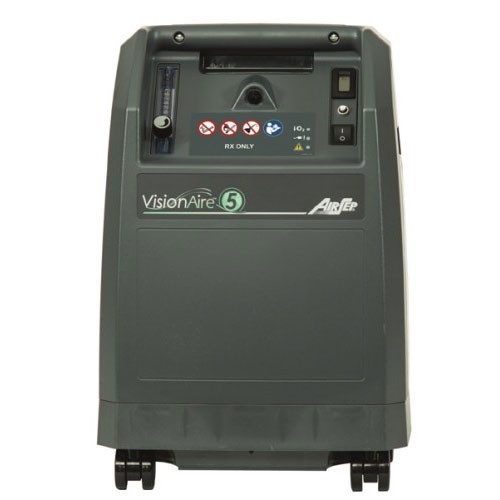
- Brand
- AirSep
- Category
- 5 LPM
₹54,999₹80,640
Indicative pricing based on market intelligence. Varies by dealer, city, bundle, and period — confirm with a local authorised seller before buying.
HHZ SCORE 8.0/10
Dr Diaz 5 LPM
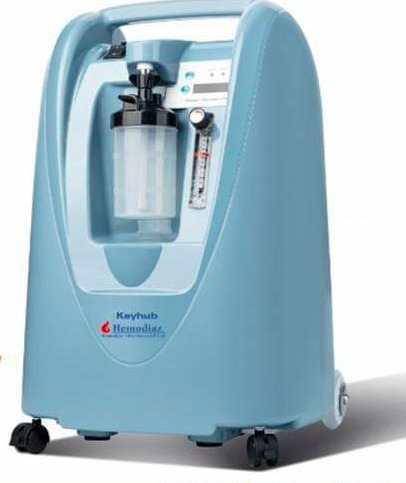
- Brand
- Hemodiaz
- Category
- 5 LPM
₹29,759.04₹40,320
Indicative pricing based on market intelligence. Varies by dealer, city, bundle, and period — confirm with a local authorised seller before buying.
HHZ SCORE 6.9/10
Specifications compared
| Specification | Airsep Visionaire 5 | Dr Diaz 5 LPM |
|---|---|---|
| Overview | ||
| Brand | AirSep | Hemodiaz |
| Category | 5 LPM | 5 LPM |
| Price | ₹54,999.00 | ₹29,759.04 |
| MRP | 80,640.00 | 40,320.00 |
| Stock | In Stock | In Stock |
| Key features | ||
| Purity | 90-96% | 90-96% |
| Type | Stationary | Single Flow |
| Continuous Flow | 0.5-5LPM | 1-5LPM |
| Weight | 13.6kg | 16kg |
| Oxygen Purity Indicator (OPI) | Yes | Yes |
| Power consumption | 290watts | 285watts |
| Technical details | ||
| Purity | 90-96% | 90-96% |
| Type | Stationary | Single Flow |
| Continuous Flow | 0.5-5LPM | 1-5LPM |
| Weight | 13.6kg | 16kg |
| Oxygen Purity Indicator (OPI) | Yes | Yes |
| Power consumption | 290watts | 285watts |
| Sound level | 45db | 48db |
| Dimensions | 20.8H x 14.1W x 11.5Dinch | 21H x 12W x 11.8Dinch |
| Operating altitude | 10000feet | 12000feet |
| Outlet pressure | 8psi | 13psi |
| Additional details | ||
| Loss of Power Alarm | Yes | Yes |
| System Malfunction Alarm | Yes | Yes |
| No Flow Alarm | Yes | Yes |
| Indian Voltage Model | Yes | Yes |
| Company Headquarters | USA | India |
| US FDA Approved | Yes | — |
| CE Certified | Yes | — |
Analysis
The matchup
The Airsep Visionaire 5 and the Dr Diaz 5 LPM are often considered together by Indian buyers trying to choose between an established import at ₹55,000 and a budget Indian-origin unit at ₹30,000. The two machines share the 5 LPM continuous-flow format, the 90–96% published purity, and the Indian Voltage Model status, but diverge sharply on certifications, efficiency, sound, and service pedigree. The Visionaire publishes US FDA approval, CE certification, 290 W power draw, 45 dB sound, and a full alarm suite — the clinical-grade envelope of a mature home oxygen product. The Dr Diaz is a 285 W, 48 dB, 13 psi outlet-pressure Indian-origin unit with 12,000 ft altitude envelope and no FDA or CE certification published. The gap is ₹25,240 on indicative retail. Our verdict: the Visionaire is the better long-horizon clinical pick; the Dr Diaz is a defensible budget choice for plains, general-medicine, short-to-mid-duration adult prescriptions where certification is not a constraint.
At-a-glance spec differences
- Price (indicative retail): Visionaire ₹54,999 vs Dr Diaz ₹29,759 — a ₹25,240 gap, or 85% more for the Visionaire
- Power draw (published): Visionaire 290 W vs Dr Diaz 285 W — effectively identical nameplate; Visionaire has no turn-down technology published but its baseline is already the class low
- Sound (published): Visionaire 45 dB vs Dr Diaz 48 dB — a meaningful 3 dB gap for bedside placement
- Altitude envelope (published): Visionaire 10,000 ft vs Dr Diaz 12,000 ft — Dr Diaz wins this one
- Outlet pressure (published): Visionaire 8 psi vs Dr Diaz 13 psi — Dr Diaz has significantly more headroom
- Weight (published): Visionaire 13.6 kg vs Dr Diaz 16 kg — Visionaire is 2.4 kg lighter
- Certifications: Visionaire US FDA approved and CE certified; Dr Diaz neither FDA nor CE
- Flow minimum: Visionaire 0.5 LPM vs Dr Diaz 1 LPM — paediatric-relevant
Where the Airsep Visionaire 5 wins
Certifications are the Visionaire’s clearest clinical signal. US FDA approval and CE certification together mean the Visionaire is accepted in hospital rental fleets, in insurance-panel durable-medical-equipment lists, and in any setting where a physician has specified certified equipment. The Dr Diaz publishes neither. For home prescriptions where the patient transitions between home and hospital or where an insurer requires certified DME for reimbursement, the Visionaire is the required choice. The ₹25,000 price premium buys certification that is not available at the Dr Diaz price point at all.
Sound is quieter by a perceptible margin. 45 dB on the Visionaire vs 48 dB on the Dr Diaz is a 3 dB gap — an audible difference at bedside. The Visionaire sits comfortably below the 50 dB bedroom-disruption threshold; the Dr Diaz is close to it. For patients on overnight low-flow supplementation — where the machine runs 8+ hours a night in the same room as the sleeper — this gap matters. Typical Indian bedrooms are smaller than US bedrooms, so sound at source translates more directly to sound at the pillow.
Weight is meaningfully lighter. 13.6 kg vs 16 kg is a 2.4 kg gap — 15% lighter. For a single elderly caregiver moving the machine between bedroom and living room daily, 13.6 kg is closer to the ergonomic line than 16 kg. Neither is a portable concentrator, but the Visionaire’s lighter weight is a real day-to-day quality-of-life advantage.
Flow minimum of 0.5 LPM opens paediatric use. The Visionaire’s 0.5 LPM minimum flow vs the Dr Diaz’s 1 LPM minimum matters for paediatric prescriptions where infant and early-childhood flow rates are often below 1 LPM. The Dr Diaz at 1 LPM cannot deliver prescribed paediatric low flows accurately; the Visionaire can.
Full alarm suite and service pedigree. Both machines publish loss-of-power, system-malfunction, and no-flow alarms as “Yes,” so the nominal alarm envelope is equivalent. The practical difference is in alarm reliability and in what happens after the alarm — the Visionaire has a decade of Indian-market service history through CAIRE and its distributors; the Dr Diaz is newer and the service chain for a failed compressor is less mature. For long-horizon reliability, the Visionaire has the track record.
Where the Dr Diaz 5 LPM wins
Price is the single biggest advantage. At ₹29,759 indicative retail vs ₹54,999 on the Visionaire, the Dr Diaz is 46% cheaper — a ₹25,240 gap. For self-funded Indian buyers without DME insurance, this gap is the question. ₹25,240 buys a backup cylinder kit, a year of electricity, a full accessory replacement set, and still leaves change. For price-bound buyers, this is a real decision factor.
Outlet pressure of 13 psi is a structural advantage for cannula accessories. The Dr Diaz publishes 13 psi vs the Visionaire’s 8 psi — 60% more outlet pressure headroom. For long cannula runs (bedroom-to-living-room exceeding 10 feet), for accessory attachments drawing pressure (humidifier plus inline filter plus nebulizer in series), and for buyers where a varying load needs stable delivery pressure, the Dr Diaz’s 13 psi is more forgiving. The Visionaire at 8 psi is adequate for standard configurations but has less reserve.
Altitude envelope is 2,000 ft higher. The Dr Diaz’s 12,000 ft published altitude beats the Visionaire’s 10,000 ft envelope by 2,000 ft. For buyers in Leh (11,500 ft), Tabo (10,760 ft), Kaza (11,980 ft), or any high-altitude Ladakh or Spiti placement, the Dr Diaz’s envelope is a tighter-margin fit that the Visionaire’s 10,000 ft rating does not clear. This is a narrow geographic window but a real Dr Diaz advantage where it applies.
Indian origin means shorter service supply chain. Hemodiaz’s parts chain runs Indian-to-Indian without customs or import delays. For routine filter and hose replacements, the Dr Diaz is typically faster to service than the Visionaire, whose parts run through Airsep/CAIRE’s global distribution. For compressor replacements, both chains are slower, but the Dr Diaz has the shorter path on average.
Indian-market context
Both machines are Indian Voltage Models on 230 V / 50 Hz. The Visionaire’s imported compressor electronics are tighter-tolerance than the Dr Diaz’s Indian-built compressor; a voltage stabiliser is advisable for both in any tier-2 city and is closer to mandatory for the Visionaire where supply quality is poor. Neither is FAA approved; neither travels on flights.
On service channel: the Visionaire is sold primarily online in India, with authorised service concentrated in tier-1 cities. Airsep/CAIRE’s Indian footprint runs roughly a dozen cities with direct authorised service; beyond that the support path is third-party. The Dr Diaz from Hemodiaz has a narrower branded footprint — roughly 30 cities with direct Hemodiaz service — but the coverage is more uniform across tier-2 than the Visionaire’s. For a Dehradun or Coimbatore or Raipur household, the Dr Diaz is often the more practically serviceable unit despite being the cheaper import.
On pricing mechanics: the Dr Diaz lists at ₹40,320 MRP and typically discounts to ₹29,759 indicative retail online. Dealer channels run at or slightly above online indicative retail. The Visionaire lists at ₹80,640 MRP and typically discounts to ₹54,999 online. Dealer-channel pricing on the Visionaire is typically at or slightly above online, with little negotiation room in the Indian channel.
GST at 12% on Class B medical devices is included in listed prices. Extended warranty beyond the standard 3-year manufacturer coverage on the Visionaire is available at additional cost; the Dr Diaz standard warranty is typically 3 years through Hemodiaz’s direct channel.
Verdict
Our recommendation is the Airsep Visionaire 5 for any long-horizon home oxygen prescription where the buyer can stretch the ₹25,000 price gap. The clinical case is built on FDA approval (institutional acceptance), 45 dB sound (overnight placement), 0.5 LPM flow minimum (paediatric), and the 13.6 kg weight (caregiver ergonomics). None of these Visionaire advantages is marginal; each is a real improvement for a real Indian use case. Over a three-year 24x7 prescription, the Visionaire pays back its premium in reliability and running-cost consistency.
Buy the Dr Diaz 5 LPM instead when the price gap is binding and three conditions hold. First, no paediatric or sub-1-LPM prescription — adult-only, general-medicine prescriptions at 2–4 LPM are served adequately by the Dr Diaz. Second, no institutional or insurance-panel requirement for FDA-approved equipment — for most self-funded private Indian buyers this is fine; for anyone using insurance or hospital-channel reimbursement it is a showstopper. Third, the use case is plains-Indian or specifically Leh-Ladakh in the 10,000–12,000 ft altitude band where the Dr Diaz’s altitude envelope is genuinely useful.
For one specific geographic edge case — Leh, Kaza, Tabo homes in the 10,000–12,000 ft altitude band — the Dr Diaz beats the Visionaire on altitude envelope. For anywhere in plains India and for altitude placements below 10,000 ft, the Visionaire wins. The ₹25,000 gap is real, but so are the certification, sound, weight, and flow-minimum advantages. A gets the pick for most Indian buyers; B is the narrow budget exception.