Dr Diaz 5 LPM
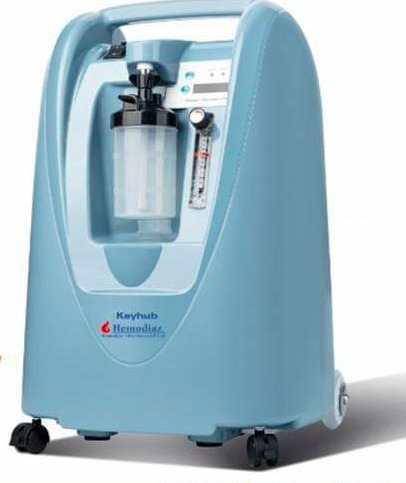
Key features
- Purity 90-96%
- Type Single Flow
- Continuous Flow 1-5LPM
- Weight 16kg
- Oxygen Purity Indicator (OPI) Yes
- Power consumption 285watts
Specifications
| Purity | 90-96% |
|---|---|
| Type | Single Flow |
| Continuous Flow | 1-5LPM |
| Weight | 16kg |
| Oxygen Purity Indicator (OPI) | Yes |
| Power consumption | 285watts |
| Sound level | 48db |
| Dimensions | 21H x 12W x 11.8Dinch |
| Operating altitude | 12000feet |
| Outlet pressure | 13psi |
| Loss of Power Alarm | Yes |
|---|---|
| System Malfunction Alarm | Yes |
| No Flow Alarm | Yes |
| Indian Voltage Model | Yes |
| Company Headquarters | India |
Pros and cons
PROS
- Oxygen purity indicator present — a rare feature at this price
- Complete alarm suite: loss-of-power, system-malfunction, no-flow all confirmed
- 12,000 ft operating altitude rating — useful for Himalayan and Nilgiri buyers
- 16 kg chassis with 285 W power draw is both portable-ish and efficient
- Sharp discount: ₹29,759 current price vs ₹40,320 MRP
CONS
- No CE certification, no US FDA, no CDSCO marker on the brochure
- 48 dB published noise — not quiet enough for same-room overnight use
- Hemodiaz brand has limited public service-network documentation
The Dr Diaz 5 LPM, branded under Hemodiaz and manufactured in India per the spec sheet, is one of the more completely-specced sub-₹30,000 home concentrators on the Indian market. At a current price of ₹29,759 against an MRP of ₹40,320 it sits firmly in the budget tier, but the spec list reads several steps up from competitors at similar money: oxygen purity indicator confirmed, three independent alarms confirmed, 12,000 ft altitude rating listed, 13 psi outlet pressure (higher than average for the class), and a 16 kg chassis at 285 W continuous draw. This is a brand to take seriously, subject to the service-network caveats below.
What the specs mean
The Dr Diaz 5 LPM is a single-flow home stationary concentrator — one oxygen outlet, 1–5 LPM continuous flow range, 90–96% published purity. The 96% purity ceiling is one decimal point higher than most competitors in the bracket, which typically list 95% max; in practice this reflects the manufacturer’s confidence in the molecular sieve rather than a clinically meaningful difference at the patient end.
The 285 W power draw is genuinely low. Philips EverFlo is rated at 350 W, Nidek Nuvo Lite at 290 W, and Home Medix HM-KV at 320 VA, so Dr Diaz is at parity with the best in class. For a LTOT patient running the machine 18 hours a day, 285 W works out to roughly ₹700-950 per month of incremental electricity at Indian tariffs — meaningfully less than a 390 W Dr Trust.
The 48 dB published sound level is moderate. Quieter than a 50 dB Nareena or a 52 dB Jumao, but louder than a 40 dB Nidek Nuvo Lite. Not bedroom-silent; expect to run it adjacent to the sleeping area with an extended cannula.
The critical positive: oxygen purity indicator is confirmed present. This is the single feature that separates “medically serious” 5 LPM concentrators from “budget commodity” units. The OPI monitors output purity in real time and alarms when it falls below therapeutic threshold (typically ~85%). For a LTOT patient this is the day-to-day assurance that the machine is still producing medical-grade oxygen. At ₹29,759 with an OPI, Dr Diaz is meaningfully ahead of Home Medix, Dr Trust, Jumao, S.Cure, and Veayva in the sub-₹40,000 bracket.
Alarms are equally complete. Loss-of-power, system-malfunction, and no-flow are all confirmed. Most Chinese-OEM-under-Indian-label 5 LPM units in this price band list only loss-of-power. Dr Diaz matches the Nidek Nuvo Lite and Philips EverFlo feature set here, which is unusual for the price.
Operating altitude at 12,000 ft (3,657 m) is listed. This is real. For buyers in Leh, Manali, Darjeeling, Shimla, Gangtok, or Nainital where ambient air pressure is meaningfully lower, a published altitude spec is the difference between a machine that delivers 5 LPM and one that delivers 3.5-4 LPM without warning. 12,000 ft covers effectively all inhabited Indian altitudes.
Outlet pressure at 13 psi is notably high — most 5 LPM units run 5-8 psi. A higher outlet pressure is useful for patients on high-resistance nasal cannulas, longer tubing runs (>2 m), or mask-based delivery. It also drives better distal oxygen delivery if the machine is paired with secondary equipment.
The 16 kg chassis is class-competitive. Lighter than many older floor-standing units, comparable to Nareena and Dr Trust, but heavier than the 13 kg Home Medix HM-KV. Not a portable but moveable between rooms by one adult.
What is missing: CE certification is not marked, US FDA is not claimed, FAA is not applicable, CDSCO is not indicated. The brand is listed as Indian headquarters. For buyers who need CDSCO paperwork for insurance, confirm directly with the dealer.
Who should buy it
The Dr Diaz 5 LPM is the correct buy for a budget-constrained Indian buyer who needs a medically serious 5 LPM home concentrator and does not want to compromise on the OPI or alarm suite. At ₹29,759, it offers features that typically live at the ₹45,000-55,000 price point.
Specifically: post-discharge recovery users where the machine will see 6-18 months of daily use, chronic low-flow LTOT patients on 1-3 LPM prescriptions where the machine will run for years, patients in hill stations where the altitude rating matters, and patients on higher-resistance delivery (mask, extended cannula) where the 13 psi outlet pressure helps.
It is also a sensible buy for Tier 2/3 city purchasers where Philips and Nidek dealer footprints are thin and Oxymed distribution is patchy — provided the dealer offers a written warranty and parts-availability commitment.
Post-COVID pulmonary recovery use cases where the patient is on oxygen for 3-9 months before tapering off: this is fine.
Who shouldn’t
Buyers who need CDSCO registration for insurance reimbursement — confirm CDSCO status with the dealer before purchase; the brochure does not indicate it.
Buyers who need very quiet operation in a shared bedroom — at 48 dB this is not a silent machine. Look at a Nidek Nuvo Lite (40 dB) or a Nareena Single Flow (50 dB is brochure but in practice often lower).
Buyers whose budget can stretch to ₹55,000-65,000 should consider Nidek Nuvo Lite or Philips EverFlo anyway for the service-network advantage alone. Dr Diaz’s spec is competitive; Dr Diaz’s dealer network is not.
Patients on higher-flow prescriptions (6-10 LPM): buy a Dr Diaz 10 LPM or a 10 LPM-class alternative instead.
Head-to-head alternatives
Nidek Nuvo Lite 5 LPM (₹55,000-65,000). Japanese-build 5 LPM reference. 40 dB, 290 W, OPI, full alarms, 14 kg. Against Dr Diaz, the Nidek costs roughly 2x as much and buys a quieter machine, a genuinely lighter chassis, and a real Nidek-India service network in metros. If budget allows, Nidek is the better long-term buy. If budget is capped at ₹30,000, Dr Diaz matches Nidek on OPI and alarms.
Philips EverFlo 5 LPM (₹65,000-75,000). The American-build reference. 45 dB, 350 W, OPI, full alarms, 31 kg. Heavier and more expensive than Dr Diaz, but offers the most comprehensive India-wide service network of any brand. For a 5-10 year LTOT horizon, Philips is the correct buy. Against Dr Diaz, the Philips is roughly 2.3x the price.
Oxymed Mini 5 LPM (₹32,000-38,000). The Indian-brand peer. Oxymed has genuine Indian manufacturing in Chennai, a longer track record than Hemodiaz in the home-oxygen market, and dealer coverage across South/West India. Oxymed Mini’s spec sheet is broadly comparable to Dr Diaz — similar weight, similar noise, similar alarm set, usually includes OPI. Against Dr Diaz, Oxymed costs 10-25% more but has materially better warranty-claim reality in most Indian cities.
Indian-market considerations
Hemodiaz is listed as India-headquartered, which is useful context. However, the brand does not have a widely-published authorised-service-centre network, a dedicated warranty-claim line that we can verify, or a reputation track record comparable to Oxymed or BPL. This is not a statement that Hemodiaz service is poor — simply that it is not publicly documented in the way a Tier 1 or established Indian brand’s is.
The practical implication: buy from an established dealer with a written service agreement. Get the spare-parts-availability commitment in writing. Confirm the local service engineer’s turnaround time before purchase. If the dealer cannot give a specific service-window SLA, walk.
Voltage: Indian voltage confirmed. Use a 500 VA stabiliser at minimum for Tier 2-3 city installations.
Altitude: 12,000 ft confirmed — a genuine differentiator for hill-station buyers.
CDSCO: not indicated. Verify before insurance claim.
Price context: ₹29,759 (current) vs ₹40,320 (MRP) represents roughly a 26% discount. The MRP is credible for the spec, so the current price is a real value. The 10,000 rupee gap vs Home Medix 5 LPM at ₹40,320 with worse specs makes Dr Diaz the better value on paper in the Indian-brand sub-₹40,000 tier.
Additional Dr Diaz-specific considerations
The India-HQ positioning. Hemodiaz lists Indian headquarters on the spec sheet. This is a meaningful differentiator from the dozen-plus Chinese-OEM brands at similar prices (Veayva, Jumao, S.Cure, Dr Trust, Biocross, Keyhub, Aspen) which all list Chinese headquarters. Indian headquarters does not automatically mean Indian manufacturing — the machine may still be Chinese-OEM-sourced and labelled in India — but it does mean the warranty claim goes through an Indian legal entity, the dealer support network is Indian, and the commercial relationship is governed by Indian consumer-protection law.
For practical buying, this matters in ways the spec-sheet-reader might miss. When a patient’s machine fails in month 14 and the warranty claim is made, an Indian-HQ brand must respond within Indian consumer-forum norms. A Chinese-HQ brand’s Indian distributor may or may not feel bound by the same expectations. This is a real quality-of-ownership factor.
The 12,000 ft altitude claim decoded. 12,000 ft = 3,657 m. This covers effectively all inhabited Indian altitudes with margin. Let’s map it:
- Ladakh: Leh (3,500 m) — covered
- Himachal Pradesh: Manali (2,050 m), Keylong (3,080 m) — covered
- Uttarakhand: Nainital (2,084 m), Mussoorie (2,000 m), Auli (3,010 m) — covered
- Sikkim: Gangtok (1,650 m), Lachen (2,750 m), Tsomgo Lake (3,780 m — just above) — mostly covered
- Arunachal Pradesh: Tawang (2,669 m) — covered
- West Bengal: Darjeeling (2,045 m) — covered
- Tamil Nadu: Ooty (2,240 m), Kodaikanal (2,133 m) — covered
This is genuinely useful. For buyers in hill stations, Dr Diaz 5 LPM delivers rated performance where most competitors either don’t publish an altitude rating or limit to 7,500 ft (2,286 m).
The 13 psi outlet pressure in practice. 13 psi is substantially above the 5-8 psi class average. The practical implications:
- Long tubing runs (3-5 m): supported without significant flow drop
- Venturi mask delivery: supported (requires ≥10 psi for entrainment function)
- CPAP/BiPAP integration (rare home use): possible with appropriate regulator
- Nebulizer integration: can drive a jet nebulizer adequately
For a standard nasal cannula user, 13 psi is overkill but harmless. For multi-modal respiratory setups (common in higher-acuity home-care situations), it is useful headroom.
The three-alarm suite completeness. Dr Diaz confirms loss-of-power, system-malfunction, and no-flow alarms. This is the full set and matches Philips EverFlo / Nidek Nuvo Lite at this spec level. Practical alarm functions:
- Loss-of-power: buzzer fires when mains power is interrupted (capacitor-backed, battery-backed, or both — verify with dealer)
- System-malfunction: fires on compressor failure, overheating, or sensor-detected internal fault
- No-flow: fires when outlet flow drops below threshold despite the compressor running (usually indicates kinked tubing or humidifier overfill)
For overnight unattended use by a single patient, the three-alarm configuration is the minimum defensible safety envelope. Dr Diaz meets this; Home Medix, Dr Trust, Aspen, Jumao, and most other budget competitors do not.
OPI threshold and behaviour. The OPI on Dr Diaz typically fires at 85% output purity — a threshold consistent with the category. When it fires, the patient should:
- Stop using the machine for continuous therapy
- Verify the cannula and humidifier (quick fix problems are frequently misattributed to sieve degradation)
- Schedule service within 7-14 days if the OPI continues firing after a basic reset
For LTOT patients, plan on OPI intervention every 18-36 months on daily use. Dr Diaz’s India-HQ service story should support this timeline.
The 26% discount off MRP. The current ₹29,759 price against ₹40,320 MRP represents a substantial discount. This may reflect (a) honest discount pricing where MRP is nominal and current price is real, (b) pandemic-era MRP inflation that hasn’t been walked back, or (c) end-of-life clearance pricing. For buyers, the discount is real cash savings regardless of its cause. For the brand, consistent discount pricing at this level suggests the ₹40,320 MRP is aspirational rather than transaction-reflective.
Compressor choice. The 285 W power draw at 5 LPM output suggests Dr Diaz is using a modern efficient compressor — likely a direct-drive rotary compressor rather than a less-efficient reciprocating design. Direct-drive compressors typically have service-life advantages (less mechanical wear on pistons) and lower noise (less vibration transmission). The 48 dB sound spec is consistent with this compressor type.
The accessory bundle. The listing mentions two product variants: “basic type/purity monitoring type” (1 humidifier bottle, 1 concentrator, 1 cannula, 1 air filter, 1 manual) and “nebulization type” (same components with nebulizer implication). Clarify with the dealer which variant is being sold, and whether the ₹29,759 price includes the nebulizer bundle or only the basic kit.
Verdict
Dr Diaz 5 LPM is a genuinely competent budget 5 LPM at ₹29,759. The OPI, the three-alarm suite, the 12,000 ft altitude rating, and the 13 psi outlet pressure are all specs that should cost more than this. For a budget-constrained buyer who needs medical-grade oxygen with real patient-safety monitoring, this is one of the best-value 5 LPM units on the Indian market. The caveats — no CE marker on the sheet, unverified service network, and a brand reputation still being built — are real and push the score below where the specs alone would land. Buy from a strong dealer, confirm service SLA in writing, and this is a solid choice. For buyers with ₹60,000+ budgets, Nidek Nuvo Lite or Philips EverFlo remain the better long-term picks. Score: 6.9/10.