Airsep Visionaire 5 vs Oxymed Mini (5L) Oxygen Concentrator
Airsep Visionaire 5
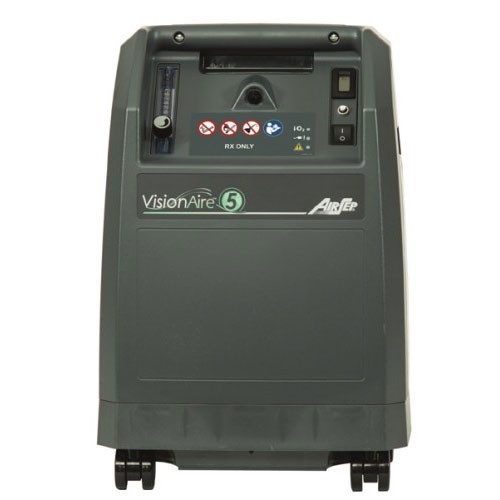
- Brand
- AirSep
- Category
- 5 LPM
₹54,999₹80,640
Indicative pricing based on market intelligence. Varies by dealer, city, bundle, and period — confirm with a local authorised seller before buying.
HHZ SCORE 8.0/10
EDITORIAL PICK
Oxymed Mini (5L) Oxygen Concentrator
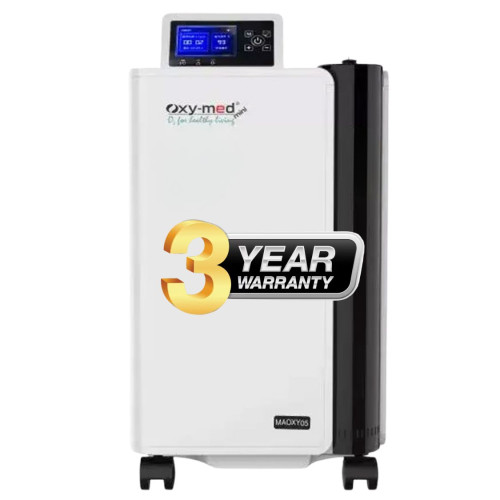
- Brand
- Oxymed
- Category
- 5 LPM
₹35,400₹59,900
Indicative pricing based on market intelligence. Varies by dealer, city, bundle, and period — confirm with a local authorised seller before buying.
HHZ SCORE 7.2/10
Specifications compared
| Specification | Airsep Visionaire 5 | Oxymed Mini (5L) Oxygen Concentrator |
|---|---|---|
| Overview | ||
| Brand | AirSep | Oxymed |
| Category | 5 LPM | 5 LPM |
| Price | ₹54,999.00 | ₹35,400.00 |
| MRP | 80,640.00 | 59,900.00 |
| Stock | In Stock | In Stock |
| Key features | ||
| Purity | 90-96% | 90-96% |
| Type | Stationary | Home Stationary |
| Continuous Flow | 0.5-5LPM | 1-5LPM |
| Weight | 13.6kg | 13.9kg |
| Oxygen Purity Indicator (OPI) | Yes | Yes |
| Power consumption | 290watts | 390watts |
| Technical details | ||
| Purity | 90-96% | 90-96% |
| Type | Stationary | Home Stationary |
| Continuous Flow | 0.5-5LPM | 1-5LPM |
| Weight | 13.6kg | 13.9kg |
| Oxygen Purity Indicator (OPI) | Yes | Yes |
| Power consumption | 290watts | 390watts |
| Sound level | 45db | 45db |
| Dimensions | 20.8H x 14.1W x 11.5Dinch | 20.27H x 12.36W x 9.4Dinch |
| Operating altitude | 10000feet | 7500feet |
| Outlet pressure | 8psi | 10psi |
| Additional details | ||
| Oxygen Purity % Analyzer | — | Yes |
| Loss of Power Alarm | Yes | Yes |
| System Malfunction Alarm | Yes | Yes |
| No Flow Alarm | Yes | Yes |
| Indian Voltage Model | Yes | Yes |
| Company Headquarters | USA | India |
| US FDA Approved | Yes | — |
| CE Certified | Yes | — |
Analysis
The matchup
The Airsep Visionaire 5 and the Oxymed Mini 5 LPM sit at opposite ends of the Indian 5 LPM stationary market — the Visionaire is a US-origin, FDA-approved unit positioned on efficiency and clinical pedigree, while the Oxymed Mini is an Indian-origin, service-network-led unit positioned on price, accessibility, and post-sale support. Both run at 0.5–5 LPM continuous flow (Visionaire) or 1–5 LPM continuous flow (Oxymed Mini), both publish 90–96% purity, and both ship as Indian Voltage Models. The interesting question is not which one is “better” in the abstract — both meet the clinical requirement of a long-term home prescription — but which one is the better fit for a given Indian household, given a roughly ₹20,000 price gap between indicative retail on the Visionaire (₹54,999) and indicative retail on the Oxymed Mini (₹35,400). Our verdict: the Visionaire has the stronger spec sheet on the dimensions that cost money to get right, but the Oxymed Mini wins on the practical dimensions that determine whether a machine actually serves a patient well in year two and year three.
At-a-glance spec differences
- Price (indicative retail): Visionaire ₹54,999 vs Oxymed Mini ₹35,400 — a roughly ₹19,600 gap, or 55% more for the Airsep unit
- Power draw (published): Visionaire 290 W vs Oxymed Mini 390 W — the Visionaire is 26% more efficient at full flow, a cumulative electricity gap of roughly ₹650 per month of 24x7 operation at ₹9/kWh tariff
- Altitude envelope (published): Visionaire 10,000 ft vs Oxymed Mini 7,500 ft — a 2,500 ft gap that matters for buyers in Himachal and Uttarakhand hill stations
- Weight (published): Visionaire 13.6 kg vs Oxymed Mini 13.9 kg — effectively identical; both sit in the lightest tier of 5 LPM stationaries
- Sound (published): Both rated 45 dB — below the 50 dB threshold that becomes disruptive at bedside placement
- Analyzer vs indicator: Oxymed Mini publishes an Oxygen Purity % Analyzer that shows real-time purity; the Visionaire publishes only an Oxygen Purity Indicator (a below-threshold warning light)
- Certifications: Visionaire US FDA approved and CE certified; Oxymed Mini CDSCO registered only (no CE or US FDA on record)
- Flow minimum: Visionaire 0.5 LPM, Oxymed Mini 1 LPM — the lower minimum matters for paediatric titration
Where the Airsep Visionaire 5 wins
Power draw is the cleanest long-term advantage. At 290 W published, the Visionaire is 26% more efficient than the Oxymed Mini’s 390 W at full flow. For a patient on a 24x7 prescription, that difference compounds: at a ₹9/kWh commercial tariff, the Visionaire runs to roughly ₹1,880/month while the Oxymed Mini runs to roughly ₹2,528/month — a gap of ₹650 a month. Over three years that is ₹23,400 in electricity, which eats roughly 30% of the upfront price gap. On subsidised domestic tariffs the gap narrows but remains real. Buyers who intend to run the machine continuously, in homes without solar or battery backup, on urban commercial-rate connections, should factor this in.
Altitude envelope is the cleanest geographic advantage. The Visionaire’s 10,000 ft published rating opens hill-station destinations that the Oxymed Mini’s 7,500 ft rating closes. Nainital (6,800 ft), Shimla (7,100 ft), Ooty (7,300 ft) sit inside both envelopes. But Auli (8,530 ft), Kaza (11,980 ft), Dharamshala-to-McLeodganj routes (6,800 ft up), Chail (7,700 ft), and any high-altitude Leh or Sikkim placement only work inside the Visionaire’s envelope. For a buyer in Manali or Dehradun planning a seasonal hill-station family stay, this matters. For most plains buyers in Chennai, Bangalore, Mumbai, Pune, Hyderabad, Delhi-NCR it is irrelevant.
Certifications carry institutional weight. The Visionaire is US FDA approved and CE certified; the Oxymed Mini is CDSCO registered only, with no CE or US FDA on record. For buyers whose prescribing physicians specify FDA-approved equipment, for hospital-discharge handoffs where the ward rental fleet is FDA-only, and for buyers who assign trust to the FDA or CE mark as a general quality proxy, this closes the question quickly. CDSCO registration is the Indian domestic gate and is what the Oxymed clears; CE and FDA apply to export, travel, and certain institutional procurement, and only the Visionaire carries them.
Flow range starts lower. The Visionaire’s 0.5 LPM minimum is a full step below the Oxymed Mini’s 1 LPM minimum. For paediatric prescriptions and for low-flow sleep-titration adult prescriptions, a machine that can actually deliver the prescribed rate without approximation is the required choice.
Where the Oxymed Mini 5 LPM wins
Price is the single biggest real-world advantage. At ₹35,400 indicative retail vs ₹54,999 on the Visionaire, the Oxymed Mini leaves roughly ₹19,600 on the table — enough to buy a Yuwell YX-102 backup cylinder kit, a pulse oximeter, an extra humidifier bottle, two spare cannula sets, and still have change. For first-time oxygen households making a capital purchase rather than renting, that optionality is load-bearing.
Service network is the other big real-world advantage. Oxymed publishes a 50-city installation footprint with a named dealer density that exceeds what Airsep/CAIRE maintains in India. When a 5 LPM stationary fails at year two, the question is not “is it a good machine” but “how quickly does a technician arrive.” In tier-2 and tier-3 Indian cities — Nashik, Indore, Raipur, Guwahati, Madurai, Trichy, Vijayawada — Oxymed has an answer. Airsep’s support path runs through a smaller network and typically longer dispatch times outside metros. The three-year published warranty on the Oxymed Mini is actionable locally; the Visionaire’s is not always.
The Oxygen Purity % Analyzer is better than the Visionaire’s Indicator. Both machines publish OPI; only the Oxymed Mini publishes a real-time numerical Oxygen Purity % Analyzer. For caregivers doing any monitoring at home — which, informally, most do — a number on the screen beats a threshold light. The Visionaire tells you “something is wrong”; the Oxymed Mini tells you “purity is 94%, trending down from 95% yesterday.” That continuous data is useful both for early-warning of sieve-bed degradation and for reassurance on good days.
Included accessories are better. The Oxymed Mini ships with a humidifier bottle, nasal cannula, nebulizer kit, additional filter set, and power cable. The Visionaire ships with humidifier, cannula, and manual only. At list price the Mini’s included accessories are worth ₹2,500–3,500, which widens the effective price gap.
Indian-market context
On a 230 V / 50 Hz domestic Indian supply, both machines run on the published Indian Voltage Model — no step-down transformer, no stabiliser strictly required though advisable in most metros and mandatory in tier-2 cities where voltage sags are routine. Outlet pressure is 8 psi on the Visionaire and 10 psi on the Oxymed Mini — both adequate for standard 7-foot cannula runs; the Mini’s higher pressure gives slightly more headroom for cannula extensions though neither is suitable for long-haul tubing without pressure loss.
Both ship as stationary home units, not portable, and both are typical 13–14 kg trolley-chassis units that move between rooms but do not travel in cars or on flights. Neither is FAA approved, so neither is a candidate for domestic air travel oxygen.
On dealer channel vs online channel: the Oxymed Mini is broadly available through offline medical-equipment dealer channels in all Indian metros and most tier-2 cities, often at prices close to or below online indicative retail once a local dealer margin is negotiated. The Visionaire is primarily an online purchase channel in India; offline dealer availability is thinner and offline prices typically run 5–10% above online indicative retail. Hospital rental fleets in tier-1 cities carry both brands; Tier-2 rental fleets are dominated by Oxymed, Philips, and DeVilbiss with Airsep appearing less frequently.
GST on Class B medical devices is 12% and is typically included in listed prices; home installation, first-service visit, and humidifier bottle are typically included in both purchase paths. Extended warranty beyond the standard 3-year manufacturer warranty is available from Oxymed at a nominal fee; it is harder to obtain for the Visionaire through Airsep India directly.
A third option: Home Medix HM-KV
The Home Medix HM-KV sits between these two buying positions. It gives a plains-city household a 13 kg chassis, field-verified sound at or below 40 dB, live purity display, full alarms, integrated nebulization, and a 3-year / 10,000-hour warranty without moving to the Visionaire’s imported-price tier. That makes it the stronger bedside-value alternative when quiet operation matters more than the Visionaire’s altitude and certification advantages.
Oxymed remains the safer operational choice wherever its local authorised-service coverage is stronger. Buyers considering this third route should read the dedicated HM-KV vs Oxymed Mini comparison and confirm which company can service the patient’s pincode before paying.
Verdict
Our recommendation is the Oxymed Mini 5 LPM for the majority of Indian buyers — specifically, for plains-city households, first-time oxygen buyers, and households where the prescribing physician has not specified FDA-approved equipment. The ₹19,600 price advantage, the 50-city service footprint, the real-time Oxygen Purity Analyzer, and the fuller accessory kit together outweigh the Visionaire’s edges on efficiency and altitude for typical Indian use. Over a three-year horizon, the Mini’s lower upfront cost buys more than the Visionaire’s lower running cost saves, and its service network is the difference between a working machine and a paperweight in year two.
Buy the Airsep Visionaire 5 instead if any of three conditions apply. First, if the household is sited above 7,500 ft or plans extended hill-station stays in the 7,500–10,000 ft envelope — the Mini is not rated for that altitude band and the Visionaire is. Second, if the prescribing physician has specified FDA-approved equipment — the institutional signal closes the question. Third, if the patient is paediatric or the prescription calls for any flow below 1 LPM — the Visionaire’s 0.5 LPM minimum is required and the Mini’s 1 LPM minimum is not adequate.
For the 24x7-running, commercial-tariff, multi-year case where running cost matters more than purchase price, the math still tilts to the Visionaire by roughly ₹3,800 over three years — but this narrow window is where service-network risk bites hardest, and a service-gated Visionaire failing in month 30 with no local technician is a materially worse outcome than an Oxymed Mini running a touch hotter but serviceable in two days. We only recommend the Visionaire on electricity math for metros (Mumbai, Delhi-NCR, Chennai, Bangalore) where Airsep authorised service is viable.
The tie-breaker for ambiguous cases — mid-altitude, plains-adjacent hill towns like Dehradun (2,200 ft) or Kodaikanal (7,200 ft), general-medicine adult prescriptions in the 2–4 LPM range — is service network, and Oxymed wins that. B gets the pick.