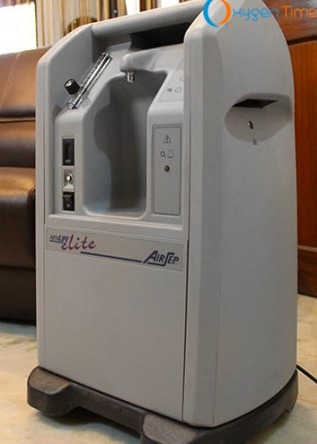
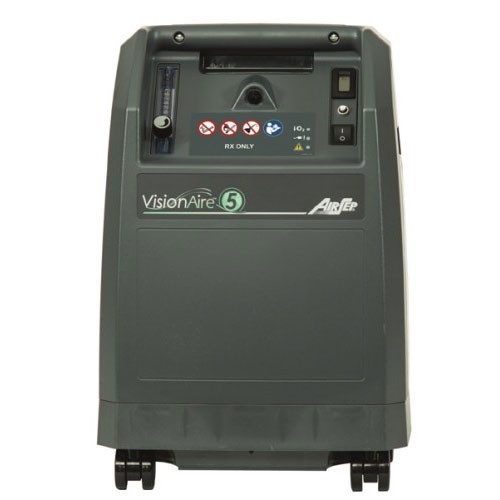
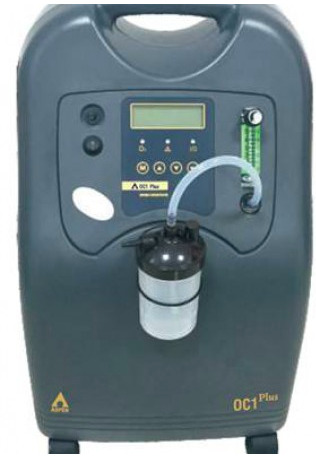
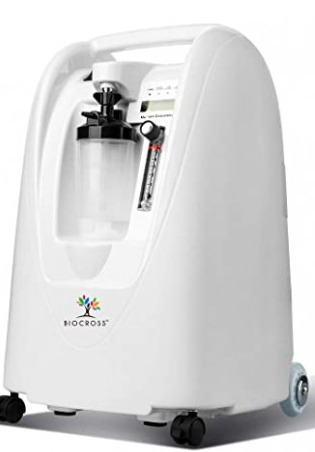
DeVilbiss 5 LPM
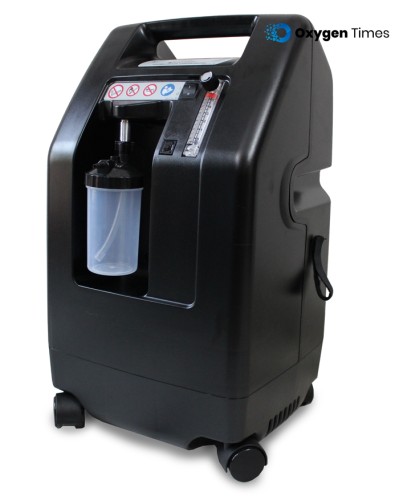
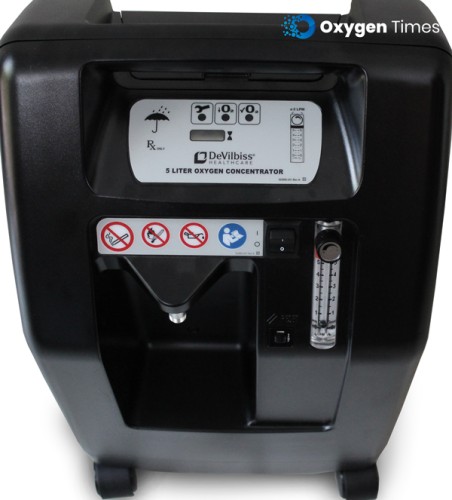
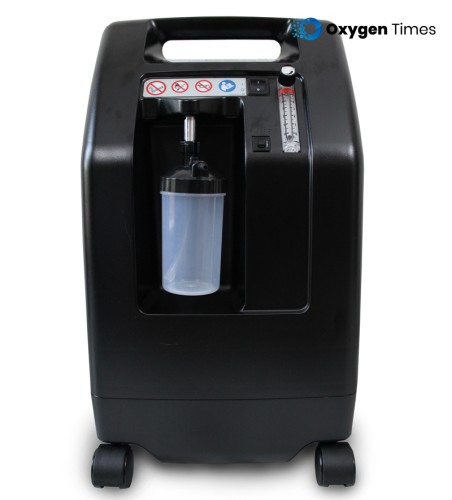
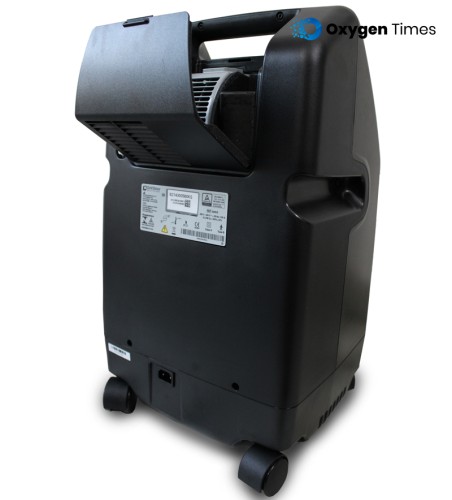
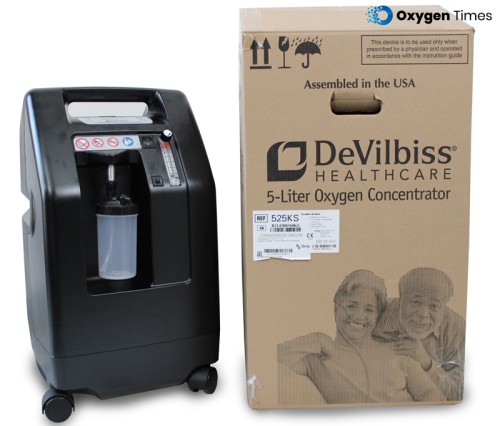
Key features
- Purity 90-96%
- Type Home Stationary
- Continuous Flow 1-5LPM
- Weight 16.3kg
- Oxygen Purity Indicator (OPI) Yes
- Power consumption 310watts
Specifications
| Purity | 90-96% |
|---|---|
| Type | Home Stationary |
| Continuous Flow | 1-5LPM |
| Weight | 16.3kg |
| Oxygen Purity Indicator (OPI) | Yes |
| Power consumption | 310watts |
| Sound level | 48db |
| Dimensions | 24.4H x 13.4W x 12Dinch |
| Operating altitude | 13123feet |
| Outlet pressure | 8.5psi |
| Loss of Power Alarm | Yes |
|---|---|
| System Malfunction Alarm | Yes |
| No Flow Alarm | Yes |
| Indian Voltage Model | Yes |
| Company Headquarters | USA |
| US FDA Approved | Yes |
| CE Certified | Yes |
Pros and cons
PROS
- Operating altitude of 13,123 ft is the highest in this review by a wide margin — the only 5 LPM suitable for Leh, Spiti, upper Himachal, Darjeeling
- Street price of Rs. 45,984 is the lowest among Western-brand 5 LPM concentrators here — 20% below the Nuvo Lite
- Full alarm set including system-malfunction and no-flow, plus OPI, plus turn-down technology for power efficiency at low flows
- Outlet pressure of 8.5 psi is the highest among 5 LPM units in this review, supports short transfill setups and long tubing
CONS
- Weight of 16.3 kg is 2.7 kg heavier than the Nuvo Lite, enough to change single-person lift ergonomics
- Sound level of 48 dB is 8 dB louder than the Nuvo Lite's 40 dB — not a bedroom-shared unit for light sleepers
- Auxiliary oxygen port for cylinder transfill is FDA-cleared but not covered by Indian warranty terms for transfill use
The Drive DeVilbiss Compact 525 is the oxygen concentrator that should be the default buy for any Indian household above 2,000 metres, and the second-best buy for plains households willing to trade some bedroom quiet for a lower purchase price and a substantially wider operational envelope. It is the only machine in this 5 LPM group with a published altitude rating that actually covers the Indian hill-station map, and at Rs. 45,984 street it is also the cheapest Western-brand concentrator here.
The Compact 525 has been in the Indian market for longer than the Nuvo Lite, and in the 2020-2021 pandemic demand surge it was the unit most frequently deployed for step-down and home-discharge cases because its altitude and outlet pressure headroom made it the safest generic recommendation. Post-pandemic, stock normalised and the 525 has settled into its niche — hill-station LTOT and value-tier plains LTOT.
What the specs mean in practice
Operating altitude: 13,123 ft. This is the number that sells the machine. The Nuvo Lite caps at 7,500 ft, the Nuvo Standard at 8,000 ft, the Invacare Perfect O2 V at 8,000 ft, the Biocross 5 LPM at 7,500 ft. The DeVilbiss 525 at 13,123 ft is alone at the top and is the only 5 LPM that works without purity degradation in Leh (11,500 ft), Lachung (9,000 ft), Spiti’s Kaza (11,980 ft), Tawang (10,000 ft), and the upper reaches of Kinnaur and Lahaul. This is not a marketing margin — the DeVilbiss brochure quotes published purity maintained to 13,123 ft, versus competing units that list the altitude as “operating range” without purity guarantee.
Weight: 16.3 kg. 2.7 kg heavier than the Nuvo Lite. For a single-person lift this is the difference between one-handed pivot on castors and a two-handed squat-lift. For a stationary install where the unit does not move, irrelevant. For an Indian multi-room flat where the unit gets rolled between a daytime spot and a bedroom spot, the Nuvo Lite’s ergonomics are better; the 525 still works but requires a flatter floor profile.
Power: 310 W. Only 20 W above the Nuvo Lite. At 14 h/day that is Rs. 1,015/month on Mumbai rates — within Rs. 65 of the Nuvo Lite’s Rs. 950. DeVilbiss specifies “turn-down technology” which throttles compressor output at lower flow settings, so sustained operation at 1-2 LPM actually draws closer to 240-260 W in practice (manufacturer claim). At the 5 LPM ceiling, the full 310 W is drawn.
Sound: 48 dB. 8 dB noisier than the Nuvo Lite. This is the 525’s central weakness for bedroom-shared use cases. 48 dB at the machine becomes roughly 42-44 dB at a pillow 3 metres away in a typical Indian bedroom — enough to register as background noise for a light sleeper, acceptable for someone already habituated to ceiling-fan hum.
Outlet pressure: 8.5 psi. Highest in the 5 LPM class. Supports 50-ft tubing runs without measurable flow loss. The auxiliary oxygen port — a 525-specific feature — allows connection of an FDA-cleared cylinder-filling accessory, so home transfill of small walkabout cylinders is possible. This is almost never covered by Indian dealer warranties for transfill use (check the warranty fine print), but the physical capability is there.
Full alarm set plus OPI. Loss of power, system malfunction, no-flow, and oxygen purity indicator — all listed on the manufacturer sheet. This is the full home-safety loadout and matches what clinicians expect from a reference 5 LPM concentrator.
Dimensions: 24.4H x 13.4W x 12D inch. Slightly taller and narrower footprint than the Nuvo Lite (23H x 14W x 9D), marginally less kitchen-counter-stable. On castors on hard flooring it is fine.
Who should buy it
Any Indian household above 7,500 ft altitude with a 1-5 LPM prescription. There is no real alternative — the 525 is the unit that works.
Plains buyers on a tight capital budget who would otherwise be looking at Chinese-brand 5 LPMs in the Rs. 25,000-35,000 range. The 525’s Rs. 45,984 price is only a 20% premium over the best Chinese unit while delivering a full Western brand service pipeline, 3-year warranty, FDA+CE certification, and OPI/alarm compliance.
Patients using long tubing — a 40-50 ft run from a central machine location to a bedside — where the 5.5 psi of the Nuvo Lite introduces measurable flow loss at the delivered end.
Families who plan to do occasional home cylinder transfill (where the Indian regulatory situation allows) — the 525’s 8.5 psi outlet and auxiliary port are the correct infrastructure for that use case.
Who shouldn’t
Patients sleeping in the same bedroom as the machine who are sensitive to 48 dB ambient noise. The Nuvo Lite at 40 dB is the machine you want.
Neonatal and paediatric cases needing flow below 0.5 LPM. The 525 bottoms at 0.5 LPM; the Nuvo Lite goes down to 0.125 LPM.
Buyers who prioritise weight over altitude — the Nuvo Lite’s 13.6 kg is what they want. If you are never going above 6,000 ft, the altitude-over-weight trade favours the Nuvo Lite.
Alternatives, head-to-head
DeVilbiss 525 vs Nidek Nuvo Lite. Covered in detail above. The 525 wins on altitude (13,123 vs 7,500 ft) and on price (Rs. 45,984 vs Rs. 57,599) and on outlet pressure (8.5 vs 5.5 psi). The Nuvo Lite wins on weight (13.6 vs 16.3 kg) and on noise (40 vs 48 dB). For hill-station use the 525 is the correct buy. For plains bedroom-quiet use the Nuvo Lite is the correct buy. For plains with price sensitivity the 525 is the correct buy. The decision matrix is clean.
DeVilbiss 525 vs Invacare Perfect O2 V. The Invacare at Rs. 59,520 is 1.3 kg heavier (17.6 vs 16.3 kg), 5 dB quieter (43 vs 48 dB), draws 15 W more power (325 vs 310 W), and caps at 8,000 ft altitude (vs 13,123 ft). The Perfect O2 V published sheet does not show FDA or CE certification on the Indian configuration, which is a real concern for institutional buyers and a quieter concern for home buyers. The 525 is Rs. 13,500 cheaper and far superior on altitude; the Invacare only beats it on noise. Unless the buyer specifically needs the 43 dB signature, the 525 is the correct choice.
DeVilbiss 525 vs Biocross 5 LPM. The Biocross at Rs. 36,480 is roughly Rs. 9,500 cheaper, close on noise (48 dB vs 48 dB), close on weight (16 vs 16.3 kg), and capped at 7,500 ft altitude. The Biocross published sheet shows no FDA, no CE, no OPI, and no alarm specs. For any patient where safety and paperwork matter, the 525 is the correct buy at the Rs. 9,500 premium. For a cost-only comparison with buyers accepting the certification gap, the Biocross saves money — but we would not recommend it for long-term use.
Indian-market considerations
Voltage: 220V/50Hz Indian configuration stated. A 500 VA servo stabiliser handles the 310 W load comfortably — budget Rs. 2,800-3,500 from a Servokon, V-Guard, or Microtek retailer. For hill-station installations in Himachal or Ladakh where grid quality is notably worse than plains, a 1 kVA servo stabiliser is the sensible upsize at Rs. 4,500-5,500.
UPS/inverter: 310 W is well within home inverter range. A 1 kVA sine-wave inverter with 150 Ah tubular battery gives approximately 45 minutes full-load backup, longer when turn-down technology reduces draw at sub-5 LPM settings. For Leh and Spiti, where power cuts can be multi-hour, a 2 kVA / 200 Ah system is more appropriate and lands at Rs. 30,000-40,000 installed.
CDSCO: US FDA and CE marks stated. Drive DeVilbiss India holds import registrations that should be verifiable with the dealer’s importer letter — institutional procurement teams should confirm before order.
Altitude: 13,123 ft published cap. Covers the entire Indian inhabited altitude range.
Service: Drive DeVilbiss India runs through authorised regional dealers in Delhi, Mumbai, Chandigarh, Kolkata, Bengaluru, Chennai, Hyderabad, and Pune. Hill-station service is thinner — in Shimla, Dehradun, and Srinagar, service requires a 200-400 km machine transport to the nearest full-service centre, which practically means planning for a loaner during major service events.
Warranty: 3 years on the Indian configuration — confirm with the dealer’s warranty card. Matches the Nuvo Lite’s 3-year term and is a real differentiator versus the 1-year warranties on high-flow Nidek units. Over the 3-year warranty period the implied service-cost insurance is substantial — for a 525 that needs a compressor-related repair in year 2, the out-of-warranty cost would be Rs. 15,000-22,000, which the warranty covers at no additional cost.
Hill-station service logistics: For buyers in Shimla, Manali, Leh, Gangtok, or Darjeeling, the nearest full DeVilbiss service centre is typically 200-400 km away (Chandigarh for Himachal, Delhi for Leh, Siliguri for Darjeeling, Guwahati for Gangtok). During service events, options are (a) courier the unit to the service centre with a 10-14 day round-trip downtime, or (b) arrange an authorised dealer visit with pre-approved parts. Plan for a backup rental cylinder during this window — most DeVilbiss dealers in hill-station regions maintain cylinder loaner programmes specifically for this purpose.
Turn-down technology operational note: The 525’s turn-down feature reduces compressor load at lower flow settings, delivering measurable electricity savings for patients whose prescription varies across the day. A patient on 1 LPM overnight and 3 LPM during exertion will see perhaps 20-25% less electricity consumption versus a non-turn-down 5 LPM machine running constant-rate compressor. Over multi-year operation this is Rs. 3,000-6,000 in electricity savings that is specifically a 525 advantage.
Auxiliary oxygen port caution: The 525’s auxiliary port is FDA-cleared for integration with specific cylinder-filling accessories in US markets. In India, cylinder transfill at home sits in a regulatory grey area — some Indian states have explicit regulations prohibiting home cylinder filling by non-licensed operators, others are silent. Indian dealer warranties typically exclude damage from transfill use. For Indian buyers, the auxiliary port is best treated as a useful physical feature for diagnostics and accessories rather than a transfill endorsement. Consult the dealer’s warranty fine print before planning transfill use.
Filter replacement schedule: The 525 uses a coarse intake foam filter (replaced every 2-3 months, Rs. 100-200 each) and a HEPA bacteria filter (replaced annually, Rs. 400-700). Neither is a major cost item. Replacement filter stock is widely available at DeVilbiss-authorised dealers and at generic respiratory-supply shops in major cities.
Compressor lifespan expectations: The 525’s compressor is rated for approximately 25,000-30,000 operating hours before requiring major service. At 14 h/day this is 5-6 years, at 20 h/day 3-4 years. The 3-year warranty covers the first third of this lifespan; beyond that, service economics depend on replacement-parts availability and in-city dealer relationships.
Cold-weather operation: In Leh, Spiti, and upper Himachal winter conditions (ambient -10°C to -25°C indoors without heating), concentrator compressors can experience cold-start issues. The 525 tolerates this better than most, but buyers in these regions should plan for indoor heating of the installation space or for a sheltered utility-room location where ambient stays above 5-10°C during machine operation.
Verdict
Best DeVilbiss 525 alternatives in India
For a plains household, compare the Home Medix HM-KV when lower published sound, lower weight, lower power draw, live purity display, and value matter; local Home Medix service is the deciding condition. Nidek Nuvo Lite is the quiet imported alternative, while AirSep VisionAire 5 is the efficiency-and-altitude comparison. Stay with DeVilbiss for a high-altitude address only after the exact operating ceiling and service logistics are confirmed.
The DeVilbiss Compact 525 is the most versatile 5 LPM concentrator in the Indian market and the only one that genuinely works above 2,000 metres altitude. At Rs. 45,984 it is also the cheapest Western-brand option, and the 3-year Indian warranty is the cleanest paperwork in this category. The penalties — 48 dB noise, 16.3 kg weight, an extra 20 W power — are real but small, and none of them is a deal-breaker for most home buyers. For hill-station households, this is the unit. For plains households on a budget, this is the unit. For plains households where bedroom quiet is paramount, the Nuvo Lite is the unit. That is the only scenario where the 525 loses. Score 8.0 — the highest in this review of 5 LPM units, driven by altitude, price, and paperwork in that order.