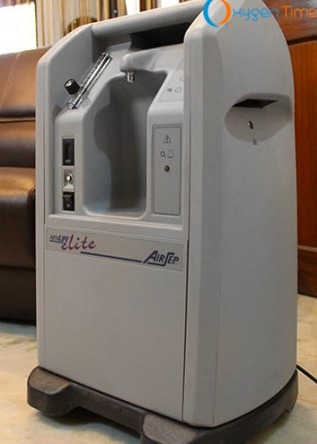
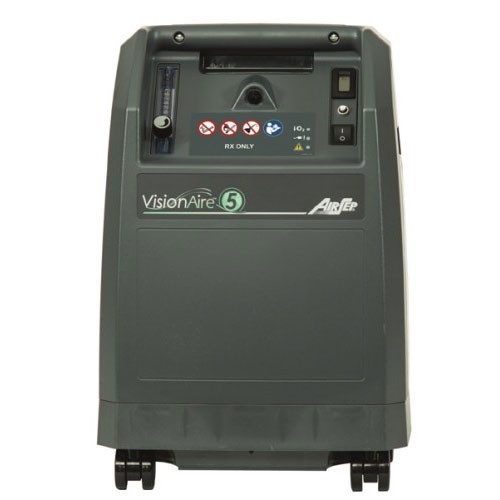
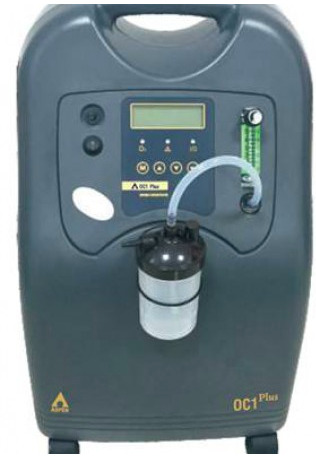
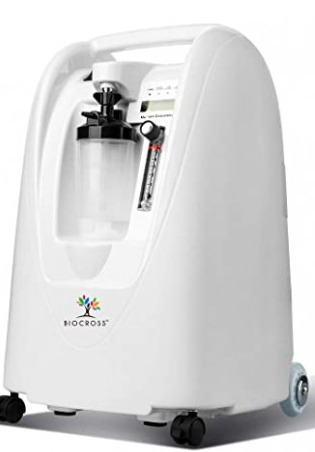
Nareena 5 LPM Single Flow
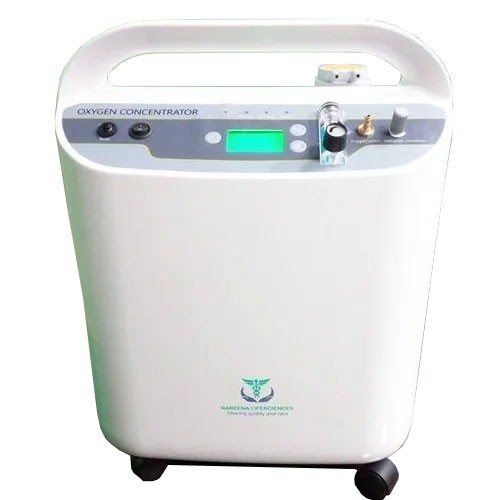
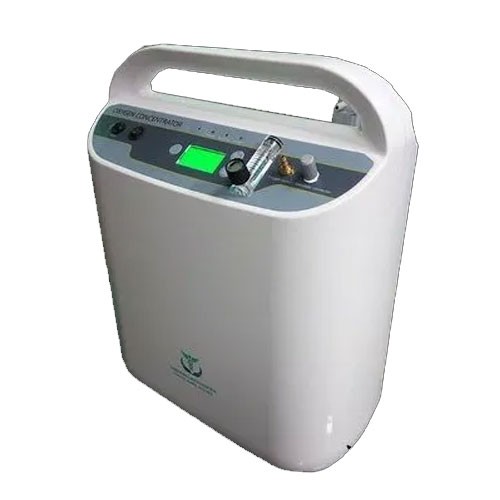
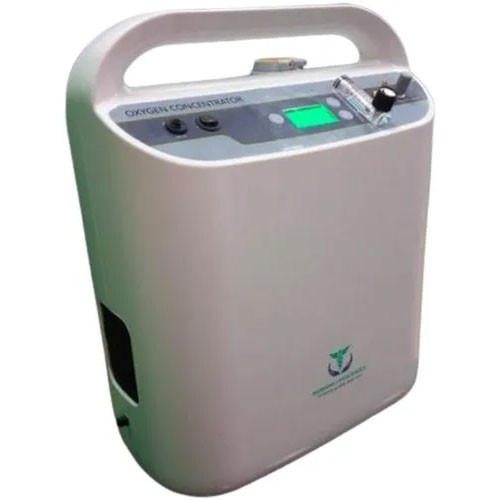
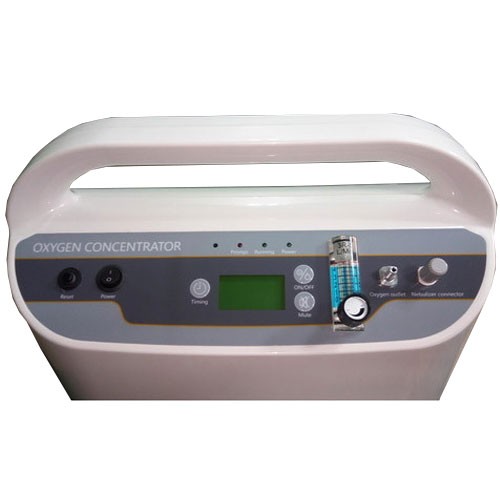
Key features
- Purity 90-96%
- Type Home Stationary
- Continuous Flow 1-5LPM
- Weight 15kg
- Oxygen Purity Indicator (OPI) Yes
- Power consumption 550watts
Specifications
| Purity | 90-96% |
|---|---|
| Type | Home Stationary |
| Continuous Flow | 1-5LPM |
| Weight | 15kg |
| Oxygen Purity Indicator (OPI) | Yes |
| Power consumption | 550watts |
| Sound level | 50db |
| Dimensions | 23.6H x 14.7W x 14.3Dinch |
| Loss of Power Alarm | Yes |
|---|---|
| Indian Voltage Model | Yes |
| Company Headquarters | India |
Pros and cons
PROS
- Oxygen purity indicator confirmed — essential for long-term LTOT use
- 15 kg chassis is light for a 5 LPM stationary, easy to reposition
- 90-96% purity range and 4.2-star rating across 26 customer reviews on the listing
- Indian headquarters per the spec sheet, with 1-year warranty mentioned in product description
- ₹35,510 current price vs ₹67,200 MRP — deep discount
CONS
- 550 W power draw is high for the 5 LPM class (Nidek at 290 W, Philips at 350 W)
- 50 dB published noise level — not bedroom-quiet
- Only loss-of-power alarm confirmed; no malfunction or no-flow alarms on brochure
- No CE, FDA, CDSCO markers indicated
Nareena Lifesciences markets the 5 LPM Single Flow as an Indian-origin home concentrator, and the spec sheet backs that claim with Indian headquarters listed, Indian-voltage model confirmed, and 26 accumulated customer reviews averaging 4.2 stars on the product listing. At ₹35,510 current price (against a ₹67,200 MRP — a 47% discount), it sits in the middle of the sub-₹40,000 Indian-brand tier. The spec sheet reports 1–5 LPM continuous flow, 90–96% purity, OPI present, 15 kg chassis, 550 W power draw, and 50 dB sound. On features it is one of the better Indian-brand options. On power efficiency and noise it lags.
What the specs mean
The Nareena 5 LPM is built around the same PSA molecular-sieve architecture as every 5 LPM stationary concentrator — the differences are in build quality, tuning, and auxiliary features. At 1–5 LPM continuous flow with 90–96% purity the machine delivers within the medical-therapeutic envelope. The 96% upper purity bound is at the high end of the category, matching Dr Diaz and Oxyflow and beating the typical 90–95% range from most Chinese-OEM competitors.
The key positive: oxygen purity indicator is confirmed present. This single spec puts Nareena ahead of Home Medix, Dr Trust, Jumao, Biocross, Keyhub, Dynmed, S.Cure, Veayva, Aspen, Vandelay, and Healthgenie in the sub-₹40,000 bracket — almost every budget Chinese-OEM-under-Indian-label competitor omits the OPI. For a patient on LTOT, the OPI is the difference between knowing the machine is failing in month 18 versus discovering it in an emergency in month 24. Nareena delivering this at ₹35,510 is a meaningful feature-for-price win.
The product description — scraped from the listing page — explicitly documents that the OPI lights up when oxygen purity falls below 86%. That is the correct threshold for patient-facing alerts and matches industry practice.
The 15 kg chassis is genuinely light for a 5 LPM stationary. Philips EverFlo is 31 kg and Aspen is 21 kg. Home Medix HM-KV is lighter at 13 kg, while Vandelay (14.5 kg) and Dr Trust (15 kg) sit in the same lightweight band. Nareena at 15 kg with a proper compressor is a good packaging trade-off. One adult can move it between rooms without help.
Where Nareena lags is power efficiency. The 550 W draw is on the high end for a 5 LPM. Philips EverFlo is 350 W, Nidek Nuvo Lite is 290 W, Dr Diaz is 285 W. Nareena at 550 W consumes roughly 55-90% more electricity than the best-in-class 5 LPM. Over a year of 16-hour daily operation at ₹9/kWh this works out to roughly ₹3,000/month vs ₹1,500/month for a Nidek. Over three years the difference is ₹54,000 — meaningfully higher than the savings on the capital cost of the machine. For buyers on long-term LTOT, this is a real argument for paying more upfront.
The 50 dB sound level is competitive with the class mean but louder than Philips (45 dB) or Nidek (40 dB). Not bedroom-silent.
Outlet pressure is not published for the single-flow variant. Typical 5 LPM runs 5-8 psi; assume this.
Dimensions at 23.6H x 14.7W x 14.3D inches are standard. The unit has wheels (implied by the “home stationary” category) but this is not explicitly documented.
Alarm suite: only loss-of-power is confirmed. The product description mentions “Alarms: Loss of power” explicitly, with no other alarms listed. This is a weaker alarm suite than the Dr Diaz 5 LPM at similar money (Dr Diaz has three alarms). For overnight unattended operation, an additional no-flow alarm is clinically valuable.
Certifications: no CE, no FDA, no CDSCO indicated. Confirm CDSCO status with dealer for insurance purposes.
Warranty: the product description states 1 year. Standard for the category; ask the dealer about extended warranty at purchase.
Who should buy it
Nareena 5 LPM is a solid choice for Indian buyers who want a genuinely Indian-origin 5 LPM with an OPI and a moderate price tag. The 4.2-star rating across 26 accumulated customer reviews on the product listing is real social proof for the Indian home-oxygen market — most sub-₹40,000 concentrators on the Indian market have zero public reviews or a handful of Amazon-style star clicks.
Specifically: home-use LTOT patients at 1-4 LPM where the machine will run years rather than months, post-discharge recovery users on 6-18 month horizons, and buyers in North/Northwest India where Nareena’s Haryana-based distribution is strongest. For hill-station use the operating-altitude is not published, so treat this as a plains/urban machine unless the dealer confirms otherwise.
The 15 kg chassis also makes this a reasonable pick for buyers who need to move the machine between rooms — from day-use in the living room to night-use in the bedroom — without a wheeled trolley.
Who shouldn’t
Long-term LTOT patients who run the machine 16+ hours daily: the 550 W power draw costs an extra ₹1,500-1,800 per month vs a Nidek. Over 3-5 years of daily use this is a significant amount of money; a Nidek Nuvo Lite pays back its higher capital cost in 2-3 years on electricity savings alone.
Patients who need insurance-reimbursement paperwork requiring CDSCO registration — verify directly.
Buyers in bedroom-shared homes who need low noise: 50 dB is too loud for same-room overnight use. Nidek Nuvo Lite or Philips EverFlo would be better.
Buyers in hill stations above ~2,500 m: no altitude rating. Use the Dr Diaz 5 LPM (12,000 ft rated) or confirm derating data with Nareena before deployment.
Head-to-head alternatives
Oxymed Mini 5 LPM (₹32,000-38,000). The direct Indian-brand competitor. Oxymed has Chennai-based assembly, a longer market history in Indian home oxygen, and a dealer network concentrated in South and West India. Spec comparison: Oxymed Mini has comparable weight (~15 kg), comparable noise (~48 dB), comparable purity range, usually includes OPI, and has a more complete alarm suite. Against Nareena, Oxymed is similarly priced but has stronger service reality in most metros. For South Indian buyers, Oxymed wins. For North Indian buyers, Nareena has better distribution.
Philips EverFlo 5 LPM (₹65,000-75,000). The international reference. 45 dB, 350 W, OPI, full alarms. Against Nareena, Philips is roughly 90-110% more expensive, heavier (31 kg), but materially better on noise, power efficiency, service network, and documented long-term reliability. Over 5+ years of ownership, Philips is the better total-cost-of-ownership buy. For 1-3 year time horizons, Nareena is the better price-performance buy.
Nidek Nuvo Lite 5 LPM (₹55,000-65,000). The Japanese compact. 40 dB, 290 W, OPI, full alarms, 14 kg. Against Nareena, Nidek is roughly 55-85% more expensive and is meaningfully better on noise, power efficiency, and weight. The Nidek’s lower power draw is worth ₹18,000/year in electricity over the Nareena at typical usage — that is a real recurring cost worth factoring in.
Indian-market considerations
Nareena Lifesciences is a Delhi/NCR-based company with primary distribution through medical-equipment dealers in North India. The dealer network is thinner in South and East India. For buyers outside North India, confirm specifically which local dealer will handle warranty claims before purchase, and ask about spare-parts lead time.
Warranty claim reality: Nareena’s 1-year warranty is standard, and the brand has enough market presence through 26 reviewed units on the source listing that the brand is clearly shipping product. The claim-handling infrastructure is dealer-dependent; ask the specific dealer about turnaround time.
CDSCO: not indicated on the brochure. The Nareena Lifesciences parent company has other CDSCO-registered medical devices, so the concentrator line may be covered, but confirm with the specific dealer or the manufacturer before counting on it for insurance.
Voltage: Indian voltage confirmed. A 500 VA-1 kVA stabiliser is sensible at 550 W continuous draw. Do not run without a stabiliser in Tier 2-3 cities.
Altitude: not listed. Verify before deploying above 1,800 m.
Spare parts: zeolite sieve replacement and compressor capacitor are the two most-replaced consumables on 5 LPM concentrators; ask the dealer about availability and price before committing.
Additional Nareena-specific considerations
The 4.2-star / 26-review social-proof context. Among Indian emerging-brand 5 LPM concentrators, accumulated customer review counts are typically 0-5. Nareena’s 26 reviews averaging 4.2 stars on the source listing is unusually robust. For comparison:
- Veayva 5 Litre: 0 reviews
- Dr Diaz 5 LPM: 0 reviews listed
- Jumao 5 LPM: 0 reviews
- S.Cure 5 LPM: 0 reviews
- Home Medix 5 LPM: 0 reviews
- Vandelay 5L: 0 reviews
Nareena’s 26-review baseline reflects meaningful unit volume moving through Indian distribution channels over time. The 4.2-star average is respectable but not glowing — consistent with a product that does what it says on the spec sheet without surprises, but doesn’t delight users in ways that drive 4.8-5.0 ratings.
Review-count is also a signal of product-market persistence. A brand with 26 reviews across a multi-year accumulation has been shipping continuously enough to accumulate that volume, which suggests the brand is not a fly-by-night importer. Review-less brands may be new, may be shipping very small quantities, or may be operating below the threshold of customer-review generation.
The 550 W power draw implications for LTOT. Nareena’s 550 W draw is the highest in the 5 LPM class we review. Let’s compute the 3-year electricity cost for comparison:
- Nareena 5 LPM at 550 W, 16 hrs/day, 365 days/year, ₹9/kWh = ₹28,909/year × 3 = ₹86,727
- Dr Diaz 5 LPM at 285 W under same conditions = ₹14,991/year × 3 = ₹44,973
- Nidek Nuvo Lite at 290 W = ₹15,255/year × 3 = ₹45,765
- Philips EverFlo at 350 W = ₹18,414/year × 3 = ₹55,242
Over 3 years, choosing Nareena vs Dr Diaz costs ₹41,754 more in electricity — which exceeds the capital cost of the Nareena machine itself (₹35,510). Choosing Nareena vs Nidek Nuvo Lite costs ₹40,962 more in electricity, which roughly offsets Nidek’s higher capital cost of ₹25K+.
Practical implication: for LTOT patients running 16+ hours daily, Nareena’s operating economics are significantly worse than most alternatives at similar or higher capital cost. The capital-cost saving vs Nidek (₹20-25K) is eaten by electricity in ~2-3 years.
The 15 kg chassis usability. At 15 kg, Nareena is in the sweet spot for one-person-lift 5 LPM concentrators. Light enough that a 60-65 kg adult can lift and reposition the machine without assistance. Heavy enough to provide adequate vibration damping for the 550 W compressor. Nareena ships with built-in wheels on the bottom of the chassis (implied by the stationary category though not explicitly documented in the brochure), which simplifies horizontal movement on hard floors.
The India-HQ reality for warranty claims. Nareena Lifesciences is India-headquartered per the brochure. The company is a Delhi/NCR-based medical-devices firm with other products in the respiratory and diagnostic space. This has practical implications:
- Warranty claims go through an Indian legal entity with Indian consumer-protection accountability
- Service technicians can be directly employed by Nareena in metro markets rather than dealer-network-dependent
- Spare parts are sourced through Indian distribution rather than direct-from-China channels
- Product updates and recalls communicate through Indian regulatory pathways
This does not mean the warranty experience is automatically good — it depends on Nareena’s specific operational execution — but the underlying commercial relationship is Indian-jurisdiction-governed, which is a material difference from China-HQ brands.
The 96% purity ceiling. Nareena’s 90-96% purity range is 1% above the standard 90-95% most competitors publish. This likely reflects:
- More aggressive molecular-sieve configuration (more sieve mass, longer PSA cycle time)
- Higher compressor output (consistent with the 550 W power draw)
- Tighter manufacturer QC standards for the purity spec
The 1% practical difference at the patient end (96% vs 95% delivered oxygen) is clinically negligible for most therapeutic applications, but the 96% ceiling does indicate the manufacturer has confidence in the machine’s molecular-sieve performance. For LTOT over years, higher purity headroom means the machine can lose 4-5% of its purity capacity over time and still deliver medically-adequate oxygen (90%+).
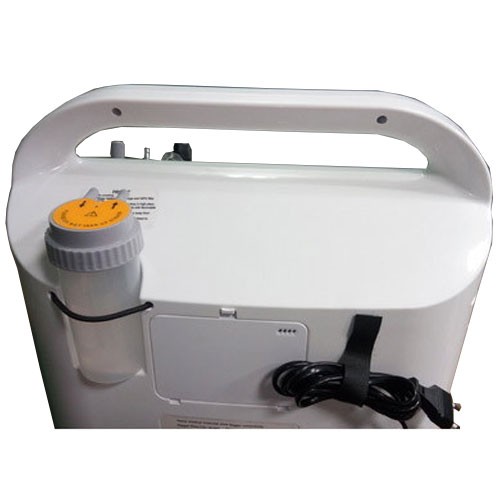
The bundled accessories. The product description mentions: Machine, Humidifier Bottle, Connector Tube, Extra HEPA & HEMA Filters, Dust Filter, Extra Fuse. The inclusion of “extra” filters and an extra fuse is a small but meaningful differentiator — most competitors ship only the primary filter set. This reduces the need for immediate accessory purchases and signals Nareena has thought about post-purchase consumables.
The OPI 86% threshold. The product description explicitly notes the OPI lights up when oxygen purity falls below 86%. This is standard industry practice and clinically appropriate — 86% is below therapeutic-range but above immediate-danger-range, giving the patient a few days to schedule service before the machine becomes non-therapeutic.
Distribution geography. Nareena’s dealer network is strongest in North India (Delhi NCR, Punjab, Haryana, UP, Rajasthan) and parts of Central India. Coverage is thinner in South India (Karnataka, Tamil Nadu, Kerala, Andhra Pradesh) where Oxymed has stronger presence, thinner in West India (Maharashtra, Gujarat), and thinner in East India (West Bengal, Odisha). For buyers outside Nareena’s distribution strength, verify the specific local dealer’s Nareena-service capability and spare-parts inventory before purchase.
The electricity-vs-capital decision framework. For buyers weighing Nareena against more efficient alternatives, the decision hinges on expected ownership duration:
- <18 months: capital cost dominates; Nareena is competitive
- 18-36 months: electricity cost is meaningful; Nareena is neutral to unfavourable
-
36 months: electricity cost dominates; Nareena is significantly unfavourable
For post-COVID recovery or short-term post-discharge use, Nareena is fine. For chronic LTOT on a confirmed multi-year prescription, a more efficient Japanese or Western import pays back its higher capital cost on electricity savings.
Verdict
Nareena 5 LPM Single Flow is one of the stronger Indian-brand 5 LPM options in the sub-₹40,000 tier. The OPI inclusion, the light 15 kg chassis, the 96% purity ceiling, and the genuine India-HQ positioning make it a credible product. The weaknesses — high 550 W power draw, only one alarm, no CDSCO marker, no altitude rating — are real and meaningful for LTOT use. For a 1-3 year home oxygen horizon on a patient not likely to escalate, Nareena is a solid buy at ₹35,510. For 3-5 year LTOT, either Philips EverFlo or Nidek Nuvo Lite will pay back their higher capital cost on electricity savings alone. For insurance-documented devices, verify CDSCO status before purchase. Score: 7.0/10.