BPL Oxy 5 Neo 5 LPM vs Philips Everflo 5 Liter Oxygen Concentrator
BPL Oxy 5 Neo 5 LPM
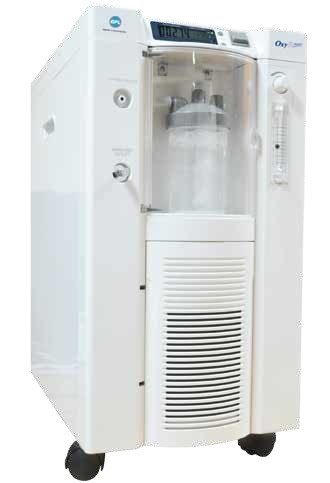
- Brand
- BPL
- Category
- 5 LPM
₹31,966.08₹62,400
Indicative pricing based on market intelligence. Varies by dealer, city, bundle, and period — confirm with a local authorised seller before buying.
HHZ SCORE 6.6/10
Philips Everflo 5 Liter Oxygen Concentrator
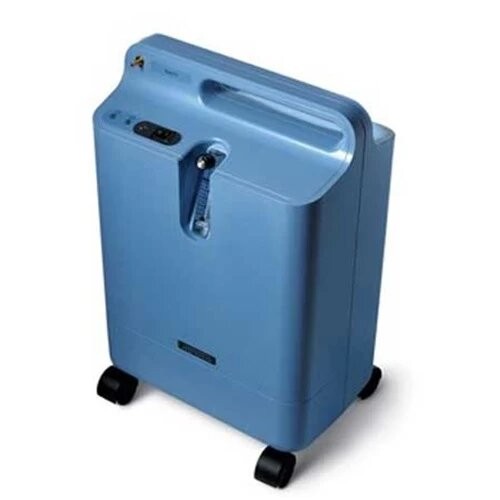
- Brand
- Philips Respironics
- Category
- 5 LPM
Discontinued
Indicative pricing based on market intelligence. Varies by dealer, city, bundle, and period — confirm with a local authorised seller before buying.
HHZ SCORE 8.2/10
Specifications compared
| Specification | BPL Oxy 5 Neo 5 LPM | Philips Everflo 5 Liter Oxygen Concentrator |
|---|---|---|
| Overview | ||
| Brand | BPL | Philips Respironics |
| Category | 5 LPM | 5 LPM |
| Price | ₹31,966.08 | — |
| MRP | 62,400.00 | — |
| Stock | In Stock | DISCONTINUED WORLDWIDE |
| Key features | ||
| Purity | 90-96% | 90-96% |
| Type | Home Stationary | Home Stationary |
| Continuous Flow | 1-5LPM | 1-5LPM |
| Weight | 25kg | 14kg |
| Oxygen Purity Indicator (OPI) | Yes | Yes |
| Power consumption | 400watts | 350watts |
| Technical details | ||
| Purity | 90-96% | 90-96% |
| Type | Home Stationary | Home Stationary |
| Continuous Flow | 1-5LPM | 1-5LPM |
| Weight | 25kg | 14kg |
| Oxygen Purity Indicator (OPI) | Yes | Yes |
| Power consumption | 400watts | 350watts |
| Sound level | 55db | 45db |
| Dimensions | 21.8H x 11.22W x 18.5Dinch | 23H x 15W x 9.5Dinch |
| Operating altitude | 6000feet | 7500feet |
| Outlet pressure | 7.25psi | 5.5psi |
| Additional details | ||
| Loss of Power Alarm | Yes | Yes |
| System Malfunction Alarm | Yes | Yes |
| No Flow Alarm | — | Yes |
| Indian Voltage Model | Yes | Yes |
| Company Headquarters | India | USA |
| US FDA Approved | — | Yes |
| CE Certified | — | Yes |
Analysis
Editor’s note — Everflo discontinued. Philips has discontinued the Everflo worldwide; it is no longer in production and remaining units are end-of-line stock. For an in-production 5 LPM alternative available in India, consider the Home Medix HM-KV (up to 5 L/min, 93% ±3%, ≤40 dB, 3-year warranty). The comparison below is retained for reference.
The BPL Oxy 5 Neo and the Philips Respironics Everflo are both well-known brands in the Indian home-oxygen segment. BPL is a legacy Indian medical-electronics maker with broad brand recognition among older Indian buyers; the Everflo is the imported category reference. Priced at ₹31,966 for the BPL and ₹43,699 (since discontinued) for the Everflo, the BPL saves ₹11,733 (about 27% below the Everflo). That is a substantial saving — enough that brand-recognition-driven buyers often ask whether the BPL is the smarter purchase. Our honest read: for clinical home oxygen, the Everflo wins on the specs that matter, and the BPL’s weight, noise, and missing certifications are genuine trade-offs the buyer needs to understand.
At-a-glance
Weight is the headline gap — 14 kg on the Everflo versus 25 kg on the BPL. That is 11 kg heavier, about 79% more mass on the BPL. The Everflo is at the lighter end of the 5 LPM stationary class; the BPL is the heaviest 5 LPM machine we have on record in the current Indian market. Flow range is 1–5 LPM on both. Purity is 90–96% on both — a tie. Noise is 45 dB on the Everflo versus 55 dB on the BPL — a 10 dB gap, roughly 4x louder perceptually for the BPL. Power consumption is 350 W on the Everflo versus 400 W on the BPL — a 50 W Everflo advantage, saving about ₹600–900 per year.
On monitoring, both machines have “Yes” on OPI, which is a genuine parity feature. The Everflo has “Yes” on all three alarms (loss of power, system malfunction, no flow). The BPL has “Yes” on loss-of-power and system-malfunction alarms but empty on no-flow. FDA approval is “Yes” on the Everflo and empty on the BPL. CE certification is “Yes” on the Everflo and empty on the BPL. Operating altitude is 7,500 ft on the Everflo; 6,000 ft on the BPL. Warranty is published 3 years on the Everflo; BPL description mentions 2 years. Outlet pressure is 5.5 psi on the Everflo and 7.25 psi on the BPL. Stock is In Stock on both. Company HQ is USA for Philips Respironics and India for BPL.
Where the Everflo wins
The weight delta is dramatic and has direct practical consequences. 25 kg is genuinely heavy — at that weight, even most adult caregivers cannot easily move the machine single-handed, and elderly family members or smaller-framed users essentially cannot lift it without assistance. Multi-person handling is often required, which constrains the household’s flexibility in positioning the concentrator. For an Indian home where the machine may need to move between bedroom and living room, or between floors in a joint-family home, 25 kg is a significant constraint. The Everflo at 14 kg is one-handed lift for most adults.
Noise at 55 dB on the BPL is loud for overnight residential use. 55 dB is roughly 4x louder perceptually than 45 dB and sits noticeably above the overnight-comfort envelope for sensitive sleepers. Indian bedrooms are typically small (100–160 sqft) with acoustically close proximity between the machine and the patient; at 55 dB, BPL use overnight will be audible and potentially disruptive for both the patient and any sleeping partner. The Everflo’s 45 dB is within the comfort range for continuous overnight use.
FDA approval on the Everflo is a genuine certification advantage. The Everflo carries US FDA approval and CE certification per manufacturer brochures — both are documented. The BPL has neither on its listing. For residential medical equipment running 10+ hours per day, documented compliance to international standards is a reasonable expectation, and the Everflo carries it while the BPL does not.
The no-flow alarm on the Everflo is the final material advantage over the BPL. A kinked tube, a disconnected cannula, or a downstream blockage during overnight use is caught by the Everflo’s no-flow alarm; the BPL’s no-flow row is empty and this failure mode is not flagged. During sleep, when the patient and caregiver may not immediately notice a disconnected cannula, no-flow alerting is a safety feature worth having.
Operating altitude on the Everflo is 7,500 ft versus 6,000 ft on the BPL. For Indian buyers in Himachal, Uttarakhand, or Sikkim, the Everflo has a 1,500 ft envelope advantage — this matters for hill-station residents (Shimla sits at 6,800 ft, Manali at 6,400 ft, Darjeeling at 6,700 ft) where the BPL’s rated envelope does not cover their location.
Service network favours the Everflo for speed of dispatch. Philips Respironics has factory-aligned service centres in every Indian metro and most tier-2 cities. BPL has good Indian brand presence but its service footprint for oxygen concentrators specifically is thinner than its broader medical-electronics presence; BPL’s service network is better known for diagnostic equipment and patient monitors than for concentrators.
Where the BPL Oxy 5 Neo wins
The BPL’s honest advantages start with price. ₹31,966 versus ₹43,699 (since discontinued) is ₹11,733 saved, about 27% below the Everflo. That is a real and meaningful gap.
Indian HQ is a BPL advantage for buyers who specifically want to transact with an Indian-origin brand. BPL’s brand recognition in India is genuinely deep — older buyers often associate BPL with reliability from decades of Indian medical-electronics history. For buyers who value Indian manufacturer support, Indian warranty service paths, and simpler communication in local languages, BPL has real appeal.
OPI is “Yes” on the BPL — a genuine parity feature with the Everflo. For sieve-bed monitoring, the BPL is equivalent to the Everflo on this alarm.
Outlet pressure at 7.25 psi on the BPL is higher than the Everflo’s 5.5 psi. For long cannula runs (>3 metres) or for high-humidity humidifier bottles, higher outlet pressure helps maintain flow at the patient end. At typical 2-metre cannula lengths, both are adequate.
The BPL includes a nebulizer bottle in its standard package per the listed contents, plus built-in storage for accessories (cannula, humidifier bottle, filters, user manuals). This is a legitimate ergonomic feature for Indian households who appreciate integrated accessory storage.
Warranty on the BPL is 2 years per the product description. That is shorter than the Everflo’s 3 years but longer than unspecified. Over a 2-year window, the BPL warranty is credible.
Beyond these, the BPL does not beat the Everflo on the load-bearing technical specs. It is heavier, louder, less power-efficient, has a lower altitude envelope, fewer certifications, weaker service depth, and fewer alarm features.
Indian-market context
The weight and noise specs are where this comparison becomes concrete for the Indian buyer. 25 kg and 55 dB are not academic numbers — they describe a machine that is physically difficult to move and acoustically intrusive in typical Indian bedroom environments. For a household whose patient is elderly (which is the majority of Indian 5 LPM users) and where the caregiver is also elderly (a common scenario), the 25 kg weight often means the machine cannot be moved at all without outside help, which restricts its placement to wherever it is first installed. The 55 dB noise at night is genuinely difficult to sleep with for many patients and partners.
The ₹11,733 saving on the BPL is real money, but against the operating cost of the heavier, louder machine — longer-lived noise exposure, reduced household flexibility, and weaker tier-2 service path for concentrators — the saving buys a meaningfully worse ownership experience. For short-horizon prescriptions (3–6 months) the BPL’s saving is a cleaner win; for long-horizon chronic use (3+ years) the Everflo’s operating experience is noticeably better and the warranty depth (3 years vs 2 years) captures more of the expected service-event window.
Indian ambient stress affects both machines. The BPL’s India-native engineering may offer some advantages in dust-and-humidity tolerance — the brand’s broader medical-electronics portfolio has significant India field history. The Everflo has equivalent or better field history specifically in the concentrator category.
The altitude envelope difference matters more for specific buyer geographies than the headline numbers suggest. If the buyer is in a plains city, both machines are comfortably within their altitude envelopes. If the buyer is in the hills at 6,000+ ft, the BPL’s rated envelope is at its edge and may underperform; the Everflo’s 7,500 ft envelope has comfortable margin.
Stock is In Stock on both — no differentiation on availability.
Resale: both brands have active Indian secondary markets. Everflo resale holds stronger, with 2-year-old units transacting at ₹22,000–30,000. BPL Oxy 5 Neo resale is active but at lower absolute levels, typically ₹12,000–18,000 for 2-year-old units — a direct function of its lower original sticker.
Verdict
The Philips Everflo 5 LPM wins this matchup on the technical specs that matter most for clinical home oxygen: weight (11 kg lighter), noise (10 dB quieter), certifications (FDA and CE vs neither), altitude envelope (7,500 ft vs 6,000 ft), no-flow alarm (covered vs empty), warranty length (3 years vs 2), and service-network depth for the concentrator category. The BPL’s price advantage (₹11,733 saving) and Indian HQ positioning are genuine, but they do not offset the physical-characteristics gap (a 25 kg machine at 55 dB is a meaningful household ergonomics concern) or the certification gap.
For the Indian buyer with a chronic or sub-chronic oxygen prescription, the Everflo is the better pick. The premium is ₹11,733 more, and in exchange the buyer gets a materially easier-to-live-with machine with documented international compliance and a richer service path. For a buyer with a short prescribed horizon (3–6 months), a stable placement (the machine will not move), a larger bedroom (which absorbs the 55 dB noise better), and a preference for Indian brand provenance — the BPL can serve, and its OPI plus two-of-three alarm coverage is not bad. But the Everflo remains the more complete answer for most buyer profiles.
One broader observation: the BPL Oxy 5 Neo is not a bad machine. It has legitimate Indian brand heritage, working OPI, a useful nebulizer bundle, integrated accessory storage, and a 2-year warranty. It is simply outmatched on physical characteristics and certifications by the Philips Everflo. In the ₹30,000–35,000 band of the Indian 5 LPM market, the BPL competes with the Oxymed Mini (₹35,400 with better monitoring and lighter weight) and the GVS Oxypure (₹33,599). Among these, we would generally point buyers toward the Oxymed Mini for the best overall value in this price band. Against the Everflo specifically, the BPL’s case rests on the price saving, and our view is that the Everflo’s superior physical and certification profile is worth the delta for most Indian 5 LPM buyers.