Airsep Visionaire 5 vs Philips Everflo 5 Liter Oxygen Concentrator
Airsep Visionaire 5
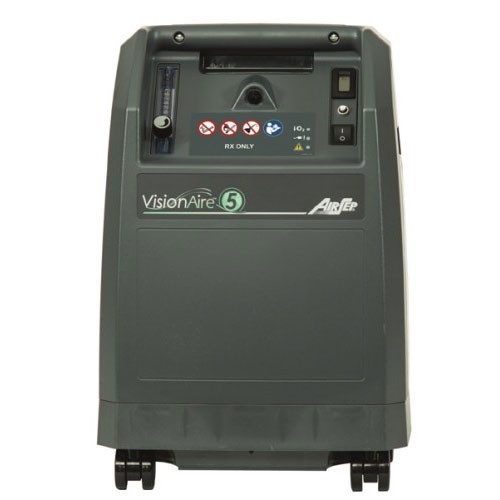
- Brand
- AirSep
- Category
- 5 LPM
₹54,999₹80,640
Indicative pricing based on market intelligence. Varies by dealer, city, bundle, and period — confirm with a local authorised seller before buying.
HHZ SCORE 8.0/10
Philips Everflo 5 Liter Oxygen Concentrator
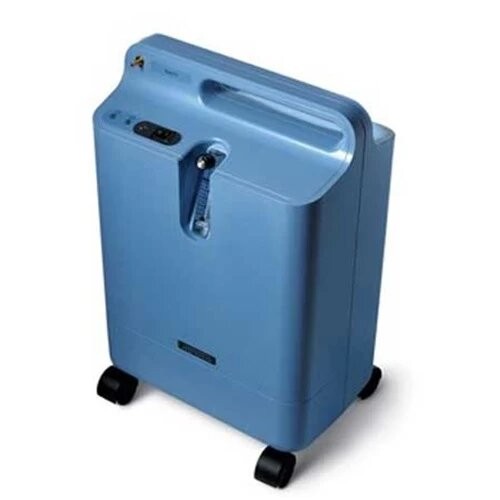
- Brand
- Philips Respironics
- Category
- 5 LPM
Discontinued
Indicative pricing based on market intelligence. Varies by dealer, city, bundle, and period — confirm with a local authorised seller before buying.
HHZ SCORE 8.2/10
Specifications compared
| Specification | Airsep Visionaire 5 | Philips Everflo 5 Liter Oxygen Concentrator |
|---|---|---|
| Overview | ||
| Brand | AirSep | Philips Respironics |
| Category | 5 LPM | 5 LPM |
| Price | ₹54,999.00 | — |
| MRP | 80,640.00 | — |
| Stock | In Stock | DISCONTINUED WORLDWIDE |
| Key features | ||
| Purity | 90-96% | 90-96% |
| Type | Stationary | Home Stationary |
| Continuous Flow | 0.5-5LPM | 1-5LPM |
| Weight | 13.6kg | 14kg |
| Oxygen Purity Indicator (OPI) | Yes | Yes |
| Power consumption | 290watts | 350watts |
| Technical details | ||
| Purity | 90-96% | 90-96% |
| Type | Stationary | Home Stationary |
| Continuous Flow | 0.5-5LPM | 1-5LPM |
| Weight | 13.6kg | 14kg |
| Oxygen Purity Indicator (OPI) | Yes | Yes |
| Power consumption | 290watts | 350watts |
| Sound level | 45db | 45db |
| Dimensions | 20.8H x 14.1W x 11.5Dinch | 23H x 15W x 9.5Dinch |
| Operating altitude | 10000feet | 7500feet |
| Outlet pressure | 8psi | 5.5psi |
| Additional details | ||
| Loss of Power Alarm | Yes | Yes |
| System Malfunction Alarm | Yes | Yes |
| No Flow Alarm | Yes | Yes |
| Indian Voltage Model | Yes | Yes |
| Company Headquarters | USA | USA |
| US FDA Approved | Yes | Yes |
| CE Certified | Yes | Yes |
Analysis
Editor’s note — Everflo discontinued. Philips has discontinued the Everflo worldwide; it is no longer in production and remaining units are end-of-line stock. For an in-production 5 LPM alternative available in India, consider the Home Medix HM-KV (up to 5 L/min, 93% ±3%, ≤40 dB, 3-year warranty). The comparison below is retained for reference.
The AirSep Visionaire 5 at ₹54,999 and the Philips Everflo 5 LPM at ₹43,699 (since discontinued) sit at the top of the US-designed import segment for 5 LPM home oxygen concentrators in India — separated by ₹11,300 on listed prices, with Visionaire the more expensive pick. Both carry US FDA approval and CE certification. Both publish the full three-alarm safety package. Both are Indian-voltage machines with 3-year warranties. And both have established reputations in the Indian market through authorised-dealer channels. Where they split is specific. AirSep Visionaire 5 publishes 13.6 kg against Everflo’s 14 kg (Visionaire 0.4 kg lighter — the lightest in this comparison), 290 W against Everflo’s 350 W (Visionaire 60 W lower on power), 0.5 LPM minimum flow against Everflo’s 1 LPM (Visionaire’s flow floor is half of Everflo’s), and 10,000 ft altitude against Everflo’s 7,500 ft (Visionaire 2,500 ft more headroom). Everflo counters with a ₹11,300 lower entry price, a broader Indian dealer network, and a longer installed base. Call: Everflo wins for standard Indian home use on price; Visionaire wins for altitude, low-flow patients, and premium build preferences.
At a glance
- Price. Everflo ₹43,699 (since discontinued) vs Visionaire ₹54,999 — Everflo is ₹11,300 cheaper (21%).
- Weight. Visionaire 13.6 kg vs Everflo 14 kg — Visionaire 0.4 kg lighter.
- Power draw. Visionaire 290 W vs Everflo 350 W — Visionaire 60 W (17%) lower.
- Noise (published). Both 45 dB.
- Altitude rating. Visionaire 10,000 ft vs Everflo 7,500 ft.
- Flow floor. Visionaire 0.5 LPM vs Everflo 1 LPM.
- Outlet pressure. Visionaire 8 psi vs Everflo 5.5 psi.
- Certifications. Both US FDA + CE.
Where the AirSep Visionaire 5 wins
Visionaire’s wins cluster in the premium-specification categories where AirSep positions the unit above the Everflo tier.
First, weight. Visionaire publishes 13.6 kg — the lightest 5 LPM home stationary unit in this comparison set. Everflo publishes 14 kg. The 0.4 kg gap is marginal in absolute terms but makes Visionaire the lightest option in the US-import tier. For apartments with stairs, for users who move the unit between rooms regularly, or for caregivers with physical limitations, Visionaire is the most manageable unit at this flow rating.
Second, power draw. Visionaire publishes 290 W against Everflo’s 350 W — 60 W (17%) lower. On a 12-hour-a-day usage pattern at ₹8–10/kWh residential tariff, that’s ₹2,100–2,600 saved per year. Across 3 years of daily use: ₹6,300–7,800. That recovers about two-thirds of the ₹11,300 upfront price gap over the warranty window. On long-duty daily use, the operating-cost math substantially narrows the purchase-price difference.
Third, altitude. Visionaire publishes a 10,000 ft operating altitude ceiling against Everflo’s 7,500 ft — 2,500 ft more headroom. This matters for Indian hill-station deployment. Shimla at 7,200 ft is near Everflo’s ceiling; Gangtok at 5,400 ft is comfortable for both; Ooty at 7,350 ft is at Everflo’s edge; Tawang at 10,000 ft is exactly Visionaire’s ceiling. For any setup above 6,000 ft, Visionaire has meaningful headroom that Everflo is running close to its published limit on.
Fourth, flow floor. Visionaire publishes a 0.5 LPM minimum continuous flow. Everflo publishes 1 LPM as its minimum. For patients prescribed sub-1 LPM oxygen — typically paediatric cases, very mild COPD, or post-anaesthesia tapering — Visionaire is the only one of the two that can deliver the prescribed flow continuously. Everflo’s 1 LPM floor means the patient has to run at twice the prescribed rate, which is clinically suboptimal and wastes power. For any prescription below 1 LPM, Visionaire is the correct unit.
Fifth, outlet pressure. Visionaire publishes 8 psi against Everflo’s 5.5 psi — a 2.5 psi gap. For long tubing runs (concentrator in one room, patient in another), for humidifier-bottle setups that add back-pressure, or for pairings with nebuliser attachments, Visionaire sustains delivered flow more reliably at the patient end. Everflo’s 5.5 psi is the lowest outlet pressure in this comparison set and a known practical limitation for extended setups.
Sixth, AirSep’s reputation for compressor longevity. The Visionaire line uses a CHART Industries / CAIRE compressor design with a documented longer expected-service-life than the compressor in the Everflo. For continuous-duty institutional use (rental fleets, nursing homes, clinical outpatient spaces), Visionaire is the longer-ownership-horizon unit. This is a reputational observation grounded in long-run field deployment, not a spec-sheet line.
Seventh, Visionaire’s compact 20.8 in H × 14.1 in W × 11.5 in D footprint is slightly taller but narrower and shallower than Everflo’s 23 in H × 15 in W × 9.5 in D on width (though deeper on depth). Both occupy similar floor real estate; neither has a decisive dimensional advantage.
Where the Philips Everflo 5 LPM wins
Everflo’s wins are pragmatic and load-bearing for the mainstream Indian home-oxygen buyer.
First, price. Everflo at ₹43,699 (since discontinued) is ₹11,300 cheaper than Visionaire at ₹54,999 — a 21% saving on the upfront cost. That’s a significant rupee-denominated advantage. For a first-time home-oxygen buyer, ₹11,300 is the difference between “comfortable purchase” and “stretch purchase”.
Second, Indian dealer network depth. Philips Respironics has the most established authorised-dealer network among the US imports in India, with concentrated presence in metros and credible tier-1 coverage. Sieve-bed supply, filter availability, and warranty-claim routing through the Philips India channel are the most mature of any import 5 LPM unit. AirSep’s Indian distribution is narrower — still available, still authorised, but with thinner service-center depth outside Mumbai, Delhi, Bengaluru, and Chennai. For buyers in tier-1 cities outside the top 4, Everflo has better post-sale support reach than Visionaire.
Third, installed-base advantage. Everflo has been the benchmark 5 LPM import in India for over a decade. The dealer familiarity, the technician skill base, the sieve-bed supply pipeline, and the service-training ecosystem are all more mature for Everflo than for Visionaire. For a unit that needs servicing in year 2 or 3, choosing the unit with the deeper local-knowledge base is a risk-reduction move. Visionaire has an excellent global reputation; Everflo has an excellent India-specific service ecosystem.
Fourth, noise parity. Both publish 45 dB, so this is a draw — but it’s a draw at the lowest published noise level in the segment. Neither unit is a noise liability for bedside use.
Fifth, resale. Everflo’s secondary-market resale in India is the strongest of any 5 LPM unit — typically 50–60% of original price retained after 3 years of use, driven by the installed-base advantage and the lower replacement-cost ceiling. Visionaire retains 45–55% — strong but slightly behind, reflecting the smaller installed base. For buyers planning short-term use (post-operative, temporary respiratory episode), Everflo’s stronger resale recovery closes part of the ₹11,300 upfront gap.
Sixth, Everflo’s OPI threshold. Both units have Oxygen Purity Indicator LEDs. Everflo’s trips below 82%; Visionaire’s trip threshold is not specified on its published spec sheet. Everflo’s indicator is the more documented, more-understood signal. Neither publishes a live purity analyser readout.
Seventh, and not a spec but a practical variable: Everflo’s two-side-panel cabinet design makes it the more field-serviceable unit for trained technicians working in the Indian authorised-dealer channel. Visionaire’s enclosure is more compact but less immediately accessible for sieve-bed replacement.
Indian-market context
Both units are 220–240 V Indian-voltage machines. Both are US-designed premium imports. Both publish 3-year Indian-market warranties. Both have US FDA and CE certifications on their spec sheets.
Where they diverge is Indian distribution depth. Philips Respironics maintains the most established authorised-dealer footprint among the US imports, with concentrated service presence in Mumbai, Delhi NCR, Bengaluru, Chennai, Hyderabad, Pune, Kolkata, and Ahmedabad, plus tier-1 dealer reach into Chandigarh, Lucknow, Jaipur, and similar. AirSep’s Indian distribution overlaps with the major metros but has thinner penetration into tier-1 cities and weaker coverage in east and north-east India. For a buyer in Mumbai or Bengaluru, both brands are well-served; for a buyer in Guwahati or Bhubaneswar, Everflo is the lower-service-risk pick.
Rupee pricing: AirSep Visionaire 5 MRP ₹80,640 discounted to ₹54,999 current; Philips Everflo MRP ₹63,228.48 discounted to ₹43,699 (since discontinued). Both follow India-market MRP-to-street discount conventions; the street prices are the real buy-in numbers.
Spare-parts availability: Everflo’s sieve-bed and filter pipeline is the most mature import supply chain in India; Visionaire’s is present but thinner. Consumables (humidifier bottles, cannulas, dust filters) are widely available for both through independent oxygen-equipment stockists.
Warranty-claim reality: Everflo claims route through Philips India-authorised dealers with reasonable turnaround in metros. Visionaire claims route through AirSep-authorised dealers with more limited geographic spread. For a non-metro warranty claim, Everflo is the faster resolution.
Resale retention: Everflo typically retains 50–60% of original price after 3 years; Visionaire retains 45–55%. Both are in the upper retention band; Everflo’s larger installed base gives it the edge.
Verdict — who should pick which
Pick the Philips Everflo 5 LPM if you are a standard Indian home-oxygen buyer in plains altitude (below 6,000 ft), if you want the most mature Indian dealer network among the US imports, if the ₹11,300 price saving matters to your budget, or if the patient is prescribed 1 LPM or higher (where Everflo’s 1 LPM flow floor is not a limitation). For mainstream Indian home-oxygen demand, Everflo is the correct default among the US-designed imports.
Pick the AirSep Visionaire 5 in four specific scenarios. First, if the user is at altitude above 7,500 ft — Visionaire’s 10,000 ft ceiling gives 2,500 ft of headroom that Everflo lacks. Second, if the patient is prescribed sub-1 LPM flow (paediatric, very mild COPD, post-anaesthesia tapering) — Visionaire’s 0.5 LPM flow floor is the only way to deliver the prescribed rate continuously. Third, if long tubing runs or nebuliser pairings are part of the setup — Visionaire’s 8 psi outlet pressure (vs Everflo’s 5.5 psi) sustains delivered flow better. Fourth, if the purchase is for institutional or long-duty use (rental fleets, nursing-home deployment, clinical outpatient) where AirSep/CAIRE’s compressor longevity reputation and 60 W lower power draw compound into the cheaper-to-own unit over 3+ years.
Default for most buyers: Philips Everflo 5 LPM. The ₹11,300 price advantage, the deeper Indian dealer network, and the stronger installed base make it the safer mainstream pick. Visionaire is the sharper tool for specialised use cases — altitude, low-flow, long-tubing, institutional — but for a standard Indian home-oxygen purchase by a first-time buyer, Everflo is the better value. If none of the four Visionaire-specific scenarios applies to your situation, buy the Everflo.