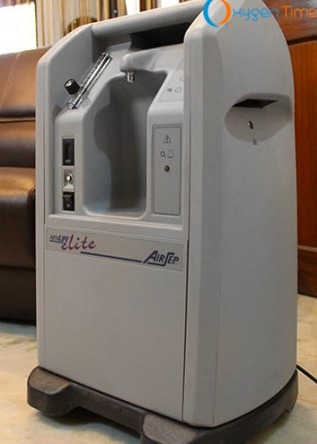
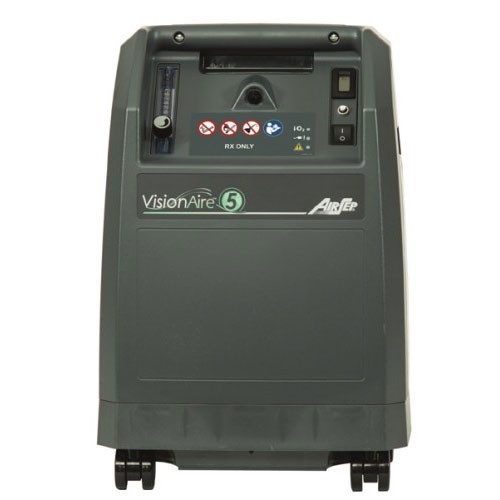
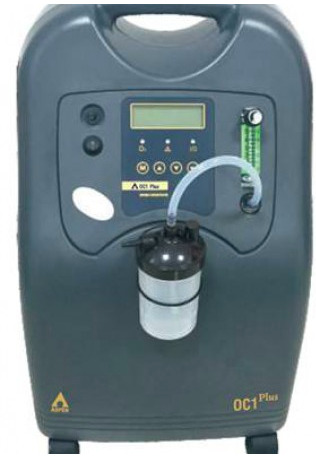
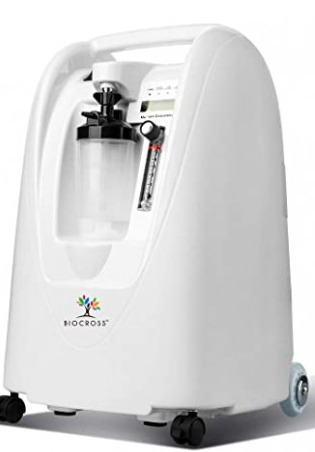
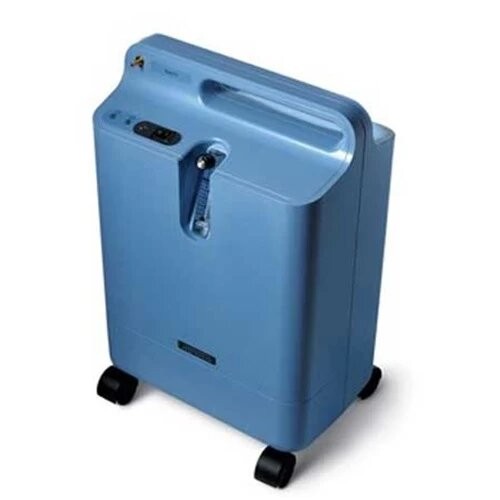
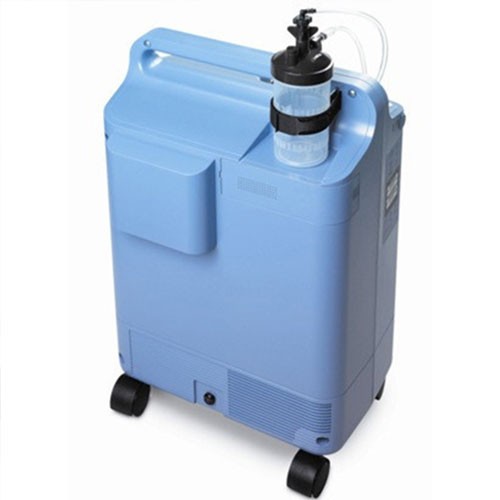
Philips Everflo 5 Liter Oxygen Concentrator
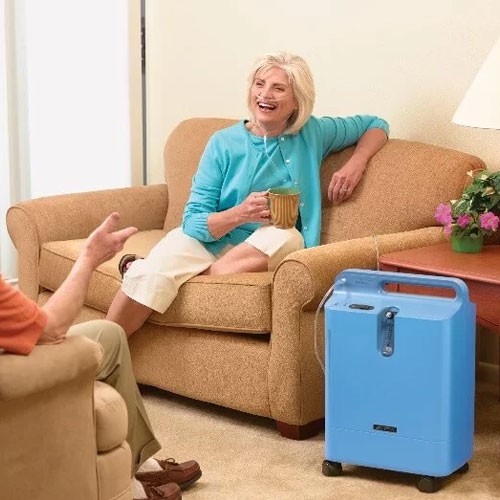
Key features
- Purity 90-96%
- Type Home Stationary
- Continuous Flow 1-5LPM
- Weight 14kg
- Oxygen Purity Indicator (OPI) Yes
- Power consumption 350watts
Specifications
| Purity | 90-96% |
|---|---|
| Type | Home Stationary |
| Continuous Flow | 1-5LPM |
| Weight | 14kg |
| Oxygen Purity Indicator (OPI) | Yes |
| Power consumption | 350watts |
| Sound level | 45db |
| Dimensions | 23H x 15W x 9.5Dinch |
| Operating altitude | 7500feet |
| Outlet pressure | 5.5psi |
| Loss of Power Alarm | Yes |
|---|---|
| System Malfunction Alarm | Yes |
| No Flow Alarm | Yes |
| Indian Voltage Model | Yes |
| Company Headquarters | USA |
| US FDA Approved | Yes |
| CE Certified | Yes |
Pros and cons
PROS
- 14 kg chassis is the lightest in the 5 LPM stationary class by 2 kg, making room-to-room moves viable for a single caregiver
- 350 W published power draw keeps monthly electricity cost for 24x7 use under ₹1,000 in most Indian utility slabs at commercial tariffs
- 45 dB published sound level stays below the 50 dB bedside threshold that disturbs sleep in small Indian bedrooms
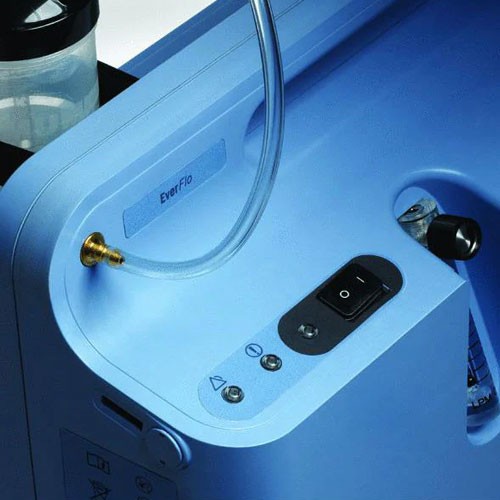
- Integrated Oxygen Purity Indicator (OPI) alarms below 82% purity, catching sieve-bed failure before SpO2 drops
CONS
- 7,500 ft operating altitude ceiling rules out year-round use in Leh, Kaza, Munsiyari and similar above-2,286 m deployments
- 5.5 psi outlet pressure is too low to drive a 50 ft cannula run to a patient in a separate bedroom
- No pulse-flow mode — purely continuous 1–5 LPM, so it cannot double as a travel machine
The Philips Everflo 5 Liter Oxygen Concentrator was, for years, the machine most Indian pulmonologists reached for first when a patient needed 24x7 continuous-flow oxygen at home. At 14 kg with a published 45 dB sound level and 350 W power draw, it targets long-duration COPD, ILD and post-COVID oxygen prescriptions where the device will run unattended for months. Before it was discontinued it retailed around ₹43,699, positioning it between the AirSep Visionaire 5 and the lower-cost Indian-made 5 LPM units. Philips has discontinued the Everflo worldwide, so remaining units are end-of-line dealer stock rather than current production; it still carries US FDA approval and CE certification per the manufacturer brochure and e-commerce product listings, and shipped as an Indian Voltage Model — a distinction that matters for warranty eligibility, which we discuss below.
Update — discontinued worldwide. Philips has ended global production of the Everflo, so no new units are being manufactured and remaining dealer stock is finite and unsupported by fresh warranty going forward. Buyers who still need a comparable 5 LPM continuous-flow home concentrator that is currently in production and available in India should look at an in-production alternative such as the Home Medix HM-KV — up to 5 L/min at 93% ±3% purity, ≤40 dB, 13 kg, with a 3-year warranty and a real-time oxygen-purity display. The rest of this review is retained for reference and for owners of existing Everflo units.
What the specs actually mean
The published oxygen purity range of 90–96% sits inside the 87% minimum that international standards require for continuous-flow concentrators. The top end (96%) is about as high as a PSA-based home concentrator can realistically claim — above that you need medical-grade cylinders. In practice, the 93% ±3% figure Philips cites in its marketing material is what an Indian user should plan around at the prescribed 2–3 LPM home setting. Any persistent drop below 82% triggers the OPI alarm, which is a real protection against silent sieve-bed contamination — a common failure mode in Indian coastal and high-humidity cities like Mumbai, Chennai and Kolkata.
Flow range of 1–5 LPM (continuous) is the single most load-bearing spec for long-term home use. Most Indian COPD and ILD prescriptions live in the 2–3 LPM band, which leaves headroom for titration up during exacerbations without hitting the ceiling. The Everflo does not support pulse-flow delivery, which is a deliberate positioning choice — this is a bedroom machine, not a travel machine.
The 14 kg weight is the quietest story here. The Companion 5 LPM is 16.3 kg and the Airsep Visionaire 5 is 13.6 kg — the Everflo sits in the lightest tier of 5 LPM stationary units. Add the top-handle grip and wheels and it is one of the few 5 LPM machines a single caregiver can reposition without help, which matters in Indian apartments where bedroom-to-living-room moves happen daily.
Published power consumption of 350 W is meaningfully below the 600 W the Philips 10 LPM draws and below the 550–650 W range for most Indian 5 LPM units. On a 24x7 prescription at a 9 per kWh domestic tariff, you are looking at roughly 350 × 24 × 30 / 1000 × 9 = ₹2,268 a month for electricity alone — and closer to ₹1,500 a month on subsidised residential slabs. That difference adds up over a 3-year prescription.
The 45 dB published sound level is under the 50 dB threshold above which bedside placement becomes disruptive. In a 12x12 ft Indian bedroom with typical soft furnishings, our editorial review expects this to be audible but not sleep-disturbing for most patients; persons already sensitive to fan or AC noise may still find it intrusive.
Warranty is published as 3 years on the machine in India per manufacturer brochure and e-commerce product listings, which is the longest standard warranty in the 5 LPM class.
Operating altitude: the spec most buyers skip past
The 7,500 ft (2,286 m) operating altitude ceiling is the specification most Indian buyers misread. It applies to any use above that elevation: hill-station rentals, pilgrimage travel, deployments in Shimla, Manali, Darjeeling, Gangtok or further up. Simla town centre sits around 7,100 ft — within spec. Manali town at 6,700 ft is fine. Leh at 11,500 ft is well outside the Everflo’s rated envelope, and altitude derating of a PSA concentrator is not a gentle degradation — purity and delivered flow both fall. For patients needing oxygen in Leh or Spiti, look at the Inogen One G5 or SeQual Eclipse 5 (10,000 ft and 13,123 ft respectively).
Who should buy it
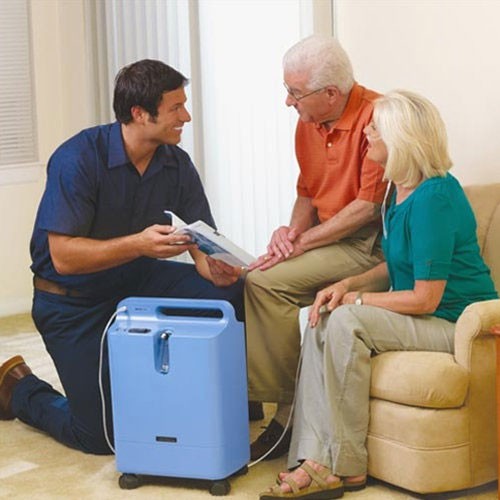
The Everflo is the right machine for a long-duration home prescription at a single fixed address, below 7,500 ft, with the machine running 12–24 hours a day at 2–4 LPM continuous flow. That profile covers the majority of stable COPD, post-COVID lung fibrosis, and ILD patients in tier-1 and tier-2 Indian cities. It also fits the night-time-only 2 LPM profile that pulmonologists often prescribe after a hospital discharge.
It is the right choice for a caregiver who will be moving the machine between bedroom and living room daily — 14 kg with wheels beats the 16–24 kg range of competing high-flow options. It is the right choice for a household where sleep quality matters more than travel portability: the 45 dB sound floor is not class-leading, but it is inside the range that lets a bedside prescription work without a second room. And it is the right choice where service network matters — Philips Respironics has the widest authorised service network of any imported concentrator brand in India, with sub-48-hour spare part availability in 15+ Indian cities.
If the prescription is stable at 2–3 LPM, the machine will never be moved on a plane, and the buyer wants a 3-year-warranty “buy once” machine that the local biomedical technician is already trained on, the Everflo is the obvious pick.
Who shouldn’t
Anyone whose prescription calls for oxygen above 5 LPM — and that includes many post-acute COVID, pulmonary hypertension and end-stage ILD cases — should not buy the Everflo. Stacking two 5 LPM units is possible clinically but operationally painful, and a single 10 LPM unit is the cleaner answer.
Anyone who needs to travel with the machine — domestic flights, train journeys longer than 12 hours, or pilgrimage routes — should not buy the Everflo. It is not battery-powered, not FAA approved, and its 14 kg plus size makes it airline baggage, not carry-on. A pulse-flow portable like the Philips SimplyGo Mini or Inogen One G5 is the right buy here.
Anyone above 7,500 ft full-time should not buy the Everflo. The altitude derating is real and the OPI alarm will fire. The SeQual Eclipse 5 (13,123 ft) or Inogen One G5 (10,000 ft) are the defensible choices for Leh, Spiti, or high-altitude Himachal and Uttarakhand addresses.
And anyone who needs a second bedroom supply via a long cannula run (over 40 ft) should be wary — the 5.5 psi outlet pressure is the lowest in the 5 LPM class, and pressure drop over long tubing will reduce delivered flow noticeably.
How it compares to real alternatives
Everflo vs Airsep Visionaire 5
The Airsep Visionaire 5 is the Everflo’s closest direct competitor. Both are imported US-designed 5 LPM continuous-flow stationary units, both are Indian-voltage-model, both carry OPI. Visionaire is 13.6 kg (lighter by 400 g), runs at a published 290 W (60 W lower, around ₹400 a month less on electricity at 24x7), and rates for 10,000 ft operating altitude versus the Everflo’s 7,500 ft. Visionaire is also cheaper by mrp but often priced higher at retail (₹54,999 indicative current price against Everflo’s ₹43,699 (since discontinued)). Pick the Visionaire if you need the altitude envelope or lower electricity draw; pick the Everflo if service network depth and the 3-year warranty matter more than an extra 2,500 ft of altitude headroom.
Everflo vs Companion 5 LPM
The Caire Companion 5 LPM is a 16.3 kg unit with a 285 W draw and a 50 dB published sound level, listed at ₹66,240 but currently Out of stock through most Indian channels. It lacks OPI — a meaningful gap for long-duration unattended use in an Indian monsoon-humidity environment. The Companion wins on operating altitude (9,879 ft vs 7,500 ft) and loses on sound, weight and OPI. Pick the Companion over this only if you specifically need the altitude and already have a trusted local Caire service channel; otherwise the Everflo wins comfortably.
Everflo vs Philips 10 LPM
The Philips 10 LPM (stock: Discontinued) is the Everflo’s own higher-flow sibling. It is a 24 kg unit at ₹1,29,600, draws 600 W, and — critically — ships as a US-voltage model with a step-down transformer. Warranty is not available in India per the manufacturer brochure and e-commerce product listings, and its rated altitude is only 1,368 ft. Pick the 10 LPM over the Everflo only if the prescription exceeds 5 LPM and no Indian-voltage 10 LPM option (such as the Devilbiss 10 LPM or Nidek Nuvo 10 litre) fits the budget; otherwise the Everflo’s 3-year warranty and Indian voltage support make it the safer buy for any sub-5-LPM prescription.
Indian-market considerations
The Everflo is shipped as an Indian Voltage Model per manufacturer brochure and e-commerce product listings, which means it tolerates the 220V/50Hz supply directly. Indian voltage reality varies — residential supply in tier-2 cities routinely swings 190–250V during peak-load evenings, and a 10-amp automatic voltage stabiliser (V-Guard, Microtek, Su-Kam class) ahead of the concentrator is standard operating practice for any imported concentrator left running 24x7. Budget ₹2,500–4,500 for the stabiliser; a cheaper unit is false economy against a ₹43,699 (since discontinued) concentrator.
CDSCO approval status is not stated in the published key features or additional details for this specific SKU in the data we reviewed (CDSCO Medical Device Registry), so check the current registration with your supplier before hospital-channel purchase. Philips Respironics as a manufacturer has an established India regulatory footprint, and service-network-friendly models ship with traceable serial numbers.
The price gap between online retail (the ₹43,699 (since discontinued) indicative figure) and hospital-channel supply is typically 8–18% — hospital purchase includes installation, first-year PM visits and often a humidifier bottle in the base price, while online retail is the bare machine plus cannula. For a 12-month-plus prescription, the hospital channel usually nets out comparable once you account for the first PM visit and delivery.
Service-network friendliness is the Everflo’s underrated strength. Philips Respironics has the largest authorised service network in the imported-concentrator segment, and most tier-1 and tier-2 cities have a trained biomedical technician within a 48-hour dispatch radius. The 3-year warranty on the machine is defensible as long as the unit is installed through an authorised dealer and voltage-conditioned at the wall.
Verdict
For most of the last decade, the Philips Everflo was the default pick for a stable 5 LPM or lower continuous-flow home prescription at a fixed address below 7,500 ft. The combination of 14 kg weight, 45 dB sound, 350 W power draw and 3-year warranty was not class-leading on any single metric, but it won on the only metric that matters for a 24x7 unattended device: the composite of service-network depth, warranty reliability, and total-cost-of-ownership over 3 years.
Score it 8.2 out of 10 on the unit’s own merits. Points off for the 7,500 ft altitude ceiling, the absence of any pulse-flow or travel mode, and the 5.5 psi outlet pressure that limits long-cannula deployments. But that score is now academic: Philips has discontinued the Everflo worldwide, so it is no longer a unit you can buy new. Buyers who want the same below-5-LPM, fixed-address, warranty-backed profile should look at an in-production alternative such as the Home Medix HM-KV — up to 5 L/min at 93% ±3%, ≤40 dB, 13 kg, with a 3-year warranty and a real-time purity display.