DeVilbiss 5 LPM vs Oxymed Mini (5L) Oxygen Concentrator
DeVilbiss 5 LPM
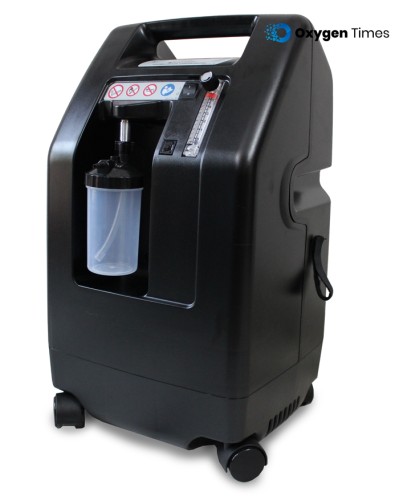
- Brand
- Drive DeVilbiss
- Category
- 5 LPM
₹45,984₹86,400
Indicative pricing based on market intelligence. Varies by dealer, city, bundle, and period — confirm with a local authorised seller before buying.
HHZ SCORE 8.0/10
EDITORIAL PICK
Oxymed Mini (5L) Oxygen Concentrator
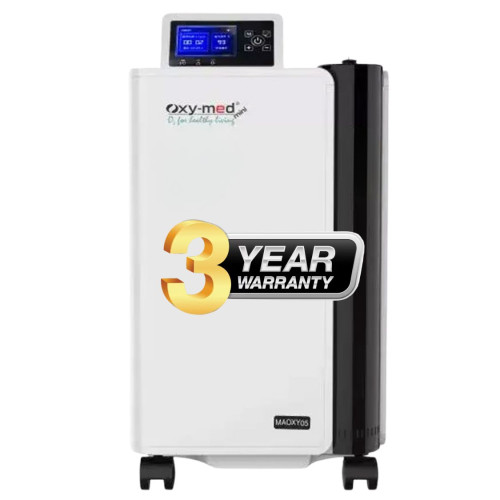
- Brand
- Oxymed
- Category
- 5 LPM
₹35,400₹59,900
Indicative pricing based on market intelligence. Varies by dealer, city, bundle, and period — confirm with a local authorised seller before buying.
HHZ SCORE 7.2/10
Specifications compared
| Specification | DeVilbiss 5 LPM | Oxymed Mini (5L) Oxygen Concentrator |
|---|---|---|
| Overview | ||
| Brand | Drive DeVilbiss | Oxymed |
| Category | 5 LPM | 5 LPM |
| Price | ₹45,984.00 | ₹35,400.00 |
| MRP | 86,400.00 | 59,900.00 |
| Stock | In Stock | In Stock |
| Key features | ||
| Purity | 90-96% | 90-96% |
| Type | Home Stationary | Home Stationary |
| Continuous Flow | 1-5LPM | 1-5LPM |
| Weight | 16.3kg | 13.9kg |
| Oxygen Purity Indicator (OPI) | Yes | Yes |
| Power consumption | 310watts | 390watts |
| Technical details | ||
| Purity | 90-96% | 90-96% |
| Type | Home Stationary | Home Stationary |
| Continuous Flow | 1-5LPM | 1-5LPM |
| Weight | 16.3kg | 13.9kg |
| Oxygen Purity Indicator (OPI) | Yes | Yes |
| Power consumption | 310watts | 390watts |
| Sound level | 48db | 45db |
| Dimensions | 24.4H x 13.4W x 12Dinch | 20.27H x 12.36W x 9.4Dinch |
| Operating altitude | 13123feet | 7500feet |
| Outlet pressure | 8.5psi | 10psi |
| Additional details | ||
| Oxygen Purity % Analyzer | — | Yes |
| Loss of Power Alarm | Yes | Yes |
| System Malfunction Alarm | Yes | Yes |
| No Flow Alarm | Yes | Yes |
| Indian Voltage Model | Yes | Yes |
| Company Headquarters | USA | India |
| US FDA Approved | Yes | — |
| CE Certified | Yes | — |
Analysis
The DeVilbiss 5 LPM (Drive DeVilbiss Compact 525) and the Oxymed Mini (5L) Oxygen Concentrator are an unusual cross-shop: a US-designed import at ₹45,984 against an India-manufactured unit at ₹35,400 — a ₹10,584 price gap where the cheaper unit holds several spec-sheet wins. Both publish the same 90–96% oxygen purity across 1–5 LPM, both publish the full three-alarm package, and both are Indian-voltage machines with 3-year warranties. Where they split is sharp and interesting. DeVilbiss brings the heavy credentials — US FDA approval, CE certification, 13,123 ft altitude ceiling, 8.5 psi outlet pressure, turn-down power technology. Oxymed Mini counters with CDSCO registration (no CE or FDA on record), a discrete on-device oxygen purity analyser, 2.4 kg lighter body (13.9 kg vs 16.3 kg), 390 W vs DeVilbiss’s 310 W on power (DeVilbiss wins), and a publicly documented 40-plus-service-centre Indian dealer network. Call: Oxymed Mini for standard home use, DeVilbiss for altitude or export/travel credentials.
At a glance
- Price. Oxymed Mini ₹35,400 vs DeVilbiss ₹45,984 — Oxymed is ₹10,584 cheaper (23%).
- Weight. Oxymed 13.9 kg vs DeVilbiss 16.3 kg — Oxymed 2.4 kg lighter.
- Power draw. DeVilbiss 310 W vs Oxymed 390 W — DeVilbiss is 80 W lower.
- Noise (published). Oxymed 45 dB vs DeVilbiss 48 dB.
- Altitude rating. DeVilbiss 13,123 ft vs Oxymed 7,500 ft.
- Outlet pressure. DeVilbiss 8.5 psi vs Oxymed 10 psi — Oxymed is actually higher.
- Certifications. DeVilbiss: US FDA + CE. Oxymed: CDSCO registered only (no CE or US FDA on record).
- On-device purity analyser. Oxymed Mini: yes. DeVilbiss: no (indicator only).
Where the DeVilbiss 5 LPM wins
DeVilbiss’s wins concentrate in the “serious specification credentials” category.
First, altitude. DeVilbiss publishes 13,123 ft as its operating ceiling — the highest in this entire comparison set. Oxymed Mini publishes 7,500 ft. For users in hill-station India above Oxymed’s rated ceiling (Leh at 11,500 ft, higher Sikkim and Arunachal, parts of Ladakh), DeVilbiss is the only one with genuine engineering headroom. Oxymed’s sieve-bed performance degrades above its rated altitude; DeVilbiss has 5,623 ft of additional certified headroom. This is a specification-level difference, not marketing — at altitude, DeVilbiss will sustain 90–96% purity where Oxymed will struggle.
Second, US FDA and CE approvals. DeVilbiss publishes both FDA and CE certifications on its additional-details table. Oxymed publishes CDSCO registration only — the applicable Indian regulatory gate — with neither CE nor FDA on record. For individual Indian home users, CDSCO is the relevant regulatory signal and the missing CE/FDA paperwork does not practically affect domestic-use buying decisions. But for three specific use cases — institutional or rental buyers who want CE/FDA paperwork for compliance, travelling patients who may need the unit recognised abroad, and medical professionals purchasing for clinical spaces — DeVilbiss’s dual-marking is a real tiebreaker.
Third, power draw. DeVilbiss publishes 310 W against Oxymed’s 390 W — 80 W lower (21%). And DeVilbiss’s “turn-down technology” (documented in its product listing) means it draws less power at lower prescribed flow rates rather than running the compressor at full output across the flow range. For a patient on 2–3 LPM daily, DeVilbiss’s real-world power advantage widens. Over 3 years of 12-hour daily use at ₹8–10/kWh, that’s ₹2,900–3,700 in power savings — a partial offset against the ₹10,584 price premium.
Fourth, the auxiliary oxygen port. DeVilbiss’s product listing specifies an inbuilt auxiliary oxygen port that can pair with an FDA-cleared cylinder-filling device. Oxymed Mini does not publish this feature. For users who want to top up portable cylinders for outings or occasional mobility, DeVilbiss is the unit that supports it.
Fifth, circuit breaker and serviceability. DeVilbiss publishes a circuit-breaker design that resets the unit automatically after electrical overload — a relevant feature in Indian mains conditions where voltage spikes are common. DeVilbiss also specifies a two-part case design intended for easier technician servicing. These are quality-of-engineering signals that Oxymed’s spec sheet doesn’t match directly.
Sixth, resale and institutional credibility. DeVilbiss’s US-design provenance and FDA paperwork give it stronger retention in institutional resale channels (hospital bulk purchases, government health-scheme procurements, rental-fleet operations). For rental-equipment operators, DeVilbiss is the easier unit to re-sell after fleet rotation. For individual home-resale buyers, Oxymed’s lower entry price actually makes the resale math closer than it appears.
Where the Oxymed Mini (5L) wins
Oxymed’s wins concentrate in the everyday daily-use and service-reach categories — which for most Indian home buyers are the more load-bearing ones.
First, price. Oxymed at ₹35,400 is ₹10,584 cheaper than DeVilbiss at ₹45,984 — a 23% saving on the upfront cost. That is a meaningful rupee difference in the Indian home-oxygen market, particularly for first-time buyers on a budget.
Second, weight. Oxymed publishes 13.9 kg against DeVilbiss’s 16.3 kg — 2.4 kg lighter. On a unit that will need periodic repositioning for cleaning, room changes, or technician access, the 2.4 kg gap is the difference between a comfortable one-person lift and a two-person assist. For elderly caregivers and apartment setups, Oxymed is genuinely easier to handle.
Third, noise. Oxymed publishes 45 dB against DeVilbiss’s 48 dB. Three decibels on the logarithmic dB scale is a 40% increase in perceived loudness. Overnight bedside use — the dominant duty cycle for home oxygen — is where this gap matters most. Oxymed is meaningfully quieter at rated output.
Fourth, on-device oxygen purity analyser. This is a clean Oxymed win. Oxymed publishes a discrete “Oxygen Purity % Analyzer” feature — a live numerical readout of actual oxygen concentration on the device display. DeVilbiss publishes OPI (an indicator LED that changes state below 86% purity) but leaves the “Oxygen Purity % Analyzer” field blank on its additional-details table. For caregivers monitoring an elderly or chronic patient, seeing “93%” or “89%” on the device is a more informative signal than watching for an LED trip.
Fifth, outlet pressure. Oxymed publishes 10 psi against DeVilbiss’s 8.5 psi — Oxymed is actually higher. For long tubing runs and nebuliser pairings, Oxymed’s outlet pressure sustains delivered flow at least as well as DeVilbiss. This is the one category where the India-manufactured unit edges out the US-designed import on a spec-sheet line.
Sixth, and the single biggest Oxymed advantage: Indian service network. Oxymed’s product page documents 40-plus service centres across India and home-installation in 50 cities. DeVilbiss distributes through a narrower authorised-dealer network concentrated in major metros. For a buyer in a non-metro Indian city — which is most Indian home-oxygen demand — Oxymed has a technician reachable within 48 hours where DeVilbiss may require shipping the unit to a metro service centre. On a device that needs at least one in-person service visit over its 3-year warranty life, this is the dominant post-sale variable.
Seventh, in-box accessories. Oxymed bundles humidifier bottle, nasal cannula, additional filter set, nebuliser kit, and power cable. DeVilbiss bundles humidifier bottle, nasal cannula, filter set, power cable, and user manual — a thinner starter kit without the integrated nebuliser.
Oxymed also publishes a digital flow regulator with 0.5 LPM adjustment increments via +/- buttons and a front-panel display showing flow rate, purity, timer, and hour meter. DeVilbiss uses a standard rotameter-ball flow meter. For caregivers titrating flow precisely, Oxymed’s digital regulator is the more accurate interface.
Indian-market context
Both units are 220–240 V Indian-voltage machines and both publish 3-year warranties. That’s the commonality.
Service reach is the biggest divergence. Oxymed’s 40-plus service centres and 50-city installation footprint is the signature competitive advantage for the brand in India. The practical effect is that warranty service, sieve-bed replacement, compressor tune-ups, and consumables resupply all route through a dealer within reasonable reach of most Indian buyers. DeVilbiss’s Indian distribution is thinner — present in metros, patchy in tier-2 and tier-3 cities. For rural or small-town buyers, the Oxymed dealer advantage is load-bearing.
Rupee pricing: Oxymed MRP ₹59,900 discounted to ₹35,400 current; DeVilbiss MRP ₹86,400 discounted to ₹45,984 current. Both follow standard India-market MRP-to-street discount conventions; the street numbers are the real buy-in.
Spare-parts availability: for consumables (filters, humidifier bottles, cannulas), both brands are stocked widely through independent oxygen-equipment shops. For sieve-bed and compressor-level parts, Oxymed’s dealer-routed supply is faster and broader; DeVilbiss requires the authorised-dealer channel, which is geographically sparser.
Resale retention in India: DeVilbiss retains 45–55% of original price after 3 years; Oxymed retains 30–40%. DeVilbiss has the stronger absolute retention percentage, but because the upfront price is higher, the retained-value rupee numbers are closer than the percentages suggest.
Where Home Medix HM-KV fits
The Home Medix HM-KV is the value-led third option for a standard plains-city prescription. It is lighter and quieter than both units on the published or field-verified figures used by HHZ, while retaining live purity information, a complete alarm stack, integrated nebulization, and a 3-year / 10,000-hour warranty.
HM-KV is not a substitute for the DeVilbiss when high altitude or long-tubing outlet pressure is the reason for buying DeVilbiss. Against Oxymed, the decision is local support versus bedside specifications: use the HM-KV vs Oxymed Mini comparison and verify service by pincode.
Verdict — who should pick which
Pick the Oxymed Mini (5L) if you are a standard home-oxygen buyer in plains India, if you live outside a top-10 metro where Oxymed’s 40-service-centre reach becomes decisive, if the ₹10,584 price saving matters to your budget, if the user is elderly or sleep-sensitive (45 dB vs 48 dB is noticeable), or if you want the on-device live purity analyser readout. For the mainstream Indian home-oxygen buyer, Oxymed Mini is the right default — better-priced, better-serviced, and CDSCO registered for domestic home use.
Pick the DeVilbiss 5 LPM in three specific scenarios. First, if the user is deploying at altitude above 7,500 ft — DeVilbiss’s published 13,123 ft ceiling versus Oxymed’s 7,500 ft is decisive. Oxymed will struggle with sieve-bed efficiency above its rated altitude; DeVilbiss has headroom. Second, if you need CE or US FDA paperwork for institutional, clinical, or travel-export purposes — neither is on record for Oxymed. Third, if the user is prescribed sub-5 LPM flow rates and wants the power savings from DeVilbiss’s turn-down technology, which compound meaningfully over continuous use.
Default for most buyers: Oxymed Mini (5L). The ₹10,584 saving plus the 40-service-centre dealer network plus the on-device purity analyser plus the 2.4 kg lighter body plus the 3 dB noise advantage collectively outweigh DeVilbiss’s altitude and CE/FDA advantages for most home-use scenarios. DeVilbiss is the sharper specialised tool — high-altitude, export-or-travel paperwork — but Oxymed is the better everyday unit for mainstream Indian home-oxygen demand.