Home Medix HM-KV 5 LPM vs Oxymed Mini (5L) Oxygen Concentrator
Home Medix HM-KV 5 LPM
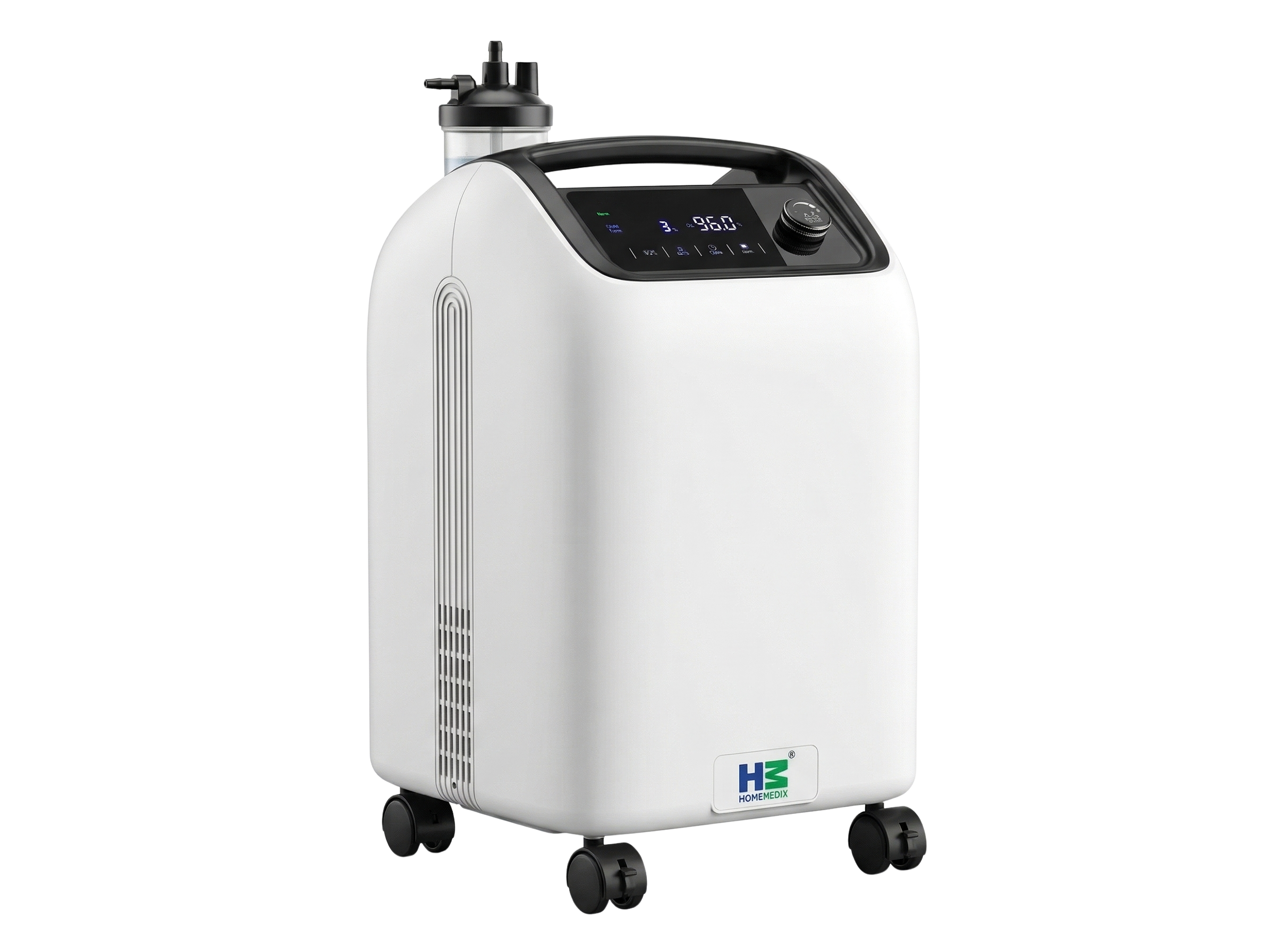
- Brand
- Home Medix
- Category
- 5 LPM
₹37,800₹54,000
Indicative pricing based on market intelligence. Varies by dealer, city, bundle, and period — confirm with a local authorised seller before buying.
HHZ SCORE 7.7/10
Oxymed Mini (5L) Oxygen Concentrator
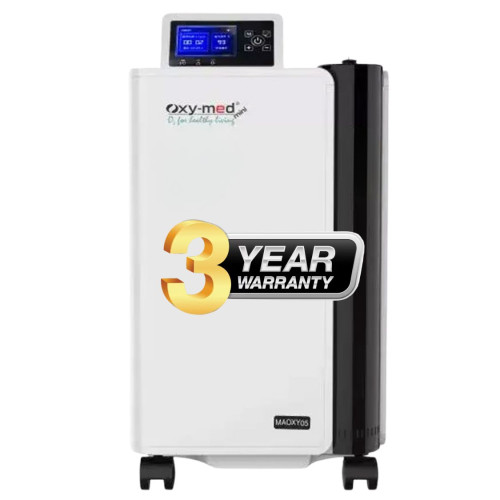
- Brand
- Oxymed
- Category
- 5 LPM
₹35,400₹59,900
Indicative pricing based on market intelligence. Varies by dealer, city, bundle, and period — confirm with a local authorised seller before buying.
HHZ SCORE 7.2/10
Specifications compared
| Specification | Home Medix HM-KV 5 LPM | Oxymed Mini (5L) Oxygen Concentrator |
|---|---|---|
| Overview | ||
| Brand | Home Medix | Oxymed |
| Category | 5 LPM | 5 LPM |
| Price | ₹37,800 | ₹35,400.00 |
| MRP | 54,000 | 59,900.00 |
| Stock | In Stock | In Stock |
| Key features | ||
| Purity | 93% ± 3% | 90-96% |
| Type | Home Stationary | Home Stationary |
| Continuous Flow | 0.5–5 L/min | 1-5LPM |
| Weight | 13 kg (lightest in the 5 LPM class) | 13.9kg |
| Oxygen Purity Indicator (OPI) | Yes | Yes |
| Power consumption | 320 VA | 390watts |
| Technical details | ||
| Purity | 93% ± 3% | 90-96% |
| Type | Home Stationary | Home Stationary |
| Continuous Flow | 0.5–5 L/min | 1-5LPM |
| Weight | 13 kg (lightest in the 5 LPM class) | 13.9kg |
| Oxygen Purity Indicator (OPI) | Yes | Yes |
| Power consumption | 320 VA | 390watts |
| Sound level | ≤ 40 dB (field-verified) | 45db |
| Dimensions | Compact floor-standing form factor | 20.27H x 12.36W x 9.4Dinch |
| Outlet pressure | 0.04–0.06 MPa | 10psi |
| Operating altitude | — | 7500feet |
| Additional details | ||
| Oxygen Purity % Analyzer | Yes | Yes |
| Loss of Power Alarm | Yes | Yes |
| System Malfunction Alarm | Yes (High Temperature) | Yes |
| No Flow Alarm | Yes (Low/No Flow) | Yes |
| Indian Voltage Model | Yes | Yes |
| Company Headquarters | India | India |
| Home Medix differentiators | ||
| Integrated Nebulization | Yes | — |
| Precise Electronic Flowmeter | Yes | — |
| One-Touch SOS Alert | Yes — high-volume audible alarm button for summoning a nearby attendant (local siren; no mobile app or telecom channel) | — |
| Hour Counter | User-visible running-hour display | — |
| Working Voltage | AC 230V / 50Hz, ±10% tolerance (207–253 V) | — |
| Industrial-Grade Compressor | Yes | — |
| ISO 9001 | Yes | — |
| ISO 13485 | Yes | — |
| CDSCO | Approved | — |
| Warranty | 3 years or 10,000 hours of operation, whichever comes first | — |
Analysis
Two Indian-brand 5 LPMs, two different service-network strategies
The Home Medix HM-KV and the Oxymed Mini 5 LPM are the two closest spec-sheet matches in the Indian mid-tier 5 LPM segment. Both are Indian-HQ, both CDSCO-registered, both lightweight home stationary units with full alarm coverage, both priced within ₹2,400 of each other (HM-KV ₹37,800 vs Oxymed Mini ₹35,400 indicative retail, roughly 2026 street pricing). They differ in small but decisive ways — 0.9 kg of weight, 5 dB of sound, documented voltage tolerance, and the single most important execution variable for an Indian LTOT prescription: which service network reaches the buyer’s pincode.
Headline positioning: the HM-KV wins on bedside operating characteristics and warranty framework; the Oxymed Mini wins on authorised-service breadth across Tier-2 and Tier-3 India. For buyers inside the Home Medix service zone, the HM-KV is the cleaner spec pick. For buyers in smaller cities where Oxymed’s 40+ authorised centre footprint reaches and Home Medix does not, Oxymed is the operationally safer pick even at feature parity.
At-a-glance differences
- Price: Oxymed ₹35,400 (listed MRP ₹59,900) vs HM-KV ₹37,800 (listed MRP ₹54,000) — Oxymed is ₹2,400 cheaper at current retail
- Weight: HM-KV 13 kg vs Oxymed 13.9 kg — HM-KV is 0.9 kg lighter; HM-KV is the lightest 5 LPM on the Indian market, Oxymed is a close second
- Sound: HM-KV ≤ 40 dB(A) field-verified vs Oxymed 45 dB — HM-KV is 5 dB quieter, a clearly audible bedside difference
- Oxygen flow: Both 0.5–5 L/min continuous
- Oxygen concentration: HM-KV 93% ± 3%; Oxymed 90–96% (same practical band)
- Outlet pressure: Oxymed 10 psi; HM-KV 0.04–0.06 MPa (roughly 5.8–8.7 psi)
- Power: HM-KV 320 VA at AC 230V ±10% tolerance (207–253 V, documented); Oxymed 390 W with no published AC tolerance band
- Alarm suite: Both run full coverage. HM-KV: Low Oxygen, Power Failure, High Temperature, Low/No Flow. Oxymed: Loss of Power, System Malfunction, No Flow
- Oxygen purity monitoring: Both ship a live oxygen purity percent analyzer with OPI and a Low Oxygen Concentration alarm — feature parity on this axis
- Hour counter: HM-KV has a user-visible running-hour display; Oxymed documents a folding-screen display showing flow rate, purity, timer, and hour meter
- Operating altitude: Oxymed publishes 7,500 ft; HM-KV does not publish a hard altitude ceiling
- Warranty: HM-KV 3 years or 10,000 hours (whichever comes first); Oxymed 3 years
- Regulatory: Both CDSCO-approved / CDSCO-registered. Neither carries CE or US FDA on record. HM-KV additionally documents ISO 9001 + ISO 13485
- Service network: Oxymed publishes 40+ authorised service centres across India — the largest Indian concentrator service footprint; Home Medix service concentration is South and West India with thinner reach in the North-East and hill belt
Both are In Stock through primary Indian e-commerce channels; both ship Indian-voltage with in-built nebulizer support and humidifier bottle in box.
Where the HM-KV wins
Quietest 5 LPM in the mid-tier — ≤ 40 dB(A) field-verified vs Oxymed’s 45 dB. 5 dB is a genuinely audible difference at the bedside; it is also the threshold between “WHO-acceptable sleep environment” and “borderline sleep environment” for overnight LTOT use. The “field-verified” qualifier on the HM-KV spec is the honest framing of a dB number that manufacturers commonly publish as an unverified ceiling. For a patient sleeping in the same room as the concentrator every night, the quieter unit is the more livable choice.
Lightest 5 LPM on the Indian market — 13 kg vs 13.9 kg. The margin is small (0.9 kg) but real. Both units are in the lightest tier of the 5 LPM class, materially easier to relocate between rooms than a Philips EverFlo (14 kg), Nidek Nuvo Lite (~18 kg), or BPL Oxy 5 Neo (25 kg). At 13 vs 13.9 kg the practical difference is marginal — either unit is single-person carry — but the HM-KV holds the class-leading title.
Documented AC ±10% voltage tolerance. The HM-KV specifies AC 230V / 50Hz with ±10% tolerance (207–253 V) as a published operating envelope. The Oxymed data sheet lists a 390 W power draw but does not publish an equivalent tolerance band. In Indian Tier-2 / Tier-3 mains conditions this distinction is operationally useful — the HM-KV’s spec’d envelope tells the buyer exactly when the unit will shut down cleanly rather than damage the compressor. Both benefit from a servo stabiliser; the HM-KV just comes with a published envelope rather than dealer-discretion.
Hour-count warranty clause — 3 years or 10,000 hours, whichever comes first. Oxymed’s flat 3-year warranty does not distinguish hour-count usage profiles. The HM-KV’s 10,000-hour clause is the honest bit: a unit running 16 hours a day hits 10,000 hours in about 20 months, so the “3-year” figure is the right planning number only for lighter-use patients. The user-visible hour counter on the HM-KV control panel means the patient can see how close they are to the trigger without calling service. For buyers who care about warranty-term clarity, the HM-KV framework is the more precise one; for buyers who prefer a flat 3-year number without fine print, Oxymed’s wording is simpler.
ISO 9001 + ISO 13485 documentation. Both units are CDSCO-compliant, which is the Indian regulatory gate. The HM-KV additionally documents ISO 9001 (quality management) and ISO 13485 (medical device quality management) on its data sheet. For institutional procurement where ISO paperwork is a tender prerequisite, this is the cleaner paperwork bundle.
Where the Oxymed Mini wins
Largest Indian concentrator service footprint — 40+ authorised service centres. This is Oxymed’s headline argument and it is material. For buyers in Tier-2 and Tier-3 Indian cities outside the Home Medix service zone, the gap between “authorised service centre in my city” and “ship the unit to Bangalore for service” is the difference between a 48-hour warranty claim and a 2–3 week outage. Oxymed is the longest-running Indian concentrator brand with the broadest dealer density; in cities like Patna, Lucknow, Kanpur, Bhubaneswar, Guwahati, Ranchi, Raipur, or Indore, Oxymed’s authorised service reach is typically stronger than Home Medix’s. For LTOT — where extended downtime is a clinical safety issue, not just an inconvenience — service reach outranks spec-sheet niceties by a wide margin.
₹2,400 cheaper — ₹35,400 vs ₹37,800. A modest but real price gap. At 6% below the HM-KV, the Oxymed Mini is priced slightly lower for what is effectively feature parity on most axes.
7,500 ft altitude envelope documented. Oxymed publishes 7,500 ft (roughly 2,286 m) as the operating altitude ceiling. That covers Manali (2,050 m), Gangtok (~1,600 m), Darjeeling (~2,000 m), Shimla (~2,200 m — within envelope), Ooty (~2,200 m), Munnar (~1,500 m), Mussoorie (~2,000 m), Srinagar (~1,600 m). Leh at ~3,500 m is outside the envelope. The HM-KV data sheet does not publish a hard altitude ceiling; PSA concentrators generally derate 2–4 percentage points per 1,000 m regardless of brand — the difference is that Oxymed publishes a spec and Home Medix does not.
10 psi outlet pressure documented. Slightly higher than the HM-KV’s 0.04–0.06 MPa (roughly 5.8–8.7 psi equivalent). Useful for longer cannula runs and setups combining a humidifier with extended tubing; both pressures are adequate for standard nasal-cannula delivery at 5 L/min.
Indian-market considerations
Service reach is the execution variable. For an Indian LTOT prescription, the single most important thing the buyer does is confirm which brand has an authorised service centre in the same city as the patient. Call the nearest listed service point and ask specifically: warranty-claim turnaround time, whether sieve beds and compressors are stocked locally, whether they will do an in-home service call or require the unit shipped in. If the answer to either brand is “we send it to the factory,” that implies 2–3 weeks of downtime for any major service event — factor this in against the spec-sheet comparison.
Stabiliser sizing. HM-KV at 320 VA wants a 500 VA stabiliser minimum, 750 VA where mains regularly swings outside 207–253 V. Oxymed at 390 W wants ~600 VA stabiliser sized at 1.5× the rated draw. In Indian Tier-2 cities where mains commonly swings 160–260 V, the stabiliser is non-optional for either unit.
Altitude. Oxymed publishes 7,500 ft; HM-KV does not publish a hard ceiling. For hill-station installations, verify delivered purity in-use with an oximeter-plus-analyser check. This is not uniquely an HM-KV issue — altitude derating affects every PSA concentrator — but buyers at 2,000 m+ should expect 2–4 percentage points drop in delivered purity regardless of which brand they pick.
Humidifier budget. Both ship with a humidifier bottle in the box. Factor ₹300–₹500 for replacement bottles and quarterly cleaning in coastal humidity zones (Mumbai, Chennai, Kolkata, Kochi, Visakhapatnam).
GST and reimbursement. 12% GST applies to both. CGHS / ECHS / ESIC / private insurance reimbursement for home oxygen therapy requires GST-compliant invoicing from an authorised dealer — both brands’ authorised channels can provide this. Neither brand’s regulatory bundle extends beyond CDSCO for the Indian market, so reimbursement eligibility is governed by the payer’s accepted-devices list, not the regulatory paperwork.
Network reality. Home Medix’s dealer concentration is Bengaluru, Chennai, Hyderabad, Mumbai, Pune, Ahmedabad, and second-tier South/West cities. Oxymed’s footprint includes those plus significant presence in North, East, and Central India — Delhi NCR, Lucknow, Patna, Kolkata, Ranchi, Raipur, Bhubaneswar, Bhopal, Indore, Jaipur, Ludhiana. For buyers outside the Home Medix-served zone, Oxymed is the default pick on execution grounds even when the HM-KV spec sheet is stronger.
Who should pick which
Pick the Home Medix HM-KV 5 LPM if: you live in a Home-Medix-served city (Bengaluru, Chennai, Hyderabad, Mumbai, Pune, Ahmedabad, and adjacent metros); the concentrator will live at the patient’s bedside during overnight use where the 5 dB sound reduction materially improves sleep quality; you value the hour-count warranty framework and visible hour counter; or you care about the documented AC ±10% voltage tolerance for Tier-2 / Tier-3 mains conditions.
Pick the Oxymed Mini 5 LPM if: you live in a Tier-2 or Tier-3 Indian city outside the Home Medix authorised-service zone; service-network reach is the dominant decision variable (the default for LTOT where downtime is a clinical issue); or you want the published altitude envelope documentation for a hill-station installation up to ~2,200 m.
Verdict
This is a genuinely split call and the right answer depends on which brand’s service network reaches the buyer. In Home-Medix-served metros the HM-KV is the cleaner pick on bedside operating characteristics (13 kg, ≤ 40 dB field-verified, documented voltage tolerance, 3-year / 10,000-hour warranty with visible hour counter, ISO 9001 + ISO 13485 paperwork). Outside the Home Medix service zone, the Oxymed Mini’s 40+ authorised service footprint is the operationally safer pick even at roughly feature parity — for an LTOT prescription, authorised service reach outranks a 5 dB sound improvement by a wide margin. Both are competent mid-tier Indian-market 5 LPMs with CDSCO registration; pick by pincode-service first, spec sheet second.
Consult your treating pulmonologist before finalising the prescription flow rate — 5 LPM buys clinical headroom, and titration is what matters at the bedside.