Oxymed Mini (5L) Oxygen Concentrator vs Yuwell 9F Touchscreen 5LPM
EDITORIAL PICK
Oxymed Mini (5L) Oxygen Concentrator
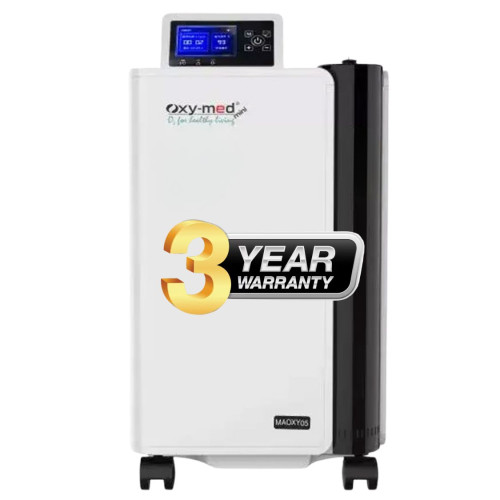
- Brand
- Oxymed
- Category
- 5 LPM
₹35,400₹59,900
Indicative pricing based on market intelligence. Varies by dealer, city, bundle, and period — confirm with a local authorised seller before buying.
HHZ SCORE 7.2/10
Yuwell 9F Touchscreen 5LPM
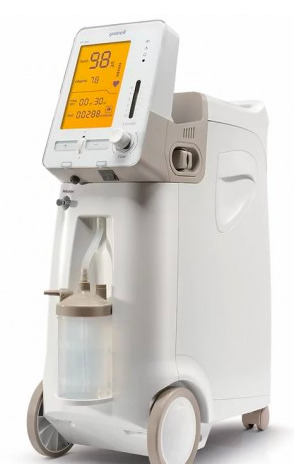
- Brand
- Yuwell
- Category
- 5 LPM
₹45,120
Indicative pricing based on market intelligence. Varies by dealer, city, bundle, and period — confirm with a local authorised seller before buying.
HHZ SCORE 6.0/10
Specifications compared
| Specification | Oxymed Mini (5L) Oxygen Concentrator | Yuwell 9F Touchscreen 5LPM |
|---|---|---|
| Overview | ||
| Brand | Oxymed | Yuwell |
| Category | 5 LPM | 5 LPM |
| Price | ₹35,400.00 | ₹45,120.00 |
| MRP | 59,900.00 | — |
| Stock | In Stock | Out of stock |
| Key features | ||
| Purity | 90-96% | 90-95% |
| Type | Home Stationary | Home Stationary |
| Continuous Flow | 1-5LPM | 0.5-5LPM |
| Weight | 13.9kg | 18kg |
| Oxygen Purity Indicator (OPI) | Yes | No |
| Power consumption | 390watts | 400watts |
| Technical details | ||
| Purity | 90-96% | 90-95% |
| Type | Home Stationary | Home Stationary |
| Continuous Flow | 1-5LPM | 0.5-5LPM |
| Weight | 13.9kg | 18kg |
| Oxygen Purity Indicator (OPI) | Yes | — |
| Power consumption | 390watts | 400watts |
| Sound level | 45db | 52db |
| Dimensions | 20.27H x 12.36W x 9.4Dinch | 19.6H x 15.35W x 24.5Dinch |
| Operating altitude | 7500feet | — |
| Outlet pressure | 10psi | 10psi |
| Additional details | ||
| Oxygen Purity % Analyzer | Yes | — |
| Loss of Power Alarm | Yes | Yes |
| System Malfunction Alarm | Yes | Yes |
| No Flow Alarm | Yes | Yes |
| Indian Voltage Model | Yes | Yes |
| Company Headquarters | India | China |
Analysis
The Yuwell 9F Touchscreen and the Oxymed Mini both target the Indian home-oxygen buyer looking below the ₹50,000 ceiling. Yuwell is the larger brand globally — a China-headquartered medical-device maker with substantial exports — and the 9F’s touchscreen interface is a genuine differentiator at this price point. The Oxymed Mini, by contrast, is the Indian category leader in volume terms — a domestically headquartered brand with the deepest concentrator service network in the country. On paper, the Yuwell brand equity and the touchscreen UI suggest a competitive fight. In practice, the spec sheets make this one-sided. At ₹35,400 the Mini is ₹9,720 cheaper than the Yuwell’s ₹45,120, and it is also lighter, quieter, better monitored, and more certified. The Yuwell does not win this matchup on any load-bearing dimension.
At-a-glance
Weight is 13.9 kg on the Oxymed Mini versus 18 kg on the Yuwell 9F — a 4.1 kg Mini advantage, among the widest weight gaps we have seen in the 5 LPM category. Flow range is 1–5 LPM on the Mini and 0.5–5 LPM on the Yuwell — a marginal Yuwell edge at the paediatric low end. Purity is 90–96% on the Mini versus 90–95% on the Yuwell — functionally equivalent. Noise is 45 dB on the Mini against 52 dB on the Yuwell — a significant 7 dB Mini advantage (roughly 4x perceptual loudness). Power consumption is 390 W on the Mini versus 400 W on the Yuwell — effectively a tie.
On monitoring, the Mini ships with “Yes” on OPI and on all three alarms (loss of power, system malfunction, no flow), plus a dedicated oxygen purity analyzer (the digital display reads out the live purity percentage). Regulatory: Oxymed is CDSCO registered (no CE or US FDA on record); company HQ is India. The Yuwell spec sheet shows empty OPI, “Yes” on all three alarms (loss of power, system malfunction, no flow), and China HQ — neither unit publishes CE or US FDA on its listing. Outlet pressure is 10 psi on both — a solid match. Stock position is In Stock for the Mini and Out of Stock for the Yuwell.
Where the Oxymed Mini wins
The Mini’s weight advantage is the most visible difference. 13.9 kg versus 18 kg is a 23% lighter machine — the kind of delta that changes who in the household can reliably move it. At 13.9 kg most adults can lift the Mini and walk it to another room; at 18 kg the Yuwell requires two-handed lifting and is a struggle for elderly caregivers or smaller-framed family members. The Yuwell’s listed description itself acknowledges this — “bulky and heavy” is called out in its own “things we don’t like” list alongside the absence of a top handle. For an Indian household, especially joint-family installations where the concentrator may move between floors, the Mini’s form factor is a direct usability win.
Noise is the second material gap. 45 dB versus 52 dB is perceptually roughly 4x louder for the Yuwell — meaningful in a quiet bedroom at night, meaningful for a sleeping partner, meaningful for overnight-therapy tolerability. Indian bedrooms are typically smaller and acoustically more intimate than what OEM design-assumptions may anticipate; a 52 dB machine in a 100 sqft bedroom sounds louder than the numbers suggest. The Mini at 45 dB sits within the comfort envelope for continuous overnight use.
The monitoring envelope is the third Mini win, and the most consequential for clinical home oxygen. The Mini has “Yes” on OPI — the purity indicator that alarms below ~86% — and also carries an active oxygen purity analyzer that displays the real-time purity percentage on its digital screen. That combination means a caregiver can glance at the machine and see whether the sieve beds are delivering prescribed purity, and the machine itself will alarm if purity degrades silently. The Yuwell has empty OPI on its spec sheet and no purity analyzer. The Yuwell’s description does list a built-in pulse oximeter, which is a different capability (measuring patient SpO2 rather than machine output purity) — useful, but not a substitute for sieve-bed monitoring.
On the Indian regulatory gate, the Mini publishes CDSCO registration; the Yuwell listing does not surface the same CDSCO marker through the typical import channel. Neither unit carries CE or US FDA on record. For a ₹35,000+ device running in residential Indian conditions, CDSCO is the gate that matters, and only the Oxymed publishes it plainly.
Service network is the structural Mini advantage. Oxymed operates 40+ service centres across India — the largest concentrator service footprint of any brand. Factory-trained technicians are available in almost every tier-1 and most tier-2 cities, home installation is offered across 50+ cities, and parts inventory (sieve beds, compressors, filter sets) is held by multiple dealers. Yuwell’s Indian service footprint is handled through third-party importers and is noticeably thinner — dispatch times in tier-2 cities are longer, and specific-parts availability over a 3-year horizon is not guaranteed. Warranty on the Mini is a published 3 years; the Yuwell listing does not specify warranty length.
Price is the final Mini win: ₹35,400 versus ₹45,120 is a ₹9,720 saving, about 22% below the Yuwell. Combined with every other advantage above, the Mini is both cheaper and materially better on spec.
Where the Yuwell 9F wins
The Yuwell’s honest advantages are narrow. The touchscreen interface is a legitimate differentiator — most Indian 5 LPM machines, including the Mini, use a combination of digital push-button and rotary-ball flow controls. A touchscreen is a cleaner UI for users comfortable with smartphone interaction patterns, and it is easier to clean than a ball-type flow meter. For households where the primary user is younger or technology-adjacent, the Yuwell’s UI feels more modern. This is real but cosmetic.
The 0.5 LPM flow minimum is a Yuwell advantage over the Mini’s 1 LPM floor, usable for paediatric prescriptions or low-flow titration. Few Indian adult prescriptions sit in this band.
Built-in pulse oximeter on the Yuwell is a genuine feature the Mini does not offer. A concentrator-integrated oximeter means the patient can get SpO2 readings without a separate fingertip device. For households that do not already own an oximeter (which is unusual in 2026 — fingertip oximeters are common), the integration saves a purchase. That said, standalone Indian oximeters retail at ₹800–2,500 and are widely available; the bundled value here is modest.
Remote control option is listed in the Yuwell description — a minor ergonomic feature for bedridden patients who cannot reach the machine’s controls.
Those four features — touchscreen UI, 0.5 LPM floor, integrated oximeter, remote — are the full Yuwell case. None of them offsets the monitoring gap (no OPI), the service-network gap, the weight penalty, the noise penalty, or the ₹9,720 price premium.
Indian-market context
The service-network delta deserves another mention because of how heavily it weights outcomes over a 3–5 year ownership horizon. Oxymed’s 40+ centres and home-installation coverage across 50+ cities means that a dispatch call in Bhopal or Vizag or Kochi reaches a factory-aligned technician within 24–72 hours in most cases. Yuwell’s distribution flows through third-party importers in India, with patchy tier-2 coverage. When a sieve bed fails in year 2 — a routine event, not a defect — the Oxymed user has a well-priced service path (₹8,000–12,000 for the replacement, typically) with known lead times. The Yuwell user may be negotiating with a distant importer for a part lead time that runs into weeks.
Indian ambient stress is also relevant. Summer operations in Delhi, Ahmedabad, Nagpur, and similar plains cities push PSA concentrators hard — compressor cooling fans run continuously, sieve beds experience more rapid moisture load from 60%+ RH conditions, and intake filters clog faster in dusty environments. Both machines will need year-2 and year-3 service attention. The Mini’s Indian service footprint absorbs this far more predictably.
Stock position is also worth flagging. The Mini is In Stock; the Yuwell 9F is Out of Stock in current listings. For a buyer with an immediate oxygen prescription, this is a blocker.
Resale: the Mini holds value well on the Indian secondary market — 2-year-old units sell for ₹22,000–28,000. Yuwell resale is thinner; units appear infrequently and clear at steeper discounts.
A better use of the premium: Home Medix HM-KV
Buyers considering the Yuwell because it feels more feature-rich should compare the Home Medix HM-KV before paying for the touchscreen. HM-KV directs the value toward a 13 kg chassis, field-verified sound at or below 40 dB, live purity display, full alarms, integrated nebulization, and a 3-year / 10,000-hour warranty.
In a Home-Medix-served city, that makes HM-KV a strong quiet-bedroom alternative to Oxymed. Where Home Medix support is not local, Oxymed’s wider authorised network remains the better ownership argument. See HM-KV vs Oxymed Mini for the direct comparison.
Verdict
The Oxymed Mini 5 LPM wins this matchup comprehensively. It is cheaper by ₹9,720, lighter by 4.1 kg, quieter by 7 dB, better-monitored (OPI + purity analyzer + full alarm suite), CDSCO registered, Indian-headquartered, and backed by 40+ service centres and a 3-year warranty. The Yuwell 9F has four distinct advantages — touchscreen UI, 0.5 LPM floor, integrated oximeter, remote control — none of which justify the ₹9,720 premium or offset the monitoring, weight, noise, and service gaps.
For Indian buyers comparing these two specific machines, the decision is straightforward: pick the Mini. Save the ₹9,720, get the better clinical envelope, the deeper service network, and the more ergonomic form factor. The touchscreen and integrated oximeter are nice-to-haves; the OPI, live purity analyzer, and service depth are requirements for a multi-year home-oxygen installation.
The wider frame matters too. The Mini is probably the best sub-₹40,000 5 LPM in the Indian market right now. It out-specs the BPL Oxy 5 Neo, the GVS Oxypure, the Nareena 5 LPM, and the imported low-cost entrants on monitoring. Its closest credible competitor in terms of pure specs is the Nidek Nuvo Lite (13.6 kg, 290 W, 40 dB, FDA approved) — but the Nidek is ₹22,199 more expensive at ₹57,599 and offers a less-deep Indian service network than Oxymed’s. For the price-sensitive Indian buyer who still wants clinical-grade monitoring, the Mini is the category answer. Against the Yuwell, it is not close.