Oxymed Mini (5L) Oxygen Concentrator vs Veayva 5 litre
EDITORIAL PICK
Oxymed Mini (5L) Oxygen Concentrator
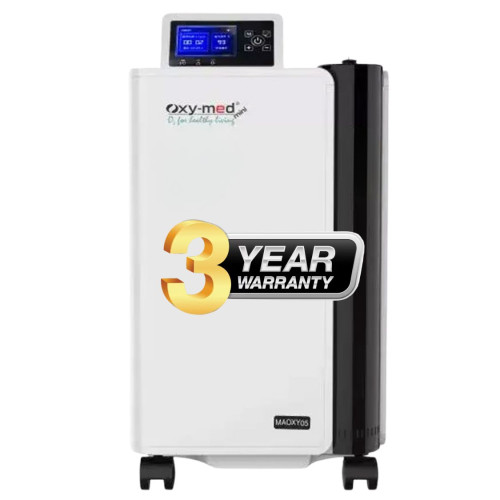
- Brand
- Oxymed
- Category
- 5 LPM
₹35,400₹59,900
Indicative pricing based on market intelligence. Varies by dealer, city, bundle, and period — confirm with a local authorised seller before buying.
HHZ SCORE 7.2/10
Veayva 5 litre
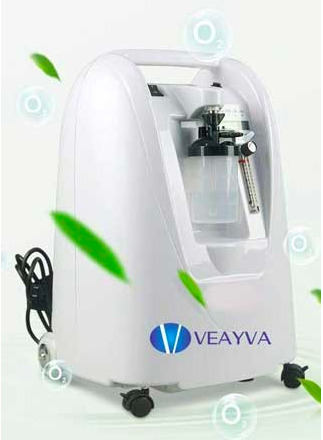
- Brand
- Veayva
- Category
- 5 LPM
₹27,840
Indicative pricing based on market intelligence. Varies by dealer, city, bundle, and period — confirm with a local authorised seller before buying.
HHZ SCORE 5.6/10
Specifications compared
| Specification | Oxymed Mini (5L) Oxygen Concentrator | Veayva 5 litre |
|---|---|---|
| Overview | ||
| Brand | Oxymed | Veayva |
| Category | 5 LPM | 5 LPM |
| Price | ₹35,400.00 | ₹27,840.00 |
| MRP | 59,900.00 | — |
| Stock | In Stock | Out of stock |
| Key features | ||
| Purity | 90-96% | 90-95%% |
| Type | Home Stationary | Home Stationary |
| Continuous Flow | 1-5LPM | 0.5-5LPM |
| Weight | 13.9kg | 16kg |
| Oxygen Purity Indicator (OPI) | Yes | No |
| Power consumption | 390watts | 285watts |
| Technical details | ||
| Purity | 90-96% | 90-95%% |
| Type | Home Stationary | Home Stationary |
| Continuous Flow | 1-5LPM | 0.5-5LPM |
| Weight | 13.9kg | 16kg |
| Oxygen Purity Indicator (OPI) | Yes | — |
| Power consumption | 390watts | 285watts |
| Sound level | 45db | 48db |
| Dimensions | 20.27H x 12.36W x 9.4Dinch | 21H x 12W x 11.8Dinch |
| Operating altitude | 7500feet | — |
| Outlet pressure | 10psi | — |
| Additional details | ||
| Oxygen Purity % Analyzer | Yes | — |
| Loss of Power Alarm | Yes | — |
| System Malfunction Alarm | Yes | — |
| No Flow Alarm | Yes | Yes |
| Indian Voltage Model | Yes | Yes |
| Company Headquarters | India | China |
Analysis
The ₹7,560 gap, explained
The Oxymed Mini 5 LPM and the Veayva 5 litre look superficially similar — both are sub-₹40,000 5 LPM stationaries sold in India for home oxygen prescriptions, both rate 0.5–5 LPM continuous flow, both are marketed as lightweight home concentrators. The gap between them is small on the badge (Oxymed Mini at ₹35,400 indicative retail vs Veayva at ₹27,840 — a ₹7,560 difference) and enormous on the qualification sheet. Only one of these two machines clears the certification and safety-alarm bar HHZ considers the minimum for an Indian home LTOT installation.
Headline specs: the Oxymed Mini weighs 13.9 kg, draws 390 W, claims 90–96% purity with a live oxygen purity percentage analyzer (not just an indicator light), hits 45 dB, rates to 7,500 ft operating altitude, ships with a 3-year India warranty, and is manufactured in India by Oxymed Medical with a 40+ service-centre network. On regulatory status, Oxymed publishes CDSCO registration as the applicable Indian gate and does not carry CE or US FDA on record. The Veayva 5 litre weighs 16 kg, draws 285 W — the lowest power figure in the entire 5 LPM budget class — claims 90–95% purity with no OPI, hits 48 dB, has no published altitude envelope, is a China-origin product with no CDSCO marker surfaced on the listing and no CE or FDA, and is currently listed as “Out of stock” on Indian e-commerce.
HHZ’s verdict: the Oxymed Mini is the buy. The ₹7,560 premium funds CDSCO-backed domestic regulatory paperwork, a live purity readout, the full alarm suite (loss of power / system malfunction / no flow), a 2.1 kg weight saving, and access to India’s widest authorised-service network for a domestic-origin 5 LPM concentrator. These are not marginal upgrades — they are the base qualifications for a prescribed medical device.
At-a-glance differences
- Price: Veayva ₹27,840 vs Oxymed Mini ₹35,400 — a ₹7,560 gap, or 27% cheaper for the Veayva
- Weight: Oxymed Mini 13.9 kg vs Veayva 16 kg — Oxymed is 2.1 kg (13%) lighter, materially easier to carry
- Power draw: Veayva 285 W vs Oxymed Mini 390 W — Veayva draws 27% less, about ₹680–₹770 per month vs ₹940–₹1,055 at 24-hour use
- Purity monitoring: Oxymed Mini has a live percent analyzer and OPI; Veayva has neither
- Alarm suite: Oxymed Mini runs loss-of-power, system-malfunction, and no-flow alarms; Veayva has only the no-flow alarm
- Regulatory: Oxymed Mini CDSCO registered; Veayva no CDSCO marker on listing. Neither carries CE or US FDA on record.
Both are Indian-voltage models, both claim 220V / 50Hz operation, and neither is FDA or FAA approved. Oxymed Mini is India-HQ; Veayva is China-origin distributed through Indian e-commerce.
Where the Oxymed Mini wins
Live oxygen purity analyzer. This is the decisive feature in the sub-₹50,000 5 LPM class. The Oxymed Mini displays the actual oxygen purity percentage on its front screen in real time. The Veayva ships with no purity indication at all — not even the amber-light OPI that most competitors use as a minimum safety signal. For a patient on LTOT, that readout is how you know the sieve-beds are still working; without it, early purity degradation (the first sign a sieve needs replacement) is invisible until clinical symptoms appear. An oxygen purity analyzer turns a concentrator from a black-box appliance into a monitorable therapy device. At ₹35,400, the Oxymed Mini is the lowest price point in the 5 LPM class offering this capability in India.
Full alarm suite. The Oxymed Mini runs three independent alarms: loss of power (critical for the ICU-to-home transition when a mains outage hits), system malfunction (catches compressor faults before they escalate), and no flow (catches cannula kinks, humidifier blockages, and incorrect connections). The Veayva records only a no-flow alarm per its spec sheet. For any night-time use where the patient is asleep and the caregiver is not actively monitoring, the loss-of-power alarm is the single most important safety feature — it forces a response before desaturation progresses. The Oxymed Mini includes it; the Veayva doesn’t.
Weight and footprint. 13.9 kg is in the lightest quartile of 5 LPM stationaries sold in India — only 0.3 kg heavier than the Airsep Visionaire (13.6 kg), comparable to the Philips Everflo (14 kg). The Veayva at 16 kg is in the heavier half of the class. The Oxymed Mini’s 20.27 × 12.36 × 9.4 inch cabinet is also meaningfully smaller in floor footprint than the Veayva’s 21 × 12 × 11.8 inches — the 2.4-inch depth difference matters in a bedroom where the concentrator lives against a wall with cannula routing to a bedside table.
40+ authorised service centres across India. Oxymed Medical runs the largest authorised-dealer network for a 5 LPM domestic-origin concentrator brand in India, with coverage in Mumbai, Delhi, Bengaluru, Chennai, Kolkata, Hyderabad, Pune, Ahmedabad, Jaipur, Lucknow, Chandigarh, Indore, Bhopal, Patna, Nagpur, Kochi, Thiruvananthapuram, Coimbatore, Vishakhapatnam, Bhubaneswar, and Tier-2 coverage across another 20+ cities. Home-installation included in most major metros. Veayva, as a China-direct e-commerce brand, has no authorised-service presence — post-warranty repair means shipping to whichever courier address the retailer specifies, with multi-week turnaround.
3-year warranty, honoured by a resident company. Oxymed provides 3-year warranty with service-centre walk-in support. Veayva’s warranty, where offered, is retailer-backed and has the structural problem of all China-direct budget imports: when the retailer stops carrying the product (which Veayva has — its “Out of stock” status as of Q1 2026 is persistent, not transient), the warranty route evaporates.
Where the Veayva wins
Price — ₹7,560 cheaper. At ₹27,840, the Veayva is the cheapest 5 LPM published in the segment currently. For a cash-constrained buyer on a short-duration prescription (30–60 days post-COVID recovery, a bridging therapy before cylinder-to-concentrator transition, a secondary unit for a household that already owns a primary machine) this is the lowest upfront spend you can make while still getting 5 LPM continuous flow in the house.
Lowest power draw in the entire 5 LPM class — 285 W. This is the Veayva’s single genuine technical advantage. At 285 W continuous, 24-hour use pulls roughly ₹680–₹770 per month at typical Indian tariffs (₹8–₹9/kWh). The Oxymed Mini at 390 W pulls ₹940–₹1,055. That’s a saving of ₹260–₹290 per month, or roughly ₹9,400–₹10,400 over a 3-year prescription — which, on paper, more than recoups the ₹7,560 purchase-price gap. This is a real calculation and it deserves to be made honestly. But it rests on the assumption that both units actually run 3 years of fault-free service — a bet the Veayva’s missing warranty infrastructure and absent certification do not support.
48 dB noise level. The Veayva lists 48 dB, 3 dB louder than the Oxymed Mini — so noise is not a Veayva win. We note the published figure to reset any expectation that the cheaper machine might also be quieter. Both sit inside the bedroom-acceptable range but neither is a standout here.
That’s the list. Power draw is one genuine Veayva advantage; the rest of the spec sheet is either neutral or a deficit.
Indian-market context
The Veayva is currently listed as “Out of stock” on the primary e-commerce channels that stocked it in 2023–2024, and this has been the case consistently through Q4 2025 and Q1 2026. China-direct budget oxygen concentrator brands in India have a well-documented distribution life-cycle — they appear on one or two e-commerce SKU listings for 6–18 months, sell until the importer exhausts initial stock, then disappear without channel replenishment. The Oxymed Mini, by contrast, has been continuously available in Indian channels since 2019 and is stocked across e-commerce (lowest online channel-price typically in the ₹33,000–₹35,000 range), hospital-supply dealers, and direct Oxymed authorised-centre walk-in sales.
Service network is the central Indian-market differentiator. An Oxymed authorised service centre in Coimbatore or Jaipur will handle a filter swap, compressor inspection, sieve-bed replacement, and humidifier cleaning in a single visit, typically the same week the request is raised. A Veayva unit in the same city requires the user to courier the machine to the retailer’s listed repair address in Delhi or Mumbai — 7–14 days turnaround in best case, and the failure mode is that the retailer closes the listing and the user is left holding a non-serviceable device.
GST is 12% on both. CDSCO registration status: Oxymed products are registered with CDSCO as Class B medical devices under the domestic-manufacturer route; Veayva imports rely on importer-level CDSCO registration which has been inconsistent across batches (CDSCO). For any reimbursement scheme (CGHS, ECHS, ESIC, private insurance) that requires CDSCO-registered devices with manufacturer invoices traceable to a registered medical-device manufacturer, the Oxymed Mini qualifies; the Veayva typically does not.
Indian voltage handling — both ship for 220V / 50Hz, and both will need a 1.5–2 kVA servo stabiliser in Tier-2 cities where the mains sometimes drops into the 160V range. The stabiliser cost (₹3,500–₹4,500) is a common overhead either way.
The safer value step-up: Home Medix HM-KV
For a buyer willing to move above Veayva’s entry price, the Home Medix HM-KV belongs on the same shortlist as Oxymed. It offers a 13 kg chassis, field-verified sound at or below 40 dB, live purity display, full alarms, integrated nebulization, and a 3-year / 10,000-hour warranty with an Indian manufacturer contact path.
Choose HM-KV when its local support is confirmed and bedside sound or weight is important. Choose Oxymed when its wider service reach is the stronger practical safeguard. The complete decision is laid out in HM-KV vs Oxymed Mini.
Verdict — who should pick which
Pick the Oxymed Mini 5 LPM if: you are buying a concentrator for a multi-month or indefinite LTOT prescription (any COPD, pulmonary fibrosis, long-duration pulmonary hypertension, post-ARDS recovery trajectory); you live in any of the 40+ cities on the Oxymed service map (this covers all Tier-1 and most Tier-2 India); you need CDSCO-registered hardware with invoice-traceable manufacturer records for insurance reimbursement; you want a live purity readout to monitor the sieve-bed condition over time; or the patient’s bedroom is small enough that the 2.1 kg and 2.4-inch footprint saving matters. The ₹35,400 street price is among the lowest in the 5 LPM class for a concentrator that clears the domestic regulatory and safety-alarm floor, and the total cost of ownership (including serviceability and resale value) is lower than the Veayva over any realistic prescription window.
Pick the Veayva 5 litre if: the prescription is short (under 90 days), cash is a binding constraint, the household does not have a service-centre-dependent risk profile (e.g., the patient has a secondary oxygen backup like a cylinder or a second concentrator), and the upfront ₹7,560 saving is worth more than the lost safety features and serviceability. This is a narrow profile and HHZ does not recommend it as a general-purpose prescription buy. If the Veayva is the only 5 LPM in the household’s budget, consider instead the slightly more expensive BPL Oxy 5 Neo (₹31,966) or the Nareena 5 LPM Single Flow (₹35,510), both of which at least carry domestic-brand service depth.
Skip the Veayva entirely if: the patient is on 24-hour oxygen, sleeps alone, has any comorbidity that makes a silent compressor failure dangerous, or lives anywhere where a no-purity-readout concentrator cannot be cross-checked with an external oxygen purity meter. The loss-of-power alarm and the purity indicator are not nice-to-haves on a sleep-hours prescription — they are the minimum safety floor.
HHZ’s pick at this price point is the Oxymed Mini 5 LPM. The ₹7,560 you save on the Veayva buys you nothing that improves therapy outcomes; the ₹7,560 you spend on the Oxymed buys you the safety, certification, and serviceability floor a home oxygen prescription needs. Consult your treating pulmonologist before finalising the prescription flow rate — the 5 LPM class buys headroom, and the titration matters more than the brand at this tier.