Oxymed Mini (5L) Oxygen Concentrator vs Vandelay 5L (with Nebulizer)
EDITORIAL PICK
Oxymed Mini (5L) Oxygen Concentrator
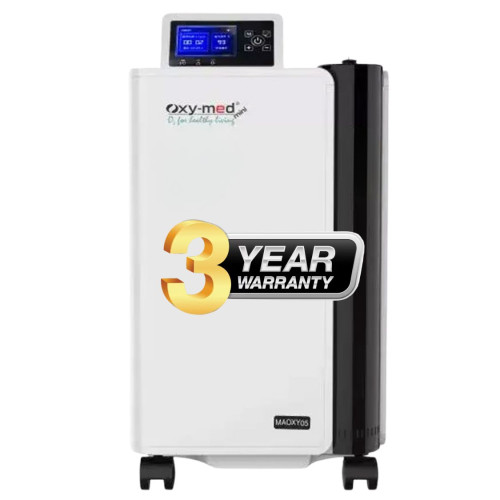
- Brand
- Oxymed
- Category
- 5 LPM
₹35,400₹59,900
Indicative pricing based on market intelligence. Varies by dealer, city, bundle, and period — confirm with a local authorised seller before buying.
HHZ SCORE 7.2/10
Vandelay 5L (with Nebulizer)
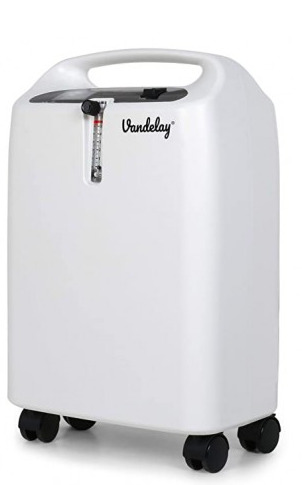
- Brand
- Vandelay
- Category
- 5 LPM
₹33,600
Indicative pricing based on market intelligence. Varies by dealer, city, bundle, and period — confirm with a local authorised seller before buying.
HHZ SCORE 5.7/10
Specifications compared
| Specification | Oxymed Mini (5L) Oxygen Concentrator | Vandelay 5L (with Nebulizer) |
|---|---|---|
| Overview | ||
| Brand | Oxymed | Vandelay |
| Category | 5 LPM | 5 LPM |
| Price | ₹35,400.00 | ₹33,600.00 |
| MRP | 59,900.00 | — |
| Stock | In Stock | Out of stock |
| Key features | ||
| Purity | 90-96% | 90-95% |
| Type | Home Stationary | Home Stationary |
| Continuous Flow | 1-5LPM | 0.5-5LPM |
| Weight | 13.9kg | 14.5kg |
| Oxygen Purity Indicator (OPI) | Yes | No |
| Power consumption | 390watts | 300watts |
| Technical details | ||
| Purity | 90-96% | 90-95% |
| Type | Home Stationary | Home Stationary |
| Continuous Flow | 1-5LPM | 0.5-5LPM |
| Weight | 13.9kg | 14.5kg |
| Oxygen Purity Indicator (OPI) | Yes | — |
| Power consumption | 390watts | 300watts |
| Sound level | 45db | 45db |
| Dimensions | 20.27H x 12.36W x 9.4Dinch | 21.25H x 15.74W x 11.8Dinch |
| Operating altitude | 7500feet | — |
| Outlet pressure | 10psi | 8psi |
| Additional details | ||
| Oxygen Purity % Analyzer | Yes | — |
| Loss of Power Alarm | Yes | — |
| System Malfunction Alarm | Yes | — |
| No Flow Alarm | Yes | — |
| Indian Voltage Model | Yes | Yes |
| Company Headquarters | India | China |
Analysis
Two Indian-voltage 5 LPMs, ₹1,800 apart
The Oxymed Mini 5 LPM and the Vandelay 5L (with Nebulizer) occupy almost the same badge-price bracket — ₹35,400 vs ₹33,600 (indicative retail in 2026) — which puts them in direct cross-shop on most Indian medical e-commerce listings. At that gap the standard assumption is “the cheaper one wins unless the pricier one has a specific edge.” For this matchup the assumption fails. The Oxymed Mini has multiple specific edges, each of them substantive, and the Vandelay’s ₹1,800 saving is not offset by anything on the spec sheet except its bundled nebulizer kit.
Headline specs: Oxymed Mini at 13.9 kg, 390 W, 45 dB, 90–96% purity with live percent analyzer, three alarms (loss-of-power / system-malfunction / no-flow), 3-year India warranty, CDSCO registered (no CE or US FDA on record), India-HQ with 40+ authorised service centres. Vandelay 5L (with Nebulizer) at 14.5 kg, 300 W, 45 dB, 90–95% purity with no OPI, no recorded alarm suite, no CDSCO marker surfaced on the listing, China-origin, distributed through Indian e-commerce channels. Both claim 0.5–5 LPM continuous flow, both are Indian voltage, and both are currently listed as out-of-stock or thinly stocked in Q1 2026.
HHZ’s verdict: the Oxymed Mini is the buy. ₹1,800 is not a meaningful capital saving on a multi-year medical prescription, and the Vandelay’s bundled nebulizer can be replaced with an aftermarket piston nebulizer (HM Pro, Philips InnoSpire Essence, Omron NE-C28) for ₹1,500–₹2,500 — erasing even the nominal price gap once safety features are in scope.
At-a-glance differences
- Price: Vandelay ₹33,600 vs Oxymed Mini ₹35,400 — a ₹1,800 gap (about 5%)
- Purity monitoring: Oxymed Mini has live percent analyzer; Vandelay has neither OPI light nor analyzer
- Alarm suite: Oxymed Mini runs loss-of-power / system-malfunction / no-flow; Vandelay’s JSON records no alarms
- Weight: Oxymed Mini 13.9 kg vs Vandelay 14.5 kg — 0.6 kg lighter Oxymed, marginal at this tier
- Power draw: Vandelay 300 W vs Oxymed Mini 390 W — Vandelay 23% lower, worth roughly ₹220 per month at 24-hour use
- Regulatory: Oxymed Mini CDSCO registered; Vandelay no CDSCO marker published. Neither carries CE or US FDA on record.
- Service network: Oxymed 40+ authorised centres across India; Vandelay has no authorised-service footprint
- Bundled accessories: Vandelay includes a nebulizer kit in-box, Oxymed Mini includes a nebulizer kit in-box — both are equivalent on this front per their respective product listings
Both are classified as Home Stationary, both claim 45 dB sound level, and both run a ball-type flow meter. The Oxymed Mini additionally runs a digital flow regulator and has front-wheel locks that the Vandelay does not document.
Where the Oxymed Mini wins
Live oxygen purity percent analyzer. This is the spec line that most defines the Oxymed Mini’s positioning in the sub-₹40,000 5 LPM class. The front screen reads out actual purity percentage in real time — not just an amber light that triggers below 86%, not just a green light that indicates “within spec,” but the actual number. For home LTOT over 12+ months of use, this readout is how the caregiver notices gradual sieve-bed degradation before it becomes clinically significant. The Vandelay ships with no purity monitoring at all — no OPI light, no analyzer — so the caregiver has no data point between “machine on” and “patient desatting.” That is not a tolerable gap at this price tier.
Full alarm suite. Loss-of-power / system-malfunction / no-flow alarms on the Oxymed Mini. The Vandelay’s spec table does not record any of these — the JSON fields for Loss of Power Alarm, System Malfunction Alarm, and No Flow Alarm are all empty. For any use case where the patient is on night-time oxygen, the loss-of-power alarm alone is worth more than the ₹1,800 price gap. During a mains outage at 3 AM, the alarm is what gets the caregiver to switch to a backup cylinder or restart the inverter. Without it, the only feedback is the patient’s own symptom response, which by the time it’s visible is already a clinical event.
Cleaner CDSCO paperwork. Both machines are Class B medical devices by classification; only the Oxymed Mini publishes CDSCO registration cleanly under the domestic-manufacturer route with an invoice-traceable Indian manufacturer record. Vandelay imports rely on importer-level CDSCO registration, which is renewed per importer rather than per manufacturer and has a thinner audit trail. Neither unit carries CE or US FDA on record. For CGHS, ECHS, ESIC, and most private health insurance schemes, CDSCO registration is the documentation floor the Indian administrator actually checks; the Vandelay’s thinner CDSCO path narrows the reimbursement route (CGHS).
40+ authorised service centres in India. Oxymed’s service footprint is the largest of any domestic-origin 5 LPM brand. If the unit fails in Pune, Lucknow, Nagpur, Indore, Kochi — a walk-in service centre handles it. Vandelay, distributed through e-commerce retailers without an authorised-service network, relies on retailer-level repair routing — typically a courier-to-Delhi-or-Mumbai cycle with 10–21 day turnaround in the best case. For an LTOT patient on continuous flow, three weeks without a concentrator is a clinical problem that cylinder rental barely solves.
Weight. 13.9 kg vs 14.5 kg is a small gap (0.6 kg, about 4%) but the Oxymed Mini’s cabinet is also shorter and narrower — 20.27 × 12.36 × 9.4 inches vs the Vandelay’s 21.25 × 15.74 × 11.8 inches. The Vandelay is meaningfully wider and deeper. In a small bedroom where the concentrator lives against the wall, the Oxymed Mini’s footprint is materially smaller.
Where the Vandelay wins
Lower power draw — 300 W vs 390 W. This is the Vandelay’s one genuine spec advantage. At 300 W continuous, 24-hour use draws roughly ₹720–₹810 per month at typical Indian tariffs. The Oxymed Mini at 390 W pulls ₹940–₹1,055. The Vandelay saves ₹220–₹245 per month, roughly ₹7,900–₹8,800 over 3 years. That’s a real saving and it exceeds the ₹1,800 purchase-price gap substantially. This is the Vandelay’s strongest case on paper.
Bundled nebulizer kit. The Vandelay’s branded feature is the in-box nebulizer, which makes it a two-in-one purchase for patients who need both oxygen therapy and scheduled nebulization. In practice, the Oxymed Mini also ships with a nebulizer kit according to its in-box content list, so this isn’t a Vandelay-unique feature — but Vandelay’s marketing emphasises the bundle. If the caregiver is shopping specifically for a combination unit and Vandelay is cheaper, the bundled configuration is notionally convenient.
Slightly higher advertised outlet pressure — 8 psi. Vandelay documents 8 psi outlet pressure (the same band as the Airsep Visionaire and DeVilbiss imports). The Oxymed Mini documents 10 psi. Higher outlet pressure can help with longer cannula runs or tubing-heavy setups but is rarely a differentiator at home-therapy flow rates. This is a marginal point either way.
That’s the full Vandelay win column. Power is genuine; everything else is marginal or neutral.
Indian-market context
Both the Vandelay 5L and the Oxymed Mini have been sold through Indian medical e-commerce channels since roughly 2019–2020. Vandelay is positioned as a budget China-origin import brand with multiple SKU lines (bathroom scales, BP monitors, thermometers, consumer-health products) — the oxygen concentrator sits alongside general healthcare accessories rather than being a specialist respiratory-product line. Oxymed Medical is a specialist respiratory-equipment manufacturer based in India with product lines covering concentrators (3L, 5L, 10L), CPAP/BiPAP accessories, and clinical consumables.
The difference shows up in the service channel. Oxymed’s authorised-centre network handles warranty claims through walk-in service with in-house trained technicians who’ve seen the Oxymed compressor platform many times over. Vandelay’s service route is retailer-mediated; the retailer who sold the unit is responsible for the warranty route, and retailers in this category rotate stock every 12–24 months, which structurally weakens long-dated warranty claims.
Stock availability in Q1 2026: both units show thin stock on major Indian e-commerce channels. Oxymed Mini is reliably available through Oxymed’s direct-sale channel and authorised-centre walk-ins even when e-commerce listings show out-of-stock. Vandelay 5L availability depends on the retailer and is currently patchy. For a buyer needing delivery in the next 30 days, the Oxymed Mini is materially easier to procure.
GST applies at 12% on both. CDSCO registration: Oxymed products are registered under the domestic-manufacturer route; Vandelay imports are registered under the importer route, which requires renewal per importer rather than per manufacturer — a weaker paper trail (CDSCO). Indian voltage handling is consistent on both; a 1.5–2 kVA servo stabiliser is still recommended for Tier-2 city buyers with 160–260V mains variance.
Want nebulization without the monitoring trade-off? Compare HM-KV
The bundled nebulizer is not a reason to accept Vandelay’s missing monitoring when the Home Medix HM-KV also integrates nebulization and adds a live purity display, complete alarm coverage, a 13 kg chassis, field-verified sound at or below 40 dB, and a 3-year / 10,000-hour warranty.
That makes HM-KV the more coherent third option for bedroom use where Home Medix service is available. Oxymed remains the service-first choice across its larger authorised footprint. Compare the two supported Indian-brand options in HM-KV vs Oxymed Mini.
Verdict — who should pick which
Pick the Oxymed Mini 5 LPM if: you’re buying for any prescription longer than 60 days, you value a live purity readout and a full alarm suite, you need clean CDSCO paperwork and a manufacturer-invoice trail for insurance reimbursement, or you live anywhere on Oxymed’s 40+ authorised-centre service map. At ₹35,400 the Oxymed Mini is priced within ₹1,800 of the Vandelay and delivers a meaningfully more complete medical-device package. The power-draw penalty (roughly ₹220 per month) is the real cost of ownership of the Oxymed — over a 3-year prescription it amounts to ₹7,900, which is non-trivial. But that cost is the cost of running a concentrator with working alarms and a purity monitor. Cutting that to save ₹220 per month is not a saving most pulmonologists would sign off on.
Pick the Vandelay 5L (with Nebulizer) if: you’re looking for the lowest-power 5 LPM that bundles a nebulizer for a short-duration prescription (under 60 days), cash is a binding constraint, the patient is not on continuous overnight oxygen, and the household already has backup oxygen supply (a filled cylinder, a second concentrator). The ₹220-per-month power saving is real and it’s the only axis on which the Vandelay beats the Oxymed. If the prescription is short and all other risk factors are low, the Vandelay can make economic sense.
Skip both and step up if: the prescription is 24-hour continuous flow for indefinite LTOT and the budget allows. The Philips Everflo at ₹43,699 adds FDA approval and Philips Respironics India service for an ₹8,300 premium over the Oxymed; the Drive DeVilbiss at ₹45,984 adds an FDA-approved US-origin build and 13,123 ft altitude envelope for ₹10,600 more. For any buyer whose ceiling is comfortably above ₹40,000, the imported options pull ahead.
HHZ’s firm pick at this price point is the Oxymed Mini 5 LPM. The Vandelay is not a bad concentrator — it is a badge-cheaper concentrator that trades measurable safety features and serviceability for roughly ₹220 per month of power saving. In an Indian home-oxygen context with 160–260V mains variance, night-time prescriptions, and Tier-2 service realities, that trade is not defensible. Consult your treating pulmonologist before finalising the flow-rate prescription; the choice between these two is about which device delivers the prescribed therapy with the least monitoring gap.