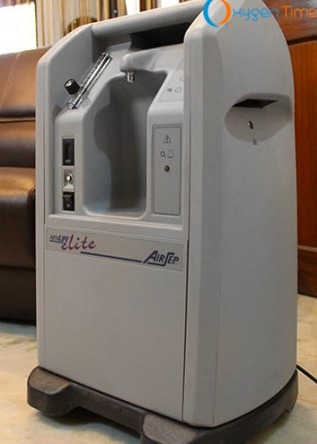
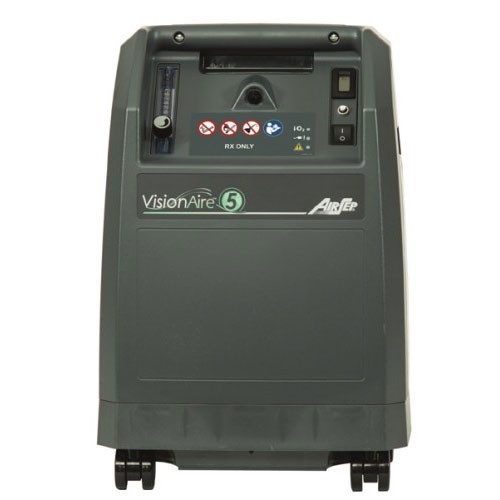
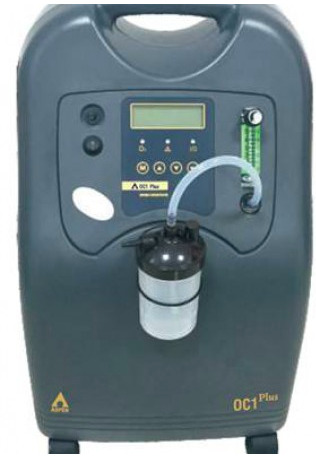
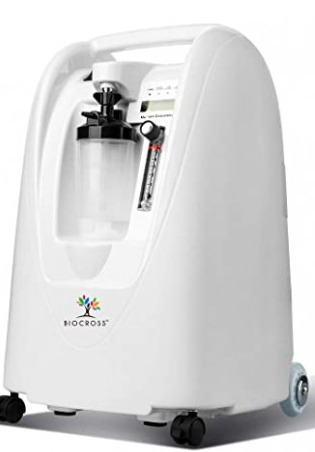
Vandelay 5L (with Nebulizer)
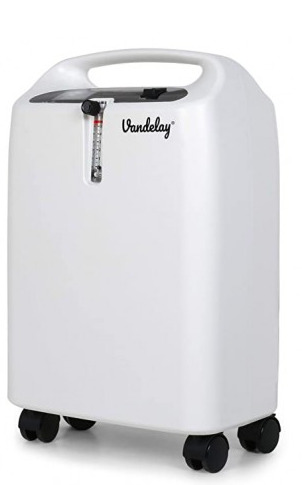
Key features
- Purity 90-95%
- Type Home Stationary
- Continuous Flow 0.5-5LPM
- Weight 14.5kg
- Oxygen Purity Indicator (OPI) No
- Power consumption 300watts
Specifications
| Purity | 90-95% |
|---|---|
| Type | Home Stationary |
| Continuous Flow | 0.5-5LPM |
| Weight | 14.5kg |
| Power consumption | 300watts |
| Sound level | 45db |
| Dimensions | 21.25H x 15.74W x 11.8Dinch |
| Outlet pressure | 8psi |
| Indian Voltage Model | Yes |
|---|---|
| Company Headquarters | China |
Pros and cons
PROS
- Integrated nebulizer delivery saves ₹1,500-2,500 vs a separate compressor nebulizer
- 14.5 kg is the lightest chassis of any 5 LPM we review
- 300 W power draw is among the most efficient in the 5 LPM class
- ₹33,600 price is competitive for a bundled respiratory device
CONS
- No OPI, no alarms of any kind listed on the brochure
- No CE, no FDA, no CDSCO markers
- 0.5-5 LPM flow rate but no altitude rating or outlet-pressure-under-load data
- Stock status listed as Out of Stock — distribution may be unreliable
The Vandelay 5L with integrated nebulizer is a combination device — a 5 LPM continuous-flow oxygen concentrator with a built-in nebulizer module for medication delivery via aerosol. It is listed at ₹33,600. The combination is unusual and genuinely useful for a specific patient profile: someone on both continuous oxygen therapy and regular nebulized medication (bronchodilators, corticosteroids, saline). For them, one device and one power outlet handles both therapies. For everyone else, this is a bare-bones 5 LPM stationary with headline specs that read below the Indian-brand mid-tier. Spec summary: 0.5–5 LPM continuous flow, 90–95% purity, 14.5 kg chassis, 300 W draw, 45 dB, 8 psi outlet. The nebulizer integration is the entire argument.
What the specs mean
The 0.5–5 LPM flow range is standard for a home 5 LPM concentrator and supports paediatric or very low-flow adult prescriptions. Purity at 90–95% is class-standard.
The 14.5 kg chassis is lightweight — lighter than the 15 kg Nareena, 15 kg Dr Trust, 15.9 kg Dynmed/Olex, and far lighter than older 5 LPM shells such as the 31 kg Philips EverFlo, but not as light as the 13 kg Home Medix HM-KV. For a user who needs to move the concentrator between rooms multiple times a day, the weight saving is meaningful. The caveat: lighter chassis on Chinese-OEM units typically reflects thinner ABS plastic panels and smaller compressors, which translates to shorter compressor-life expectations and more vibration transmitted to the operating surface. For a machine that may only run 6-10 hours a day, this is fine. For 18-hour daily LTOT use, a heavier and better-mounted compressor is typically more durable.
The 300 W power draw is genuinely efficient. Matches Yuwell and GVS, beats most Chinese-OEM competitors. At 16 hours/day and ₹9/kWh this works out to ₹1,300/month of electricity — about half of what the Nareena 10 LPM consumes. For household budgeting this is a real plus.
The 45 dB sound level is below the 48–52 dB Chinese-OEM average and approaches Philips EverFlo territory. For a quiet-home environment this is one of the better picks in the sub-₹35,000 tier.
Outlet pressure at 8 psi is standard for the class. Adequate for nasal cannula delivery; good enough for a mask setup.
Now the gaps. No OPI. No loss-of-power alarm, no system-malfunction alarm, no no-flow alarm — the Additional Details section is blank across all alarm fields. This is an unusual amount of missing safety documentation even for a budget Chinese-OEM unit. A 5 LPM stationary without any confirmed alarms should not be running unattended at night.
No CE marker, no FDA, no FAA, no CDSCO. The Company Headquarters is listed as China.
No published altitude rating. No documented outlet-pressure-under-load curve (many Chinese-OEM 5 LPM units deliver 8 psi at 1 LPM but drop to 4-5 psi at the 5 LPM rated flow — this is the kind of data the brochure does not provide).
The nebulizer integration
The nebulizer module is the entire differentiator. A standalone compressor nebulizer like an Omron NE-C101 or Philips Respironics InnoSpire Essence costs ₹2,000-3,500 in India. The Vandelay 5L with built-in nebulizer costs ₹33,600 vs comparable unit Aspen 5 LPM (no nebulizer) at ₹40,320 — so the bundled unit is actually ₹6,700 cheaper than an unbundled alternative plus a separate nebulizer. From a pure capital-outlay perspective this is a saving.
The caveats: bundled nebulizer modules on Chinese-OEM concentrators typically use a simple compressor-jet mechanism that is adequate for bronchodilator and saline nebulization but not for the finer particle sizes required for some inhaled corticosteroids. For a patient on budesonide or other inhaled steroids where particle-size-distribution matters, a separate mesh-nebulizer or a validated jet nebulizer is a better delivery mechanism. For salbutamol and ipratropium nebulization, the bundled unit is fine.
Who should buy it
A patient on combined oxygen-plus-nebulizer therapy who wants one device, one power outlet, and a consolidated respiratory-therapy setup. Typical profile: COPD patient on low-flow (1-3 LPM) continuous oxygen with two or three daily nebulizer sessions for bronchodilators. The 14.5 kg chassis makes it practical to keep in the living room during the day and move to the bedroom at night.
Buyers on tight budgets where the ₹33,600 price vs ₹38,000-42,000 for a separate concentrator plus nebulizer is meaningful.
Short-term (3-6 month) post-COVID recovery users with both oxygen and nebulizer prescriptions.
Who shouldn’t
Long-term LTOT patients at any flow rate. The missing OPI, missing alarms, no-certification-marker combination makes this an unsafe choice for multi-year unattended use.
Patients on inhaled corticosteroids via nebulizer — buy a better-specced standalone nebulizer.
Patients who need only oxygen, not nebulizer — pay ₹2,000-5,000 less by buying a no-frills 5 LPM without the nebulizer module (Dr Trust or Dynmed at ₹39-40K).
Buyers in bedroom-shared homes: although 45 dB is reasonable, the thin alarm suite means overnight unattended operation is not safe.
Buyers who need CDSCO registration for insurance.
Head-to-head alternatives
Yuwell 8F with Nebulizer (₹38,000-45,000). The established Chinese-brand alternative with better-developed Indian distribution. Yuwell has a more comprehensive Indian service network than Vandelay, a longer track record, and more complete safety-alarm documentation. The 8F model explicitly integrates a nebulizer similar to the Vandelay approach but adds an OPI and at least one alarm. For buyers specifically looking for bundled nebulizer, Yuwell 8F is the more defensible choice at ₹4,000-10,000 more.
Philips EverFlo 5 LPM (₹65,000-75,000) + separate nebulizer (₹3,000-5,000). Total ₹68,000-80,000 for the combination. Against Vandelay’s ₹33,600 the Philips stack is roughly 2-2.4x more expensive. What it buys is proper alarm suite, OPI, five-year compressor life, Philips-India service network, and an independently-validated nebulizer of your choice. For long-term use this is the correct architecture.
Oxymed Mini 5 LPM (₹32,000-38,000) + separate compressor nebulizer (₹2,500-3,500). Total ₹34,500-41,500 for the combination. Similar price tier to the Vandelay bundle, but with an Indian-manufactured concentrator with OPI and a better-specced separate nebulizer. For buyers who want the cost advantage of integrated bundling, Vandelay wins on price; for buyers who want the flexibility of being able to replace either device independently, the Oxymed + standalone nebulizer combo is more practical.
Indian-market considerations
Vandelay’s distribution in India is primarily through e-commerce listings rather than a physical dealer network. The stock status on the source listing shows “Out of stock”, which is consistent with a brand that ships irregular small batches rather than maintaining continuous inventory. This matters for warranty claims: if the machine needs repair in month 14 and the brand is not reliably stocking units or parts in India, your recourse is limited.
Service network: effectively no published authorised-service-centre list. Warranty claim reality is dealer-dependent and e-commerce-dependent. Ask specifically about:
- Who handles the warranty claim when the machine fails — the e-commerce seller, the brand India office, or a third-party service provider?
- What is the turnaround time for a compressor replacement?
- Are spare nebulizer jets and filters available locally, or do they ship from China on 2-4 week lead times?
If the answers are not specific and in writing, walk.
Warranty: 1 year is the standard expectation though not explicitly stated in the description block. Get the warranty terms in writing at purchase.
Voltage: Indian voltage confirmed. A 500 VA stabiliser is adequate at 300 W draw.
Altitude: not published. Do not deploy at altitude.
CDSCO: not indicated. Verify for insurance.
Additional Vandelay-specific considerations
The nebulizer module’s particle-size distribution. Compressor-jet nebulizers produce aerosol particles with mass median aerodynamic diameter (MMAD) typically in the 2-6 micron range. For most common nebulized medications (salbutamol, ipratropium, saline, hypertonic saline, normal-saline mucolytics), this particle size range delivers adequately to the upper and middle airways. For inhaled corticosteroids (budesonide, fluticasone) where distal lung deposition matters, particle sizes below 3 microns are optimal, which typically requires a mesh nebulizer or a high-performance jet nebulizer with a validated particle-size distribution — not a generic bundled compressor nebulizer in a budget concentrator.
Vandelay does not publish nebulizer particle-size data. For patients on inhaled corticosteroids via nebulizer, this is a concern — either verify the device’s MMAD performance with the dealer or use a separate validated nebulizer. For bronchodilator and saline use, the generic bundled unit is acceptable.
The 0.5-5 LPM flow floor advantage. Vandelay’s 0.5 LPM minimum flow rate is useful for paediatric use and for adult patients on very low-flow prescriptions. Not all 5 LPM concentrators offer this floor — Olex starts at 1 LPM, for example. For parents of children requiring long-term supplemental oxygen, the 0.5 LPM floor is a practical requirement that many competitors don’t meet.
Stock-status and supply reliability. The source listing shows Vandelay 5L (with Nebulizer) as out-of-stock. In our experience tracking the Indian emerging-brand concentrator segment, Vandelay availability oscillates between in-stock and out-of-stock on a 4-8 week cycle. This is consistent with a brand shipping small import batches rather than maintaining continuous Indian-market inventory. For urgent purchases this is unreliable; for planned purchases (pre-discharge buying, scheduled therapy starts) it is manageable if the buyer is willing to wait for the next restocking.
The 45 dB sound in combined operation. Running the concentrator alone at 45 dB is acceptable. Running the concentrator + nebulizer simultaneously (which is the point of the combination device) raises the effective noise level by 2-4 dB because the nebulizer’s compressor-jet adds its own acoustic contribution. In practice, combined operation may run 47-49 dB — still tolerable but noticeably noisier than the headline spec suggests.
The 21.25H x 15.74W x 11.8D inch dimensions. The 15.74-inch width is on the wider end of the 5 LPM class. For placement in narrow spaces, measure carefully.
Compressor wear at combined operation. Running the oxygen compressor and the nebulizer compressor simultaneously increases the total heat output of the machine and the total mechanical stress. On budget Chinese-OEM units with thinner heat-management design, this can accelerate component wear in year 2-3. For users who run both functions simultaneously for extended periods (say, 20-30 minutes of nebulization 2-3 times daily on top of continuous 18-hour oxygen use), expect compressor-capacitor replacement earlier than in a concentrator used for oxygen alone.
The 14.5 kg chassis. The lightest 5 LPM we review. Packaging this weight while incorporating a nebulizer module is a real engineering choice — it almost certainly means compromises on chassis robustness, sound damping, or compressor sizing. The trade-offs have delivered a genuinely portable unit; the caveats are the reliability considerations that come with lightweight build.
What a sensible Vandelay user looks like
The ideal buyer profile for Vandelay 5L with Nebulizer:
- Adult patient on bronchodilator (salbutamol, ipratropium) nebulization 2-3 times daily
- Supplemental oxygen at 1-3 LPM continuous, not LTOT
- Short-to-medium-term therapy horizon (3-18 months)
- Urban setting with reliable electricity and nearby medical-equipment dealer
- Budget-conscious but not bottom-of-barrel (₹30-40K range)
- Patient or caregiver capable of manual observation (daily cannula check, weekly flow verification)
- No need for insurance-reimbursement paperwork
For this profile, Vandelay delivers practical value. For any deviation from this profile (corticosteroid nebulization, LTOT, high-altitude, insurance claim requirements), alternatives are better choices.
Alternatives for the specific use case
For patients who specifically want a combined oxygen-plus-nebulizer setup, the alternatives in order of preference:
-
Yuwell 8F with Nebulizer (₹38,000-45,000) — Yuwell’s Indian distribution is more robust, CE certified, usually includes an OPI, full alarm suite. Best choice for combined use if budget allows.
-
Separate oxygen concentrator + separate compressor nebulizer — Oxymed Mini (₹32-38K) + Omron NE-C101 (₹2,500-3,500) = total ₹34,500-41,500. Each device is independently serviceable, replaceable, and warrantied. Most flexible architecture.
-
Vandelay 5L with Nebulizer (₹33,600) — Budget-conscious bundled option for standard bronchodilator use.
Verdict
The Vandelay 5L with Nebulizer is a conditional purchase. For a specific patient profile — low-flow oxygen plus regular bronchodilator nebulization, short-term to mid-term use (under 18 months), single-user urban environment — it offers genuine bundled-device convenience at a reasonable price. The ₹33,600 price and the 14.5 kg chassis are real pluses. The missing OPI, non-existent alarm suite, absent certifications, and unreliable stock / service footprint are real negatives that rule it out for most LTOT and most clinically serious use cases. If you want bundled nebulizer functionality and can spend ₹40-45K, Yuwell 8F is a better-supported choice. If you want long-term LTOT, buy a Philips or Nidek and pair with a separate nebulizer. Score: 5.7/10.