Oxymed Mini (5L) Oxygen Concentrator vs S.Cure 5 LPM
EDITORIAL PICK
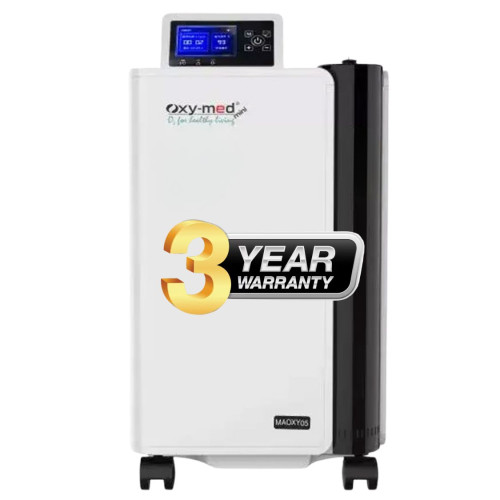
Oxymed Mini (5L) Oxygen Concentrator
- Brand
- Oxymed
- Category
- 5 LPM
₹35,400₹59,900
Indicative pricing based on market intelligence. Varies by dealer, city, bundle, and period — confirm with a local authorised seller before buying.
HHZ SCORE 7.2/10
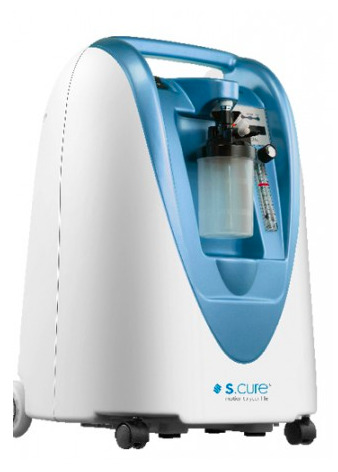
S.Cure 5 LPM
- Brand
- S. Cure
- Category
- 5 LPM
₹44,160
Indicative pricing based on market intelligence. Varies by dealer, city, bundle, and period — confirm with a local authorised seller before buying.
HHZ SCORE 6.0/10
Specifications compared
| Specification | Oxymed Mini (5L) Oxygen Concentrator | S.Cure 5 LPM |
|---|---|---|
| Overview | ||
| Brand | Oxymed | S. Cure |
| Category | 5 LPM | 5 LPM |
| Price | ₹35,400.00 | ₹44,160.00 |
| MRP | 59,900.00 | — |
| Stock | In Stock | Out of stock |
| Key features | ||
| Purity | 90-96% | 90-95% |
| Type | Home Stationary | Home Stationary |
| Continuous Flow | 1-5LPM | 0.5-5LPM |
| Weight | 13.9kg | 16kg |
| Oxygen Purity Indicator (OPI) | Yes | No |
| Power consumption | 390watts | 285watts |
| Technical details | ||
| Purity | 90-96% | 90-95% |
| Type | Home Stationary | Home Stationary |
| Continuous Flow | 1-5LPM | 0.5-5LPM |
| Weight | 13.9kg | 16kg |
| Oxygen Purity Indicator (OPI) | Yes | — |
| Power consumption | 390watts | 285watts |
| Sound level | 45db | 48db |
| Dimensions | 20.27H x 12.36W x 9.4Dinch | 21H x 12W x 11.8Dinch |
| Operating altitude | 7500feet | — |
| Outlet pressure | 10psi | — |
| Additional details | ||
| Oxygen Purity % Analyzer | Yes | — |
| Loss of Power Alarm | Yes | Yes |
| System Malfunction Alarm | Yes | Yes |
| No Flow Alarm | Yes | — |
| Indian Voltage Model | Yes | Yes |
| Company Headquarters | India | China |
Analysis
The cheaper unit is the better unit
The Oxymed Mini 5 LPM and the S.Cure 5 LPM both sit in the Indian 5 LPM stationary category, but once the spec sheets are laid side-by-side the S.Cure’s positioning falls apart. The Oxymed Mini is ₹8,760 cheaper (₹35,400 vs ₹44,160 indicative retail), 2.1 kg lighter (13.9 kg vs 16 kg), 3 dB quieter (45 dB vs 48 dB), has a live oxygen purity percent analyzer that the S.Cure lacks entirely, runs a more complete alarm suite, and is supported by India’s largest domestic-brand authorised-service network. The S.Cure beats the Oxymed on exactly one axis: 285 W power draw vs 390 W — a margin worth roughly ₹260 per month at 24-hour use, which cannot offset its structural deficits.
The S.Cure 5 LPM is listed as “Out of stock” in Q1 2026. This is not a transient availability issue — S.Cure’s India channel has been thinly stocked since mid-2024 and the brand shows the pattern typical of China-direct budget oxygen concentrators in India: 12–24 month retail lifecycle followed by gradual listing withdrawal. The Oxymed Mini, by contrast, has been continuously stocked across Indian channels since 2019.
HHZ’s verdict: the Oxymed Mini is the buy. The S.Cure has no competitive case at its current ₹44,160 price point.
At-a-glance differences
- Price: Oxymed Mini ₹35,400 vs S.Cure ₹44,160 — Oxymed is ₹8,760 (20%) cheaper
- Weight: Oxymed Mini 13.9 kg vs S.Cure 16 kg — Oxymed is 2.1 kg lighter (13% less)
- Sound: Oxymed Mini 45 dB vs S.Cure 48 dB — Oxymed is 3 dB quieter
- Purity monitoring: Oxymed has live percent analyzer; S.Cure has no OPI and no analyzer
- Alarm suite: Oxymed runs loss-of-power / system-malfunction / no-flow; S.Cure runs loss-of-power and system-malfunction only — no no-flow alarm
- Power draw: S.Cure 285 W vs Oxymed 390 W — S.Cure draws 27% less
- Operating altitude: Oxymed rates 7,500 ft; S.Cure has no published altitude spec
- Service network: Oxymed has 40+ Indian authorised centres; S.Cure has none documented
- Stock status: Oxymed is In Stock; S.Cure is Out of Stock
Both are Indian-voltage models; neither carries CE, US FDA, or FAA on record. Oxymed publishes CDSCO registration (domestic-manufacturer route); S.Cure’s CDSCO status relies on importer-level registration with an inconsistent batch history. Oxymed is India-HQ; S.Cure is China-origin.
Where the Oxymed Mini wins
Price — ₹8,760 cheaper. This is the headline: the cheaper unit in this matchup is the better-specified unit. ₹8,760 is not a small margin at this tier — it’s about 25% of the total purchase cost. That money funds a 2 kVA servo stabiliser (₹4,000), a 12-month consumables kit (₹2,500), and still leaves ₹2,260 toward the first year of filter replacements. The S.Cure premium buys nothing measurable in return.
Live oxygen purity percent analyzer. The Oxymed Mini reads out real-time purity percentage on its front screen. The S.Cure has no OPI light and no percent analyzer — the “Oxygen Purity % Analyzer” field is empty on its spec sheet. For any LTOT prescription lasting 12+ months, the purity readout is the signal that sieve-beds are wearing; without it, the first sign of sieve degradation is patient desaturation, which is too late in the fault chain.
Full alarm suite. The Oxymed Mini runs three independent alarms: loss-of-power, system-malfunction, and no-flow. The S.Cure’s spec table records loss-of-power and system-malfunction but no no-flow alarm. In practice, the no-flow alarm is the alarm that catches day-to-day use errors: a kinked cannula, a blocked humidifier bottle, a cannula accidentally disconnected during patient movement. Without it, a silent-delivery failure can run for hours before anyone notices.
Weight and chassis. 13.9 kg vs 16 kg — the Oxymed is 2.1 kg lighter, and its 20.27 × 12.36 × 9.4 inch footprint is narrower and shallower than the S.Cure’s 21 × 12 × 11.8 inch cabinet. For bedroom installations where the concentrator lives against a wall with the cannula routed to the patient’s bed, the saved depth matters.
Noise. 45 dB vs 48 dB is a 3 dB difference — roughly half the perceived loudness at bedside range. In a small bedroom with the concentrator 6–8 feet from the patient’s head, the Oxymed Mini is measurably less sleep-disruptive. The S.Cure at 48 dB is still inside the acceptable bedroom-noise range per WHO community-noise guidance, but nobody picks a louder unit at a higher price if the flow specs are equivalent.
Oxymed service network. 40+ authorised centres across Indian metros and Tier-2 cities. Walk-in service for filter swaps, compressor inspection, and sieve-bed replacements. Home installation included in most metros. The S.Cure has no documented India service network — post-warranty repair is retailer-mediated with multi-week turnaround at best.
Where the S.Cure wins
Power draw — 285 W. This is the S.Cure’s only genuine technical advantage. At 285 W continuous, 24-hour use pulls roughly ₹680–₹770 per month at Indian tariffs. The Oxymed at 390 W pulls ₹940–₹1,055. The S.Cure saves ₹260–₹290 per month, roughly ₹9,400–₹10,400 over 3 years. On paper, that recoups the ₹8,760 purchase-price gap after about 34 months of continuous use. In practice, the calculation assumes fault-free operation for the full window — which requires a working service channel, which the S.Cure lacks.
Outlet pressure. S.Cure does not publish an outlet pressure figure on its spec sheet, so this is not a documented advantage. We mention this only to note that the S.Cure does not have a published advantage here either.
That’s the complete S.Cure win list — one line.
Indian-market context
S.Cure is a China-origin import brand that has appeared sporadically in Indian e-commerce medical-device channels since roughly 2021. Its distribution pattern is typical of unbranded-imports — single importer, single e-commerce listing, 12–24 month stock cycle, then gradual de-listing. As of Q1 2026 the S.Cure 5 LPM is listed out of stock across major Indian medical e-commerce channels and has been since Q3 2024.
Oxymed Medical, by contrast, is a specialist respiratory-equipment manufacturer based in India with a fully-integrated product line (concentrators 3L / 5L / 10L, adjustable-flow units, CPAP-accessory supply, clinical consumables) and a documented dealer-plus-service network spanning 40+ cities. Oxymed’s authorised service centres carry genuine replacement parts — compressor assemblies, sieve-bed modules, HEPA filters, inlet filter cotton — and authorised technicians have in-house training on the Oxymed compressor platform. This is the service depth that structurally differentiates a resident-manufacturer brand from an import-only brand.
GST at 12% applies to both. CDSCO registration: Oxymed is registered under the domestic-manufacturer route with a direct registration traceable to the Indian manufacturer; S.Cure relies on importer-level CDSCO registration which has historically been inconsistent — some import batches have documented registrations, others do not (CDSCO). For CGHS, ECHS, ESIC, and private-insurance reimbursement, the Oxymed’s paperwork is materially stronger.
Indian mains variance is a common overhead — both units need a 1.5–2 kVA servo stabiliser in regions where mains drops below 180V. The stabiliser cost (₹3,500–₹4,500) is equivalent. Altitude: the S.Cure has no published altitude envelope, so any hill-station use is unvalidated; the Oxymed rates 7,500 ft, which covers every major Indian hill station except Leh (11,500 ft).
Home Medix HM-KV is the more relevant alternative to Oxymed
If a buyer wants an alternative to the Oxymed Mini, the Home Medix HM-KV presents a stronger case than paying more for the S.Cure. It combines a 13 kg chassis, field-verified sound at or below 40 dB, live purity information, full alarms, integrated nebulization, and a 3-year / 10,000-hour warranty.
The choice between HM-KV and Oxymed should still be made by service availability: HM-KV for the quieter bedside-value package in supported cities, Oxymed for the broader authorised footprint. The dedicated HM-KV vs Oxymed Mini comparison has the full trade-off.
Verdict — who should pick which
Pick the Oxymed Mini 5 LPM if: you want a 5 LPM stationary with working safety features (live purity analyzer, three alarms), India-wide service network, CDSCO registration with an Indian-manufacturer invoice trail, a weight under 14 kg, and a price point that is simultaneously the lowest in the sub-₹40,000 class and the most feature-complete in that price band. This covers virtually every Indian home-prescription buyer on 1–5 LPM continuous flow. The Oxymed Mini is not a compromise pick — it is the reference 5 LPM at its price point for a reason.
Pick the S.Cure 5 LPM if: you have a specific reason to prioritise a 285 W power draw over every other spec line, you already own the needed safety monitoring externally (a separate pulse oximeter, an external oxygen purity meter, a caregiver present 24/7), you can accept multi-week repair turnaround, and you can find a channel actually stocking the unit in 2026 (which currently is not the case on mainstream Indian e-commerce). That profile is narrow enough that the S.Cure is effectively not a recommendable buy in the current market.
Skip the S.Cure and consider an alternative if: the Oxymed Mini is somehow unavailable in your region. The BPL Oxy 5 Neo (₹31,966) is a cheaper domestic-brand option, though heavier (25 kg) and with a louder 55 dB output. The Nareena 5 LPM Single Flow (₹35,510) is comparable on price to Oxymed but has a higher 550 W power draw. The Philips Everflo (₹43,699) is nearly the same price as the S.Cure but is an FDA-approved, 14 kg US-designed unit with Philips Respironics India service — the obvious step-up over the S.Cure at the same price tier.
HHZ’s firm pick in this matchup is the Oxymed Mini 5 LPM. It wins on price, weight, noise, purity monitoring, alarm suite, domestic regulatory paperwork, service, and stock availability, and the one axis it loses on (power draw) is worth roughly ₹9,400 over 3 years — a margin that the S.Cure cannot reliably cash in because its service channel cannot keep the machine running for 3 years. Consult your treating pulmonologist before finalising the prescription flow rate — at this price tier, the machine choice is straightforward but the titration is not.