Nareena 5 LPM Single Flow vs Oxymed Mini (5L) Oxygen Concentrator
Nareena 5 LPM Single Flow
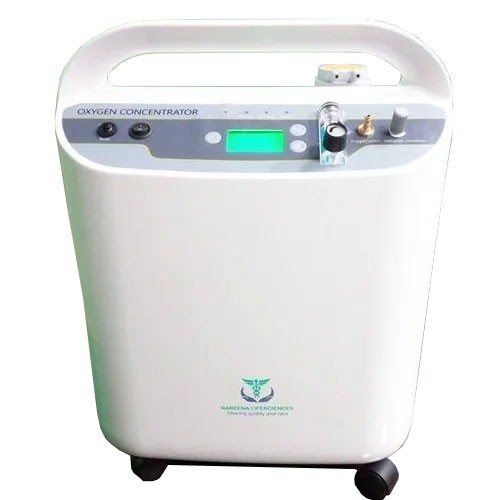
- Brand
- Nareena Lifesciences
- Category
- 5 LPM
₹35,510.40₹67,200
Indicative pricing based on market intelligence. Varies by dealer, city, bundle, and period — confirm with a local authorised seller before buying.
HHZ SCORE 7.0/10
EDITORIAL PICK
Oxymed Mini (5L) Oxygen Concentrator
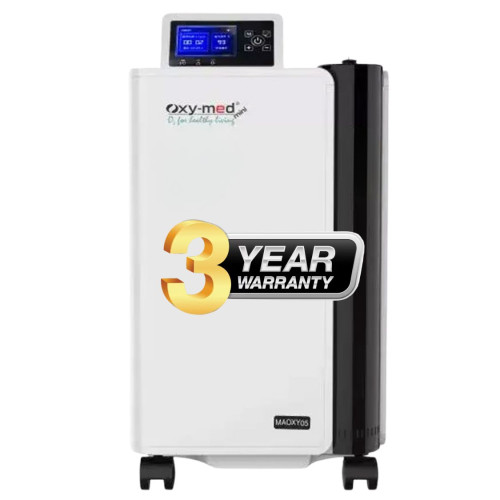
- Brand
- Oxymed
- Category
- 5 LPM
₹35,400₹59,900
Indicative pricing based on market intelligence. Varies by dealer, city, bundle, and period — confirm with a local authorised seller before buying.
HHZ SCORE 7.2/10
Specifications compared
| Specification | Nareena 5 LPM Single Flow | Oxymed Mini (5L) Oxygen Concentrator |
|---|---|---|
| Overview | ||
| Brand | Nareena Lifesciences | Oxymed |
| Category | 5 LPM | 5 LPM |
| Price | ₹35,510.40 | ₹35,400.00 |
| MRP | 67,200.00 | 59,900.00 |
| Stock | In Stock | In Stock |
| Key features | ||
| Purity | 90-96% | 90-96% |
| Type | Home Stationary | Home Stationary |
| Continuous Flow | 1-5LPM | 1-5LPM |
| Weight | 15kg | 13.9kg |
| Oxygen Purity Indicator (OPI) | Yes | Yes |
| Power consumption | 550watts | 390watts |
| Technical details | ||
| Purity | 90-96% | 90-96% |
| Type | Home Stationary | Home Stationary |
| Continuous Flow | 1-5LPM | 1-5LPM |
| Weight | 15kg | 13.9kg |
| Oxygen Purity Indicator (OPI) | Yes | Yes |
| Power consumption | 550watts | 390watts |
| Sound level | 50db | 45db |
| Dimensions | 23.6H x 14.7W x 14.3Dinch | 20.27H x 12.36W x 9.4Dinch |
| Operating altitude | — | 7500feet |
| Outlet pressure | — | 10psi |
| Additional details | ||
| Loss of Power Alarm | Yes | Yes |
| System Malfunction Alarm | — | Yes |
| No Flow Alarm | — | Yes |
| Indian Voltage Model | Yes | Yes |
| Company Headquarters | India | India |
| Oxygen Purity % Analyzer | — | Yes |
Analysis
The Nareena 5 LPM Single Flow and the Oxymed Mini (5L) Oxygen Concentrator are priced almost identically — Nareena at ₹35,510.40 current against Oxymed Mini at ₹35,400 current, a ₹110.40 gap that’s functionally zero on a 5 LPM concentrator purchase. That makes this comparison the rare one where the buyer can ignore price and just read the spec sheets. And the spec sheets tell a one-sided story. Oxymed Mini publishes 390 W against Nareena’s 550 W — a 160 W gap (29% lower) at rated output. Oxymed publishes 45 dB against Nareena’s 50 dB — five decibels, which is roughly a doubling of perceived loudness. Oxymed is CDSCO registered; Nareena publishes no regulatory marker. Oxymed’s warranty is 3 years; Nareena’s is 1 year. Oxymed publishes the full alarm trio (loss-of-power, system-malfunction, no-flow) plus a live percent-purity analyzer; Nareena publishes only loss-of-power. At the same money, Oxymed Mini wins comprehensively.
At a glance
- Price. Oxymed Mini ₹35,400 vs Nareena ₹35,510.40 — a ₹110.40 Oxymed edge, effectively a tie.
- Power draw. Oxymed Mini 390 W vs Nareena 550 W — Oxymed is 160 W (29%) lower.
- Noise (published). Oxymed Mini 45 dB vs Nareena 50 dB.
- Weight. Oxymed Mini 13.9 kg vs Nareena 15 kg — Oxymed 1.1 kg lighter.
- Warranty. Oxymed Mini 3 years vs Nareena 1 year.
- Regulatory. Oxymed Mini: CDSCO registered (no CE or US FDA on record). Nareena: none published.
- Alarms. Oxymed Mini: all three (power, malfunction, no-flow). Nareena: loss-of-power only.
Where the Nareena 5 LPM Single Flow wins
This section is short because there is not much here on a published spec basis. The Nareena’s single genuine win is its operating-altitude case, which is not published at all — and that’s actually a loss against Oxymed’s published 7,500 ft rating, so we can’t claim it for Nareena either. Running through the spec sheet line by line, Nareena does not publish a win on purity, flow range, weight, noise, power, warranty, certifications, alarms, dimensions, or price.
The only defensible Nareena advantage is the one that sits outside the spec sheet: some buyers value Nareena Lifesciences’ longer presence in the Indian clinical-equipment supply channel (Nareena has historically supplied oxygen plants and hospital-grade equipment in addition to home concentrators), and some institutional buyers favour that heritage on procurement grounds. For a home-use buyer, that heritage does not translate into a tangible device advantage. Nareena does bundle extra HEPA and HEMA filters plus a spare fuse in-box, which is a small consumables bonus — but Oxymed also bundles an additional filter set, nasal cannula, humidifier bottle, and a nebuliser kit, so the in-box comparison is not a Nareena win either.
If the buyer wants a domestic-India-manufacturing option, both units qualify — Oxymed publishes “Company Headquarters: India” and Nareena publishes the same. So “Indian brand preference” as a tie-breaker doesn’t distinguish them. The rupee-pricing difference of ₹110.40 is not meaningful. In short: Nareena’s spec sheet does not give the buyer a reason to prefer it over the Oxymed Mini in this matchup.
Where the Oxymed Mini (5L) wins
Oxymed Mini’s wins are comprehensive and come from every direction on the spec sheet.
Start with power. 390 W against Nareena’s 550 W is a 160 W gap — 29% lower at rated output. On a 12-hour-a-day usage pattern and residential tariff of ₹8–10/kWh, that’s ₹5,600–7,000 saved per year. Across Oxymed’s 3-year warranty window, that’s ₹16,800–21,000. At effectively the same upfront price, the Oxymed is the dramatically cheaper machine to run.
Noise: Oxymed publishes 45 dB against Nareena’s 50 dB. Five decibels on the logarithmic dB scale is a near-doubling of perceived loudness. For overnight bedside use — which is most home-oxygen use — the gap between 45 and 50 dB is the difference between a soft background hum and a noticeable mechanical presence. Patient sleep quality and caregiver fatigue are real consequences of this gap.
Weight and dimensions: 13.9 kg against 15 kg — Oxymed is 1.1 kg lighter. Oxymed’s published 20.27 in H × 12.36 in W × 9.4 in D footprint is more compact than Nareena’s 23.6 in H × 14.7 in W × 14.3 in D, especially on depth where Oxymed is 4.9 inches shallower. In a typical Indian bedside setup where the concentrator shares a side table with a lamp, a phone, and medication, 4.9 inches of depth is a meaningful real-estate advantage.
Warranty: Oxymed 3 years against Nareena 1 year. The expected-failure cluster for sieve-bed saturation and compressor wear on 5 LPM home units is months 18–36 of daily use. Nareena exits warranty before that window opens; Oxymed is covered through it.
Regulatory: Oxymed publishes CDSCO registration as the domestic gate for Indian sale. Nareena publishes no CDSCO marker, no CE, no FDA — blank across the regulatory row. For a Class IIa medical device sold in India, CDSCO registration is the applicable legal floor, and its absence on the Nareena spec sheet is a meaningful gap. Neither unit carries CE or US FDA on record, so neither is differentiated for export or institutional procurement that requires those marks.
Alarms: Oxymed publishes all three of loss-of-power, system-malfunction, and no-flow. Nareena publishes only loss-of-power. The no-flow alarm in particular catches cannula kinks, disconnected tubing, and humidifier-bottle leaks — real failure modes that silently cut oxygen delivery. A unit without a no-flow alarm is materially less safe for an elderly or semi-mobile patient who may not notice a delivery interruption.
On-device diagnostics: Oxymed publishes a discrete “Oxygen Purity % Analyzer” — a live readout of the actual oxygen concentration as a number. Nareena does not publish this feature. Oxymed also specifies a 10 psi outlet pressure against Nareena’s unpublished value, which matters for longer tubing runs and nebuliser attachments. Oxymed specifies a 7,500 ft operating altitude; Nareena publishes no altitude rating.
Finally, Oxymed’s product page documents a 40-plus-service-centre dealer network and home-installation in 50 Indian cities. Nareena distributes through regional dealer and e-commerce channels without an equivalent published service-centre count. For a device that needs in-person service at least once in its life, this is the decisive post-sale factor.
Indian-market context
Both units are Indian-headquartered, Indian-voltage 220–240 V machines that don’t need a step-down transformer. Both are sold through Indian e-commerce and dealer channels. Where the Indian-market picture splits is downstream of the sale.
Oxymed’s in-India service infrastructure is its headline positioning — 40+ service centres, 50-city installation coverage, and a dealer network that handles warranty claims at the point of sale. The practical effect is that a home-oxygen user in Indore, Vizag, or Guwahati has a technician path for sieve-bed replacement, humidifier-module issues, and compressor service. That is not marketing fluff; it’s the dominant post-sale variable on any home concentrator.
Nareena distributes through a less dense regional dealer footprint and heavier e-commerce reliance. Consumables (HEPA filters, dust filters, humidifier bottles) are available, but compressor-level and sieve-bed service is thinner outside of Nareena’s core distributor footprint. The 1-year warranty means that the unit exits warranty before it enters the statistically likely failure window for 5 LPM concentrators in continuous use.
Rupee pricing is effectively tied: Oxymed MRP ₹59,900 discounted to ₹35,400 current; Nareena MRP ₹67,200 discounted to ₹35,510.40 current. Neither buyer should expect the MRP discount to stabilise in a meaningful way — these are India-market “MRP theatre” numbers; the street price is the real number.
A better-supported third shortlist: Home Medix HM-KV
At this price level, the Home Medix HM-KV is more relevant than accepting Nareena’s thinner warranty and service case. It brings a 13 kg chassis, field-verified sound at or below 40 dB, live purity display, full alarms, integrated nebulization, and a 3-year / 10,000-hour warranty.
HM-KV becomes the preferred bedside-value alternative where Home Medix has local service; Oxymed remains the safer ownership choice where its larger authorised network is the only one that reaches the patient. Compare those two directly at HM-KV vs Oxymed Mini.
Verdict — who should pick which
Pick the Oxymed Mini (5L) unless there is a specific procurement reason to prefer Nareena that sits outside the spec sheet. At identical street prices (₹35,400 vs ₹35,510.40), the Oxymed gives you 160 W lower power draw, 5 dB quieter operation, a 1.1 kg lighter body, a more compact footprint, a three-year warranty, the complete alarm package, a discrete purity analyser readout, a published 7,500 ft altitude rating, and a 40-plus-service-centre dealer network. There is no spec-sheet category where Nareena wins meaningfully.
Pick the Nareena 5 LPM Single Flow only if you have a specific institutional or procurement reason to favour Nareena — for example, a regional government health-scheme contract that lists Nareena as an approved supplier but not Oxymed, or a workplace rental-equipment policy that mandates Nareena’s parent-group supply chain. For individual home buyers, there is no scenario at current listed prices where Nareena is the better purchase.
Default for individual home buyers: Oxymed Mini (5L). This is one of the clearest one-sided calls in the 5 LPM segment. The Oxymed is not just marginally better — it is meaningfully better across every load-bearing spec, and the price gap is too small to treat as a Nareena argument. If the buyer’s budget is stretched at ₹35,400, the right move is to wait two weeks for a dealer promotion on the Oxymed rather than spend the ₹110 “savings” on the Nareena.