Jumao 5LPM vs Oxymed Mini (5L) Oxygen Concentrator
Jumao 5LPM
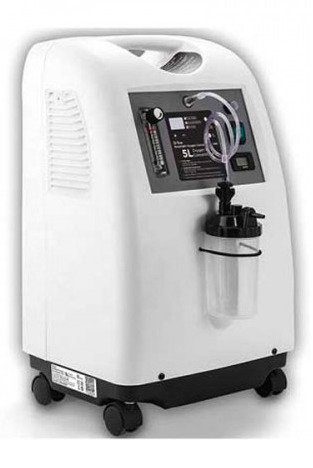
- Brand
- Jumao
- Category
- 5 LPM
₹40,320
Indicative pricing based on market intelligence. Varies by dealer, city, bundle, and period — confirm with a local authorised seller before buying.
HHZ SCORE 5.5/10
EDITORIAL PICK
Oxymed Mini (5L) Oxygen Concentrator
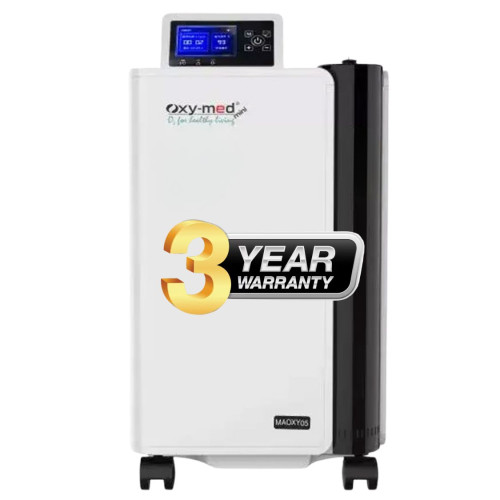
- Brand
- Oxymed
- Category
- 5 LPM
₹35,400₹59,900
Indicative pricing based on market intelligence. Varies by dealer, city, bundle, and period — confirm with a local authorised seller before buying.
HHZ SCORE 7.2/10
Specifications compared
| Specification | Jumao 5LPM | Oxymed Mini (5L) Oxygen Concentrator |
|---|---|---|
| Overview | ||
| Brand | Jumao | Oxymed |
| Category | 5 LPM | 5 LPM |
| Price | ₹40,320.00 | ₹35,400.00 |
| MRP | — | 59,900.00 |
| Stock | Out of stock | In Stock |
| Key features | ||
| Purity | 90-95% | 90-96% |
| Type | Home Stationary | Home Stationary |
| Continuous Flow | 0.5-5LPM | 1-5LPM |
| Weight | 16kg | 13.9kg |
| Oxygen Purity Indicator (OPI) | No | Yes |
| Power consumption | 390watts | 390watts |
| Technical details | ||
| Purity | 90-95% | 90-96% |
| Type | Home Stationary | Home Stationary |
| Continuous Flow | 0.5-5LPM | 1-5LPM |
| Weight | 16kg | 13.9kg |
| Oxygen Purity Indicator (OPI) | — | Yes |
| Power consumption | 390watts | 390watts |
| Sound level | 52db | 45db |
| Dimensions | 22.8H x 12.2W x 16.1Dinch | 20.27H x 12.36W x 9.4Dinch |
| Outlet pressure | 8.4psi | 10psi |
| Operating altitude | — | 7500feet |
| Additional details | ||
| Oxygen Purity % Analyzer | — | Yes |
| Loss of Power Alarm | — | Yes |
| System Malfunction Alarm | — | Yes |
| No Flow Alarm | — | Yes |
| Indian Voltage Model | Yes | Yes |
| Company Headquarters | China | India |
Analysis
The Jumao 5LPM is one of several imported Chinese-origin concentrators that compete in the Indian sub-₹45,000 segment. Against less-established competitors, the Jumao’s price-feature balance can be acceptable. Against the Oxymed Mini — the current Indian volume leader in 5 LPM with a 1,000+ rating sample and a 40+ service-centre national network — the Jumao is outmatched on nearly every axis that matters for Indian home-oxygen use. At ₹40,320 street for the Jumao versus ₹35,400 for the Mini, the Mini is both cheaper by ₹4,920 (~12%) and meaningfully better on spec.
At-a-glance
Weight is 16 kg on the Jumao versus 13.9 kg on the Oxymed Mini — a 2.1 kg Mini advantage. Flow range is 0.5–5 LPM on the Jumao versus 1–5 LPM on the Mini — a marginal Jumao edge for paediatric or low-flow use. Purity is 90–95% on the Jumao and 90–96% on the Mini — functionally equivalent. Noise is 52 dB on the Jumao versus 45 dB on the Mini — a significant 7 dB Mini advantage. Power draw is 390 W on both — a wash.
Monitoring is where the gap widens sharply. The Jumao spec sheet shows empty rows on OPI, oxygen purity analyzer, loss-of-power alarm, system-malfunction alarm, and no-flow alarm — that is zero flagged alarms on the Jumao. The Mini shows “Yes” on OPI, “Yes” on the purity analyzer (live-reading on the digital display), and “Yes” on all three alarms (loss of power, system malfunction, no flow). Regulatory: both are CDSCO registered as the applicable Indian gate; neither carries CE or US FDA on record. Company HQ is China for Jumao, India for the Mini. Stock position is Out of Stock for the Jumao, In Stock for the Mini.
Where the Oxymed Mini wins
The alarm gap is the most consequential. The Jumao spec sheet shows every alarm row empty — no OPI, no loss-of-power alarm, no system-malfunction alarm, no no-flow alarm. For a concentrator that will run for years in Indian residential conditions, that is a serious monitoring shortfall. Silent sieve-bed degradation, silent compressor faults, silent tubing disconnections — none of these failure modes generate an alert on the Jumao according to its published spec. The Mini alarms on all of them and shows live purity on the display. For any household whose patient’s SpO2 is being actively managed against the concentrator’s output, this is a disqualifying gap for the Jumao.
Weight is a straightforward Mini win: 13.9 kg versus 16 kg, 13% lighter. For single-caregiver room moves, between-floor transfers in joint-family homes, and general household-positioning flexibility, the Mini’s weight is a practical advantage.
Noise is the second big practical Mini win. 45 dB versus 52 dB is a 7 dB gap — perceptually roughly 4x louder for the Jumao. In a small Indian bedroom with the door closed and ambient night-time noise floors typically in the 35–40 dB range, 52 dB is noticeable, intrusive, and often harder for a sleeping partner to tolerate. 45 dB sits comfortably within the overnight-therapy comfort envelope; 52 dB sits on the loud edge.
Regulatory paperwork is better on the Mini only at the Indian level: Oxymed publishes CDSCO registration as the domestic regulatory gate; the Jumao listing does not surface a comparable CDSCO marker. Neither unit carries CE or US FDA on record. For buyers specifically chasing European or US approvals for export, travel, or institutional procurement, neither of these answers the question.
Indian manufacturer status and service network is the structural Mini advantage. Oxymed is an Indian-headquartered brand with 40+ service centres nationwide — the deepest concentrator service footprint of any brand in India. Home installation is offered in 50+ cities. Parts inventory (sieve beds, compressors, filters, humidifier bottles) is widely stocked. Warranty is a published 3 years. The Jumao’s Indian distribution is thin — the brand is imported through third-party channels, service engineer availability in tier-2 cities is limited, and parts lead times are not predictable over a multi-year horizon. Warranty length is not specified in the Jumao listing.
Outlet pressure is 10 psi on the Mini and 8.4 psi on the Jumao — a marginal Mini edge for long cannula runs (>3 metres), though at typical 2-metre cannula lengths both are adequate.
Price is the final Mini win: ₹35,400 versus ₹40,320 — ₹4,920 cheaper. Combined with every other advantage above, the Mini is both cheaper and meaningfully better on spec.
Where the Jumao wins
The Jumao’s honest advantages are narrow. The 0.5 LPM flow minimum is a real advantage over the Mini’s 1 LPM floor for paediatric prescriptions or low-flow overnight titration regimens. This covers a small slice of the prescription distribution — few adult Indian prescriptions sit below 1 LPM — but it is a legitimate edge where applicable.
The Jumao ships with a nebulizer kit in its box per the listed package contents. The Oxymed Mini also ships with a nebulizer kit. So this is a parity feature, not a Jumao differentiator, though both machines offer a neb-integrated option which households requiring combined oxygen-plus-bronchodilator therapy will find useful.
Beyond the 0.5 LPM flow floor, we cannot identify any dimension on which the Jumao’s published specs beat the Mini’s. It is heavier, louder, less-monitored, lacks OPI, lacks alarms, has a thinner Indian service footprint, and is more expensive. The only legitimate reason to pick the Jumao over the Mini that we can see is if the buyer specifically needs the sub-1-LPM flow capability.
Indian-market context
Oxymed’s service network is worth dwelling on because of how heavily it weights long-horizon outcomes. In the Indian 5 LPM segment, year-2 and year-3 service events are routine — sieve-bed degradation, compressor-bearing wear, filter replacements, humidifier-bottle leaks. These are not defects; they are expected maintenance events for any PSA concentrator running 10+ hours per day in Indian residential conditions. For the Oxymed Mini, these events have a well-priced service path through 40+ centres, with typical turnaround of 48–72 hours in metros and 5–10 days in tier-2 cities. For the Jumao, the same events require negotiation with a distant importer, unpredictable parts lead times, and in many cases the user ends up disposing of the machine rather than servicing it.
Resale value is also structurally different. The Oxymed Mini is the highest-volume 5 LPM concentrator in India with a published 1,000+ rating count on the e-commerce listing. That volume creates an active secondary market — 2-year-old Mini units transact at ₹22,000–28,000 on Indian resale platforms. The Jumao’s Indian secondary market is essentially non-existent; units that do surface transact at heavy discounts (60–70% off original retail within 18 months). For households whose prescribed therapy horizon may not match the machine’s service life, resale recovery is a real component of effective cost of ownership.
Stock availability matters for buyers with immediate oxygen prescriptions. The Mini is In Stock; the Jumao is Out of Stock. For a household needing equipment today, this alone resolves the comparison.
Indian ambient stress factors — summer temperatures above 40°C in plains cities, monsoon humidity above 80% on coasts, dust loads above what most OEM design envelopes assume — are punishing. Both machines operate in these conditions. The Mini has a multi-year field history and a documented service path; the Jumao has thinner field data and a less-developed service channel.
Also compare the Home Medix HM-KV
The Home Medix HM-KV is a more credible alternative to Oxymed than the Jumao for a supported Indian household. It is specified at 13 kg with field-verified sound at or below 40 dB and adds live purity information, full alarms, integrated nebulization, and a 3-year / 10,000-hour warranty.
For buyers in a Home-Medix-served city, that combination can beat Oxymed on bedside comfort and value. For buyers outside that footprint, Oxymed’s broader service network remains more important than a quieter chassis. Use the HM-KV vs Oxymed Mini comparison to make the pincode-level call.
Verdict
The Oxymed Mini 5 LPM wins this matchup across the board. It is cheaper by ₹4,920, lighter by 2.1 kg, quieter by 7 dB, better-monitored (OPI, purity analyzer, full alarm suite), CDSCO registered, Indian-headquartered, and backed by 40+ service centres. The Jumao offers a 0.5 LPM flow minimum (useful for a small slice of prescriptions) and effectively nothing else that the Mini does not match or exceed.
For Indian buyers comparing these two specific machines, the decision is unambiguous: pick the Mini. The ₹4,920 saving comes with a better machine on every load-bearing dimension. If the buyer specifically requires sub-1-LPM flow for a paediatric prescription, the Jumao has a narrow case — but even then, we would point the buyer to other alternatives in the Indian market that offer 0.5 LPM floors plus better monitoring (the BPL Oxy 5 Neo, the GVS Oxypure, the Vandelay 5L with Nebulizer all offer 0.5 LPM minimums at various points in the 5 LPM price band, with various other trade-offs).
The wider point: the Oxymed Mini is the category-leading value buy in the Indian 5 LPM segment at current pricing. It out-specs the Jumao, the GVS Oxypure, the Vandelay, the Yuwell, and the S.Cure on monitoring. Its pricing undercuts the Everflo by ₹8,299 and the Nidek Nuvo Lite by ₹22,199 while delivering comparable or better alarm coverage. The combination of Indian manufacturer support, CDSCO registration, OPI plus a live purity analyzer, full alarm suite, 3-year warranty, and 40+ service centres is genuinely rare at this price point. The Jumao does not come close to matching it.