GVS Oxypure 5 LPM vs Oxymed Mini (5L) Oxygen Concentrator
GVS Oxypure 5 LPM
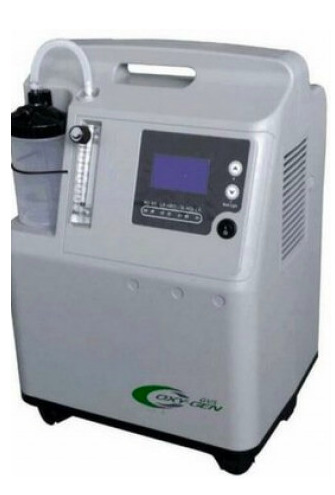
- Brand
- GVS
- Category
- 5 LPM
₹33,599.04₹34,560
Indicative pricing based on market intelligence. Varies by dealer, city, bundle, and period — confirm with a local authorised seller before buying.
HHZ SCORE 6.4/10
EDITORIAL PICK
Oxymed Mini (5L) Oxygen Concentrator
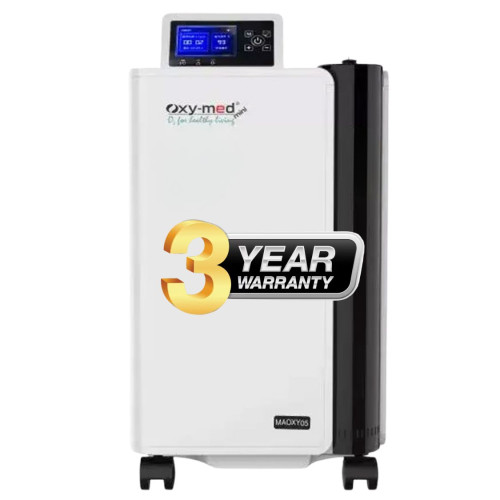
- Brand
- Oxymed
- Category
- 5 LPM
₹35,400₹59,900
Indicative pricing based on market intelligence. Varies by dealer, city, bundle, and period — confirm with a local authorised seller before buying.
HHZ SCORE 7.2/10
Specifications compared
| Specification | GVS Oxypure 5 LPM | Oxymed Mini (5L) Oxygen Concentrator |
|---|---|---|
| Overview | ||
| Brand | GVS | Oxymed |
| Category | 5 LPM | 5 LPM |
| Price | ₹33,599.04 | ₹35,400.00 |
| MRP | 34,560.00 | 59,900.00 |
| Stock | Out of stock | In Stock |
| Key features | ||
| Purity | 90-95% | 90-96% |
| Type | Home Stationary | Home Stationary |
| Continuous Flow | 0.5-5LPM | 1-5LPM |
| Weight | 16kg | 13.9kg |
| Oxygen Purity Indicator (OPI) | No | Yes |
| Power consumption | 300watts | 390watts |
| Technical details | ||
| Purity | 90-95% | 90-96% |
| Type | Home Stationary | Home Stationary |
| Continuous Flow | 0.5-5LPM | 1-5LPM |
| Weight | 16kg | 13.9kg |
| Oxygen Purity Indicator (OPI) | — | Yes |
| Power consumption | 300watts | 390watts |
| Sound level | 43db | 45db |
| Dimensions | 20H x 13.7W x 11Dinch | 20.27H x 12.36W x 9.4Dinch |
| Operating altitude | 7500feet | 7500feet |
| Outlet pressure | 10psi | 10psi |
| Additional details | ||
| Oxygen Purity % Analyzer | — | Yes |
| Loss of Power Alarm | — | Yes |
| System Malfunction Alarm | — | Yes |
| No Flow Alarm | — | Yes |
| Indian Voltage Model | Yes | Yes |
| Company Headquarters | China | India |
| CE Certified | Yes | — |
Analysis
The GVS Oxypure 5 LPM and the Oxymed Mini are closely priced — ₹33,599 for the Oxypure against ₹35,400 for the Mini, a gap of just ₹1,801. At that small a price difference, the buyer’s decision essentially comes down to which machine offers better specs, better service support, and better Indian market fit. On every one of those axes, the Oxymed Mini wins. The GVS Oxypure has a thinner monitoring envelope, no OPI, no alarms flagged on its spec sheet, heavier weight, and a much shallower Indian service footprint. The Mini’s ₹1,801 premium buys substantial additional value.
At-a-glance
Weight is 13.9 kg on the Mini versus 16 kg on the GVS — a 2.1 kg Mini advantage. Flow range is 1–5 LPM on the Mini and 0.5–5 LPM on the GVS — a marginal GVS edge for paediatric or low-flow use. Purity is 90–96% on the Mini and 90–95% on the GVS — equivalent. Noise is 45 dB on the Mini versus 43 dB on the GVS — a small 2 dB GVS advantage, close to the perceptual threshold. Power consumption is 390 W on the Mini versus 300 W on the GVS — a 90 W GVS advantage, translating to roughly ₹1,100–1,600 per year of electricity savings at typical Indian tariffs and 10–12 hour daily use.
Monitoring is where the gap widens sharply. The Mini has “Yes” on OPI, “Yes” on live oxygen purity analyzer, and “Yes” on all three alarms (loss of power, system malfunction, no flow). The GVS has empty rows on OPI, purity analyzer, loss-of-power alarm, system-malfunction alarm, and no-flow alarm — that is zero flagged monitoring features on the GVS spec sheet. CE certification is “Yes” on both. Company HQ is India for the Mini, China for the GVS. Stock is In Stock for the Mini, Out of Stock for the GVS.
Where the Oxymed Mini wins
The monitoring gap is the most consequential difference. The Mini’s OPI alarms below ~86% purity and the live purity analyzer displays real-time percentage on the digital screen — the caregiver can glance at the machine and confirm the sieve beds are delivering prescribed purity. The GVS shows empty rows on OPI, purity analyzer, and all three alarms. This is a significant safety gap for sustained home oxygen therapy. Sieve-bed degradation, compressor faults, tubing disconnections, power loss with failed backup — none of these failure modes generate alerts on the GVS according to its published spec. The Mini’s own description also confirms the purity analyzer feature directly: “Oxymed Mini comes with an inbuilt oxygen purity analyzer through which users can get to know the oxygen purity level that is being delivered in real-time.”
For clinical home oxygen — meaning the patient’s SpO2 is being actively managed against the concentrator’s output — this monitoring delta is hard to overstate. Silent purity decline on the GVS means the caregiver will only detect the problem via patient symptoms. The Mini catches it directly.
The GVS’s own listing acknowledges the monitoring shortfall in its “things we don’t like” section: “Does not have oxygen purity analyzer” is flagged explicitly. The spec sheet backs this up. The Mini does have it, and it is a material advantage.
Weight is a practical Mini win: 13.9 kg versus 16 kg, 13% lighter. For single-caregiver room moves, between-floor transfers, and general positioning flexibility, the Mini’s weight is more manageable.
Service network is the structural Mini advantage. Oxymed’s 40+ Indian service centres, factory-trained technicians, and home installation in 50+ cities are the deepest concentrator service footprint in the country. The GVS is distributed through third-party channels with a thinner network; the GVS listing itself acknowledges this with “Poor network dealer” flagged in its own “things we don’t like” section. For year-2 and year-3 service events — which are routine for any PSA concentrator in Indian residential conditions — this service delta compounds into meaningful differences in turnaround time, parts availability, and effective ownership cost.
The Mini’s published 3-year warranty versus the GVS’s unspecified warranty length is another Mini win. Over a 3-year ownership horizon, a compressor-level service event that is covered on the Mini can be a ₹12,000–18,000 bill on the GVS, enough to erase the ₹1,801 upfront price advantage and more.
Outlet pressure is 10 psi on both — a wash. Operating altitude is 7,500 ft on both — also a wash.
The Mini’s active purity display is an underappreciated ergonomic win. It means the caregiver does not need a separate spot oxygen analyser to verify the machine is delivering prescribed purity; the display reads out the live percentage. For households without a separate O2 analyser (which is most), this is real value.
Where the GVS Oxypure wins
The GVS’s honest advantages are narrower than the Mini’s. Price is ₹1,801 cheaper — genuine but small. Power draw is 90 W lower (300 W versus 390 W), which over 12 hours per day of typical use saves roughly 390 kWh per year or ₹2,800–3,900 at typical Indian slab tariffs. Over 3 years that is ₹8,400–11,700 of electricity savings, which could offset the price delta and tip the operating-cost comparison in the GVS’s favour.
The 0.5 LPM flow minimum is a legitimate advantage over the Mini’s 1 LPM floor for paediatric prescriptions or low-flow overnight titration regimens.
Noise is 2 dB quieter on the GVS (43 dB versus 45 dB) — close to the perceptual threshold and not a meaningful differentiator for most users.
The GVS’s own listing highlights three positives: “virtual support for set up” (useful for self-installing buyers), “compact” form factor, and “screen displays the oxygen outlet pressure being delivered in real time” (an ergonomic feature the Mini’s screen does not offer — the Mini’s screen shows flow, purity, timer, and hour meter but not outlet pressure).
Beyond these — price, power draw, flow floor, mild noise advantage, and the pressure display — the GVS does not beat the Mini on any significant dimension.
Indian-market context
The electricity math is worth being honest about. At 90 W power advantage and 12 hours per day of use, the GVS saves roughly 390 kWh per year. At Indian domestic slab 2+ tariffs of ₹7–10 per kWh, that is ₹2,800–3,900 per year. Over 3 years, ₹8,400–11,700. Combined with the ₹1,801 upfront price advantage, total savings of ₹10,200–13,500 over 3 years. That is real money and a reasonable buyer should factor it in. However, that savings must be offset against: (a) the cost of silent sieve-bed degradation on a machine without OPI — potentially the value of detecting purity decline early and extending sieve-bed life, (b) the cost of a single out-of-warranty service event (₹12,000–18,000) that the Mini’s 3-year warranty would cover, and (c) the monitoring-safety value of full alarm coverage on the Mini that the GVS lacks. Net, the financial case for the GVS is not nearly as clean as the headline saving suggests.
The service-network delta cuts hard here. The GVS’s own listing flags “poor dealer network” as an honest drawback. For an Indian buyer in a tier-2 or tier-3 city, service reachability over a 3–5 year horizon is a primary concern. The Mini’s 40+ centres mean a service call in Coimbatore, Indore, or Patna is answered by a factory-trained technician within 48–72 hours. The GVS may require a longer wait, or a part shipment from a distant distributor, or the machine simply being unserviceable and replaced.
Indian ambient stress — summer 35–42°C, monsoon 60–80% RH, high dust loads — affects both machines equally in physical terms, but affects them very differently in service terms. The Mini has a well-documented service path for these stressors; the GVS does not.
Stock position: Mini is In Stock, GVS is Out of Stock. For immediate prescriptions this is dispositive.
Resale: Mini’s strong secondary-market presence (1,000+ rating sample, routine transactions at ₹22,000–28,000 for 2-year-old units) is absent for the GVS.
Home Medix HM-KV: the quieter third choice
The Home Medix HM-KV is the third option for buyers who like the Oxymed’s monitoring completeness but want a quieter, lighter bedside machine. Its 13 kg chassis, field-verified sound at or below 40 dB, live purity display, full alarms, integrated nebulization, and 3-year / 10,000-hour warranty create a more complete home-LTOT package than the GVS documentation supports.
Do not treat the HM-KV as a universal replacement for Oxymed: local service remains the deciding variable. In cities where Home Medix support is proven, compare the two directly in HM-KV vs Oxymed Mini; elsewhere Oxymed’s broader network remains the safer ownership proposition.
Verdict
The Oxymed Mini 5 LPM wins this matchup for the typical Indian buyer. The ₹1,801 price premium is small; the GVS’s 90 W power-draw advantage (worth roughly ₹2,800–3,900 per year) is legitimate but does not offset the monitoring gaps (no OPI, no purity analyzer, no alarms), the 2.1 kg weight penalty, the weaker Indian service network, the unspecified warranty length, and the Out of Stock position. The Mini’s combination of OPI plus live purity analyzer, full alarm suite, Indian manufacturer HQ, 40+ service centres, and published 3-year warranty makes it a better long-term buy for sustained clinical home oxygen.
The GVS Oxypure has a narrow case: if the buyer is strictly power-efficiency-driven, has a long prescribed horizon (3+ years) where electricity savings compound meaningfully, is comfortable with silent purity-decline risk, and has local service access (e.g., a metropolitan buyer with known GVS dealer presence), the operating-cost math can work. Outside that specific profile, the Mini is the better pick.
A wider note on the Indian 5 LPM segment at this price point: the sub-₹40,000 band is crowded — the Mini, the GVS, the Vandelay, the BPL Oxy 5 Neo, the Home Medix all live here. The Mini is the one among these that ships with the complete monitoring envelope — OPI plus purity analyzer plus all three alarms. That is the feature that most distinguishes clinical-grade home oxygen from consumer-grade oxygen generation, and at ₹35,400 it is a remarkably complete offering. Against the GVS specifically, the Mini’s premium is earned.