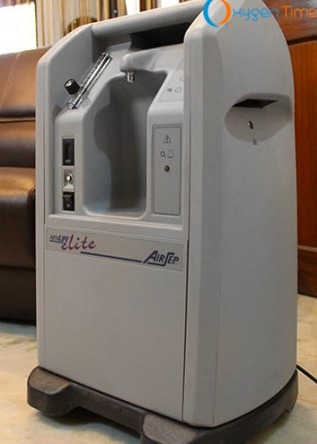
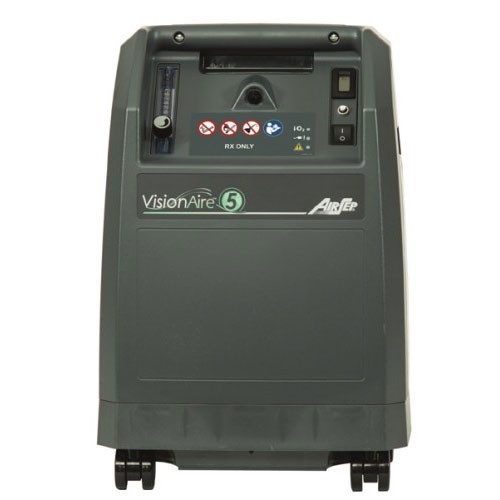
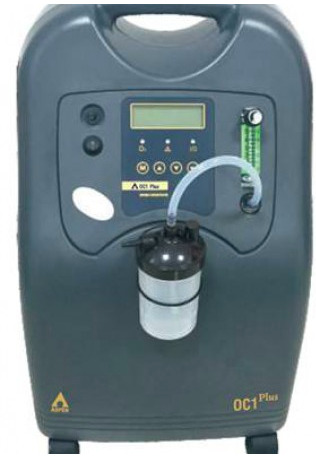
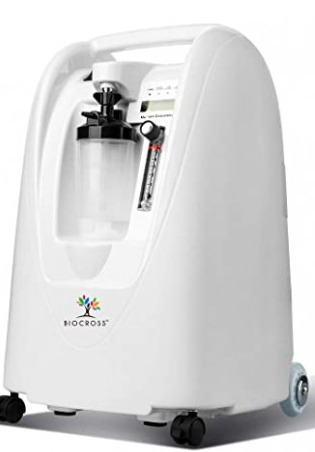
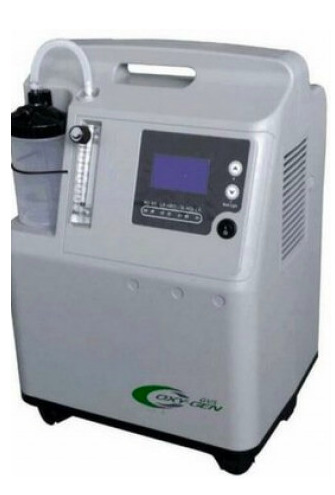
GVS Oxypure 5 LPM
Key features
- Purity 90-95%
- Type Home Stationary
- Continuous Flow 0.5-5LPM
- Weight 16kg
- Oxygen Purity Indicator (OPI) No
- Power consumption 300watts
Specifications
| Purity | 90-95% |
|---|---|
| Type | Home Stationary |
| Continuous Flow | 0.5-5LPM |
| Weight | 16kg |
| Power consumption | 300watts |
| Sound level | 43db |
| Dimensions | 20H x 13.7W x 11Dinch |
| Operating altitude | 7500feet |
| Outlet pressure | 10psi |
| Indian Voltage Model | Yes |
|---|---|
| Company Headquarters | China |
| CE Certified | Yes |
Pros and cons
PROS
- CE certified (one of few in this sub-₹35,000 tier to explicitly hold the mark)
- 300 W power draw matches Philips EverFlo for efficiency
- 7,500 ft operating altitude published — useful for mid-altitude hill stations
- 43 dB published sound level is below the Chinese-OEM class average
CONS
- Listing itself says 'poor network dealer' — service footprint is the acknowledged weakness
- No OPI and no alarms confirmed on the spec sheet
- No FDA, no CDSCO markers; China-headquartered
- Stock status: out of stock — availability is inconsistent
The GVS Oxypure 5 LPM is one of the more interesting budget 5 LPM units in the Indian market — CE certified per the brochure, efficient at 300 W power draw, with a published 7,500 ft altitude rating that many Chinese-OEM competitors omit. At ₹33,599 current (₹34,560 MRP, minimal discount) it sits in the mid-budget band. Uniquely for this review, the product listing itself explicitly includes a “things we don’t like” section that names “poor network dealer” and “does not have oxygen purity analyzer” as weaknesses. Honest marketing for a Chinese-OEM brand — and the honesty is why we can calibrate the rating precisely. Summary specs: 0.5–5 LPM continuous, 90–95% purity, 16 kg, 43 dB, 10 psi outlet, CE certified, no OPI, no alarms confirmed.
What the specs mean
The 0.5–5 LPM flow range with 90–95% purity is class-standard. The 0.5 LPM minimum is useful for paediatric or low-flow adult prescriptions.
The 300 W power draw is genuinely efficient. Beats Philips EverFlo (350 W is Philips’s listed figure), Home Medix HM-KV (320 VA), Dr Trust (390 W), and Nareena (550 W), and sits close to Nidek Nuvo Lite (290 W). At 16 hours/day and ₹9/kWh, 300 W works out to ₹1,300/month — one of the lowest continuous-oxygen electricity bills you can achieve at 5 LPM. Over three years of daily use, this saves ₹25,000-40,000 vs less efficient competitors and offsets the capital cost completely.
The 43 dB sound level is below the Chinese-OEM class average of 48-52 dB and approaches Nidek-class quiet. For a shared-bedroom environment this is one of the better choices in the sub-₹35,000 tier. Not as quiet as a Nidek Nuvo Lite (40 dB) but close.
The 7,500 ft (2,286 m) published operating altitude is a genuine spec and useful for buyers in mid-altitude cities: Ooty (2,240 m), Munnar (1,600 m), Nainital (2,084 m), Mussoorie (2,000 m), Darjeeling (2,045 m), Kodaikanal (2,133 m), Mahabaleshwar (1,353 m). It does not cover Leh, Manali, or the higher Himalayan stations — for those buyers, Dr Diaz 5 LPM (12,000 ft rated) is the better pick.
Outlet pressure at 10 psi is above-average for the class. Useful for long-tubing runs or mask delivery.
CE certification is marked. This is one of relatively few sub-₹35,000 concentrators in the Indian market that explicitly holds CE. For buyers who want a minimum-regulatory bar met, this is meaningful.
16 kg chassis is class-competitive — lighter than many older 5 LPM shells but heavier than Home Medix HM-KV (13 kg), Nareena (15 kg), or Vandelay (14.5 kg).
The weaknesses are documented on the listing itself. No oxygen purity indicator. For a LTOT machine this is the same critical gap that affects most budget Chinese-OEM units — no patient-facing confirmation that the machine is still producing medical-grade oxygen.
Alarm suite: the Additional Details section shows empty fields for loss-of-power, system-malfunction, and no-flow alarms. The brochure does not confirm any alarm presence. Even the lowest-end 5 LPM machines typically have a loss-of-power alarm; GVS’s silence here is either a brochure gap or a real absence.
“Poor network dealer” is the listing’s own language. This is unusual honesty from a vendor and useful signal: the brand has thin distribution in India, and warranty claims will depend on whoever sold you the unit rather than on a manufacturer-supported service infrastructure.
“Become popular only in the recent past — durability cannot be claimed” is also the listing’s own language. In other words: limited field history. For a device where long-term reliability is the most important attribute, this matters.
China headquarters; no CDSCO, no FDA marked.
Who should buy it
The GVS Oxypure makes sense for a specific buyer: someone who wants the lowest-electricity-cost 5 LPM at the sub-₹35,000 price point, values the 7,500 ft altitude rating for hill-station use, and is comfortable with a thin service network because the use case is short-term or because they have an established dealer relationship.
Short-term post-COVID recovery (3-9 months) in a mid-altitude city (1,500-2,300 m). Budget-conscious household with a specific medium-term oxygen requirement. Buyers who have found a local dealer with a written service commitment and spare-parts stock.
The CE certification makes this defensible for buyers who want a regulatory marker without paying Philips-tier pricing.
Who shouldn’t
Long-term LTOT patients. The no-OPI/no-alarms/thin-service combination is not safe for 18+ months of daily use.
Buyers who cannot verify a local dealer’s service commitment in writing.
Patients in high-altitude stations (Leh, Manali, Shimla) — the 7,500 ft rating is not enough; use Dr Diaz 5 LPM (12,000 ft) instead.
Insurance-reimbursement cases requiring CDSCO — the brochure does not confirm CDSCO, and the vendor’s own admission of thin dealer network means getting a proper invoice-plus-compliance-paperwork trail may be harder than from a more established brand.
Head-to-head alternatives
Nidek Nuvo Lite 5 LPM (₹55,000-65,000). Japanese reference. 40 dB, 290 W, OPI, full alarms, 14 kg. Against GVS, Nidek is 65-90% more expensive and materially better on OPI, alarms, service network, and long-term durability. For chronic use, Nidek wins.
Philips EverFlo 5 LPM (₹65,000-75,000). American reference. 45 dB, 350 W, OPI, full alarms. Against GVS, Philips is roughly 2x the price but buys the most comprehensive India-wide service network, a documented 5+ year compressor life, and full alarm suite with OPI. For multi-year LTOT, Philips is correct.
Oxymed Mini 5 LPM (₹32,000-38,000). Indian-brand peer in the same price tier. Chennai-based manufacturing, dealer network concentrated in South/West India, comparable spec sheet but typically includes OPI and at least one alarm. Against GVS, Oxymed costs similar money and has materially better warranty-claim reality in Indian cities. For buyers at this price point who want the least-hassle support experience, Oxymed wins.
Indian-market considerations
The listing explicitly calls out “poor network dealer” as a weakness. Take this at face value: GVS does not have a widespread Indian dealer network, authorised service centres are not publicly documented, and warranty-claim turnaround will depend on the specific seller.
Practical implications:
- Ask the selling dealer in writing: who handles the warranty claim, what is the turnaround time, and what is the spare-parts availability?
- Get the CE certificate number from the dealer; CE certification is a real regulatory status but meaningless if the specific unit is not actually covered.
- If the dealer cannot answer these questions specifically, consider a more established brand — Oxymed, BPL, or a Tier-1 import — even at higher cost.
Warranty: not explicitly documented in the description block. 1-year from dealer is the category standard; confirm in writing.
Voltage: Indian voltage confirmed. 500 VA stabiliser is adequate at 300 W.
Altitude: 7,500 ft confirmed on brochure. For most inhabited Indian hill stations this is adequate; for Leh (3,500 m / 11,500 ft) it is not.
Stock: listed as out of stock on the source page. Availability is inconsistent; for a machine you need urgently, verify current stock directly before ordering.
Additional GVS-specific considerations
The vendor-authored honesty framing. The “things we don’t like” section in the GVS source listing is unusual and worth engaging with. Most concentrator product pages on Indian e-commerce channels list only positives or a mix of generic “5 LPM features.” GVS explicitly documents three negatives:
- “Poor network dealer” — admits the service gap
- “Does not have oxygen purity analyzer” — admits the OPI absence
- “Become popular only in the recent past- durability cannot be claimed” — admits the limited field history
This is the kind of honesty that suggests the vendor is confident enough in the product’s strengths (CE certification, 300 W efficiency, 7,500 ft altitude, 43 dB sound) to acknowledge the weaknesses. It also means the buyer has explicit informed-consent to the trade-offs. The absence of this kind of honest framing on other Chinese-OEM-in-India brands — where the weaknesses are present but not disclosed — is itself a quality signal.
The CE certification as cost driver. CE certification for medical devices in the EU requires testing and documentation processes that typically add ₹3,000-8,000 per unit in manufacturer cost. GVS’s explicit CE claim, if verifiable against a specific CE certificate number, puts this product in a different regulatory tier than uncertified Chinese-OEM alternatives at similar or lower prices. Ask the dealer for the CE certificate number and cross-check on the relevant Notified Body database before relying on the claim.
The “virtual support for set up” feature. The source listing mentions virtual setup support as a positive feature. This is unusual for Chinese-OEM brands in India and suggests GVS has at least some Indian-based customer-support infrastructure, even if the dealer network is thin. For first-time buyers unfamiliar with concentrator setup (humidifier fill, cannula connection, flow rate adjustment), this is useful.
The “screen displays the oxygen outlet pressure being delivered in real time” claim. If accurate, this means GVS Oxypure has a pressure display feature that few budget Chinese-OEM competitors offer. A real-time pressure readout helps the user verify that the machine is delivering oxygen at the correct flow rate and catch clogged filters, kinked tubing, or humidifier overfill problems that reduce output. This is a meaningful usability feature at this price point. Confirm with the dealer what the pressure-readout actually displays in practice.
The “good ratings on Amazon” mention. The listing references positive Amazon reviews as a positive. For the Indian home-oxygen buyer, Amazon reviews are a practical source of field-performance data — not perfect, but useful as a leading indicator. Check the current Amazon listing for GVS Oxypure at the time of purchase; look for reviews from 18+ months after delivery that discuss long-term reliability.
The 7,500 ft altitude vs 12,000 ft comparison. GVS’s 7,500 ft (2,286 m) altitude rating covers most inhabited Indian hill stations but not all. Specifically:
- Covered: Ooty (2,240 m), Munnar (1,600 m), Darjeeling (2,045 m), Nainital (2,084 m), Mussoorie (2,000 m), Kodaikanal (2,133 m), Shimla (2,276 m — at the edge)
- Not covered: Manali (2,050-2,800 m depending on location), Leh (3,500 m), Lahaul-Spiti region, Sikkim above Gangtok, parts of Arunachal Pradesh
For buyers in the covered range, GVS’s altitude rating is adequate. For buyers in the uncovered range, Dr Diaz 5 LPM (12,000 ft / 3,657 m) is the more defensible pick.
Compressor derating curves at altitude. Even within the 7,500 ft rated range, actual oxygen output drops as altitude increases. At sea level GVS delivers nominal 5 LPM at 90-95% purity; at 2,000 m it may deliver 4.5 LPM at 88-92% purity; at 2,286 m (the rated ceiling) it delivers approximately 4 LPM at 85-90% purity. These are general approximations — GVS does not publish specific derating curves. For prescriptions requiring the full 5 LPM at altitude, a machine with higher altitude headroom is safer.
Energy efficiency as TCO driver. At 300 W for 16 hours daily, 365 days a year, ₹9/kWh, GVS consumes about ₹15,800/year in electricity. Compare to a Nareena 5 LPM at 550 W (₹28,900/year) — over 3 years the GVS saves ₹39,300. This fully offsets the capital-cost savings of buying a cheaper (but less efficient) alternative, and in fact makes GVS a positive-TCO choice vs the Nareena if you buy both at their list prices.
Verdict
The GVS Oxypure 5 LPM is a well-specced budget 5 LPM on paper: CE certified, 300 W efficient, 43 dB quiet, 7,500 ft altitude rated. Those are all genuinely positive specs for a sub-₹35,000 unit. The gaps are the service-network admission from the vendor itself, the absent OPI, and the silent alarm suite on the brochure. For short-term mid-altitude use with a responsive local dealer, this is defensible. For long-term LTOT, there are better choices at the same or slightly higher price point — particularly Oxymed Mini for the service-network advantage, or Dr Diaz 5 LPM for the OPI and altitude rating combo at similar money. Score: 6.4/10.