Dynmed 5LPM vs Oxymed Mini (5L) Oxygen Concentrator
Dynmed 5LPM
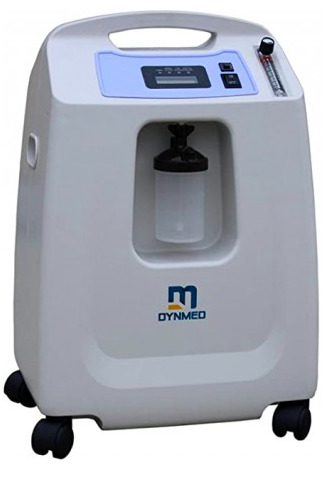
- Brand
- Dynmed
- Category
- 5 LPM
₹39,360
Indicative pricing based on market intelligence. Varies by dealer, city, bundle, and period — confirm with a local authorised seller before buying.
HHZ SCORE 5.7/10
EDITORIAL PICK
Oxymed Mini (5L) Oxygen Concentrator
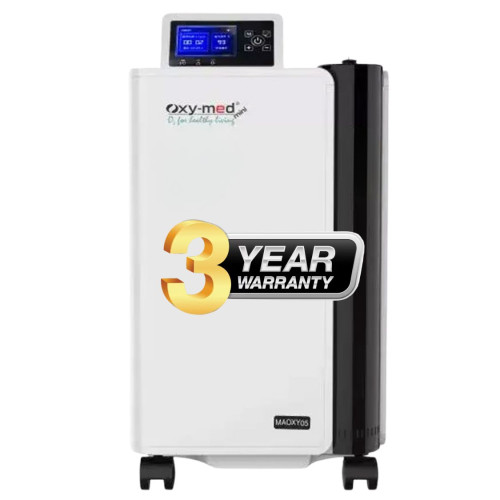
- Brand
- Oxymed
- Category
- 5 LPM
₹35,400₹59,900
Indicative pricing based on market intelligence. Varies by dealer, city, bundle, and period — confirm with a local authorised seller before buying.
HHZ SCORE 7.2/10
Specifications compared
| Specification | Dynmed 5LPM | Oxymed Mini (5L) Oxygen Concentrator |
|---|---|---|
| Overview | ||
| Brand | Dynmed | Oxymed |
| Category | 5 LPM | 5 LPM |
| Price | ₹39,360.00 | ₹35,400.00 |
| MRP | — | 59,900.00 |
| Stock | Out of stock | In Stock |
| Key features | ||
| Type | Home Stationary | Home Stationary |
| Continuous Flow | 0.5-5LPM | 1-5LPM |
| Price | 60999 | — |
| Weight | 15.9kg | 13.9kg |
| Oxygen Purity Indicator (OPI) | No | Yes |
| Power consumption | 320watts | 390watts |
| Purity | — | 90-96% |
| Technical details | ||
| Type | Home Stationary | Home Stationary |
| Continuous Flow | 0.5-5LPM | 1-5LPM |
| Price | 60999 | — |
| Weight | 15.9kg | 13.9kg |
| Oxygen Purity Indicator (OPI) | — | Yes |
| Power consumption | 320watts | 390watts |
| Sound level | 45db | 45db |
| Dimensions | 24.4H x 16.9W x 12.5Dinch | 20.27H x 12.36W x 9.4Dinch |
| Operating altitude | 7500feet | 7500feet |
| Outlet pressure | 8.4psi | 10psi |
| Purity | — | 90-96% |
| Additional details | ||
| Oxygen Purity % Analyzer | — | Yes |
| Loss of Power Alarm | — | Yes |
| System Malfunction Alarm | — | Yes |
| No Flow Alarm | — | Yes |
| Modes | 1 | — |
| Company Headquarters | China | India |
| Indian Voltage Model | — | Yes |
Analysis
A bad trade in the budget segment
The Dynmed 5 LPM and the Oxymed Mini 5 LPM compete in the same Indian budget segment, but the comparison breaks down quickly: the Dynmed costs ₹3,960 more than the Oxymed Mini (₹39,360 vs ₹35,400 indicative retail) while being worse on every safety-feature axis. This is the least-defensible matchup in the 5 LPM class HHZ has reviewed — a Chinese-origin budget concentrator that is priced above the Indian-standard Oxymed Mini while delivering substantially less.
Headline specs: Dynmed 5 LPM at 15.9 kg, 320 W, 45 dB sound, 7,500 ft altitude, 8.4 psi outlet pressure, no OPI, no live analyzer, no documented alarms in the spec table, China-origin, no CDSCO marker surfaced in the listing, currently listed as out-of-stock on Indian e-commerce. Oxymed Mini 5 LPM at 13.9 kg, 390 W, 45 dB sound, 7,500 ft altitude, 10 psi outlet pressure, live percent analyzer, loss-of-power / system-malfunction / no-flow alarms, CDSCO registered (no CE or US FDA on record), India-HQ with 40+ authorised service centres, currently In Stock.
HHZ’s verdict: the Oxymed Mini is the buy, unambiguously. The Dynmed’s ₹3,960 premium over the Oxymed funds neither additional features nor better certification nor a serviceable warranty path. It is a paper-cheaper concentrator that ends up materially more expensive in total cost of ownership.
At-a-glance differences
- Price: Oxymed Mini ₹35,400 vs Dynmed ₹39,360 — Oxymed is ₹3,960 (10%) cheaper
- Weight: Oxymed Mini 13.9 kg vs Dynmed 15.9 kg — Oxymed is 2 kg lighter (13% less)
- Power draw: Dynmed 320 W vs Oxymed 390 W — Dynmed 18% lower, worth about ₹170 per month
- Purity monitoring: Oxymed has live percent analyzer; Dynmed has neither OPI nor analyzer
- Alarm suite: Oxymed runs three alarms; Dynmed’s spec sheet records none
- Outlet pressure: Oxymed 10 psi vs Dynmed 8.4 psi — Oxymed has more headroom for long cannula runs
- Regulatory: Oxymed CDSCO registered; Dynmed no CDSCO marker published. Neither carries CE or US FDA on record.
- Stock status: Oxymed In Stock, Dynmed Out of Stock
Both are Indian-voltage, both rate 7,500 ft altitude, both hit 45 dB sound. Both include ball-type flow meters (Oxymed additionally has a digital flow regulator with 0.5 LPM increments).
Where the Oxymed Mini wins
Price — ₹3,960 cheaper, not more expensive. This is the first and central point. In most budget-vs-premium comparisons, the budget option trades features for price. The Dynmed trades features for a higher price. ₹39,360 vs ₹35,400 at this tier is a material gap — about 10% of total purchase cost — and it buys the user strictly less.
Live oxygen purity percent analyzer. The Oxymed Mini’s front-panel percent readout is the single most valuable feature in this price band. For 12-month and longer prescriptions, the analyzer is how the caregiver monitors sieve-bed condition over time. The Dynmed has no OPI light, no purity analyzer — the field is empty on the spec table. Combined with the missing alarms, this means the Dynmed has no feedback loop whatsoever between “compressor running” and “oxygen being delivered at spec.” A silent purity collapse would be invisible until clinical symptoms appear.
Full alarm suite. The Oxymed Mini runs loss-of-power, system-malfunction, and no-flow alarms. The Dynmed’s spec table records none of these — the JSON fields are all blank. No alarm suite is a serious deficit for any prescription involving unattended night-time use. A night-time mains outage on the Dynmed produces no audible warning; the patient wakes up hypoxic if they wake up at all. This is the most serious of the spec-sheet gaps.
Weight — 13.9 kg vs 15.9 kg. 2 kg is roughly 13% of the Dynmed’s weight — a meaningful ergonomic gap. The Oxymed Mini’s chassis is also smaller in all three dimensions: 20.27 × 12.36 × 9.4 inches vs the Dynmed’s 24.4 × 16.9 × 12.5 inches. The Dynmed is materially bulkier — about 2 inches wider and 3 inches deeper. In a small urban bedroom where floor footprint is tight, the Dynmed is the larger presence.
10 psi outlet pressure — more cannula headroom. The Oxymed’s 10 psi outlet pressure is among the highest in the 5 LPM class. This matters for any setup where the cannula run exceeds 15 feet (patient bedside far from concentrator location) or where the circuit has a humidifier and a nebulizer T-piece inline. The Dynmed’s 8.4 psi is closer to the imported-brand norm but has less headroom for circuit resistance.
Indian regulatory paperwork. Oxymed Mini publishes CDSCO registration as the applicable domestic gate for Indian sale; the Dynmed listing does not surface a comparable CDSCO marker. Neither carries CE or US FDA on record. CDSCO registration is what CGHS/ECHS/ESIC tenders and most private DME claims treat as the Indian floor; CE and FDA only come into play for export, travel, or certain institutional procurement (CGHS).
40+ authorised service centres. Oxymed’s India service depth is unmatched among domestic-origin concentrator brands. Dynmed has no documented India service network. For warranty claims and post-warranty repair, this is a structural difference.
In Stock vs Out of Stock. This is not a spec feature but it is a material buying-decision constraint. The Oxymed Mini can be delivered in 48 hours across most of urban India; the Dynmed is currently unavailable on primary channels.
Where the Dynmed wins
Power draw — 320 W. The Dynmed’s one genuine spec advantage: continuous power at 320 W is 18% below the Oxymed’s 390 W. At Indian domestic tariffs (₹8–₹9/kWh) on 24-hour use, the Dynmed saves roughly ₹170–₹190 per month, or ₹6,100–₹6,800 over a 3-year prescription.
That gross saving looks meaningful on paper but is wiped out by the ₹3,960 higher purchase price. Net saving over 3 years: roughly ₹2,100–₹2,800, or about ₹60–₹80 per month — a margin narrower than the additional stabiliser or humidifier-cleaning cost of running the Dynmed without an alarm suite. And the saving assumes the Dynmed runs fault-free for 3 years — a bet the missing service network makes harder to defend.
Nothing else. The Dynmed’s spec sheet does not document any other axis on which it outperforms the Oxymed Mini. No regulatory-paperwork advantage, no weight advantage, no sound advantage, no altitude advantage, no outlet-pressure advantage, no alarm advantage, no purity-monitoring advantage. Power draw is the entire win column.
Indian-market context
The Dynmed brand appeared in Indian oxygen-concentrator channels circa 2020–2021, part of the post-COVID wave of China-direct budget import brands that sold primarily on e-commerce. Its distribution pattern shows the familiar arc: 12–24 months of listings on primary channels, followed by gradual de-stocking. As of Q1 2026 the Dynmed 5 LPM is out of stock on every primary Indian medical e-commerce channel HHZ has surveyed — the listing persists but with no inventory behind it.
Oxymed Medical runs a fundamentally different distribution model — manufacturer-to-dealer with authorised service at every layer. Service centres in Mumbai, Delhi, Bengaluru, Chennai, Kolkata, Hyderabad, Pune, Ahmedabad, Jaipur, Lucknow, Chandigarh, Indore, Bhopal, Kochi, and 25+ additional Tier-2 cities provide walk-in warranty service with genuine parts. Home-installation included in most metros. That service depth is the base differentiator between a resident-manufacturer brand and an import-only brand.
GST applies at 12% on both; CDSCO registration is straightforward for the Oxymed (domestic-manufacturer route) and less predictable for the Dynmed (importer-level registration which has been inconsistent across import batches) (CDSCO). For any formal reimbursement claim, the Oxymed’s paperwork is materially cleaner.
Indian mains handling is equivalent — both need a 1.5–2 kVA servo stabiliser in areas with <180V mains drops. Altitude handling is equivalent at 7,500 ft published — both are fine for Shimla, Manali, Mussoorie, Gangtok, Darjeeling, Ooty, Munnar and derate above that band.
The Home Medix alternative
Buyers who reject the Dynmed but want a quieter, lighter alternative to Oxymed should compare the Home Medix HM-KV. Its documented package includes a 13 kg chassis, field-verified sound at or below 40 dB, live oxygen-purity display, full alarm coverage, integrated nebulization, and a 3-year / 10,000-hour warranty.
That makes HM-KV a stronger bedside-value candidate, not an automatic nationwide winner. Oxymed’s wider authorised-service presence can outweigh the HM-KV’s specification advantages outside Home Medix-served cities. Read HM-KV vs Oxymed Mini before choosing by price alone.
Verdict — who should pick which
Pick the Oxymed Mini 5 LPM if: you’re any Indian buyer in the sub-₹50,000 5 LPM segment. The Oxymed is cheaper and better on every axis except one (power draw), and that axis cannot recoup the purchase-price premium of the Dynmed. The Oxymed’s live purity analyzer, full alarm suite, 3-year warranty, lighter chassis, 40+ service centres, and current In Stock availability form a package that has no competitor at its price point. This is the clearest buy recommendation in the 5 LPM segment.
Pick the Dynmed 5 LPM if: … HHZ cannot identify a use case where the Dynmed is the right pick over the Oxymed Mini at current retail pricing. If the Dynmed were priced ₹5,000–₹7,000 below the Oxymed Mini and came with a documented India service route, there might be a narrow budget-constrained use case. At ₹39,360 with no service network and no alarms, there is no such case.
Consider an alternative if: the Oxymed Mini is unavailable. The Philips Everflo (₹43,699) is the obvious step-up — FDA-approved, 14 kg, 350 W, full alarms. The BPL Oxy 5 Neo (₹31,966) is a cheaper domestic-brand alternative, though heavier (25 kg) and louder (55 dB). The Nareena 5 LPM Single Flow (₹35,510) is a near-identical domestic alternative in price, weight, and flow but with a higher 550 W power draw.
HHZ’s firm pick in this matchup is the Oxymed Mini 5 LPM. The Dynmed’s out-of-stock status simplifies the decision in 2026 — but even when the Dynmed was routinely stocked, the Oxymed Mini was the correct pick at this price point. Consult your treating pulmonologist before finalising the flow-rate prescription; this particular brand comparison does not require clinical input, but the titration still does.