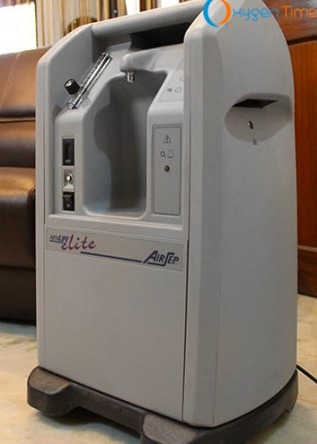
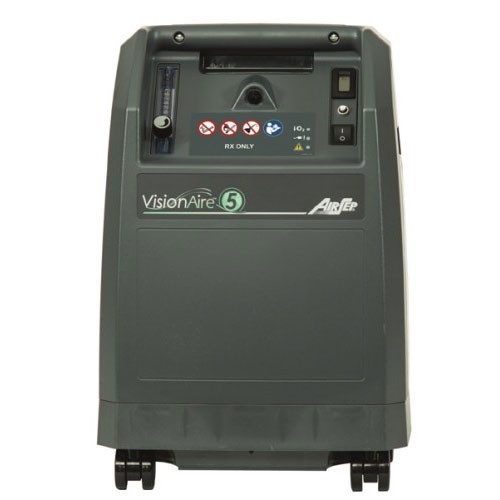
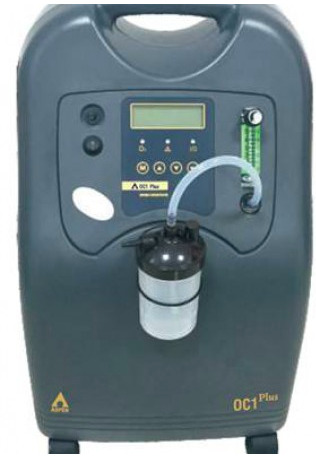
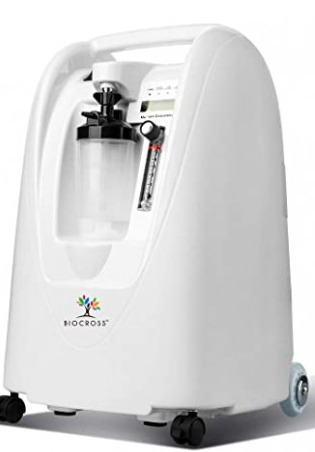
Dynmed 5LPM
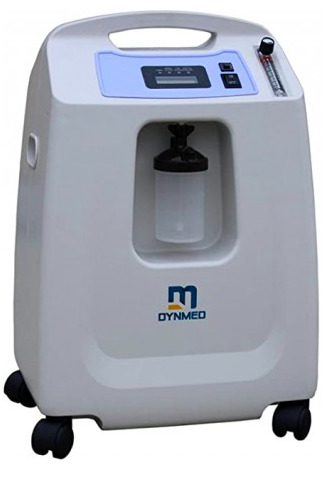
Key features
- Type Home Stationary
- Continuous Flow 0.5-5LPM
- Price 60999
- Weight 15.9kg
- Oxygen Purity Indicator (OPI) No
- Power consumption 320watts
Specifications
| Type | Home Stationary |
|---|---|
| Continuous Flow | 0.5-5LPM |
| Price | 60999 |
| Weight | 15.9kg |
| Power consumption | 320watts |
| Sound level | 45db |
| Dimensions | 24.4H x 16.9W x 12.5Dinch |
| Operating altitude | 7500feet |
| Outlet pressure | 8.4psi |
| Modes | 1 |
|---|---|
| Company Headquarters | China |
Pros and cons
PROS
- 7,500 ft operating altitude published — useful for mid-altitude hill stations
- 320 W power draw is more efficient than the Chinese-OEM 5 LPM average
- 15.9 kg chassis is movable between rooms
- 8.4 psi outlet pressure supports mask and long-tubing delivery
CONS
- Published purity range is missing from the spec sheet — unusual and concerning
- No OPI, no loss-of-power alarm, no alarms at all confirmed
- No CE, no FDA, no CDSCO markers
- China-headquartered with no public Indian service network
The Dynmed 5 LPM is a Chinese-OEM stationary concentrator listed on Indian channels at ₹39,360. The spec sheet is notably sparse — the “Purity” field is blank, which is unusual because 90-95% or 90-96% purity is the most basic spec any oxygen concentrator should publish. Whether this is a brochure omission or an actual absence of manufacturer purity guarantee is unclear. Other documented specs: 0.5–5 LPM continuous flow, 15.9 kg chassis, 320 W power draw, 45 dB sound, 8.4 psi outlet pressure, 7,500 ft operating altitude. At this price it is outgunned by better-documented alternatives.
What the specs mean
The 0.5–5 LPM flow range with 0.5 LPM minimum is useful for paediatric cases. The missing purity field is the most unusual aspect of the listing — most concentrators explicitly publish 90-95% or 90-96% purity because that is the medical-therapeutic threshold. Dynmed’s silence on this field should be treated as a request-confirmation-before-purchase item. The dealer should provide either a printed spec certificate or the CE/manufacturer test report showing the actual purity delivered at rated flow. Without this, the machine is not verifiably medical-grade.
The 320 W power draw is on the efficient side. Comparable to Home Medix HM-KV (320 VA), GVS (300 W), Vandelay (300 W), and Oxyflow (300 W); better than Dr Trust (390 W) and Nareena (550 W); a bit higher than Dr Diaz (285 W). At 16 hours/day × ₹9/kWh this is ₹1,400/month in electricity — reasonable but not class-leading.
The 15.9 kg chassis is class-competitive. Similar to Olex (15.9 kg), Nareena (15 kg), and Dr Trust (15 kg); lighter than Aspen (21 kg); heavier than Home Medix HM-KV (13 kg) and Vandelay (14.5 kg).
The 45 dB sound level is below the Chinese-OEM class average of 48-52 dB. Close to Philips EverFlo quality (45 dB) on this axis — which is a genuine positive.
Outlet pressure at 8.4 psi is competitive. Good for mask-based delivery or longer tubing runs.
The 7,500 ft (2,286 m) operating altitude matches GVS Oxypure and Biocross, useful for mid-altitude hill station deployments (Ooty, Munnar, Darjeeling, Nainital, Mussoorie, Mahabaleshwar). Does not cover Leh, Manali, or higher-altitude Himalayan stations.
The critical gaps: no OPI. No confirmed alarms — loss-of-power, system-malfunction, no-flow are all blank. No CE, no FDA, no CDSCO.
The Additional Details block lists “Modes: 1” and “Company Headquarters: China” but does not confirm Indian voltage — though this is almost certainly a brochure gap rather than a real 110 V unit being sold into the Indian market. Confirm with dealer.
The product description is minimal: “1 Humidifier Bottle, 1 Nasal Cannula, User Manual” — no nebulizer kit included.
Who should buy it
A narrow buyer with specific circumstances. Dynmed’s 7,500 ft altitude rating is useful if you live in a mid-altitude hill station and other altitude-rated alternatives (GVS, Biocross, Dr Diaz) are unavailable at your dealer. The 45 dB sound level is below class average and suits quiet-residence use. The 320 W power draw is reasonable for long-hour operation.
Short-term post-discharge users (3-6 months) where the machine will see moderate rather than 18-hour daily use.
Buyers who find Dynmed at a meaningful discount from its listed ₹39,360 — at, say, ₹30,000-35,000 it becomes more competitive against better-specced alternatives at similar reduced prices.
Who shouldn’t
Anyone on long-term LTOT. The missing purity spec, missing alarms, missing OPI combination is the wrong configuration for multi-year daily use.
Buyers who want certification paperwork — CE, CDSCO, FDA — as a purchase criterion.
Patients in high-altitude hill stations (above ~2,300 m) where 7,500 ft is not enough.
Buyers who need reliable warranty claim support from an Indian service network.
Head-to-head alternatives
Oxymed Mini 5 LPM (₹32,000-38,000). The Indian-brand peer. Similar price, better-documented specs (explicit purity range, usually an OPI), Chennai-based manufacturing, stronger service network in South/West India. Against Dynmed, Oxymed is ₹2,000-7,000 cheaper and materially better on safety features and service reality.
Biocross 5 LPM (₹36,480). Same 7,500 ft altitude rating. Similar 320 W power draw, 16 kg chassis, 48 dB sound (louder than Dynmed). Biocross also lacks OPI and confirmed alarms, so the two are near-twins on spec; Biocross is ₹2,880 cheaper. For buyers who want the altitude rating at the lowest Chinese-OEM price, Biocross is slightly better value.
Nidek Nuvo Lite 5 LPM (₹55,000-65,000). Japanese reference. 40 dB, 290 W, OPI, full alarms, 14 kg. Against Dynmed, Nidek is 40-65% more expensive but dramatically better on every meaningful axis. For any buyer whose budget stretches to ₹55,000, Nidek is the correct pick.
Indian-market considerations
Dynmed has no visible Indian dealer network or authorised-service-centre documentation. Warranty-claim reality is entirely dealer-dependent. If a Dynmed unit fails in month 10, recourse depends on the specific e-commerce seller or medical-equipment dealer who handled the transaction — not on any brand-level support infrastructure.
Spare parts: no publicly documented Indian distributor for Dynmed spare compressors, sieve beds, or flow meters. This makes post-warranty repair extremely dependent on independent technicians who stock generic Chinese-OEM parts that may or may not be a direct fit for a Dynmed unit.
Voltage: Indian voltage is not explicitly confirmed on the brochure. This is almost certainly a brochure omission (the unit is sold in India and priced in rupees) but verify at purchase. Do not accept a 110 V unit.
Altitude: 7,500 ft confirmed.
CDSCO: not indicated. Verify for insurance.
Stock: out of stock on source listing. Availability is inconsistent.
Warranty claim reality for thin-distribution Chinese-OEM brands in India is broadly: the e-commerce seller handles returns within the first 7-14 days, thereafter the warranty is nominal and depends on whether the seller has any real relationship with the manufacturer. For a critical medical device, this is a risk.
Additional Dynmed-specific considerations
The “Modes: 1” field. The brochure lists “Modes: 1” in the Additional details block. This is unusual — most 5 LPM concentrators do not publish a “modes” spec because they have one continuous-flow mode and nothing else. Dynmed’s explicit publication of “Modes: 1” suggests either (a) the field is a template copy-paste artifact from a vendor spec sheet that supports pulse-dose modes on other product lines, or (b) Dynmed’s parent OEM produces multi-mode units elsewhere and this specific 5 LPM is the single-mode variant. Neither interpretation affects the actual product, but it is another signal of documentation quality issues.
The missing purity spec in context. Among the 16 Indian-emerging-brand 5 LPM units we review, Dynmed is one of only two that explicitly leaves the purity field blank on the published brochure. The other is the Vandelay 5L with Nebulizer, which at least has “90-95%” in its key features block even if the formal Technical details table is inconsistent. Dynmed’s Technical details table has no purity entry at all. This is below the documentation standard expected for medical-grade equipment sold into the Indian retail market. The dealer should provide manufacturer test certificates documenting actual purity performance at rated flow.
The 24.4H x 16.9W x 12.5D chassis. These dimensions are identical to Nareena 10 LPM Dual Flow (24.4H x 16.9W x 12.6D). Whether this reflects a shared OEM chassis between Dynmed 5 LPM and Nareena 10 LPM (possible — multi-tier chassis families are common) or is coincidental is unknowable from the spec sheets alone. If the chassis is shared, then Dynmed 5 LPM is running a 5 LPM compressor + sieve configuration in a 10 LPM-sized chassis, which would suggest overbuilt mechanical construction (and longer durability) at a 5 LPM duty cycle. This is speculative; verify with the dealer.
No nebulizer in the bundle. The shipping contents list is minimal: 1 Humidifier Bottle, 1 Nasal Cannula, User Manual. No nebulizer kit, no HEPA filter, no power cord (though this is presumably included). Buyers needing nebulizer functionality must purchase a separate compressor nebulizer at ₹2,000-3,500.
Dealer-channel reality. Dynmed appears primarily in Indian e-commerce channels rather than through established medical-equipment distributors. This has two implications: (a) price may be negotiable if the seller is under pressure to move stock, and (b) warranty claims have no standard escalation path beyond the seller. For a medical device, the second issue is more concerning than the first opportunity. Do not buy Dynmed from a generic e-commerce listing without first verifying the seller’s medical-equipment-dealer credentials and service-capability history.
The 24.4 x 16.9 x 12.5 chassis implications
Beyond the brand-identity questions, the physical dimensions of Dynmed have practical implications for Indian home installation. The 24.4-inch height means the machine needs adequate vertical clearance — typically 30+ inches between floor and any overhanging surface (shelf, window ledge, low ceiling in converted-space rooms). The 16.9-inch width requires a dedicated 45 cm wide placement slot, which is wider than many alcoves or corridor spaces in compact Indian flats. Budget for floor-level dedicated placement in a corner or against a wall with adequate clearance around the machine (6-8 inches minimum on intake sides to avoid starving the compressor of air).
The 12.5-inch depth is manageable but not compact. Measure the intended installation space before purchase, especially if the placement is in a hallway or against a cabinet where depth matters.
Operating-hour expectations
At ₹39,360, Dynmed is expected to deliver approximately 3-5 years of reliable operation under 16 hours-per-day Indian home-use conditions. Budget Chinese-OEM compressors in this power tier (300-350 W) typically have rated lifespans in the 15,000-25,000 hour range. At 16 hours/day this translates to 2.5-4.3 years of daily operation before major compressor service is required.
Post-warranty service economics on budget Chinese-OEM units are the real LTOT consideration. A typical major service event — compressor capacitor replacement, sieve bed refurbishment, solenoid valve replacement — costs ₹4,500-8,500 depending on the specific failure and parts availability in India. On a ₹39,360 capital-cost machine, even one such service event represents 11-22% of the original purchase price. Two service events over a 4-year LTOT horizon brings the total ownership cost to ₹48-56K — at which point the buyer has paid the equivalent of a Nidek Nuvo Lite with better service-network guarantees.
Practical implication: for multi-year LTOT, the capital-cost advantage of budget Chinese-OEM units like Dynmed erodes as service-event frequency accumulates. The first 18-24 months are the best value; the 30+ month horizon starts favouring higher-capital but lower-service-cost imports.
What a fair price for Dynmed would look like
If Dynmed delivered on the specs it publishes — 1–5 LPM flow, 320 W draw, 45 dB noise, 8.4 psi outlet, 7,500 ft altitude, 90-95% purity verified by certificate — its fair market price against peers would be ₹28,000-32,000 (below Dr Diaz’s list due to thinner certification paperwork). At the current ₹39,360 list, the brand is asking for ~₹7-10K of premium that the spec sheet does not justify. Buyers should negotiate aggressively, aim for ₹30-33K, or choose a different brand.
Verdict
The Dynmed 5 LPM at ₹39,360 is underwhelming. The missing purity field on the official brochure is the signature problem — a medical-grade concentrator should publish its purity spec unambiguously, and Dynmed does not. Combined with absent OPI and alarm documentation, thin service network, and no Indian regulatory marker, this is a hard product to recommend at its list price. The 7,500 ft altitude rating and the 320 W power efficiency are the only genuinely positive specs. For ₹39,000 in the Indian market, Oxymed Mini, Biocross, or even the Home Medix 5 LPM (at same price, with CE certification) are all more defensible picks. Score: 5.7/10.