Dr Trust 5L vs Oxymed Mini (5L) Oxygen Concentrator
Dr Trust 5L
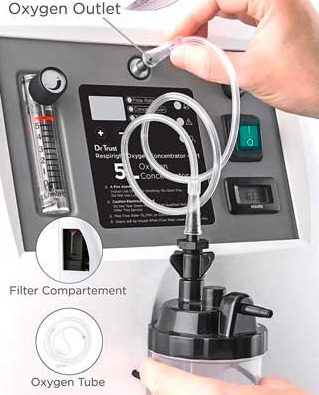
- Brand
- Dr Trust
- Category
- 5 LPM
₹40,320
Indicative pricing based on market intelligence. Varies by dealer, city, bundle, and period — confirm with a local authorised seller before buying.
HHZ SCORE 5.8/10
EDITORIAL PICK
Oxymed Mini (5L) Oxygen Concentrator
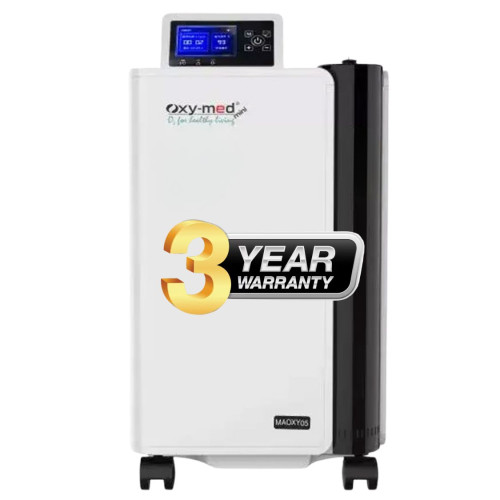
- Brand
- Oxymed
- Category
- 5 LPM
₹35,400₹59,900
Indicative pricing based on market intelligence. Varies by dealer, city, bundle, and period — confirm with a local authorised seller before buying.
HHZ SCORE 7.2/10
Specifications compared
| Specification | Dr Trust 5L | Oxymed Mini (5L) Oxygen Concentrator |
|---|---|---|
| Overview | ||
| Brand | Dr Trust | Oxymed |
| Category | 5 LPM | 5 LPM |
| Price | ₹40,320.00 | ₹35,400.00 |
| MRP | — | 59,900.00 |
| Stock | Out of stock | In Stock |
| Key features | ||
| Purity | 90-95% | 90-96% |
| Type | Home Stationary | Home Stationary |
| Continuous Flow | 0.5-5LPM | 1-5LPM |
| Weight | 15kg | 13.9kg |
| Oxygen Purity Indicator (OPI) | No | Yes |
| Power consumption | 390watts | 390watts |
| Technical details | ||
| Purity | 90-95% | 90-96% |
| Type | Home Stationary | Home Stationary |
| Continuous Flow | 0.5-5LPM | 1-5LPM |
| Weight | 15kg | 13.9kg |
| Oxygen Purity Indicator (OPI) | — | Yes |
| Power consumption | 390watts | 390watts |
| Sound level | 46db | 45db |
| Dimensions | 21.25H x 12.99W x 10.23Dinch | 20.27H x 12.36W x 9.4Dinch |
| Operating altitude | — | 7500feet |
| Outlet pressure | — | 10psi |
| Additional details | ||
| Loss of Power Alarm | — | Yes |
| System Malfunction Alarm | — | Yes |
| No Flow Alarm | — | Yes |
| Indian Voltage Model | Yes | Yes |
| Company Headquarters | China | India |
| Oxygen Purity % Analyzer | — | Yes |
Analysis
The Dr Trust 5L and the Oxymed Mini 5 LPM both target the Indian 5 LPM budget buyer, but they are separated by something more fundamental than spec sheets — they represent two entirely different commercial models for selling home oxygen into India. The Dr Trust is a consumer-health retail brand that imports Chinese OEM concentrators and relabels them for Indian e-commerce channels. The Oxymed Mini is the product of a company that built a dedicated Indian oxygen-concentrator dealer infrastructure, claims 40+ service centres, and lists over 1,000 verified customer reviews. For Indian home LTOT, this matchup is not close on any practical axis.
Price: the cheaper unit is also the better unit
Dr Trust 5L: Rs. 40,320 street price, no MRP listed. Out of stock at time of survey.
Oxymed Mini 5 LPM: Rs. 35,400 street price, against an MRP of Rs. 59,900 (a 41 percent discount, though Indian MRP-versus-street pricing is structurally inflated). In Stock.
The Oxymed Mini is Rs. 4,920 cheaper than the Dr Trust. This is already the inversion most buyers don’t expect — the brand most Indian consumers recognise from Amazon (Dr Trust, a consumer-health label with thermometers, BP monitors, weighing scales) is priced above the specialist oxygen-concentrator brand (Oxymed). The assumption that the familiar name is the safer or cheaper choice does not hold here.
Stock availability adds a further wedge. The Dr Trust is Out of Stock on the surveyed listing. The Oxymed Mini is In Stock. For post-discharge LTOT purchases with 48-72 hour urgency, stock status is the binding practical constraint — a machine you cannot buy is not really a choice.
Flow, purity, and weight
Dr Trust 5L delivers 0.5 to 5 LPM continuous at 90-95% purity. The Oxymed Mini delivers 1 to 5 LPM continuous at 90-96% purity. The Dr Trust’s lower 0.5 LPM floor is useful for paediatric and titration-sensitive cases, but for the median Indian adult LTOT prescription between 2 and 4 LPM, either flow range covers the clinical requirement. On the upper-end purity claim, the Oxymed’s 96% is a one-percent datasheet lead — not a decisive difference, but a signal that the Oxymed sieve-bed is tuned closer to the chemistry ceiling.
Weight is where the Oxymed pulls away. Dr Trust: 15 kg. Oxymed Mini: 13.9 kg. The Oxymed is 1.1 kg lighter, which matters when a caregiver shifts the machine between rooms single-handedly. 13.9 kg is also genuinely light for the 5 LPM class — it approaches the Nidek Nuvo Lite’s 13.6 kg and the Philips Everflo’s 14 kg, putting it in the same weight bracket as Western-brand benchmarks that cost 60-80 percent more.
Footprint follows the same pattern. Dr Trust: 21.25H x 12.99W x 10.23D inch. Oxymed Mini: 20.27H x 12.36W x 9.4D inch. The Oxymed is smaller on every axis.
Sound and power
Dr Trust runs at 46 dB. Oxymed Mini runs at 45 dB. One decibel is not a perceptible difference; this is effectively a tie on acoustic impact. Both are reasonable for bedroom use once the occupants habituate — neither approaches the near-silence of the Nuvo Lite at 40 dB, but neither is disruptive.
Power consumption is identical: both units draw 390 W. At 14 hours per day of use on Mumbai residential electricity rates, either unit runs at approximately Rs. 1,310 per month. No operating-cost advantage in either direction.
Alarms and OPI: the decisive gap
Dr Trust 5L spec sheet: Oxygen Purity Indicator blank, Oxygen Purity Analyzer blank, Loss of Power Alarm blank, System Malfunction Alarm blank, No Flow Alarm blank. All five safety-feature rows are empty. Only Indian Voltage Model is Yes.
Oxymed Mini 5 LPM spec sheet: Oxygen Purity Indicator Yes, Oxygen Purity Analyzer Yes, Loss of Power Alarm Yes, System Malfunction Alarm Yes, No Flow Alarm Yes. All five rows are populated. Indian Voltage Model Yes.
This is the widest alarm-coverage gap in the entire Indian 5 LPM budget segment. The Oxymed Mini offers the full complement of in-built safety features that clinicians consider baseline for home LTOT: a purity indicator to warn of sieve-bed decay, a purity analyzer to show the actual delivered O2%, a loss-of-power alarm to wake caregivers during overnight cuts, a system-malfunction alarm for general fault conditions, and a no-flow alarm for blocked cannulae or flow-meter failures.
The Dr Trust offers none of these on its published spec sheet. A home oxygen concentrator without a loss-of-power alarm fails silently when the grid drops. A concentrator without an OPI provides gradually weaker oxygen over months without any visible indication. A concentrator without a no-flow alarm continues to run when the cannula has kinked or disconnected, delivering no gas while the compressor still hums. These are not theoretical failure modes — they are the failure modes home LTOT is known to experience in the Indian context.
Certifications
Dr Trust 5L: US FDA blank, FAA blank, CE blank, no CDSCO marker surfaced on the listing. Indian Voltage Yes. Company Headquarters China.
Oxymed Mini 5 LPM: US FDA blank, FAA blank, CE blank, CDSCO registered under the domestic-manufacturer route. Indian Voltage Yes. Company Headquarters India.
The Oxymed’s CDSCO registration is the applicable Indian regulatory gate for a Class IIa medical device sold for home use in India, issued with an invoice-traceable manufacturer record. Neither unit carries CE or US FDA on record — so neither is differentiated for export, travel, or institutional procurement that requires those marks. What does differ is the domestic paperwork trail: Oxymed’s CDSCO registration is clean; the Dr Trust listing does not surface equivalent CDSCO evidence.
The country-of-origin difference matters for service reachability. Oxymed is headquartered in India and (per the manufacturer’s own description) runs 40+ service centres across the country, offering home installation in approximately 50 cities. Dr Trust, as a consumer-health retail brand, does not operate a dedicated oxygen-concentrator service infrastructure — when a compressor fails or a sieve bed needs replacement, the buyer is dependent on the general Dr Trust customer-care channel that also handles thermometers and weighing scales. That is a structurally different support model.
Warranty and operating envelope
The Dr Trust 5L does not state a warranty period on the surveyed sheet — a gap that matters at this price band.
The Oxymed Mini 5 LPM is listed with a 3-year warranty per the manufacturer’s description. Three years is the class-leading warranty for Indian 5 LPM concentrators, matching the Philips Everflo and Nidek Nuvo Lite warranties and exceeding the typical 1-2 year warranty of most budget-segment units.
The Oxymed lists operating altitude at 7,500 feet and outlet pressure at 10 psi — both documented on the spec sheet. The Dr Trust leaves both fields blank on the surveyed sheet. The operating-altitude gap matters for hill-region use (Shimla, Darjeeling, Ooty); the outlet-pressure gap matters for installations with long cannula runs.
Rating signal: the sharpest tell
The Oxymed Mini 5 LPM carries 1,062 verified customer ratings at a 4.9 average on the Indian e-commerce listing. That is an unusually deep track record for an Indian medical device, signalling sustained purchase volume across thousands of Indian households over multiple years.
The Dr Trust 5L carries no ratings on the surveyed listing. Zero review signal.
For a purchase decision where the buyer is typically not a medical professional and cannot independently test the machine, aggregated customer experience over 1,000+ purchases is the single strongest signal available. The Oxymed Mini has it. The Dr Trust does not.
Additional features
The Oxymed Mini brochure describes an in-built nebulizer, a digital flow meter (adjustable in 0.5 LPM increments with +/- buttons) in addition to a ball-type flow meter, wheel locks on the front wheels to prevent slipping on smooth floors, and a folding screen display that shows flow rate, purity, timer, and hour meter. None of these are on the Dr Trust sheet.
The Oxymed Mini also carries an Oxygen Purity Analyzer — a separate feature from the OPI — that displays the live delivered O2 percentage to the patient. This is closer to what clinicians use during titration than a simple binary OPI.
A stronger alternative to both retail-brand uncertainty and bedside noise
The Home Medix HM-KV is another defensible Indian-market option near this budget. Compared with Dr Trust, it replaces the documentation gaps with a live purity display, full alarms, published warranty terms, and Indian manufacturer support. Compared with Oxymed Mini, its main attractions are the 13 kg chassis and field-verified sound at or below 40 dB for overnight bedroom use.
Oxymed remains preferable where its authorised service centre is closer or better stocked. The direct HM-KV vs Oxymed Mini comparison explains why service reach, rather than a small spec advantage, should settle the final choice.
Verdict
There is no contest between these two units. The Oxymed Mini 5 LPM is cheaper, lighter, quieter on the margin, more power-equivalent, better-equipped on every safety feature, CDSCO-registered, India-manufactured with a 40+ city service network, backed by a 3-year warranty, and reinforced by over a thousand verified customer ratings. The Dr Trust 5L is a relabelled Chinese import sold under a familiar retail-health brand at a price premium over a clearly superior product, with blank spec-sheet rows everywhere the Oxymed has filled entries.
For any Indian home LTOT buyer in the Rs. 35,000-Rs. 45,000 budget band, the Oxymed Mini 5 LPM is the correct choice over the Dr Trust 5L. This is not a close matchup, and the price premium on the Dr Trust makes the gap not merely unjustified but inverted — the consumer is being asked to pay more for less on every measurable axis.
The Oxymed Mini is also competitive on the broader Indian shelf. It sits one tier below the Philips Everflo and Nidek Nuvo Lite (which add US FDA approval, lower noise floors, and longer vendor track records) but above the Nareena, Biocross, GVS Oxypure, and Dr Diaz tier on alarm coverage and service network. At Rs. 35,400 with CDSCO registration and a 3-year warranty, the Oxymed Mini is one of the strongest value picks in the Indian 5 LPM market at this price band.
Provenance note: all product specifications referenced in this writeup are drawn from the respective manufacturer brochures and Indian e-commerce product listings surveyed in April 2026. No bench testing has been conducted by HHZ Editorial; no clinical claims are made beyond what manufacturer documentation supports. Indian LTOT decisions should be made in consultation with the prescribing physician.