Dr Diaz 5 LPM vs Oxymed Mini (5L) Oxygen Concentrator
Dr Diaz 5 LPM
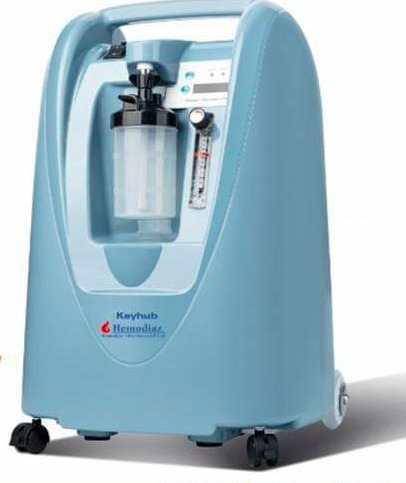
- Brand
- Hemodiaz
- Category
- 5 LPM
₹29,759.04₹40,320
Indicative pricing based on market intelligence. Varies by dealer, city, bundle, and period — confirm with a local authorised seller before buying.
HHZ SCORE 6.9/10
EDITORIAL PICK
Oxymed Mini (5L) Oxygen Concentrator
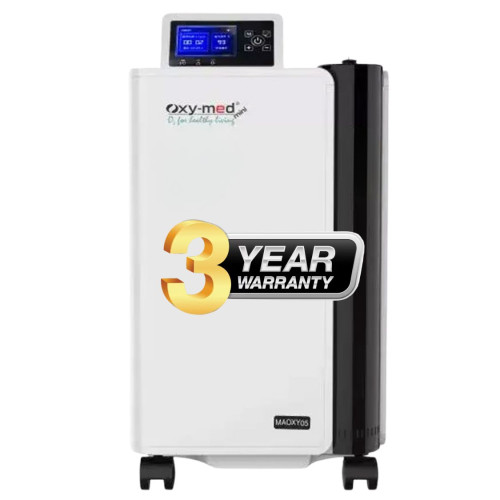
- Brand
- Oxymed
- Category
- 5 LPM
₹35,400₹59,900
Indicative pricing based on market intelligence. Varies by dealer, city, bundle, and period — confirm with a local authorised seller before buying.
HHZ SCORE 7.2/10
Specifications compared
| Specification | Dr Diaz 5 LPM | Oxymed Mini (5L) Oxygen Concentrator |
|---|---|---|
| Overview | ||
| Brand | Hemodiaz | Oxymed |
| Category | 5 LPM | 5 LPM |
| Price | ₹29,759.04 | ₹35,400.00 |
| MRP | 40,320.00 | 59,900.00 |
| Stock | In Stock | In Stock |
| Key features | ||
| Purity | 90-96% | 90-96% |
| Type | Single Flow | Home Stationary |
| Continuous Flow | 1-5LPM | 1-5LPM |
| Weight | 16kg | 13.9kg |
| Oxygen Purity Indicator (OPI) | Yes | Yes |
| Power consumption | 285watts | 390watts |
| Technical details | ||
| Purity | 90-96% | 90-96% |
| Type | Single Flow | Home Stationary |
| Continuous Flow | 1-5LPM | 1-5LPM |
| Weight | 16kg | 13.9kg |
| Oxygen Purity Indicator (OPI) | Yes | Yes |
| Power consumption | 285watts | 390watts |
| Sound level | 48db | 45db |
| Dimensions | 21H x 12W x 11.8Dinch | 20.27H x 12.36W x 9.4Dinch |
| Operating altitude | 12000feet | 7500feet |
| Outlet pressure | 13psi | 10psi |
| Additional details | ||
| Oxygen Purity % Analyzer | — | Yes |
| Loss of Power Alarm | Yes | Yes |
| System Malfunction Alarm | Yes | Yes |
| No Flow Alarm | Yes | Yes |
| Indian Voltage Model | Yes | Yes |
| Company Headquarters | India | India |
Analysis
The Dr Diaz 5 LPM at ₹29,759.04 and the Oxymed Mini (5L) Oxygen Concentrator at ₹35,400 are separated by ₹5,641 — a 16% price gap, narrow enough that the decision turns on feature-level specifics rather than on budget alone. Both units are India-headquartered, both publish 90–96% oxygen purity at 1–5 LPM continuous flow, and both publish the full three-alarm package (loss-of-power, system-malfunction, no-flow). Where they split is sharp: Oxymed publishes a discrete on-device oxygen purity analyser, a 40-plus-service-centre dealer network, and a 45 dB noise level against Dr Diaz’s 48 dB. Dr Diaz counters with lower power draw (285 W vs 390 W — a 105 W win), a dramatically higher operating altitude ceiling (12,000 ft vs 7,500 ft), and the lower price. For buyers in the plains at moderate-to-heavy daily use, Oxymed Mini is the right answer. Dr Diaz wins only at altitude or when rupee budget is the overriding constraint.
At a glance
- Price. Dr Diaz ₹29,759.04 vs Oxymed Mini ₹35,400 — Dr Diaz is ₹5,641 cheaper.
- Power draw. Dr Diaz 285 W vs Oxymed Mini 390 W — Dr Diaz is 105 W (27%) lower.
- Noise (published). Oxymed Mini 45 dB vs Dr Diaz 48 dB.
- Weight. Oxymed Mini 13.9 kg vs Dr Diaz 16 kg — Oxymed 2.1 kg lighter.
- Regulatory. Oxymed Mini: CDSCO registered (no CE or US FDA on record). Dr Diaz: no CDSCO marker published.
- Operating altitude. Dr Diaz 12,000 ft vs Oxymed Mini 7,500 ft.
- Outlet pressure. Dr Diaz 13 psi vs Oxymed Mini 10 psi.
- Service network. Oxymed: 40+ service centres; Dr Diaz: regional dealer coverage.
Where the Dr Diaz 5 LPM wins
Dr Diaz has three genuine, spec-sheet-visible advantages. First, price: ₹29,759.04 against Oxymed’s ₹35,400 is ₹5,641 cheaper — a 16% discount. On a pure budget-constrained buy, that gap is meaningful.
Second, and this is the biggest spec-sheet win on this page: Dr Diaz publishes the lowest power draw in the 5 LPM segment at 285 W, against Oxymed Mini’s 390 W. That’s a 105 W gap — 27% lower — and translates to ₹3,600–4,500 in annual electricity savings at 12-hour daily usage and ₹8–10/kWh tariff. Over a 3-year ownership window that’s ₹11,000–13,500 — which by itself more than pays for the ₹5,641 upfront price premium. On pure operating-cost arithmetic, Dr Diaz is the cheaper unit to own through three years of ownership if electricity costs dominate the equation.
Third, altitude. Dr Diaz publishes a 12,000 ft operating altitude ceiling. Oxymed Mini publishes 7,500 ft. For users in Indian hill stations above 7,500 ft — which includes Leh (11,500 ft), Tawang (10,000 ft), parts of Sikkim, Arunachal Pradesh, and higher reaches of Himachal and Uttarakhand — Oxymed is at or above its rated ceiling, where sieve-bed efficiency and pressure-swing adsorption performance degrade. Dr Diaz has 4,500 ft of additional headroom. This is not a theoretical win; it’s the practical difference between a functioning concentrator and a borderline-performing one at altitude.
Dr Diaz also publishes a higher outlet pressure — 13 psi against Oxymed’s 10 psi. For long tubing runs (concentrator in one room, patient in another), for nebuliser attachments, or for humidifier bottles with more internal restriction, the 3 psi gap sustains delivered flow more reliably. And Dr Diaz publishes a narrower footprint at 21 in H × 12 in W × 11.8 in D — narrower on width than Oxymed’s 12.36 in, though deeper on the D axis.
What Dr Diaz does not publish, though, is what closes or doesn’t close the gap: no on-device purity analyser, no publicised service-centre count, no CDSCO marker on its surveyed listing. Those absences are where Oxymed’s wins come from.
Where the Oxymed Mini (5L) wins
Oxymed Mini’s wins are comprehensive on the spec-sheet categories that matter for daily home use.
First, domestic regulatory paperwork. Oxymed publishes CDSCO registration under the domestic-manufacturer route, with an Indian-manufacturer invoice trail that CGHS, ECHS, ESIC, and most private DME claims accept as the applicable documentation floor. Dr Diaz publishes no CDSCO marker on its surveyed listing and neither CE nor FDA is in evidence for either unit. CDSCO registration is the legal gate for a Class IIa medical device sold in India; its absence on the Dr Diaz listing is a genuine paperwork gap, and Oxymed’s cleaner registration trail is a real — if unglamorous — reason to pay the ₹5,641 premium.
Second, on-device purity diagnostics. Oxymed Mini publishes a discrete “Oxygen Purity % Analyzer” feature — a live readout of actual oxygen concentration as a number on the device display. Dr Diaz lists OPI (an indicator LED) but leaves the Oxygen Purity % Analyzer field blank. For caregivers monitoring an elderly or chronic patient, the ability to see 93% or 89% on the device — instead of just an “in-range” or “out-of-range” light — is a materially better diagnostic signal.
Third, noise. Oxymed publishes 45 dB against Dr Diaz’s 48 dB. Three decibels is roughly a 40% increase in perceived loudness on the logarithmic scale. Overnight, for a patient sharing a bedroom with the concentrator, the gap is noticeable and compounds into sleep-quality differences.
Fourth, weight. Oxymed at 13.9 kg is 2.1 kg lighter than Dr Diaz’s 16 kg. For repositioning during cleaning, room changes, or technician access, that’s the difference between comfortable one-person handling and two-person-assist territory for elderly caregivers.
Fifth, dealer network. Oxymed’s product page documents 40-plus service centres across India and home-installation service in roughly 50 cities. This is the Oxymed brand’s single biggest post-sale advantage in the Indian market. For a device that will need at least one in-person service visit over its lifetime — most likely a sieve-bed replacement at month 24–36 or a compressor tune at a similar timeframe — Oxymed’s 40-service-centre footprint means a technician is reachable in most of India. Dr Diaz’s dealer coverage is regional; the buyer’s experience depends heavily on whether they’re in a Dr Diaz-active zone.
Sixth, bundled accessories. Oxymed bundles humidifier bottle, nasal cannula, additional filter set, nebuliser kit, and power cable per its product listing. Dr Diaz bundles humidifier bottle, cannula tubing, air filter, and user manual — a thinner starter kit. The Oxymed’s integrated nebuliser is specifically the kind of capability that adds real utility for a multi-condition respiratory patient.
Seventh, Oxymed publishes a digital flow regulator with 0.5 LPM adjustment increments via +/- buttons, and a front-panel folding display showing flow rate, purity, timer, and hour meter. Dr Diaz’s flow-control interface is not published in similar detail in its spec sheet. For caregivers titrating oxygen flow, the digital regulator is more accurate than a rotameter ball.
Indian-market context
Both units are India-headquartered and Indian-voltage 220–240 V machines; neither needs a step-down transformer. Both publish a 3-year warranty window. That’s where the Indian-market picture converges.
It splits on the service infrastructure. Oxymed’s published 40-plus service centres and 50-city installation coverage is its signature competitive moat in the Indian concentrator market. The practical effect for the buyer is that warranty claims, sieve-bed replacements, and compressor tune-ups route through a dealer who is a short drive or courier away, not a multi-state shipment. This is the dominant post-sale variable on any home concentrator, and Oxymed’s investment in it is unmatched in the India-brand segment.
Dr Diaz (sold by Hemodiaz) distributes through regional dealer and e-commerce channels. Parts availability for consumables is adequate — standard humidifier bottles, dust filters, and cannulas are stocked widely. But compressor-level and sieve-bed servicing outside Dr Diaz’s primary dealer footprint is thinner. In-warranty claims route through the selling dealer; response quality varies by region.
Rupee pricing: Oxymed MRP ₹59,900 discounted to ₹35,400 current; Dr Diaz MRP ₹40,320 discounted to ₹29,759.04 current. Both are India-market MRP-to-street discount constructions; the street number is the only one buyers should anchor on.
Spare-parts availability for both is tilted by dealer density. In top-10 metros, both brands have near-parity on consumables. In tier-2 and tier-3 cities, Oxymed’s dealer network makes sieve-bed and compressor-level service accessible; Dr Diaz is more courier-and-regional-dealer dependent. For a rural or small-town buyer, this is a real decision-weighting factor.
Is Home Medix HM-KV a better alternative?
For buyers drawn to Dr Diaz by price but unwilling to compromise on monitoring and warranty documentation, the Home Medix HM-KV is the more relevant step-up. It combines a 13 kg chassis, field-verified sound at or below 40 dB, live purity display, full alarms, integrated nebulization, and a 3-year / 10,000-hour warranty in the same broad sub-₹40,000 buying band.
Dr Diaz still has the narrower high-altitude case, and Oxymed still has the broader Indian service footprint. Choose HM-KV only after confirming Home Medix support at the installation address; the full trade-off is covered in HM-KV vs Oxymed Mini.
Verdict — who should pick which
Pick the Oxymed Mini (5L) if you are a standard home-oxygen buyer in plains India (below 5,000 ft altitude), if the concentrator will run 8+ hours a day, if the user is elderly or sleep-sensitive (where 45 dB vs 48 dB matters), or if you live outside a top-10 metro where the 40-service-centre dealer reach becomes load-bearing. Oxymed’s on-device purity analyser, 3 dB noise advantage, lighter 13.9 kg body, and cleaner CDSCO paperwork make it the better daily-use unit. For ₹5,641 more than Dr Diaz, you get a meaningfully better-supported device.
Pick the Dr Diaz 5 LPM in two specific scenarios. First, if the user lives above 7,500 ft altitude — Dr Diaz’s published 12,000 ft rating against Oxymed’s 7,500 ft is decisive for hill-station deployment. Oxymed’s sieve-bed performance degrades above its rated altitude; Dr Diaz has headroom. Second, if the concentrator will run continuously (14+ hours a day) and electricity cost is the dominant operating expense, where Dr Diaz’s 285 W vs Oxymed’s 390 W (a 27% power advantage) generates ₹3,600–4,500/year in savings that compound past the ₹5,641 upfront gap within 18 months.
Default for most buyers: Oxymed Mini (5L). The combination of a live purity analyser, the full alarm suite, a 3-year warranty, and a 40-service-centre dealer network is worth the ₹5,641 premium for most households, and it closes out any second-thoughts about post-sale support. Dr Diaz is the right call for a narrow but genuine set of users — high-altitude residents and continuous-duty power-cost-sensitive buyers — but for the mainstream Indian home-oxygen buyer, Oxymed is the sharper purchase.