Philips Everflo 5 Liter Oxygen Concentrator vs Yuwell 9F Touchscreen 5LPM
Philips Everflo 5 Liter Oxygen Concentrator
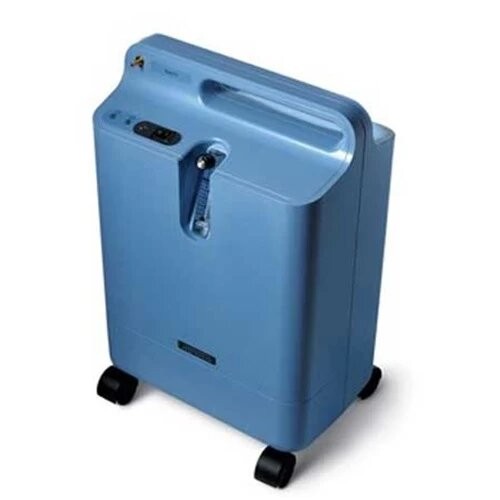
- Brand
- Philips Respironics
- Category
- 5 LPM
Discontinued
Indicative pricing based on market intelligence. Varies by dealer, city, bundle, and period — confirm with a local authorised seller before buying.
HHZ SCORE 8.2/10
Yuwell 9F Touchscreen 5LPM
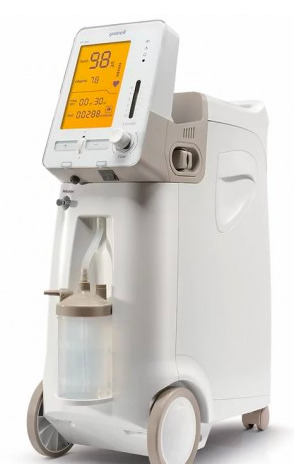
- Brand
- Yuwell
- Category
- 5 LPM
₹45,120
Indicative pricing based on market intelligence. Varies by dealer, city, bundle, and period — confirm with a local authorised seller before buying.
HHZ SCORE 6.0/10
Specifications compared
| Specification | Philips Everflo 5 Liter Oxygen Concentrator | Yuwell 9F Touchscreen 5LPM |
|---|---|---|
| Overview | ||
| Brand | Philips Respironics | Yuwell |
| Category | 5 LPM | 5 LPM |
| Price | — | ₹45,120.00 |
| Stock | DISCONTINUED WORLDWIDE | Out of stock |
| Key features | ||
| Purity | 90-96% | 90-95% |
| Type | Home Stationary | Home Stationary |
| Continuous Flow | 1-5LPM | 0.5-5LPM |
| Weight | 14kg | 18kg |
| Oxygen Purity Indicator (OPI) | Yes | No |
| Power consumption | 350watts | 400watts |
| Technical details | ||
| Purity | 90-96% | 90-95% |
| Type | Home Stationary | Home Stationary |
| Continuous Flow | 1-5LPM | 0.5-5LPM |
| Weight | 14kg | 18kg |
| Oxygen Purity Indicator (OPI) | Yes | — |
| Power consumption | 350watts | 400watts |
| Sound level | 45db | 52db |
| Dimensions | 23H x 15W x 9.5Dinch | 19.6H x 15.35W x 24.5Dinch |
| Operating altitude | 7500feet | — |
| Outlet pressure | 5.5psi | 10psi |
| Additional details | ||
| Loss of Power Alarm | Yes | Yes |
| System Malfunction Alarm | Yes | Yes |
| No Flow Alarm | Yes | Yes |
| Indian Voltage Model | Yes | Yes |
| Company Headquarters | USA | China |
| US FDA Approved | Yes | — |
| CE Certified | Yes | — |
Analysis
Editor’s note — Everflo discontinued. Philips has discontinued the Everflo worldwide; it is no longer in production and remaining units are end-of-line stock. For an in-production 5 LPM alternative available in India, consider the Home Medix HM-KV (up to 5 L/min, 93% ±3%, ≤40 dB, 3-year warranty). The comparison below is retained for reference.
The matchup
The Philips Everflo 5 LPM and the Yuwell 9F Touchscreen 5 LPM are sometimes cross-shopped by Indian buyers evaluating imported brands under ₹50,000. The Everflo is a USA-origin, FDA-approved unit at ₹43,699 (since discontinued) indicative retail — the most widely deployed imported 5 LPM stationary in Indian homes. The Yuwell 9F Touchscreen is a China-origin unit at ₹45,120 indicative retail with an unusual feature set: a touchscreen interface, a built-in pulse oximeter, and a remote control. On the spec sheet, the Yuwell’s novelty features do not compensate for published weight (18 kg vs 14 kg), published sound (52 dB vs 45 dB), no Oxygen Purity Indicator (vs Yes on the Everflo), no certifications, and no established Indian service footprint. The Yuwell 9F is listed Out of Stock at the time of this review, which reinforces its marginal presence in the Indian market. Our verdict: the Everflo wins this matchup decisively.
At-a-glance spec differences
- Price (indicative retail): Everflo ₹43,699 (since discontinued) vs Yuwell 9F ₹45,120 — the Yuwell is slightly more expensive
- Weight (published): Everflo 14 kg vs Yuwell 9F 18 kg — a 4 kg gap; the Yuwell is among the heaviest 5 LPM stationaries on the Indian market
- Sound (published): Everflo 45 dB vs Yuwell 9F 52 dB — a 7 dB gap; the Yuwell is clearly bedroom-disruptive
- Power draw (published): Everflo 350 W vs Yuwell 9F 400 W — Everflo is 13% more efficient
- Oxygen Purity Indicator: Everflo “Yes”; Yuwell 9F “No” — the Yuwell does not publish OPI in its technical details
- Certifications: Everflo US FDA approved and CE certified; Yuwell 9F neither FDA nor CE
- Unique Yuwell features: Touchscreen display, built-in pulse oximeter, remote control — none of these are matched by the Everflo
- Stock status: Everflo In Stock via wide online channel; Yuwell 9F published as Out of Stock
Where the Philips Everflo 5 LPM wins
FDA and CE certification close the institutional-acceptability question. The Everflo is US FDA approved and CE certified; the Yuwell 9F publishes neither. For buyers whose prescribing physician has specified FDA-approved equipment, for hospital-discharge handoffs where the ward rental fleet is FDA-only, and for buyers who use FDA as a general-quality proxy, the Everflo closes the question decisively. For a 5 LPM stationary with a 3–5 year expected service life, starting with an FDA-approved unit is the safer pick.
Service network is the Everflo’s defining Indian advantage. Philips Respironics operates the deepest authorised service footprint in India across more than 100 cities — typical dispatch times in metros are same-day; tier-2 cities are 24–72 hours; parts availability is reliable. Yuwell’s Indian distributor network is narrower and concentrated in a handful of tier-1 cities; for buyers outside Mumbai, Delhi-NCR, Bangalore, Chennai, Pune the Yuwell service pathway is uncertain. For a 3-year home oxygen prescription this difference is load-bearing.
Weight at 14 kg is meaningfully lighter. 14 kg vs 18 kg is a 4 kg gap — 22% lighter. For a single caregiver managing the machine solo, 14 kg is near the daily-handling ergonomic line; 18 kg is meaningfully beyond it. Indian household layouts often require the machine to move between bedroom and living room, and 18 kg makes that daily ritual a two-person job.
Sound at 45 dB is meaningfully quieter. 45 dB vs 52 dB is a 7 dB gap — close to doubling the perceived loudness. The Yuwell at 52 dB is clearly on the wrong side of the 50 dB bedroom-disruption threshold; for overnight placement it is not recommended in a small Indian bedroom unless the patient is strongly hearing-impaired. The Everflo at 45 dB sits comfortably below the threshold.
OPI is published on the Everflo; absent on the Yuwell. The Everflo publishes Oxygen Purity Indicator “Yes” in technical details; the Yuwell publishes OPI “No.” For unattended operation, an alarming OPI is the first line of defense against sieve-bed degradation producing under-purity oxygen delivery to the patient. The Yuwell’s touchscreen displays flow and status but does not alarm on purity; the Everflo’s threshold alarm does. This is a real clinical risk difference.
Full alarm suite on the Everflo. Loss-of-power, system-malfunction, and no-flow alarms all publish as “Yes” on the Everflo. The Yuwell publishes the same set as “Yes,” so the nominal alarm envelope is equivalent on this specific criterion. But without OPI and without FDA certification backing the alarm design, the Yuwell’s alarm reliability cannot be independently corroborated at the same level as the Everflo’s.
Stock and channel availability. The Everflo is consistently In Stock across major Indian online channels and through Philips authorised dealers. The Yuwell 9F Touchscreen is published Out of Stock at the time of this review — a signal of thin inventory and possibly end-of-life status in the Indian market. Committing to a machine whose stock availability is marginal is a risk on replacement-parts and warranty-fulfillment grounds.
Where the Yuwell 9F Touchscreen 5 LPM wins
Built-in pulse oximeter is a genuinely unique feature. Among 5 LPM stationary concentrators on the Indian market, the Yuwell 9F’s built-in pulse oximeter is a differentiator no major imported competitor matches. For caregivers who want continuous SpO2 monitoring built into the machine rather than through a separate finger oximeter device, this is a real Yuwell advantage. A standalone Yuwell or Choicemmed finger oximeter costs ₹1,200–2,500 retail — small money vs the concentrator cost — so the integration is convenience value rather than cost saving, but it is a real feature.
Touchscreen interface. The Yuwell 9F publishes a touchscreen control panel — a modern user-interface upgrade over the Everflo’s traditional rotary flow-meter plus indicator lights. For less technically experienced caregivers, a touchscreen with clear numerical display is friendlier to operate. This is a usability advantage, though not a clinical one.
Remote control. The Yuwell 9F ships with a remote control for flow adjustment. For patients who sleep in one room while the machine sits in another (with long cannula runs), or for bedridden patients who want to adjust flow without getting up, the remote is useful. The Everflo has no such feature.
Slightly lower flow minimum. Yuwell 9F publishes 0.5–5 LPM, Everflo publishes 1–5 LPM. For low-flow overnight titration in adult use, the Yuwell can deliver 0.5 LPM that the Everflo cannot. This narrow spec advantage has real clinical applicability for sleep-related supplementation titration.
Indian-market context
Both machines are Indian Voltage Models on 230 V / 50 Hz. Both publish continuous-flow 5 LPM capability with 90–95% purity (Yuwell) or 90–96% purity (Everflo). Neither is FAA approved. Both are stationary home units, not portable.
On service and channel: the Everflo is ubiquitous through Philips Respironics India’s authorised dealer network with hospital rental fleet presence at most tertiary-care institutions. The Yuwell 9F is sold through narrower import-distributor channels with service concentrated in tier-1 metros; post-sale support for tier-2 cities is a documented weakness. The Yuwell’s documented cons in its product description (bulky, heavy, no top handle, high power consumption, front wheels too large making it appear bulky) align with a Chinese-origin concentrator design that has been iterated less than the Everflo’s mature engineering.
On pricing mechanics: the Everflo lists at ₹63,228 MRP and discounts to ₹43,699 (since discontinued) online — consistent 31% discount across major channels. Dealer pricing runs at online parity with modest tier-2 markup. The Yuwell 9F is priced at ₹45,120 indicative with no published MRP and shows Out of Stock status, suggesting inconsistent channel availability and limited buyer protection.
GST at 12% on Class B medical devices is included. Both carry manufacturer warranties (Everflo 3 years, Yuwell publishes no specific warranty in the technical spec sheet). Hospital and home rental fleets carry the Everflo extensively; Yuwell is uncommon in Indian rental fleets.
Verdict
Our recommendation is the Philips Everflo 5 LPM for essentially any Indian home oxygen prescription. The combination of FDA approval, deep service network, lower weight, quieter sound, published OPI, and higher purity envelope wins every clinically relevant dimension. The Everflo is also cheaper than the Yuwell 9F at indicative retail — so the Yuwell is not even the budget pick, which removes its primary alternative value proposition. Over any horizon longer than six months, the Everflo is the safer and better choice.
Buy the Yuwell 9F Touchscreen 5 LPM instead only in narrow circumstances — and honestly, for most buyers, it is difficult to find a compelling Indian use case. If the built-in pulse oximeter and touchscreen are load-bearing features for a caregiver who cannot manage a separate finger-oximeter device, and if the buyer is in a tier-1 metro where Yuwell service is viable, and if the Out of Stock status resolves through a reliable distributor channel, then the Yuwell 9F is a defensible novelty choice. The 18 kg weight and 52 dB sound are real drawbacks that the integrated features do not fully offset for most households.
For any standard Indian home-oxygen prescription — adult patient, 2–4 LPM typical flow, plains or mid-altitude city, 3-year expected use — the Everflo wins on every dimension that matters. This is not a close call. A gets the pick; B is a niche choice for buyers who specifically value the integrated oximeter and touchscreen and are willing to trade 4 kg of weight and 7 dB of sound to get them.