Home Medix HM-KV 5 LPM vs Yuwell 9F Touchscreen 5LPM
EDITORIAL PICK
Home Medix HM-KV 5 LPM
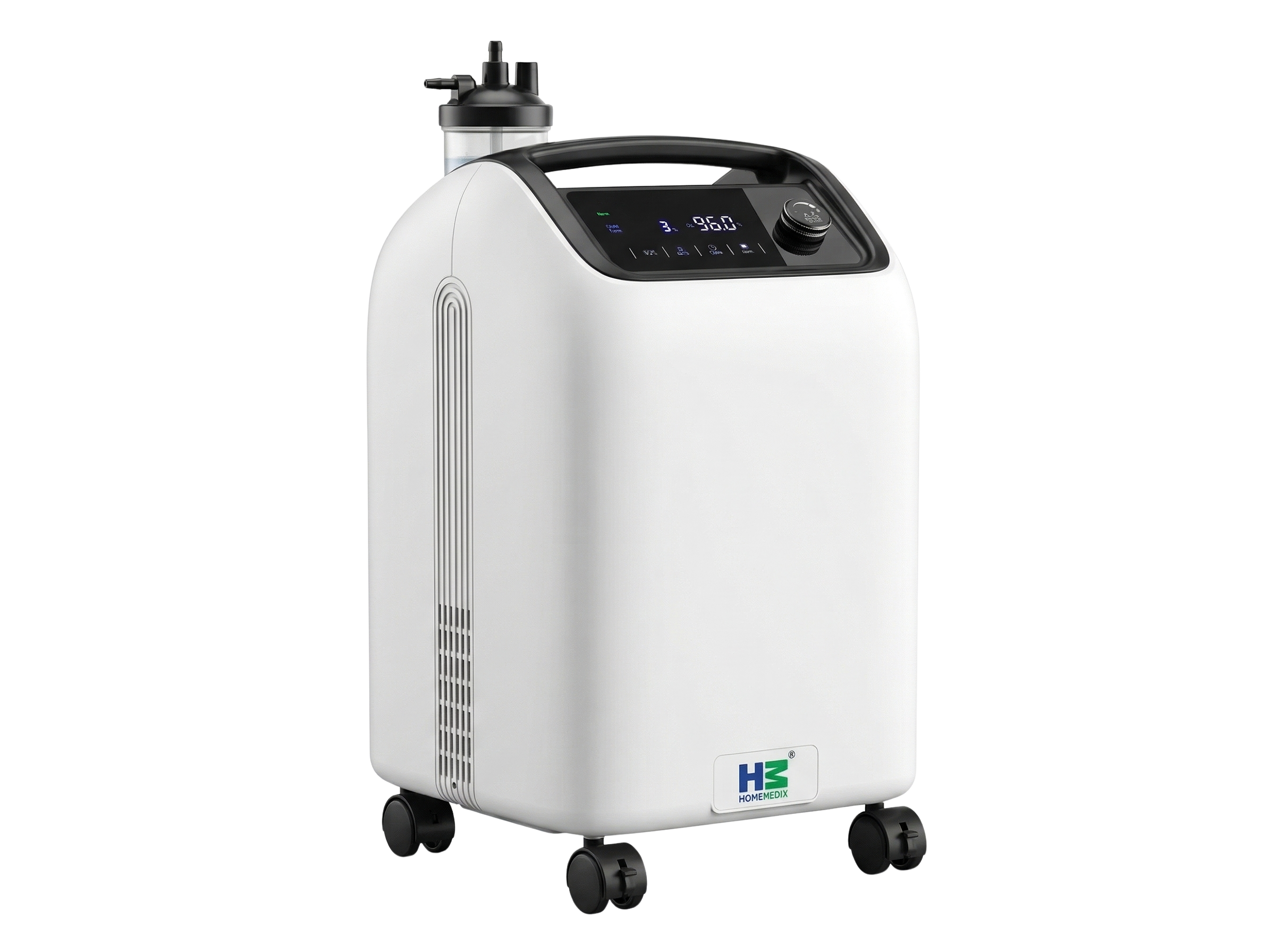
- Brand
- Home Medix
- Category
- 5 LPM
₹37,800₹54,000
Indicative pricing based on market intelligence. Varies by dealer, city, bundle, and period — confirm with a local authorised seller before buying.
HHZ SCORE 7.7/10
Yuwell 9F Touchscreen 5LPM
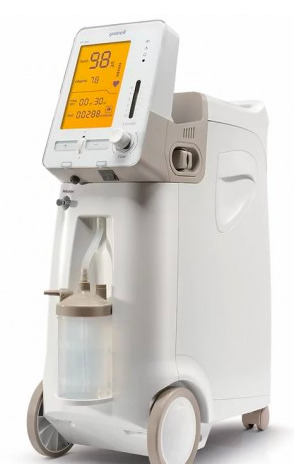
- Brand
- Yuwell
- Category
- 5 LPM
₹45,120
Indicative pricing based on market intelligence. Varies by dealer, city, bundle, and period — confirm with a local authorised seller before buying.
HHZ SCORE 6.0/10
Specifications compared
| Specification | Home Medix HM-KV 5 LPM | Yuwell 9F Touchscreen 5LPM |
|---|---|---|
| Overview | ||
| Brand | Home Medix | Yuwell |
| Category | 5 LPM | 5 LPM |
| Price | ₹37,800 | ₹45,120.00 |
| MRP | 54,000 | — |
| Stock | In Stock | Out of stock |
| Key features | ||
| Purity | 93% ± 3% | 90-95% |
| Type | Home Stationary | Home Stationary |
| Continuous Flow | 0.5–5 L/min | 0.5-5LPM |
| Weight | 13 kg (lightest in the 5 LPM class) | 18kg |
| Oxygen Purity Indicator (OPI) | Yes | No |
| Power consumption | 320 VA | 400watts |
| Technical details | ||
| Purity | 93% ± 3% | 90-95% |
| Type | Home Stationary | Home Stationary |
| Continuous Flow | 0.5–5 L/min | 0.5-5LPM |
| Weight | 13 kg (lightest in the 5 LPM class) | 18kg |
| Oxygen Purity Indicator (OPI) | Yes | — |
| Power consumption | 320 VA | 400watts |
| Sound level | ≤ 40 dB (field-verified) | 52db |
| Dimensions | Compact floor-standing form factor | 19.6H x 15.35W x 24.5Dinch |
| Outlet pressure | 0.04–0.06 MPa | 10psi |
| Additional details | ||
| Oxygen Purity % Analyzer | Yes | — |
| Loss of Power Alarm | Yes | Yes |
| System Malfunction Alarm | Yes (High Temperature) | Yes |
| No Flow Alarm | Yes (Low/No Flow) | Yes |
| Indian Voltage Model | Yes | Yes |
| Company Headquarters | India | China |
| Home Medix differentiators | ||
| Integrated Nebulization | Yes | — |
| Precise Electronic Flowmeter | Yes | — |
| One-Touch SOS Alert | Yes — high-volume audible alarm button for summoning a nearby attendant (local siren; no mobile app or telecom channel) | — |
| Hour Counter | User-visible running-hour display | — |
| Working Voltage | AC 230V / 50Hz, ±10% tolerance (207–253 V) | — |
| Industrial-Grade Compressor | Yes | — |
| ISO 9001 | Yes | — |
| ISO 13485 | Yes | — |
| CDSCO | Approved | — |
| Warranty | 3 years or 10,000 hours of operation, whichever comes first | — |
Analysis
Indian mid-tier vs Chinese-OEM premium touchscreen flagship
The Home Medix HM-KV 5 LPM and the Yuwell 9F Touchscreen 5LPM are both 5 LPM home stationary concentrators competing for the same Indian-market mid-to-upper-tier buyer — but they pitch the spec sheet around different priorities. The HM-KV (₹37,800 indicative retail) leads with the lightest 5 LPM chassis (13 kg), a class-leading ≤ 40 dB field-verified sound floor, AC 230V ±10% tolerance documented, integrated nebulisation, and an SOS audible-alarm button. The Yuwell 9F Touchscreen (₹45,120) leads with a touchscreen control interface, Yuwell’s established Chinese-OEM manufacturing scale, a 10 psi outlet pressure, and remote-control + built-in pulse oximeter features documented in the Yuwell product literature.
This is the closest head-to-head in the four-comparison set on sticker — ₹7,320 separates them, less than 20%. But the operating-spec gaps run the wrong direction for the Yuwell on the axes that matter most for Indian home LTOT: weight, sound, power draw, mains tolerance documentation, and current availability.
At-a-glance differences
- Price: HM-KV ₹37,800 (listed MRP ₹54,000) vs Yuwell 9F ₹45,120 (no listed MRP available) — HM-KV is ₹7,320 cheaper (~16% less)
- Stock posture: HM-KV In Stock through primary Indian channels; Yuwell 9F Touchscreen Out of Stock through the reviewed Indian channels
- Weight: HM-KV 13 kg vs Yuwell 18 kg — HM-KV is 5 kg lighter (~28% lighter chassis)
- Sound: HM-KV ≤ 40 dB(A) field-verified vs Yuwell 52 dB(A) — a 12 dB gap (the largest sound gap in the four-comparison set; the Yuwell is meaningfully louder at the bedside)
- Oxygen flow: Both 0.5–5 L/min continuous
- Oxygen concentration: HM-KV 93% ± 3% (90–96% band); Yuwell 90–95% — broadly equivalent
- Outlet pressure: Yuwell 10 psi documented; HM-KV 0.04–0.06 MPa (roughly 5.8–8.7 psi) — Yuwell’s higher outlet pressure, useful for longer cannula runs or humidifier-plus-nebuliser setups
- Power: HM-KV 320 VA at AC 230V ±10% tolerance (207–253 V documented); Yuwell 400 W with no published AC tolerance band — Yuwell draws ~25% more power
- Altitude ceiling: Neither unit publishes a hard altitude ceiling in the reviewed data sheets
- Alarm suite: Both run full coverage. HM-KV: Loss of Power, System Malfunction (High Temperature), Low/No Flow. Yuwell: Loss of Power, System Malfunction, No Flow
- Oxygen purity analyzer: HM-KV documents an in-built OPI with live readout; Yuwell’s data sheet lists OPI as “No” and does not document a percent analyzer
- User interface: Yuwell — touchscreen control interface (the platform’s headline feature); HM-KV — standard control panel with running-hour display and SOS button
- Additional features: Yuwell — built-in pulse oximeter, remote control documented in the product literature; HM-KV — integrated nebulisation, SOS audible-alarm button, precise electronic flowmeter
- Warranty: HM-KV 3 years or 10,000 hours; Yuwell through Indian dealer — typically 2 years, dealer-mediated
- Regulatory: HM-KV — CDSCO approved, ISO 9001, ISO 13485. Yuwell — manufactured by Yuwell (China HQ), CDSCO-registered through the Indian importer; the reviewed data sheet does not document active US FDA or CE flags
Where the HM-KV wins
₹7,320 price advantage — ~16% cheaper. Smallest price gap in the four-comparison set, but still real. At the home LTOT buyer’s out-of-pocket budget, ₹7,320 funds a year of stabiliser-protected mains plus humidifier bottle replacements.
Availability. HM-KV In Stock; Yuwell 9F Touchscreen Out of Stock through the reviewed Indian channels. For a buyer needing to deploy in the next two weeks, the HM-KV wins by availability.
12 dB quieter — ≤ 40 dB vs 52 dB. The largest sound gap in the four-comparison set. 12 dB is roughly four times the perceived loudness on the psychoacoustic scale. At 52 dB the Yuwell sits at the louder end of the 5 LPM class — comparable to a normal-volume conversation or a small fan running at full speed. For overnight bedside use this is decisive: the HM-KV disappears into background HVAC noise; the Yuwell is an audible presence through the entire sleep cycle.
5 kg lighter — 13 kg vs 18 kg. A clear weight gap. The Yuwell’s own product literature flags “bulky and heavy” and “does not have top handle” as documented weaknesses — Yuwell themselves acknowledge the chassis weight is a handling concern. The HM-KV at 13 kg is comfortably single-person carry up a flight of stairs; the Yuwell at 18 kg crosses into two-person handling territory for smaller adults or caregivers with shoulder limitations.
25% lower power draw — 320 VA vs 400 W. The Yuwell’s 400 W draw means a 50% larger stabiliser, a larger UPS for backup, and at average Indian residential tariffs roughly ₹1,500–₹2,100 higher annual running cost for 16 hours/day operation. The Yuwell’s own product literature lists “high power consumption rate” as a documented weakness.
Documented AC ±10% voltage tolerance. The HM-KV publishes 207–253 V as its operating envelope. The Yuwell at 400 W has no published Indian-mains tolerance band in the reviewed data sheet. The HM-KV is the better-documented Indian Tier-2 / Tier-3 mains unit — a particularly relevant gap for a Chinese-import platform that was designed for the Chinese 220V mains spec without explicit Indian-tolerance documentation.
Oxygen Purity Indicator with live readout. The HM-KV documents an OPI percent readout on the front panel. The Yuwell lists OPI as “No” — the touchscreen UI does not include a documented purity-percent display in the reviewed listing. For a patient or caregiver watching for sieve-bed wear, the HM-KV’s OPI is a service-relevant data point the Yuwell does not provide.
3-year / 10,000-hour warranty. The HM-KV’s warranty envelope is longer than the typical 2-year Indian-dealer warranty on imported Chinese-OEM units. For a unit running 16 hours/day, the 10,000-hour clause kicks in around 20 wall-clock months — but the 3-year wall-clock cover for lighter-use profiles is meaningful.
Integrated nebulisation and SOS button. The HM-KV chassis includes integrated nebulisation and a one-touch SOS audible-alarm. The Yuwell’s headline differentiators are touchscreen UI and remote control. For a COPD patient on home LTOT who also nebulises on exacerbation days, the HM-KV’s integrated neb saves the cost and counter-space of a separate unit; the Yuwell’s touchscreen is a UI convenience but does not substitute for nebulisation.
Where the Yuwell 9F Touchscreen wins
Touchscreen control interface. The Yuwell 9F’s headline feature is a touchscreen control panel — the platform sits at the upper end of Yuwell’s stationary range partly on this UI differentiation. For tech-comfortable users or families where the touchscreen feels more contemporary than a button-and-knob panel, this is a real preference axis the HM-KV does not match.
10 psi outlet pressure documented. The Yuwell’s 10 psi outlet sits at the higher end of the 5 LPM class — useful for longer cannula runs, humidifier-plus-nebuliser setups, or installations where the outlet must drive accessories at distance. The HM-KV’s 5.8–8.7 psi equivalent is still adequate for standard cannula delivery at 5 L/min but offers tighter headroom for accessory-heavy setups.
Built-in pulse oximeter and remote control. The Yuwell product literature documents a built-in pulse oximeter and remote-control operation. For a patient who wants integrated SpO₂ monitoring on the concentrator chassis itself (rather than a separate fingertip oximeter), this is a feature the HM-KV does not match — though the clinical utility of an on-concentrator oximeter versus a dedicated fingertip unit is debatable, and a standalone pulse oximeter retails for ₹1,500–₹3,000 in the Indian market.
Yuwell brand recognition and Chinese-OEM scale. Yuwell has been in the Indian respiratory equipment market for a long time and has high familiarity among biomed shops and end-users. The Yuwell product literature describes the platform as having “many satisfied customers in India” and being “present in the market from a very long time” — accurate, if self-promoting. For a buyer who prioritises brand familiarity, Yuwell carries weight that newer Indian-brand entries do not.
Full no-flow alarm coverage. The Yuwell documents Loss of Power, System Malfunction, and No Flow alarms — full alarm bundle matching the HM-KV’s coverage. This is parity, not a Yuwell advantage, but worth noting that the Yuwell does not drop alarms to hit its price point.
Indian-market considerations
Service-network depth — the most consequential variable. Yuwell’s Indian service network varies considerably by city and by which authorised distributor handles the regional channel. Home Medix’s service footprint is concentrated in South and West India with thinner coverage in the North-East. For either brand, call the nearest authorised service centre before purchase and confirm: (a) typical warranty-claim turnaround, (b) whether sieve beds and compressors are stocked locally, (c) whether the touchscreen unit (in the Yuwell’s case) has been serviced locally before — Chinese-import touchscreen platforms historically have higher service-touch requirements than button-panel units, and a touchscreen failure that requires manufacturer-replacement parts implies 3–6 weeks of downtime.
Stabiliser and UPS sizing. HM-KV at 320 VA wants a 500 VA stabiliser, 750 VA for unstable mains. Yuwell at 400 W wants a 600–750 VA stabiliser minimum and a larger UPS if backup is desired. The Yuwell’s higher draw and undocumented Indian-mains tolerance band push the electrical-protection budget upward.
Altitude. Neither unit publishes a hard altitude ceiling. PSA concentrators generally derate 2–4 percentage points of purity per 1,000 m of elevation. For hill-station installations at Shimla, Manali, Gangtok, Mussoorie, Ooty, Munnar, Srinagar (1,500–2,200 m), verify delivered purity with an analyser at install regardless of brand.
Coastal humidity. Mumbai, Chennai, Kochi, Kolkata, Visakhapatnam buyers should plan for quarterly humidifier-bottle cleaning and monthly inlet-filter rinses on either unit. Coastal humidity also stresses touchscreen panels — for Yuwell installations in coastal cities, the touchscreen panel adds a wear surface that the HM-KV’s button panel does not have.
GST and reimbursement. 12% GST applies to both. CGHS / ECHS reimbursement requires GST-compliant invoicing from authorised dealers. Neither unit carries US FDA or CE in the reviewed data sheets — both are CDSCO-gated for Indian sale.
Voltage and import-spec tuning. Yuwell as a Chinese-OEM unit ships globally to multiple voltage specs; the Indian-supplied unit should be the 230V variant, but cross-confirm with the dealer that the as-shipped configuration matches Indian mains. The HM-KV is designed and documented for Indian 230V from the spec sheet onward.
Who should pick which
Pick the Yuwell 9F Touchscreen 5LPM if: the touchscreen control interface is a heavily-weighted preference; the on-chassis pulse oximeter and remote-control features are clinically or operationally useful for the installation; the buyer is in a city where Yuwell’s authorised service network materially outpaces Home Medix’s local footprint; the 10 psi outlet pressure is needed for an accessory-heavy delivery setup; and the buyer can confirm fresh stock through the local Yuwell-authorised dealer.
Pick the Home Medix HM-KV 5 LPM if: the ₹7,320 price advantage is material; the unit will live at the patient’s bedside during overnight use where the 12 dB sound advantage is decisive (this is the largest single user-experience gap between the two units); you value the lighter 13 kg chassis for single-person handling; you want documented AC ±10% voltage tolerance for Indian Tier-2 / Tier-3 mains, the OPI percent readout, integrated nebulisation, the SOS-alarm button, and the 3-year / 10,000-hour warranty; or you need to deploy a unit in the next two weeks and the Yuwell’s current Out-of-Stock posture is a blocker.
Verdict
The Yuwell 9F Touchscreen 5LPM’s touchscreen interface and built-in pulse oximeter are real features — but the HM-KV wins this comparison cleanly on the axes that define a 5 LPM home stationary’s day-to-day fitness for purpose. The 12 dB sound gap is decisive at the bedside; the 5 kg weight gap is decisive for handling; the documented AC tolerance and the OPI percent readout are decisive for service confidence; the ₹7,320 lower price is the unambiguous bonus. For an Indian home LTOT prescription where the patient is paying out-of-pocket and the unit runs overnight at the bedside, the HM-KV is the correct pick.
The Yuwell’s argument applies to a narrow buyer profile: heavy weight on touchscreen UI, willingness to pay 16% more and accept materially louder bedside operation, and a service-network situation where Yuwell’s local depth is genuinely deeper than Home Medix’s. For most Indian home buyers, that profile does not match.
Consult your treating pulmonologist before finalising prescription flow rate — both units cover the 0.5–5 L/min clinical range, and titration is what governs the clinical outcome at the bedside.