Airsep Visionaire 5 vs Home Medix HM-KV 5 LPM
Airsep Visionaire 5
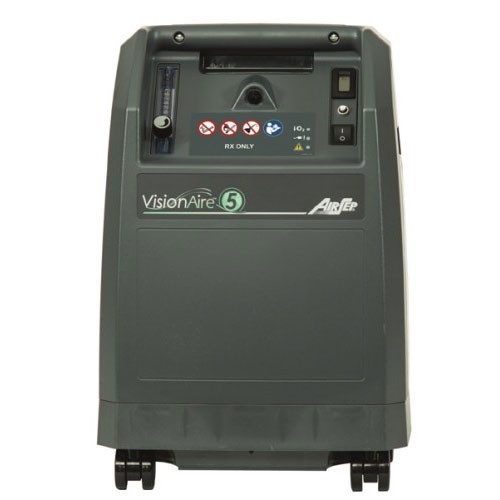
- Brand
- AirSep
- Category
- 5 LPM
₹54,999₹80,640
Indicative pricing based on market intelligence. Varies by dealer, city, bundle, and period — confirm with a local authorised seller before buying.
HHZ SCORE 8.0/10
EDITORIAL PICK
Home Medix HM-KV 5 LPM
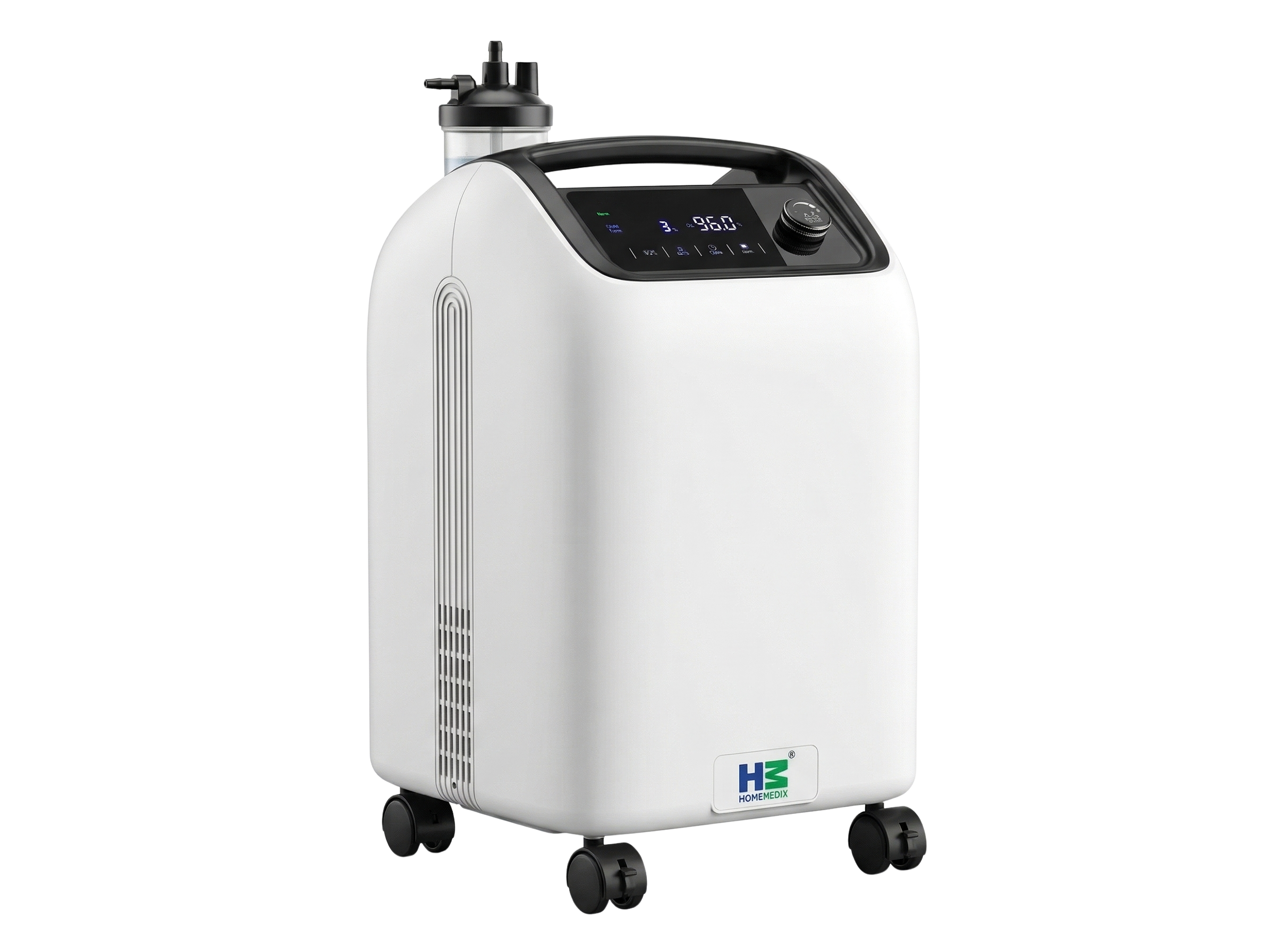
- Brand
- Home Medix
- Category
- 5 LPM
₹37,800₹54,000
Indicative pricing based on market intelligence. Varies by dealer, city, bundle, and period — confirm with a local authorised seller before buying.
HHZ SCORE 7.7/10
Specifications compared
| Specification | Airsep Visionaire 5 | Home Medix HM-KV 5 LPM |
|---|---|---|
| Overview | ||
| Brand | AirSep | Home Medix |
| Category | 5 LPM | 5 LPM |
| Price | ₹54,999.00 | ₹37,800 |
| MRP | 80,640.00 | 54,000 |
| Stock | In Stock | In Stock |
| Key features | ||
| Purity | 90-96% | 93% ± 3% |
| Type | Stationary | Home Stationary |
| Continuous Flow | 0.5-5LPM | 0.5–5 L/min |
| Weight | 13.6kg | 13 kg (lightest in the 5 LPM class) |
| Oxygen Purity Indicator (OPI) | Yes | Yes |
| Power consumption | 290watts | 320 VA |
| Technical details | ||
| Purity | 90-96% | 93% ± 3% |
| Type | Stationary | Home Stationary |
| Continuous Flow | 0.5-5LPM | 0.5–5 L/min |
| Weight | 13.6kg | 13 kg (lightest in the 5 LPM class) |
| Oxygen Purity Indicator (OPI) | Yes | Yes |
| Power consumption | 290watts | 320 VA |
| Sound level | 45db | ≤ 40 dB (field-verified) |
| Dimensions | 20.8H x 14.1W x 11.5Dinch | Compact floor-standing form factor |
| Operating altitude | 10000feet | — |
| Outlet pressure | 8psi | 0.04–0.06 MPa |
| Additional details | ||
| Oxygen Purity % Analyzer | — | Yes |
| Loss of Power Alarm | Yes | Yes |
| System Malfunction Alarm | Yes | Yes (High Temperature) |
| No Flow Alarm | Yes | Yes (Low/No Flow) |
| Indian Voltage Model | Yes | Yes |
| Company Headquarters | USA | India |
| US FDA Approved | Yes | — |
| CE Certified | Yes | — |
| Home Medix differentiators | ||
| Integrated Nebulization | — | Yes |
| Precise Electronic Flowmeter | — | Yes |
| One-Touch SOS Alert | — | Yes — high-volume audible alarm button for summoning a nearby attendant (local siren; no mobile app or telecom channel) |
| Hour Counter | — | User-visible running-hour display |
| Working Voltage | — | AC 230V / 50Hz, ±10% tolerance (207–253 V) |
| Industrial-Grade Compressor | — | Yes |
| ISO 9001 | — | Yes |
| ISO 13485 | — | Yes |
| CDSCO | — | Approved |
| Warranty | — | 3 years or 10,000 hours of operation, whichever comes first |
Analysis
Two 5 LPM stationaries split by the import-vs-Indian divide
The AirSep Visionaire 5 and the Home Medix HM-KV 5 LPM are both 5 LPM home stationary concentrators positioned for long-term oxygen therapy (LTOT) in the Indian market — but they sit on opposite sides of the import-vs-Indian-brand divide that defines the mid-to-premium 5 LPM segment. The Visionaire is the US-import nameplate (AirSep, now folded into CAIRE Inc.) priced at an indicative ₹54,999 street price in 2026, leaning on US FDA + CE paperwork and an established CAIRE/AirSep dealer network across metros. The HM-KV is the Indian-brand mid-tier challenger at ₹37,800 — a 31% price discount — leading with the lightest chassis in the 5 LPM class (13 kg), a class-leading ≤ 40 dB field-verified sound floor, and AC ±10% tolerance documented to Indian Tier-2 mains conditions.
Headline framing: the AirSep is the institutional-procurement and US-brand-preference pick; the HM-KV is the price-per-spec home-LTOT pick. Both are credible 5 LPMs — the right answer depends on whether the buyer’s decision is dominated by regulatory provenance and brand legacy or by bedside operating characteristics at a lower sticker.
At-a-glance differences
- Price: AirSep Visionaire 5 ₹54,999 (listed MRP ₹80,640) vs HM-KV ₹37,800 (listed MRP ₹54,000) — HM-KV is ₹17,199 cheaper at current retail (~31% less)
- Weight: HM-KV 13 kg vs AirSep 13.6 kg — HM-KV is 0.6 kg lighter; both are at the lighter end of the 5 LPM class
- Sound: HM-KV ≤ 40 dB(A) field-verified vs AirSep 45 dB(A) — a 5 dB gap, which translates to a meaningfully quieter bedside floor
- Oxygen flow: Both 0.5–5 L/min continuous
- Oxygen concentration: HM-KV 93% ± 3% (90–96% band); AirSep 90–96% — feature parity on the practical purity band
- Outlet pressure: AirSep 8 psi documented; HM-KV 0.04–0.06 MPa (roughly 5.8–8.7 psi) — broadly equivalent at the cannula
- Power: HM-KV 320 VA at AC 230V ±10% tolerance (207–253 V documented); AirSep 290 W with no published AC tolerance band
- Altitude ceiling: AirSep documents 10,000 ft (~3,048 m) operating altitude; HM-KV does not publish a hard altitude ceiling
- Alarm suite: Full coverage on both. HM-KV: Loss of Power, System Malfunction (High Temperature), Low/No Flow. AirSep: Loss of Power, System Malfunction, No Flow
- Oxygen purity analyzer: HM-KV documents an in-built OPI with live readout; AirSep’s data sheet lists OPI as “Yes” in key features but does not document a percent analyzer in the additional-details block — formal parity, with HM-KV more explicit
- Hour counter: HM-KV — user-visible running-hour display on the control panel; AirSep — service-accessible only per AirSep’s published documentation
- Warranty: HM-KV 3 years or 10,000 hours (whichever first); AirSep dealer-mediated warranty (typically 2 years on imports through Indian dealers, varies by distributor)
- Regulatory: HM-KV — CDSCO approved, ISO 9001, ISO 13485. AirSep — US FDA cleared, CE Certified, CDSCO-registered through the Indian importer
Stock posture: HM-KV In Stock through primary Indian channels; AirSep Visionaire 5 In Stock through the CAIRE/AirSep India network, though metro-vs-Tier-2 availability varies by dealer.
Where the HM-KV wins
₹17,199 price advantage — ~31% cheaper. The headline economic argument. For a single home LTOT prescription, ₹17,199 is the cost of a year’s worth of electricity to run a 320 VA concentrator 16 hours a day at average Indian residential tariffs, plus humidifier bottle replacements and biennial cannula refresh. For a nursing home deploying multiple units, the gap compounds to ₹1.7 lakh across 10 units — material on any procurement spreadsheet.
Quieter bedside floor — ≤ 40 dB vs 45 dB. A 5 dB gap is roughly a doubling of perceived loudness on the psychoacoustic scale. At an overnight bedside, that’s the difference between a unit that disappears into HVAC background and one that’s an audible presence through the sleep cycle. The HM-KV’s “field-verified” qualifier is the honest framing of a number that manufacturers commonly publish as an unverified ceiling; the AirSep’s 45 dB sits in the class median.
Documented AC ±10% voltage tolerance. The HM-KV publishes AC 230V / 50Hz with ±10% tolerance (207–253 V) as a hard operating envelope. The AirSep data sheet lists a 290 W draw with no published tolerance band — institutional buyers must rely on the importer’s dealer-discretion judgement on Indian mains compatibility. In Tier-2 / Tier-3 cities where voltage routinely dips below 200 V or spikes above 250 V, the HM-KV’s published envelope tells the buyer where the unit will trip rather than damage the compressor. Both still want a servo stabiliser; the HM-KV simply documents the envelope.
Longer warranty — 3 years or 10,000 hours. The HM-KV’s 3-year / 10,000-hour clause is the longer envelope at this tier; an AirSep through the Indian dealer channel typically carries a 2-year warranty subject to distributor variation. For a patient running the unit 16 hours a day, 10,000 hours is roughly 20 months wall-clock; the 3-year figure is the honest planning number for lighter-use profiles, which the AirSep’s dealer-mediated warranty does not distinguish in the same documented terms.
User-visible hour counter. The HM-KV puts running hours on the front panel. The patient or the caregiver can see exactly how close they are to the 10,000-hour warranty clause without calling the service centre. Small detail, but the kind of spec separation that distinguishes a deliberately-specified home device from an institutional unit retrofitted for home use.
Integrated nebulisation + SOS button. The HM-KV documents an integrated nebuliser interface and a one-touch SOS audible-alarm button on the chassis. The Visionaire is a pure concentrator — for a patient who also needs nebulised salbutamol/budesonide on COPD exacerbation days, the HM-KV saves the cost and counter-space of a separate nebuliser.
Where the AirSep Visionaire 5 wins
US FDA clearance. The AirSep carries US FDA clearance on its data sheet; the HM-KV does not. For a buyer where US regulatory provenance is non-negotiable — institutional tenders that prefer FDA-cleared devices, hospital procurement specs that mandate it, or family decision-makers who weight FDA paperwork heavily — the AirSep is the correct answer regardless of the other spec comparisons. FDA clearance does not change in-room clinical behaviour of a PSA concentrator, but it is genuinely useful as a procurement-compliance artefact in specific institutional pathways (US FDA).
CE certification. The AirSep additionally documents CE Certified status, which matters for export-facing tenders, multi-country NGO deployments, and certain private-insurance reimbursement tracks that prefer CE-marked devices. The HM-KV documents CDSCO + ISO 9001 + ISO 13485 — sufficient for the Indian regulatory gate but a thinner bundle for multi-jurisdictional procurement.
Documented 10,000 ft altitude ceiling. The AirSep publishes 10,000 ft (~3,048 m) as a maximum operating altitude. This is the highest published altitude ceiling in the 5 LPM segment short of niche high-altitude units. For installations in Leh (~3,500 m) the AirSep’s spec’d ceiling is still exceeded, but for hill-station deployments at Manali (~2,050 m), Shimla (~2,200 m), Gangtok (~1,600 m), Mussoorie (~2,000 m), Ooty (~2,200 m), or Srinagar (~1,600 m), the AirSep’s published ceiling is comfortably above the elevation. The HM-KV does not publish a hard altitude ceiling — PSA concentrators generally derate 2–4 percentage points of purity per 1,000 m of elevation, so verifying delivered purity with an analyser at altitude is recommended for either unit, but the AirSep buyer has a documented number to work against.
CAIRE/AirSep dealer network depth in metros. AirSep, now under CAIRE Inc., has a longer-running Indian dealer presence than most Indian-brand mid-tier challengers. Metro service depth — Delhi NCR, Mumbai, Bengaluru, Chennai, Hyderabad, Kolkata — is established, with biomed shops that know the platform and stock common service parts (sieve beds, valves, compressors). Home Medix’s service footprint is concentrated in South and West India with thinner coverage in the North-East. For a buyer in a city where AirSep’s service depth materially outweighs Home Medix’s, the import premium buys real service-reach insurance.
US-brand provenance. Whether or not it changes the device’s actual reliability, the AirSep / CAIRE name carries weight in certain family decisions and institutional procurement contexts. For a buyer where this matters, it matters — the HM-KV doesn’t compete on this axis.
Indian-market considerations
Stabiliser sizing. Both units want a stabiliser in Tier-2 / Tier-3 mains. HM-KV at 320 VA wants a 500 VA minimum, 750 VA for unstable mains. AirSep at 290 W wants a 500 VA stabiliser sized at 1.5× rated draw. The HM-KV’s documented tolerance simplifies the spec; the AirSep’s lack of published tolerance leaves it to dealer discretion.
Altitude. The AirSep is the better-documented hill-station pick on paper. For Indian high-altitude deployments above 2,000 m, plan for either unit to deliver lower-than-spec purity and verify with an oximeter-plus-analyser check at install (American Thoracic Society). Neither unit is a Leh-rated (>3,500 m) device; for genuine high-altitude clinical need, look to altitude-rated units rather than either of these.
GST and reimbursement. 12% GST applies to both. CGHS / ECHS / ESIC reimbursement pathways for home oxygen therapy require GST-compliant invoicing from an authorised dealer. The AirSep’s FDA + CE bundle may ease certain private-insurance claims that prefer FDA-cleared devices; CDSCO alone is the mandatory Indian gate for either.
Service network realism. Verify the nearest authorised service point for either brand before buying. AirSep through the CAIRE India network has strong metro depth and patchy Tier-3 coverage; Home Medix has South-and-West concentration with thinner North-East presence. For either brand, “send it to the factory” responses imply 2–3 weeks of downtime for any compressor or sieve-bed event — confirm local parts stocking before purchase.
Coastal humidity. In Mumbai, Chennai, Kochi, Kolkata, Visakhapatnam, plan for quarterly humidifier-bottle cleaning and monthly inlet-filter rinses on either unit — default service intervals from the manuals understate Indian coastal-humidity wear on sieve beds and filters.
Who should pick which
Pick the AirSep Visionaire 5 if: US FDA clearance is a tender prerequisite or family-decision must-have; CE certification is required for export or NGO procurement; the installation site is at hill-station altitude where the documented 10,000 ft ceiling is reassuring; you’re in a metro where CAIRE/AirSep’s dealer network materially outpaces Home Medix’s local coverage; or US-brand provenance dominates the buyer’s decision criteria.
Pick the Home Medix HM-KV 5 LPM if: the ₹17,199 / ~31% price advantage is material; the unit will live at the patient’s bedside during overnight use where the ≤ 40 dB sound floor is the difference between usable and not; you value documented AC ±10% voltage tolerance for Indian Tier-2 / Tier-3 mains; you want the 3-year / 10,000-hour warranty and the user-visible hour counter; or the patient additionally needs the integrated nebuliser interface and the SOS-alarm button for caregiver summoning.
Verdict
For an Indian home LTOT prescription where the patient is paying out-of-pocket and the unit will run on bedside overnight duty, the Home Medix HM-KV is the stronger pick — the price gap is real, the sound floor is meaningfully lower, and the AC tolerance is documented for the mains conditions the unit will actually face. For institutional procurement, hospital tenders requiring FDA paperwork, or buyers prioritising US-brand legacy and CAIRE’s metro dealer depth, the AirSep Visionaire 5 remains the right answer at the import premium.
Consult your treating pulmonologist before finalising flow-rate and prescription details — 5 LPM buys clinical headroom across both units, and titration is what governs clinical outcome at the bedside.