Philips Everflo 5 Liter Oxygen Concentrator vs Veayva 5 litre
Philips Everflo 5 Liter Oxygen Concentrator
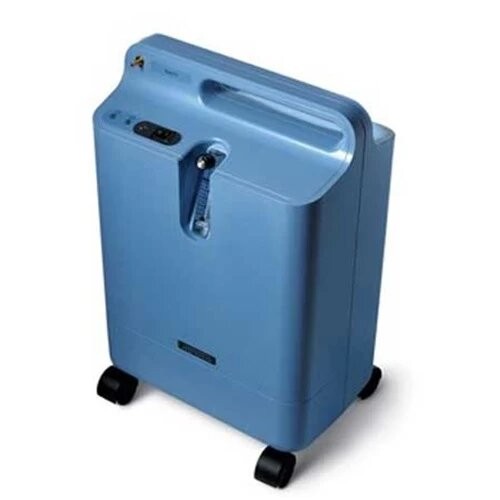
- Brand
- Philips Respironics
- Category
- 5 LPM
Discontinued
Indicative pricing based on market intelligence. Varies by dealer, city, bundle, and period — confirm with a local authorised seller before buying.
HHZ SCORE 8.2/10
Veayva 5 litre
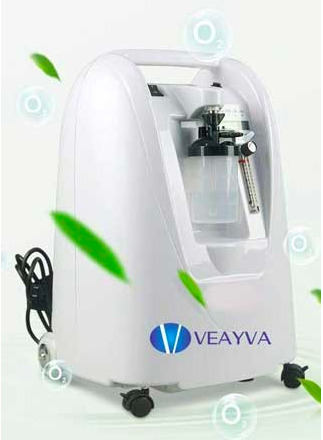
- Brand
- Veayva
- Category
- 5 LPM
₹27,840
Indicative pricing based on market intelligence. Varies by dealer, city, bundle, and period — confirm with a local authorised seller before buying.
HHZ SCORE 5.6/10
Specifications compared
| Specification | Philips Everflo 5 Liter Oxygen Concentrator | Veayva 5 litre |
|---|---|---|
| Overview | ||
| Brand | Philips Respironics | Veayva |
| Category | 5 LPM | 5 LPM |
| Price | — | ₹27,840.00 |
| Stock | DISCONTINUED WORLDWIDE | Out of stock |
| Key features | ||
| Purity | 90-96% | 90-95%% |
| Type | Home Stationary | Home Stationary |
| Continuous Flow | 1-5LPM | 0.5-5LPM |
| Weight | 14kg | 16kg |
| Oxygen Purity Indicator (OPI) | Yes | No |
| Power consumption | 350watts | 285watts |
| Technical details | ||
| Purity | 90-96% | 90-95%% |
| Type | Home Stationary | Home Stationary |
| Continuous Flow | 1-5LPM | 0.5-5LPM |
| Weight | 14kg | 16kg |
| Oxygen Purity Indicator (OPI) | Yes | — |
| Power consumption | 350watts | 285watts |
| Sound level | 45db | 48db |
| Dimensions | 23H x 15W x 9.5Dinch | 21H x 12W x 11.8Dinch |
| Operating altitude | 7500feet | — |
| Outlet pressure | 5.5psi | — |
| Additional details | ||
| Loss of Power Alarm | Yes | — |
| System Malfunction Alarm | Yes | — |
| No Flow Alarm | Yes | Yes |
| Indian Voltage Model | Yes | Yes |
| Company Headquarters | USA | China |
| US FDA Approved | Yes | — |
| CE Certified | Yes | — |
Analysis
Editor’s note — Everflo discontinued. Philips has discontinued the Everflo worldwide; it is no longer in production and remaining units are end-of-line stock. For an in-production 5 LPM alternative available in India, consider the Home Medix HM-KV (up to 5 L/min, 93% ±3%, ≤40 dB, 3-year warranty). The comparison below is retained for reference.
The Philips Respironics Everflo and the Veayva 5-litre both sit in the Indian 5 LPM stationary segment, but they occupy very different rungs of it. The Everflo is the category reference — the machine most Indian pulmonologists and rental suppliers have been handling since 2013. The Veayva is an imported low-cost alternative with thin published documentation and limited Indian dealer presence. At indicative retail, the Everflo is listed at ₹43,699 (since discontinued) against the Veayva’s ₹27,840 — a ₹15,859 gap, about 57% more for the Everflo. That gap is large enough that many first-time buyers look at the Veayva and ask whether the Philips premium is worth it. After walking through both spec sheets line by line, our read is that the Everflo earns the premium for clinical, 24x7, multi-year home-oxygen use. The Veayva does not clear that bar.
At-a-glance: where these two diverge
The Everflo weighs 14 kg against the Veayva’s 16 kg — a 2 kg advantage for the Philips that matters when a single caregiver needs to move the machine between bedroom and living room. Continuous flow range is 1–5 LPM on the Everflo versus 0.5–5 LPM on the Veayva. Purity is 90–96% on the Everflo against 90–95% on the Veayva — functionally identical for the adult COPD and post-COVID fibrosis cohort that makes up most Indian 5 LPM prescriptions. Noise is 45 dB on the Everflo against 48 dB on the Veayva, a 3 dB gap that is perceptually roughly half-again louder for the Veayva. Power draw actually favours the Veayva on paper — 285 W vs 350 W — though that translates to only about ₹500–700 per year of electricity savings at typical Indian domestic tariffs and daily use of 10–12 hours.
The larger divergences are in certification and monitoring. The Everflo carries US FDA approval and CE certification per the manufacturer brochure and e-commerce product listings. The Veayva carries neither. The Everflo has an Oxygen Purity Indicator (OPI), the system malfunction alarm, the loss-of-power alarm, and the no-flow alarm all flagged “Yes” in its spec sheet. The Veayva’s spec sheet shows only the no-flow alarm flagged “Yes” — OPI is absent, system malfunction alarm is absent, loss-of-power alarm is absent. Operating altitude is 7,500 ft for the Everflo (a published figure) and is not specified for the Veayva. Company headquarters sits in the USA for Philips Respironics; the Veayva is headquartered in China per the listing.
Where the Everflo wins
Start with the alarm suite, because it is load-bearing for home use. Domestic oxygen therapy in India runs unattended a great deal of the time — the patient may be asleep, the caregiver may be in another room, the machine may be on a timer overnight. A concentrator in that scenario needs to tell you when something has gone wrong. The Everflo’s “Yes” on loss-of-power, system malfunction, no-flow, and OPI means that the machine will alert under four independent failure modes. The Veayva’s sheet shows only no-flow; a tube kink or an exhausted sieve bed may trigger that, but a gradual purity decline or a silent compressor fault may not. For a patient whose SpO2 is being actively managed by the machine, that is a meaningful safety gap.
Certifications are the next issue. The Everflo’s US FDA and CE markings per manufacturer brochures are not just bureaucratic labels — they signal that the machine cleared design-validation and electrical-safety testing to defined international thresholds. For Indian buyers paying ₹40,000+ for a device that will run 10–12 hours a day for years, regulatory provenance is a reasonable thing to demand. The Veayva listing does not show either mark.
Service network is the third Everflo advantage, and arguably the most important for Indian buyers. Philips Respironics has been operating in India for more than a decade. Service centres and factory-trained technicians are available across all metros, most tier-2 cities, and many tier-3 towns. Sieve-bed replacement kits and compressor parts are stocked by multiple dealers. Humidifier-bottle adaptors and cannula connectors are standard across their service network. The Veayva, by contrast, has a much thinner Indian presence — dealer visibility is limited, and finding a service engineer in Pune or Nagpur or Bhopal is not straightforward. If your machine fails on day 180, the Everflo will be repaired in 48–72 hours in most metros; the Veayva may take longer, and spare-part availability is not guaranteed over a multi-year ownership horizon.
The Everflo’s published 3-year warranty is another edge. The Veayva listing does not specify warranty length, and in our experience imported unbranded 5 LPM machines default to 1-year coverage unless the dealer contracts something longer. Over a five-year ownership horizon, warranty depth is the single largest financial variable outside the unit price — a sieve-bed failure year 2 is a ₹12,000–18,000 bill under no warranty.
Where the Veayva wins
The Veayva’s honest advantage is price. At ₹27,840 versus ₹43,699 (since discontinued), it saves the buyer ₹15,859 up front — that is not nothing. For a household with a short prescribed horizon (a post-surgical 4–8 week course, or a seasonal winter aggravation episode) where the machine will run at modest duty cycles and does not need to clear clinical-grade monitoring thresholds, the Veayva price point is defensible.
Power draw is lower on paper: 285 W versus 350 W. Over a long daily usage pattern — say 14 hours a day at the 3–4 LPM flow band — the Veayva’s lower draw translates to roughly 320 kWh per year of electricity savings, about ₹2,500–3,200 at typical Indian domestic slab tariffs. That is real money over three years of continuous use. However, this advantage is largely notional for the ₹15,859 upfront gap; at ₹3,000/year savings, the payback on choosing the Veayva for power efficiency alone is over five years, by which point the machine’s service life is already in question.
Flow-range lower bound is 0.5 LPM on the Veayva versus 1 LPM on the Everflo. For paediatric prescriptions or low-flow titration regimens, the Veayva’s 0.5 LPM minimum is a technical edge. Few adult Indian prescriptions sit in that band.
That is essentially the Veayva’s case: cheaper, slightly lower power draw, and a marginally wider flow window. Beyond that, the spec sheet is thinner than the Everflo’s on every axis that matters for ongoing clinical use.
Indian-market context
Two further practical points deserve airtime. First, stock position. The Everflo is listed as “In Stock” per current e-commerce product listings. The Veayva is “Out of stock.” For a buyer whose pulmonologist has issued an oxygen prescription today, an Out-of-Stock alternative is not really an alternative — the household needs a machine this week, not next month. In the Indian 5 LPM segment, inventory availability is meaningfully more predictable for the established brands (Philips, Oxymed, BPL, Nidek) than for imported low-cost entrants.
Second, resale. The Indian secondary market for oxygen concentrators is real and price-transparent. Everflo units 2–4 years old routinely change hands for ₹20,000–30,000 depending on hour meter. Veayva units, where they surface on secondary platforms at all, transact at much steeper discounts — often 60–70% off original retail within 18 months of purchase. If the prescribed therapy horizon is not lifelong, resale value materially alters the effective cost of ownership, and the Everflo holds value noticeably better.
Indian summer ambient conditions — 35–42°C in plains cities, 60–80% RH in coastal belts — stress the compressor and cooling fans of every PSA concentrator. The Everflo’s decade-plus field history in those conditions is documented, and parts and service paths are well-understood. The Veayva does not have that field history in the Indian market.
A third, smaller point: Indian voltage model. Both machines are flagged “Yes” for Indian voltage support, so neither needs a step-down transformer. This is a floor requirement, not a differentiator.
Verdict
The Philips Everflo 5 LPM wins this matchup decisively for any buyer whose use case is clinical home oxygen therapy — meaning the machine will run hours-per-day on a prescribed flow rate for a patient whose SpO2 is being actively managed against the concentrator’s output. The Everflo’s OPI, full alarm suite (loss of power, system malfunction, no flow), US FDA approval, CE certification, 3-year warranty, and broad Indian service network together describe a machine designed for exactly that envelope. The Veayva’s spec sheet does not. For the Indian household buying a concentrator in 2026 for a chronic or sub-chronic oxygen prescription, the Everflo is the safer, better-supported, higher-resale choice.
Where does the Veayva belong? Honestly, in a narrow window. If the Everflo is unavailable at the buyer’s location, if the prescribed therapy horizon is short (4–8 weeks), if the duty cycle will be modest (4–6 hours a day at flow rates below 3 LPM), and if the ₹15,859 upfront saving materially relieves a stretched household budget — in that combination, the Veayva can serve. Outside that narrow window, the Everflo’s premium is earned.
One nuance. Several Indian 5 LPM alternatives sit between these two — the Oxymed Mini at ₹35,400 with an Indian service network the Philips cannot match on response time in tier-3 towns, the GVS Oxypure at ₹33,599 with CE certification, the BPL Oxy 5 Neo at ₹31,966 with an Indian HQ and OPI. If the user is comparing the Everflo only against the Veayva, the Everflo is the obvious winner. If the user is comparing the Everflo against the wider Indian 5 LPM field, the calculation is genuinely more interesting — and we address those matchups in separate write-ups on this site.
For this specific matchup: Philips Everflo, clearly. The Veayva is priced to be the bargain option; it does not carry enough of the Everflo’s monitoring and support infrastructure to earn a clinical recommendation.