Nidek Nuvo Lite 5 LPM vs Oxymed Mini (5L) Oxygen Concentrator
Nidek Nuvo Lite 5 LPM
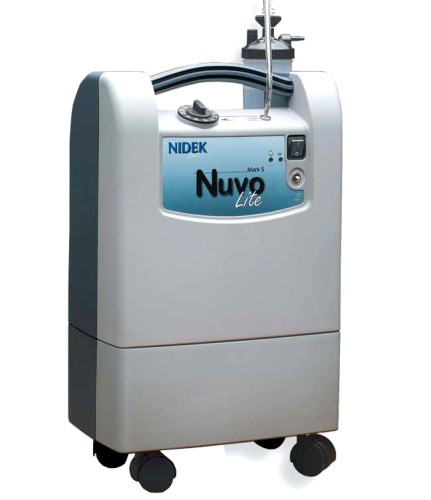
- Brand
- Nidek Medical
- Category
- 5 LPM
₹57,599.04₹66,240
Indicative pricing based on market intelligence. Varies by dealer, city, bundle, and period — confirm with a local authorised seller before buying.
HHZ SCORE 7.8/10
EDITORIAL PICK
Oxymed Mini (5L) Oxygen Concentrator
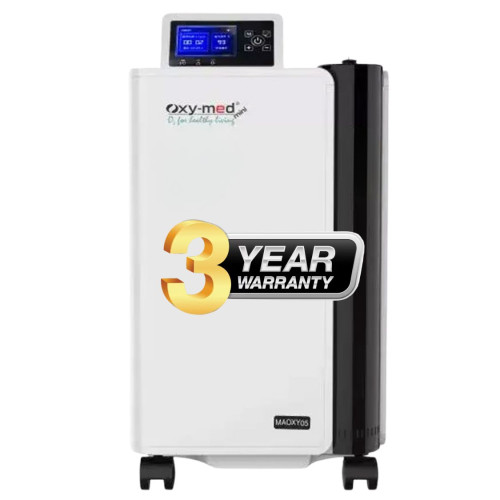
- Brand
- Oxymed
- Category
- 5 LPM
₹35,400₹59,900
Indicative pricing based on market intelligence. Varies by dealer, city, bundle, and period — confirm with a local authorised seller before buying.
HHZ SCORE 7.2/10
Specifications compared
| Specification | Nidek Nuvo Lite 5 LPM | Oxymed Mini (5L) Oxygen Concentrator |
|---|---|---|
| Overview | ||
| Brand | Nidek Medical | Oxymed |
| Category | 5 LPM | 5 LPM |
| Price | ₹57,599.04 | ₹35,400.00 |
| MRP | 66,240.00 | 59,900.00 |
| Stock | In Stock | In Stock |
| Key features | ||
| Purity | 90-96% | 90-96% |
| Type | Home Stationary | Home Stationary |
| Continuous Flow | 1-5LPM | 1-5LPM |
| Weight | 13.6kg | 13.9kg |
| Oxygen Purity Indicator (OPI) | Yes | Yes |
| Power consumption | 290watts | 390watts |
| Technical details | ||
| Purity | 90-96% | 90-96% |
| Type | Home Stationary | Home Stationary |
| Continuous Flow | 1-5LPM | 1-5LPM |
| Weight | 13.6kg | 13.9kg |
| Oxygen Purity Indicator (OPI) | Yes | Yes |
| Power consumption | 290watts | 390watts |
| Sound level | 40db | 45db |
| Dimensions | 23H x 14W x 9Dinch | 20.27H x 12.36W x 9.4Dinch |
| Operating altitude | 7500feet | 7500feet |
| Outlet pressure | 5.5psi | 10psi |
| Additional details | ||
| Oxygen Purity % Analyzer | — | Yes |
| Loss of Power Alarm | Yes | Yes |
| System Malfunction Alarm | — | Yes |
| No Flow Alarm | — | Yes |
| Indian Voltage Model | Yes | Yes |
| Company Headquarters | USA | India |
| US FDA Approved | Yes | — |
| CE Certified | Yes | — |
Analysis
The matchup
The Nidek Nuvo Lite 5 LPM and the Oxymed Mini 5 LPM are a classic imported-vs-Indian comparison in the 5 LPM stationary class. The Nidek is a USA-origin, FDA-approved unit at ₹57,599 indicative retail with class-leading 40 dB sound and 290 W power. The Oxymed Mini is an Indian-origin, CDSCO-registered unit at ₹35,400 indicative retail with a published real-time Oxygen Purity Analyzer, 45 dB sound, 390 W power, and the deepest service network of any Indian 5 LPM at 50+ cities. The price gap is ₹22,000. Our verdict: for the median Indian home-oxygen household — plains city, adult prescription, service network as the dominant long-term reliability factor — the Oxymed Mini is the better buy. The Nidek wins for specific cases where its sound advantage or CE/FDA paperwork is load-bearing.
At-a-glance spec differences
- Price (indicative retail): Nidek ₹57,599 vs Oxymed Mini ₹35,400 — a ₹22,199 gap, or 63% more for the Nidek
- Sound (published): Nidek 40 dB vs Oxymed Mini 45 dB — a 5 dB gap favouring the Nidek
- Power draw (published): Nidek 290 W vs Oxymed Mini 390 W — Nidek is 26% more efficient at full flow
- Weight (published): Nidek 13.6 kg vs Oxymed Mini 13.9 kg — effectively identical
- Altitude envelope (published): Both 7,500 ft — identical
- Analyzer vs indicator: Oxymed publishes a real-time Oxygen Purity % Analyzer; Nidek publishes only an Oxygen Purity Indicator (threshold warning light)
- Certifications: Nidek US FDA approved and CE certified; Oxymed CDSCO registered only (no CE or US FDA on record)
- Flow minimum: Nidek 0.125 LPM (with 12 discrete steps); Oxymed Mini 1 LPM
- Service network: Oxymed publishes 50+ city installation footprint; Nidek footprint is thinner and concentrated in tier-1 metros
Where the Nidek Nuvo Lite 5 LPM wins
Sound at 40 dB is the class floor. The Nidek’s 40 dB publishes 5 dB below the Oxymed Mini’s 45 dB — a perceptually meaningful gap. 40 dB is library-quiet; 45 dB is the edge of refrigerator-hum. For bedside overnight placement in a typical Indian bedroom where distances between machine and sleeper are short, the 5 dB difference translates directly to sleep quality. Patients on long-duration nightly supplementation will notice this advantage immediately.
Power efficiency is substantial. 290 W vs 390 W is a 100 W gap at full flow — a 26% efficiency advantage for the Nidek. On a 24x7 prescription at a ₹9/kWh commercial tariff, this compounds to roughly ₹650/month in electricity, or ₹23,400 over three years — which fully absorbs the upfront price gap. For commercial-tariff buyers running the machine continuously, the Nidek’s lifetime cost can be equivalent to the Oxymed Mini’s. For subsidised-domestic-tariff buyers, the gap is smaller and the Oxymed Mini’s upfront saving wins.
CE and FDA approval carry institutional weight. The Nidek is US FDA approved and CE certified; the Oxymed Mini is CDSCO registered only, with neither CE nor US FDA on record. For buyers where a prescribing physician has specified FDA-approved equipment, for hospital-discharge handoffs where the ward fleet is FDA-only, and for insurance reimbursement pathways that specify FDA-approved DME, the Nidek is the required choice. CDSCO registration is the Indian domestic gate and is what the Oxymed clears; it does not substitute for CE or FDA in export, travel, or institutional-procurement contexts.
Granular flow control. The Nidek publishes 12 discrete flow steps starting at 0.125 LPM; the Oxymed Mini’s published continuous flow range is 1–5 LPM. For paediatric prescriptions and for sleep-titration adult prescriptions below 1 LPM, the Nidek is the only one of the two that can deliver the prescribed flow accurately. This narrows the matchup to specific clinical scenarios but is a real advantage where it applies.
USA-origin engineering pedigree. For buyers who value imported construction quality and long manufacturer warranty support as proxies for reliability, the Nidek carries the stronger brand pedigree. Nidek Medical has been manufacturing oxygen concentrators for decades with a consistent published engineering profile.
Where the Oxymed Mini 5 LPM wins
Price is the cleanest big-ticket advantage. ₹35,400 indicative retail vs ₹57,599 on the Nidek is a ₹22,199 gap — 39% cheaper. For self-funded Indian buyers without durable-medical-equipment insurance, this gap is the question. ₹22,199 at the time of purchase buys a full backup cylinder kit (₹8,000–10,000), a year of electricity (₹20,000 at 390 W), and still covers a pulse oximeter and spare accessories. Upfront capital matters more than running-cost math for most Indian households.
Service network is Oxymed’s single biggest real-world advantage. Oxymed publishes home installation services in roughly 50 cities across India, with a direct dealer and technician footprint that exceeds any other Indian or imported brand in the 5 LPM stationary class. For a 3-year home oxygen prescription, the odds of needing at least one service call are high; for filter replacement they are certain. In tier-2 and tier-3 Indian cities — Indore, Nashik, Ranchi, Raipur, Visakhapatnam, Madurai, Lucknow — Oxymed’s service dispatch is typically 24–48 hours. Nidek’s is slower and often parts-availability-gated.
Real-time Oxygen Purity Analyzer beats the Nidek’s OPI. Both machines publish OPI (threshold warning lights). Only the Oxymed Mini publishes a real-time numerical Oxygen Purity Analyzer that shows continuous percentage readings on the user-facing screen. For caregivers doing any active monitoring, this data is useful — both for early-warning of sieve-bed degradation (a gradual purity drop before the OPI threshold trips) and for reassurance on normal-operation days. The Nidek tells you “something is wrong”; the Oxymed Mini tells you “purity is 94%, holding.”
Comprehensive accessory kit. The Oxymed Mini ships with humidifier bottle, nasal cannula, nebulizer kit, additional filter set, and power cable. The Nidek ships with humidifier, cannula, connecting tube, warranty card, and manual. The Oxymed Mini’s included nebulizer and spare filter set are worth ₹2,500–3,500 retail, widening the effective price gap.
Full alarm suite. The Oxymed Mini publishes loss-of-power, system-malfunction, and no-flow alarms all as “Yes.” The Nidek publishes only loss-of-power in its technical details. For unattended overnight operation, the Oxymed Mini’s fuller alarm envelope is a real clinical advantage over the Nidek’s leaner published alarm set.
3-year warranty with Indian service fulfillment. Both machines carry 3-year warranties, but Oxymed’s is directly fulfilled through its Indian service channel. The Nidek’s warranty fulfilment runs through a narrower dealer network.
Indian-market context
Both machines are Indian Voltage Models on 230 V / 50 Hz. Both publish 7,500 ft altitude envelopes — a real constraint for buyers above that elevation, but adequate for plains cities and most hill-station tourist destinations below Shimla-level. Neither is FAA approved. Both are stationary home units.
On service channels: Oxymed’s 50-city footprint is published with named dealer locations and direct Oxymed service. Nidek’s Indian service runs through authorised dealers in roughly a dozen tier-1 metros; outside those cities, support is third-party and parts chain is slower. For Bangalore, Mumbai, Delhi-NCR, Chennai, Hyderabad buyers, either machine is fine on service. For almost everywhere else, Oxymed is materially more serviceable.
On pricing mechanics: the Oxymed Mini lists at ₹59,900 MRP and typically discounts to ₹35,400 online — a 41% discount. Dealer-channel pricing runs at or slightly above online in tier-2 cities, with local negotiation room. The Nidek lists at ₹66,240 MRP and typically discounts to ₹57,599 online — a 13% discount. Nidek dealer-channel pricing is tighter with less negotiation room.
Hospital rental fleets in Indian metros carry the Nidek alongside Philips Everflo as typical imported stationary options; the Oxymed Mini is uncommon in rental fleets at tier-1 but dominates tier-2 and tier-3 rental markets. GST at 12% on Class B medical devices is included in listed prices.
Home Medix HM-KV: quiet operation without the Nidek premium
The Home Medix HM-KV is the value alternative for a buyer attracted to the Nidek’s quiet bedroom operation but unable to justify the imported-unit premium. Its field-verified sound is at or below 40 dB, its chassis is 13 kg, and it includes live purity information, full alarms, integrated nebulization, and a 3-year / 10,000-hour warranty.
It does not replace Nidek’s FDA documentation or imported-platform lineage. Against Oxymed, HM-KV trades broader nationwide service reach for stronger bedside specifications in supported cities. See HM-KV vs Oxymed Mini for the direct comparison.
Verdict
Our recommendation is the Oxymed Mini 5 LPM for the majority of Indian households. The combination of ₹22,000 lower upfront price, Oxymed’s 50-city service network, the real-time Oxygen Purity Analyzer, and the full alarm suite wins the practical case for a median adult home-oxygen buyer in a plains Indian city. Over a three-year horizon, the Oxymed Mini’s service depth is more likely to keep the machine running than the Nidek’s better nameplate specs are to deliver clinical benefit.
Buy the Nidek Nuvo Lite 5 LPM instead in three specific situations. First, when bedside overnight placement is the dominant use case and 40 dB vs 45 dB is a real quality-of-life upgrade — the Nidek is among the quietest stationary 5 LPM units on the market. Second, when the prescription is paediatric or specifies flow below 1 LPM — the Nidek’s 0.125 LPM minimum with 12 discrete steps is the only 5 LPM in this comparison that can deliver those flows. Third, when CE or US FDA approval is a hard requirement for institutional, physician, or insurance reasons — the Oxymed Mini carries neither of those marks and no amount of service-network advantage substitutes.
For the ambiguous case — adult prescription, plains city, no institutional CE/FDA requirement, general-medicine 2–4 LPM — the answer is the Oxymed Mini. The ₹22,000 saving is real upfront capital; the service network is real ongoing reliability; the analyzer is real ongoing monitoring data. The Nidek’s sound and efficiency advantages are real but do not outweigh these. B gets the pick; A is the targeted premium choice.