Nareena 5 LPM Single Flow vs Home Medix HM-KV 5 LPM
Nareena 5 LPM Single Flow
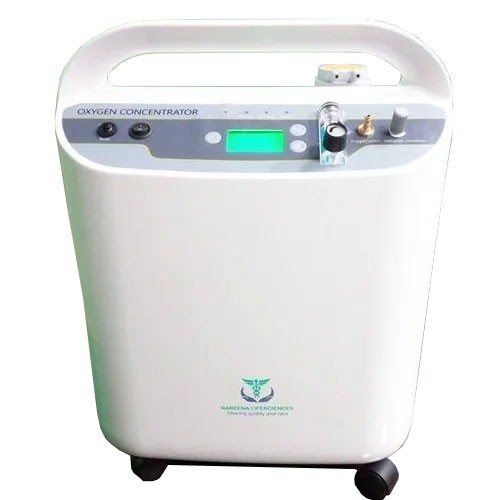
- Brand
- Nareena Lifesciences
- Category
- 5 LPM
₹35,510.40₹67,200
Indicative pricing based on market intelligence. Varies by dealer, city, bundle, and period — confirm with a local authorised seller before buying.
HHZ SCORE 7.0/10
EDITORIAL PICK
Home Medix HM-KV 5 LPM
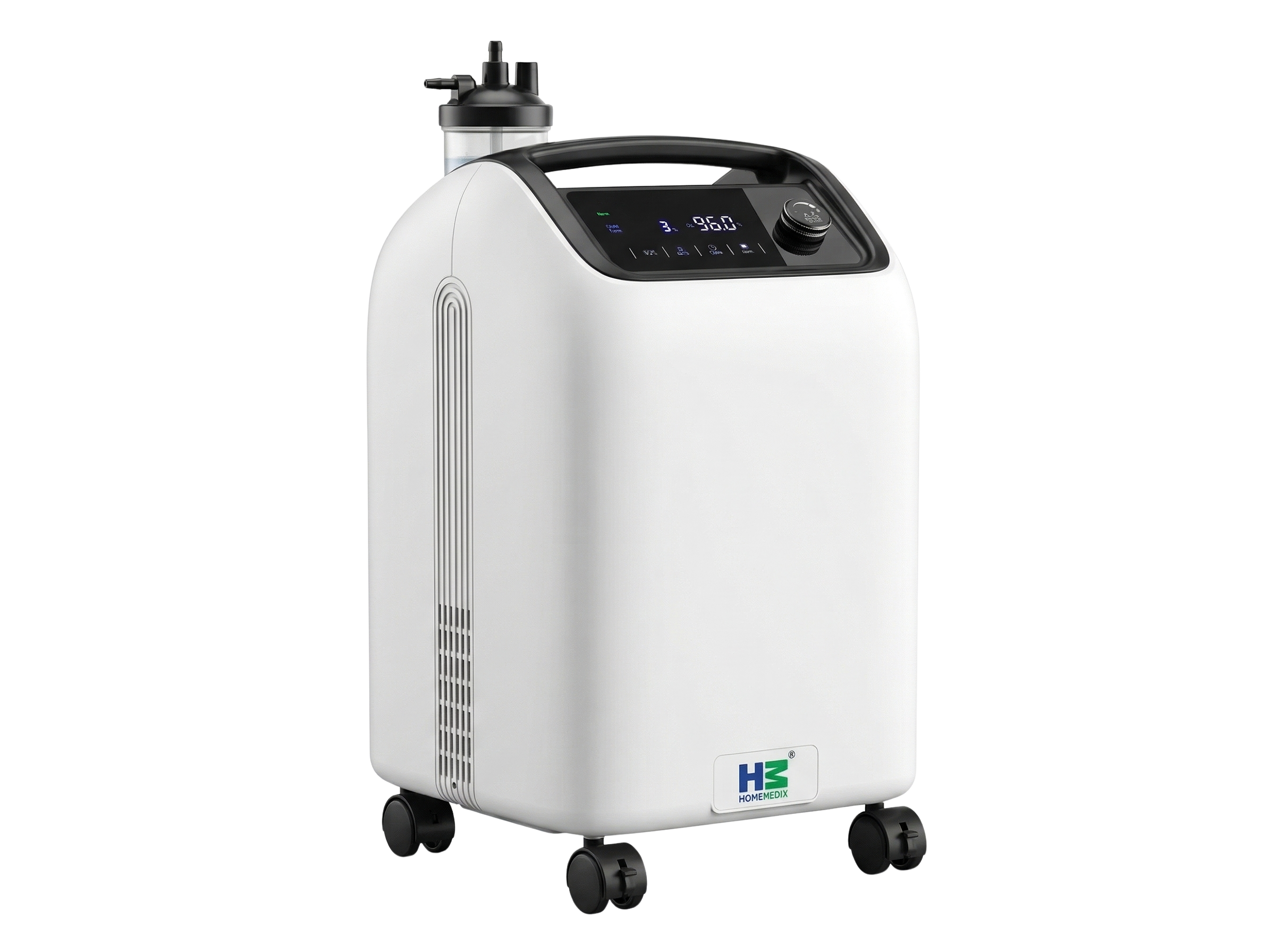
- Brand
- Home Medix
- Category
- 5 LPM
₹37,800₹54,000
Indicative pricing based on market intelligence. Varies by dealer, city, bundle, and period — confirm with a local authorised seller before buying.
HHZ SCORE 7.7/10
Specifications compared
| Specification | Nareena 5 LPM Single Flow | Home Medix HM-KV 5 LPM |
|---|---|---|
| Overview | ||
| Brand | Nareena Lifesciences | Home Medix |
| Category | 5 LPM | 5 LPM |
| Price | ₹35,510.40 | ₹37,800 |
| MRP | 67,200.00 | 54,000 |
| Stock | In Stock | In Stock |
| Key features | ||
| Purity | 90-96% | 93% ± 3% |
| Type | Home Stationary | Home Stationary |
| Continuous Flow | 1-5LPM | 0.5–5 L/min |
| Weight | 15kg | 13 kg (lightest in the 5 LPM class) |
| Oxygen Purity Indicator (OPI) | Yes | Yes |
| Power consumption | 550watts | 320 VA |
| Technical details | ||
| Purity | 90-96% | 93% ± 3% |
| Type | Home Stationary | Home Stationary |
| Continuous Flow | 1-5LPM | 0.5–5 L/min |
| Weight | 15kg | 13 kg (lightest in the 5 LPM class) |
| Oxygen Purity Indicator (OPI) | Yes | Yes |
| Power consumption | 550watts | 320 VA |
| Sound level | 50db | ≤ 40 dB (field-verified) |
| Dimensions | 23.6H x 14.7W x 14.3Dinch | Compact floor-standing form factor |
| Outlet pressure | — | 0.04–0.06 MPa |
| Additional details | ||
| Loss of Power Alarm | Yes | Yes |
| System Malfunction Alarm | — | Yes (High Temperature) |
| No Flow Alarm | — | Yes (Low/No Flow) |
| Indian Voltage Model | Yes | Yes |
| Company Headquarters | India | India |
| Oxygen Purity % Analyzer | — | Yes |
| Home Medix differentiators | ||
| Integrated Nebulization | — | Yes |
| Precise Electronic Flowmeter | — | Yes |
| One-Touch SOS Alert | — | Yes — high-volume audible alarm button for summoning a nearby attendant (local siren; no mobile app or telecom channel) |
| Hour Counter | — | User-visible running-hour display |
| Working Voltage | — | AC 230V / 50Hz, ±10% tolerance (207–253 V) |
| Industrial-Grade Compressor | — | Yes |
| ISO 9001 | — | Yes |
| ISO 13485 | — | Yes |
| CDSCO | — | Approved |
| Warranty | — | 3 years or 10,000 hours of operation, whichever comes first |
Analysis
The Nareena 5 LPM Single Flow and the Home Medix HM-KV 5 LPM are both Indian-headquartered 5 LPM home stationary concentrators sold through Indian e-commerce channels at the sub-₹40,000 price band. They look like a close matchup on price — Nareena ₹35,510 vs HM-KV ₹37,800, a ₹2,290 gap — but the spec sheets are not close. The HM-KV beats the Nareena on weight, sound, power draw, alarm coverage, purity monitoring, flow envelope, voltage-tolerance documentation, and warranty terms, and is a cleanly better unit at the bedside. The Nareena’s defensible advantages are price and Tier-2 / Tier-3 dealer reach in markets where Nareena Lifesciences has stronger local service than Home Medix.
At a glance
- Price. Nareena ₹35,510.40 (MRP ₹67,200) vs HM-KV ₹37,800 (MRP ₹54,000) — Nareena is ₹2,290 (6%) cheaper at street price.
- Weight. HM-KV 13 kg vs Nareena 15 kg — HM-KV is 2 kg lighter, the lightest in the Indian 5 LPM class.
- Sound. HM-KV ≤ 40 dB(A) field-verified vs Nareena 50 dB published — HM-KV is 10 dB quieter, a perceived-loudness halving and the difference between bedroom-friendly and adjacent-room placement.
- Continuous flow. HM-KV 0.5–5 L/min vs Nareena 1–5 L/min — HM-KV covers the sub-1 L/min titration band that Nareena does not.
- Purity. HM-KV 93% ± 3% (90–96%) vs Nareena 90–96% — same practical band.
- Power consumption. HM-KV 320 VA vs Nareena 550 W — HM-KV draws roughly 230 W less; over 24/7 LTOT operation at ₹8/kWh, that’s ~₹130/month lower electricity, ~₹4,700 over three years.
- Working voltage. HM-KV documents AC 230V / 50Hz with ±10% tolerance (207–253 V); Nareena does not publish an explicit voltage envelope.
- Outlet pressure. HM-KV 0.04–0.06 MPa (~5.8–8.7 psi); Nareena does not publish an outlet pressure figure.
- Oxygen Purity Indicator. Both Yes.
- Live oxygen-purity percent analyzer. HM-KV Yes (continuous percent readout on the front panel); Nareena does not document a live percent analyzer — only the on/off OPI threshold light.
- Alarm suite. HM-KV runs the full four-alarm suite (Loss of Power, System Malfunction / High Temperature, No Flow / Low Flow, Low Oxygen Concentration). Nareena documents only Loss of Power; the System Malfunction Alarm and No Flow Alarm fields on the Nareena data sheet are blank.
- Hour counter. HM-KV has a user-visible running-hour display; Nareena does not document one.
- Integrated nebulization + electronic flowmeter + SOS audible siren. All three on the HM-KV (factory-integrated). None documented on the Nareena.
- Regulatory. Both CDSCO-registered, Indian-voltage. Neither carries CE marking or US FDA listing on record. HM-KV additionally documents ISO 9001 and ISO 13485.
- Warranty. HM-KV 3 years or 10,000 hours, whichever comes first. Nareena 1-year warranty per its product catalogue — meaningfully shorter than the Indian 5 LPM segment standard.
- Stock. Both In Stock through primary Indian e-commerce channels.
Both are Indian-HQ manufacturers — Home Medix India Pvt Ltd (Bengaluru) and Nareena Lifesciences. Both ship Indian-voltage. Neither carries international FDA / CE certification.
Where the HM-KV wins
Sound floor — 10 dB lower. ≤ 40 dB(A) field-verified vs 50 dB published is the headline differentiator. Ten decibels is roughly a perceived-loudness halving. In practical terms: at 50 dB the Nareena is bedroom-borderline — most light sleepers will notice it and ask for the unit to be moved to an adjacent room with a tubing extension. At ≤ 40 dB the HM-KV is genuinely bedside-friendly. For an LTOT prescription where the patient runs the unit overnight, this single spec is often the difference between adherence and abandonment.
Weight — 2 kg lighter, the lightest 5 LPM on the Indian market. 13 kg vs 15 kg is a real handling difference — single-person carry up a flight of stairs without strain on the HM-KV; two-handed and slower on the Nareena. For households where the unit moves between rooms or rides in a car for occasional travel, the lighter chassis materially reduces the friction of daily use.
Power draw — 230 W lower. 320 VA vs 550 W means the HM-KV runs cooler, sizes a smaller stabiliser (500 VA minimum vs ~825 VA), saves ₹130/month on 24/7 electricity, and bridges further on a UPS for the same battery capacity. Over 36 months of LTOT operation, the cumulative electricity differential alone (₹4,700) more than wipes out the Nareena’s ₹2,290 upfront price advantage.
Full four-alarm suite. The HM-KV documents Loss of Power, System Malfunction (High Temperature), No Flow / Low Flow, and Low Oxygen Concentration. The Nareena documents only Loss of Power; the System Malfunction and No Flow Alarm fields on its data sheet are blank. For a high-flow medical device a patient depends on overnight, the No Flow Alarm specifically catches tubing kinks, blocked filters, and mask disconnects that would otherwise go undetected until the patient’s saturation drops far enough to wake them. This is a clinical-safety gap, not just a feature-list difference.
Live oxygen-purity percent readout. Both units have an OPI (the binary threshold light). The HM-KV additionally has a continuous live percent analyzer on the front panel — the more informative feedback channel for caregivers tracking sieve-bed condition over months. The Nareena’s data sheet does not list a live percent analyzer.
Sub-1 L/min flow floor. HM-KV runs from 0.5 L/min; Nareena starts at 1 L/min. For paediatric oxygen, post-acute weaning protocols, or low-titration LTOT cases where the prescription is 0.5–0.75 L/min, only the HM-KV delivers continuously — the Nareena cannot run that low.
Documented AC ±10% voltage tolerance. HM-KV specifies AC 230V / 50Hz with ±10% tolerance (207–253 V) as a published operating envelope. Nareena does not publish an equivalent tolerance band. In Indian Tier-2 / Tier-3 mains where voltage routinely dips below 200 V or spikes above 250 V, the HM-KV’s spec’d envelope tells the buyer exactly when the unit shuts down cleanly rather than damaging the compressor. Both still need a servo stabiliser; the HM-KV just publishes its envelope rather than leaving it to dealer-discretion.
Warranty — 3 years or 10,000 hours vs Nareena’s 1 year. This is a real gap. Nareena’s 1-year warranty is the shortest among major Indian-market 5 LPM brands; Oxymed, Philips, DeVilbiss, AirSep all run two-to-three-year terms. For a multi-year LTOT prescription the warranty length is operationally significant — compressor or sieve issues in year 2 are out-of-pocket on a Nareena, covered on the HM-KV.
User-visible hour counter. On the HM-KV control panel the patient sees how close they are to the 10,000-hour clause without calling service. Small touch but a differentiator at this price tier.
Factory-integrated nebulization + electronic flowmeter + SOS audible siren. None of these are documented on the Nareena’s data sheet. The integrated nebulization in particular is genuinely useful for patients on concurrent bronchodilator therapy — eliminates the need for a separate compressor nebulizer. The SOS button is a high-volume audible distress siren useful for bedridden patients whose voice does not carry to a caregiver in another room.
ISO 9001 + ISO 13485 documentation. Both units carry CDSCO registration (the Indian regulatory gate). The HM-KV additionally documents ISO 9001 (quality management) and ISO 13485 (medical device quality management). For institutional procurement where ISO paperwork is a tender prerequisite, this is the cleaner paperwork bundle.
Where the Nareena 5 LPM Single Flow wins
₹2,290 cheaper at street price. At ₹35,510 the Nareena is 6% below the HM-KV’s ₹37,800. For a budget-capped buyer this is a real saving — though as the power-cost math above shows, it is wiped out by year-2 electricity differential under 24/7 use, so the saving only sticks for lighter-use profiles (intermittent supplemental oxygen, exertion-only use, post-discharge bridging where the patient is expected to come off oxygen).
Direct Indian-manufacturer distribution. Nareena Lifesciences is an Indian respiratory-equipment manufacturer with a direct-from-manufacturer route to Indian e-commerce. For buyers in pincodes where Nareena’s authorised dealer network is stronger than Home Medix’s — typically parts of North India, the East, and certain Tier-2 cities outside the South-and-West corridor where Home Medix’s service is concentrated — the Nareena can be the operationally safer pick despite weaker spec sheet, because warranty-claim turnaround beats nominal warranty length when the nearest authorised service centre is 200 km vs 800 km away.
OPI light on board. Like the HM-KV, the Nareena documents an OPI (the binary purity-threshold indicator). It is not a HM-KV-vs-Nareena differentiator but it is a genuine baseline feature — better than budget Chinese OEM units that drop the OPI entirely.
Indian-market considerations
Service reach is the execution variable. For an Indian LTOT prescription, the most important pre-purchase action is confirming which brand has an authorised service centre in the patient’s city. Home Medix’s authorised network is concentrated in Bengaluru, Chennai, Hyderabad, Mumbai, Pune, Ahmedabad, and adjacent South / West metros. Nareena’s footprint is weighted differently — stronger in parts of North and East India and in some Tier-2 cities where Home Medix’s reach thins. Call the nearest authorised service point for both brands before deciding; ask specifically about warranty-claim turnaround time, whether sieve beds and compressors are stocked locally, and whether they will do an in-home service call. “We send it to the factory” implies 2–3 weeks of downtime per service event.
Stabiliser sizing. HM-KV at 320 VA wants a 500 VA stabiliser minimum, 750 VA where mains regularly swings outside 207–253 V. Nareena at 550 W wants 825 VA stabiliser sized at 1.5× the rated draw — meaningfully bigger and more expensive (₹2,000–₹3,000 differential on the stabiliser alone). For Tier-2 / Tier-3 cities with frequent voltage instability, a servo stabiliser is non-optional for either unit, but the HM-KV’s lower draw widens the stabiliser headroom.
Altitude. Neither data sheet publishes a hard altitude ceiling. PSA concentrators generally lose 2–4 percentage points of purity per 1,000 m of elevation. For hill-station installations (Shimla, Manali, Gangtok, Mussoorie, Ooty at 2,000 m+), verify delivered purity in-use with an oximeter check rather than relying on either paper spec — this is not brand-specific.
Coastal humidity. Mumbai, Chennai, Kolkata, Kochi, Visakhapatnam stress inlet filters faster than dry interior cities. Plan quarterly inlet-filter rinses (rather than the manual’s 6-month default) and quarterly humidifier-bottle cleaning regardless of which brand you pick.
GST and reimbursement. 12% GST applies to both. CGHS / ECHS / ESIC / private-insurance reimbursement for home oxygen therapy requires GST-compliant invoicing from an authorised dealer; both brands’ authorised channels can provide this. Neither brand’s regulatory bundle extends beyond CDSCO for the Indian market, so reimbursement eligibility is governed by the payer’s accepted-devices list rather than international certification paperwork.
Who should pick which
Pick the Home Medix HM-KV 5 LPM if: the unit will live at the patient’s bedside and the 10 dB sound advantage materially improves overnight tolerability; the patient is on multi-year LTOT where the 3-year / 10,000-hour warranty matters; the patient runs the unit 24/7 and the lower power draw saves real money over three years; the prescription includes a sub-1 L/min titration band that Nareena cannot deliver; concurrent nebulization is part of the therapy; or the buyer is in a Home Medix authorised-service city. For most Indian home LTOT prescriptions, this is the stronger pick.
Pick the Nareena 5 LPM Single Flow if: the ₹2,290 price gap is genuinely material to the household budget and the use profile is intermittent rather than 24/7 (so the higher Nareena power draw doesn’t compound into year-2 electricity overruns); the buyer is in a pincode where Nareena’s authorised dealer network is materially stronger than Home Medix’s; or the prescription is a post-discharge bridging case (3–6 months) where the 1-year warranty covers the therapy duration entirely and the spec gaps are not load-bearing.
Verdict
The HM-KV is the cleanly better unit on every clinical and operational axis that decides outcomes at the bedside — sound, weight, power, alarms, purity monitoring, flow floor, warranty, voltage tolerance, hour counter. The ₹2,290 price advantage the Nareena holds is real but narrow, and gets erased by year-2 electricity differential under 24/7 use plus Nareena’s 1-year warranty exposure in years 2–3.
For most Indian LTOT buyers in Home Medix authorised-service cities, the HM-KV is the right pick at this price band. The Nareena’s defensible niche is the buyer with a budget cap that makes ₹2,290 material AND a use profile that doesn’t compound the power-draw difference, AND a pincode where Nareena’s local dealer service is materially better than Home Medix’s. That intersection is real but small.
Both units are CDSCO-registered Indian-HQ manufacturers; neither carries CE or US FDA on record; both are appropriate for domestic Indian-market home oxygen therapy when purchased through an authorised channel with proper GST-compliant invoicing. If neither fits the budget or service-reach profile, the Oxymed Mini 5 LPM at ₹35,400 — which offers India’s broadest 40+ city authorised-service network at the Nareena’s price band — is the third option worth comparing before committing.
Confirm the prescribed flow rate with your treating pulmonologist before buying — 5 LPM buys clinical headroom, but the right answer often sits in the 1–3 L/min titration band where unit choice matters most for sound, power, and reliability over the multi-year prescription.