Keyhub 5LPM vs Philips Everflo 5 Liter Oxygen Concentrator
Keyhub 5LPM
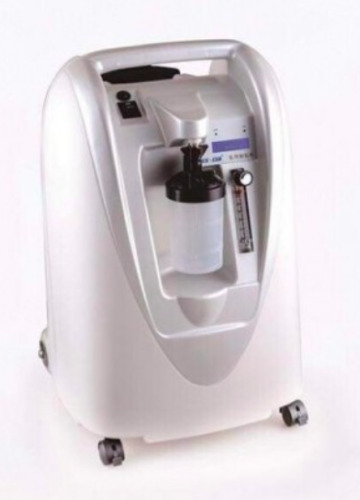
- Brand
- Keyhub
- Category
- 5 LPM
₹42,240
Indicative pricing based on market intelligence. Varies by dealer, city, bundle, and period — confirm with a local authorised seller before buying.
HHZ SCORE 6.0/10
Philips Everflo 5 Liter Oxygen Concentrator
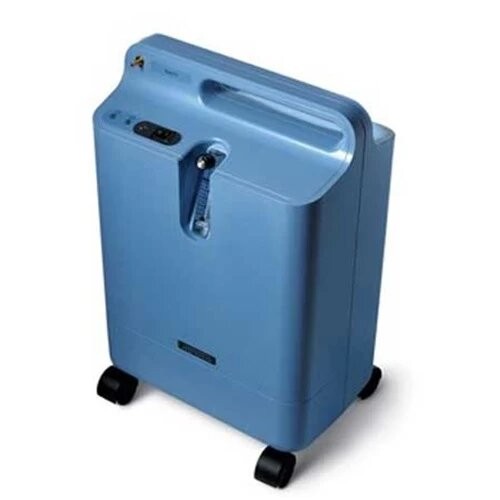
- Brand
- Philips Respironics
- Category
- 5 LPM
Discontinued
Indicative pricing based on market intelligence. Varies by dealer, city, bundle, and period — confirm with a local authorised seller before buying.
HHZ SCORE 8.2/10
Specifications compared
| Specification | Keyhub 5LPM | Philips Everflo 5 Liter Oxygen Concentrator |
|---|---|---|
| Overview | ||
| Brand | Keyhub | Philips Respironics |
| Category | 5 LPM | 5 LPM |
| Price | ₹42,240.00 | — |
| Stock | Out of stock | DISCONTINUED WORLDWIDE |
| Key features | ||
| Purity | 90-95% | 90-96% |
| Type | Home Stationary | Home Stationary |
| Continuous Flow | 0.5-5LPM | 1-5LPM |
| Weight | 16kg | 14kg |
| Oxygen Purity Indicator (OPI) | No | Yes |
| Power consumption | 320watts | 350watts |
| Technical details | ||
| Purity | 90-95% | 90-96% |
| Type | Home Stationary | Home Stationary |
| Continuous Flow | 0.5-5LPM | 1-5LPM |
| Weight | 16kg | 14kg |
| Oxygen Purity Indicator (OPI) | — | Yes |
| Power consumption | 320watts | 350watts |
| Sound level | 48db | 45db |
| Dimensions | 21H x 11.8W x 12Dinch | 23H x 15W x 9.5Dinch |
| Outlet pressure | 13psi | 5.5psi |
| Operating altitude | — | 7500feet |
| Additional details | ||
| Loss of Power Alarm | Yes | Yes |
| System Malfunction Alarm | — | Yes |
| No Flow Alarm | Yes | Yes |
| Indian Voltage Model | Yes | Yes |
| Company Headquarters | China | USA |
| US FDA Approved | — | Yes |
| CE Certified | Yes | Yes |
Analysis
Editor’s note — Everflo discontinued. Philips has discontinued the Everflo worldwide; it is no longer in production and remaining units are end-of-line stock. For an in-production 5 LPM alternative available in India, consider the Home Medix HM-KV (up to 5 L/min, 93% ±3%, ≤40 dB, 3-year warranty). The comparison below is retained for reference.
The Keyhub 5 LPM and the Philips Everflo 5 LPM sit within Rs. 1,500 of each other on the Indian 5 LPM shelf, and at first glance they could look like comparable budget-tier options. They are not. The Keyhub is a Chinese-origin CE-certified concentrator with a notable outlet-pressure spec; the Philips Everflo is the US-engineered LTOT workhorse that has sold into the Indian market for over a decade with a Philips Respironics service channel behind it. At essentially the same street price, this matchup is one of the easiest calls in the Indian 5 LPM budget band.
Price: same ballpark
Keyhub 5 LPM: Rs. 42,240 street price, no MRP listed. Out of stock on the surveyed Indian e-commerce listing.
Philips Everflo 5 LPM: Rs. 43,699 (since discontinued) street price against an MRP of Rs. 63,228.48 (31 percent discount, though Indian MRP pricing is structurally inflated). Now discontinued. 128 verified customer ratings at 4.9 average.
The Philips is Rs. 1,459 more expensive than the Keyhub — a 3.5 percent premium. That is not a cost-sensitive number. For a purchase the patient will live with for three to five years, Rs. 1,459 is roughly a month of electricity for the unit.
Stock matters again. The Keyhub is Out of Stock. The Philips is In Stock. For post-discharge urgency, the Philips is the buyable option.
Flow, purity, weight
Keyhub: 0.5 to 5 LPM continuous at 90-95% purity. Philips Everflo: 1 to 5 LPM continuous at 90-96% purity. The Keyhub’s lower 0.5 LPM floor is useful for paediatric and titration-sensitive cases; for the median Indian adult LTOT prescription (2-4 LPM), either range works.
The Philips’s upper 96% on the purity band is a one-percent datasheet lead within PSA noise — not a clinical difference but a signal that the Philips sieve-bed chemistry runs closer to the theoretical ceiling.
Weight is where Philips pulls meaningfully ahead. Keyhub: 16 kg. Philips Everflo: 14 kg. The Philips is 2 kg lighter — a 12.5 percent reduction that matters for single-caregiver repositioning and for the elderly buyer who occasionally needs to shift the machine.
Footprint: Keyhub 21H x 11.8W x 12D inch; Philips 23H x 15W x 9.5D inch. The Philips is taller and wider but shallower. In a typical Indian bedside placement against a wall, shallower depth is more practical in narrow rooms.
Sound
Keyhub: 48 dB. Philips Everflo: 45 dB. Three decibels is meaningfully perceptible — not a doubling, but a real step down from 48 to 45. The Philips sits in the “bedroom acceptable for most users” zone; the Keyhub sits in the “bedroom acceptable for habituated users” zone. For a patient on nocturnal LTOT, the 3 dB difference translates into a less disrupted sleep pattern, which in turn translates into more consistent compliance.
Note: the Philips Everflo’s marketing materials sometimes claim 40 dB for the unit, but the surveyed specification sheet shows 45 dB at standard flow conditions, and that is the number we rely on here.
Power
Keyhub draws 320 W. Philips Everflo draws 350 W. The Philips is a modest 9 percent higher draw — not a material operating-cost difference. At 14 hours per day on Mumbai residential rates, the Keyhub runs at approximately Rs. 1,080 per month; the Philips at approximately Rs. 1,180. The difference is roughly Rs. 100 per month, or Rs. 1,200 per year — recoverable in a year and change if the Keyhub were Rs. 1,459 cheaper, but the Keyhub is not meaningfully cheaper, so the electricity difference is near-wash.
Outlet pressure: the Keyhub’s one real advantage
Keyhub: 13 psi outlet pressure. Philips Everflo: 5.5 psi.
The Keyhub’s outlet pressure is substantially higher — 13 psi versus 5.5 psi. For short cannula runs (typical bedside use with 7-10 feet of tubing), this difference is immaterial; both pressures deliver adequate flow at the patient end. For installations with long tubing runs (40+ feet, sometimes required for central family-room concentrator placement with bedroom-adjacent patient), the Keyhub’s higher outlet pressure preserves flow more reliably over distance.
For a typical Indian bedroom-adjacent installation, this is not a decisive difference. For buyers running long tubing or considering whole-house oxygen distribution, the Keyhub’s higher outlet pressure is a genuine engineering advantage. But it is the only axis on which the Keyhub clearly outperforms the Philips.
OPI and alarms
Keyhub 5 LPM spec sheet: Oxygen Purity Indicator blank, Oxygen Purity Analyzer blank. Loss of Power Alarm Yes, No Flow Alarm Yes, System Malfunction Alarm blank. Indian Voltage Model Yes. CE Certified Yes.
Philips Everflo 5 LPM spec sheet: Oxygen Purity Indicator Yes. Oxygen Purity Analyzer blank. Loss of Power Alarm Yes, System Malfunction Alarm Yes, No Flow Alarm Yes. Indian Voltage Model Yes. US FDA Approved Yes. CE Certified Yes.
The Philips delivers the full four-alarm complement plus OPI. The Keyhub delivers two alarms plus no OPI. The critical missing feature on the Keyhub is OPI — the built-in warning for sieve-bed degradation that catches the slow-drift failure mode most likely to affect a home LTOT unit over two-to-five years of use.
The Philips’s OPI lights up if purity falls below 82%, per the manufacturer description. This is the clinically relevant threshold — below it, the patient is receiving room air with a small enrichment rather than therapeutic oxygen.
The Keyhub has no such feature listed. An LTOT unit without OPI is a unit where sieve-bed degradation is invisible to the family, and the patient’s falling SpO2 is the only warning signal.
Certifications
Keyhub: CE Certified Yes. US FDA blank. FAA blank. China HQ.
Philips Everflo: US FDA Approved Yes. CE Certified Yes. FAA blank. USA HQ.
The Philips is the only unit in this matchup with US FDA approval. FDA clearance adds a layer of regulatory rigour — 510(k) substantial-equivalence testing covers EMC, electrical safety, alarm function, and performance claims — that CE marking alone does not. For Indian institutional procurement (hospitals, NGOs, home-health services with clinical oversight), FDA approval is frequently a procurement requirement that rules out non-FDA units. For private individual buyers, it is a quality signal that correlates with better engineering and more thorough validation.
Company headquarters matters for service. Philips Respironics operates an Indian service channel through authorised distributors, with spares availability and compressor servicing that has been in place through multiple generations of home concentrators. Keyhub’s Indian service pipeline is less visible on surveyed collateral — the unit is a Chinese import sold through re-labelled dealer channels, and post-purchase support is typically handled by the specific dealer rather than a factory-backed support model.
Warranty and operating envelope
Keyhub: warranty period not visible on the surveyed spec sheet. Operating altitude not stated on the surveyed sheet. This is a paperwork gap.
Philips Everflo: 3-year warranty per the manufacturer description. Operating altitude: 7,500 feet. Both documented.
A 3-year warranty is the class-leading warranty for Indian 5 LPM concentrators, matching the Nidek Nuvo Lite and Oxymed Mini. The Keyhub’s absent warranty number on the surveyed sheet is a risk — the buyer is committing to a multi-year purchase with no documented manufacturer service obligation.
Rating signal
Philips Everflo: 128 verified customer ratings at 4.9 average on the Indian e-commerce listing. Keyhub: no ratings visible.
128 ratings is not a deep signal in absolute terms but is meaningful for a 5 LPM medical device at this price band — more than the Nareena (26 ratings) and behind only the Oxymed Mini (1,062 ratings) among the units in this review set. The Philips’s ratings accumulate from Indian buyers over multiple years, which is the most reliable signal of real-world satisfaction available at purchase time.
The Keyhub has zero review signal.
Verdict
The Philips Everflo 5 LPM wins this matchup by essentially every measure that matters for Indian home LTOT: lighter weight, quieter operation, OPI, full alarm coverage, FDA approval, 3-year warranty, established Indian service channel, and 128 verified customer ratings. The Keyhub’s one advantage — 13 psi outlet pressure versus 5.5 psi — is a real engineering advantage for long-tubing installations, but it is not a decisive factor for typical bedside LTOT use.
Crucially, the price difference between these two units is only Rs. 1,459 (3.5 percent). At this price gap, there is no operating-cost or purchase-price case for the Keyhub. The Philips is the better unit at essentially the same money.
The Keyhub is a defensible pick only in a narrow circumstance: a buyer who needs a high-outlet-pressure concentrator for long tubing runs and is willing to accept the missing OPI, the thinner alarm coverage, the absent documented warranty, and the weaker service pipeline. For everyone else, the Philips Everflo is the clearly better purchase.
At Rs. 43,699 (since discontinued), the Philips Everflo is one of the strongest value picks in the Indian 5 LPM market, sitting one tier below the Nidek Nuvo Lite (Rs. 57,599) on price but matching it on FDA approval and alarm coverage. For buyers considering the Philips, the Nidek Nuvo Lite comparison is a closer and more meaningful decision than the Keyhub comparison. Compared to the Keyhub, the Philips is simply the right choice.
Provenance note: all product specifications referenced in this writeup are drawn from the respective manufacturer brochures and Indian e-commerce product listings surveyed in April 2026. No bench testing has been conducted by HHZ Editorial; no clinical claims are made beyond what manufacturer documentation supports. Indian LTOT decisions should be made in consultation with the prescribing physician.