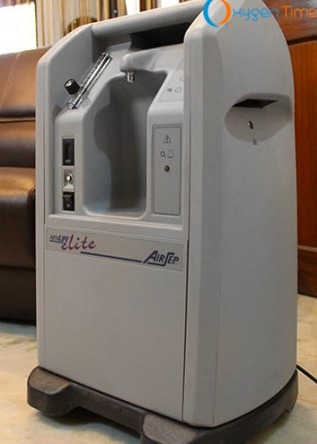
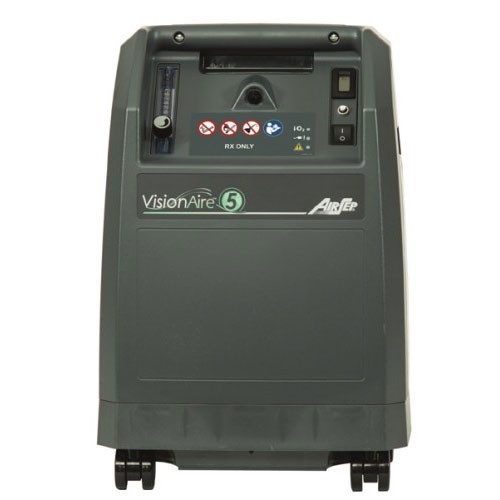
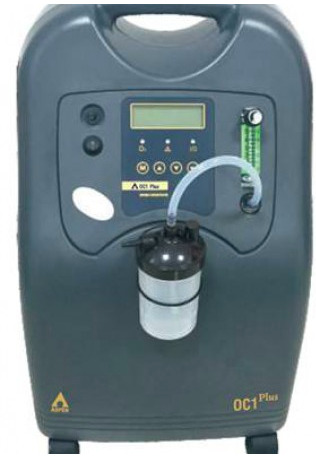
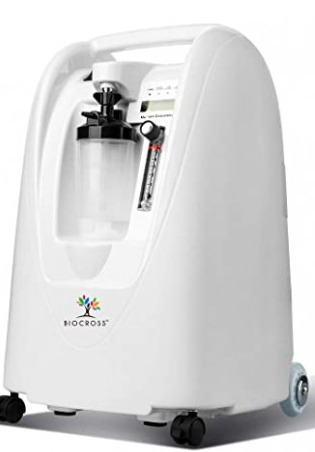
Keyhub 5LPM
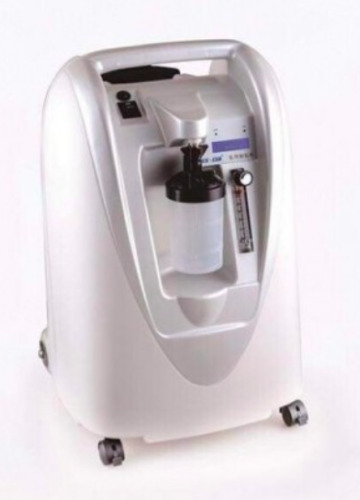
Key features
- Purity 90-95%
- Type Home Stationary
- Continuous Flow 0.5-5LPM
- Weight 16kg
- Oxygen Purity Indicator (OPI) No
- Power consumption 320watts
Specifications
| Purity | 90-95% |
|---|---|
| Type | Home Stationary |
| Continuous Flow | 0.5-5LPM |
| Weight | 16kg |
| Power consumption | 320watts |
| Sound level | 48db |
| Dimensions | 21H x 11.8W x 12Dinch |
| Outlet pressure | 13psi |
| Loss of Power Alarm | Yes |
|---|---|
| No Flow Alarm | Yes |
| Indian Voltage Model | Yes |
| Company Headquarters | China |
| CE Certified | Yes |
Pros and cons
PROS
- Loss-of-power AND no-flow alarms both declared Yes — rare in sub-Yuwell segment
- CE certification declared on spec sheet
- 16 kg chassis is lighter than 18-21 kg peers in the same price band
- 13 psi outlet pressure supports extended tubing and humidifier setups
- 0.5-5 LPM continuous flow range covers paediatric to adult prescriptions
CONS
- No US FDA, no FAA on spec sheet
- No system-malfunction alarm declared
- 48 dB noise is competitive but not quietest-in-class
- 320 W draw is marginally higher than 300 W class leaders
- No declared Indian service network or CDSCO notification in public listing
The Keyhub 5 LPM is an interesting machine in the unbranded Chinese 5 LPM segment because its spec sheet contains two things that most of its price-peer competitors leave blank: a Loss of Power Alarm declared Yes and a No Flow Alarm declared Yes. At ₹42,240 per the manufacturer brochure and e-commerce product listings, the Keyhub positions itself ₹5,000-10,000 above the cheapest Chinese 5 LPM units and ₹3,000-8,000 below the Yuwell 7F territory. For a buyer choosing among unbranded imports, the alarm declarations and the relatively light 16 kg chassis make the Keyhub the strongest pick in its specific price bracket — with honest caveats about the absent system-malfunction alarm and the absent Indian service network.
What the specs actually mean in Indian homes
The Keyhub 5 LPM delivers 90-95% oxygen purity at a continuous flow range of 0.5 to 5 LPM. Standard purity for the PSA architecture, full flow range for all typical adult and paediatric prescriptions.
Weight is 16 kg. This is genuinely competitive — lighter than the Eloxy (19 kg), Equinox (19 kg), Healthgenie (21 kg), Fitmate 5 (18 kg), and Niscomed (25 kg). It matches the Companion 5 LPM (16.3 kg) and the OxyPure 5 LPM (15.2 kg). One-person moves on a flat surface are manageable; stairs are challenging but not impossible. For an Indian home where the machine will be shifted between rooms day-to-day (bedroom at night, living room during the day), the 16 kg chassis is a quality-of-life advantage.
Power consumption of 320 W is good — lower than the 350 W typical for the class but marginally higher than the 300 W leaders (Oxybliss, OxyPure, Oxyflow). At Indian domestic tariff of ₹8-10 per kWh, 320 W continuous is ₹61-77 per day or ₹22,000-28,000 per year at 12 hours/day. Compared to a 390 W Eloxy/Equinox the Keyhub saves roughly ₹5,000 per year. Over a 3-year service life that is ₹15,000 saved — meaningful against the ₹5,000 price premium over cheaper peers.
Noise at 48 dB is competitive. Quieter than the Healthgenie, Fitmate 5, and Niscomed at 55 dB and 50 dB respectively. Not as quiet as the 40 dB claims on Eloxy, Equinox, and Oxybliss. 48 dB is the borderline at which bedroom placement becomes acceptable for most sleepers with the machine 4-6 feet away and a fabric damping mat under it. For light sleepers, still better to place in an adjacent room. For a patient using the machine awake during daytime or evening, 48 dB is a non-issue.
Dimensions of 21 × 11.8 × 12 inches are compact — narrower than many peers at 11.8 inches wide. The unit fits into tight spaces like a corner beside a hospital bed or under a study table with caster wheels.
Outlet pressure of 13 psi is the highest in our 5 LPM comparison set. This is a meaningful advantage for extended tubing runs (25-50 feet), for humidifier setups, and for any downstream device that requires headroom. A Keyhub placed across the room from the patient with 25 feet of 1/4-inch cannula tubing will deliver rated flow where a 5 psi Philips EverFlo might underperform. For Indian apartments where room layout forces concentrator placement away from the bed, this is a genuine usability win.
Compliance: CE certification declared Yes. Loss of Power Alarm declared Yes. No Flow Alarm declared Yes. System Malfunction Alarm blank. US FDA blank. FAA blank. Indian Voltage Model declared Yes. This combination is unusual and worth noting — most unbranded Chinese units that declare one alarm declare either power-loss or malfunction, but not no-flow. The no-flow alarm is specifically valuable for elderly and sleeping patients because it catches cannula dislodgement, the most common silent failure mode in home oxygen therapy. The Keyhub’s no-flow alarm is the single spec that separates it meaningfully from its peers.
Who should buy the Keyhub 5 LPM
The Keyhub 5 LPM suits a buyer who wants more declared safety features than the price-floor units (Healthgenie, Eloxy, Oxybliss) provide, who cannot justify Yuwell 7F pricing (₹45,000-55,000), and who places particular value on the no-flow alarm for a sleeping or unsupervised patient scenario. It fits elderly patients who sleep through the night with oxygen — the no-flow alarm covers cannula dislodgement during sleep — and who have a reliable caregiver within earshot to respond to an alarm. It also fits patients who need extended tubing runs due to room layout, where the 13 psi outlet pressure is a functional advantage. At 16 kg the unit is reasonably portable within a home, suiting scenarios where the machine moves between rooms daily.
Who should not buy the Keyhub 5 LPM
Buyers who need full alarm coverage (power + no-flow + malfunction) should step up to Yuwell 7F or branded alternatives — the Keyhub’s blank malfunction alarm is a genuine gap. Users in tier-2 cities without dealer networks should pick machines with national service footprints. Commercial clinic use requires full regulatory documentation, which the Keyhub does not provide (no declared CDSCO notification in public listing, no Indian regulatory certifications on brochure). Users needing FAA certification for flight use should disregard — this is a stationary unit. Users at high altitude (Leh, Darjeeling, Ooty) should verify operating altitude ceiling with the manufacturer before purchase.
How it compares: Keyhub vs Eloxy vs Oxybliss vs Yuwell 7F
Keyhub vs Eloxy 5 LPM — Eloxy is listed at ₹37,440 (₹4,800 cheaper). Eloxy runs at 40 dB (8 dB quieter), weighs 19 kg (heavier by 3 kg), draws 390 W (higher), has no alarms declared, and has no CE declared. Keyhub has both alarms declared, CE declared, 16 kg weight, and 320 W draw. The ₹4,800 price difference buys meaningful compliance and efficiency upgrades, with only the noise spec going to Eloxy. Over a 3-year service life at 12 hours/day, the Keyhub’s lower power draw saves roughly ₹5,000 — effectively paying back the price premium through electricity alone. Verdict: Keyhub wins for any buyer beyond short-term crisis use.
Keyhub vs Oxybliss 5 LPM — Oxybliss is listed at ₹36,480 (₹5,760 cheaper). Oxybliss is Taiwan-headquartered, runs at 40 dB (quieter), draws 300 W (slightly lower), has no declared alarms and blank CE row. Keyhub has declared alarms, CE, and 13 psi versus Oxybliss’s 8.5 psi outlet pressure. Verdict: Oxybliss wins on noise and raw price for short-term use; Keyhub wins on compliance and alarms for any supervised-sleep or medium-term use.
Keyhub vs Yuwell 7F 5 LPM — Yuwell 7F is typically listed at ₹45,000-55,000 (₹3,000-13,000 more). Yuwell has full alarm coverage (power, malfunction, no-flow), Yuwell’s Chinese national medical device registration, Indian service network in 40+ cities, 14-15 kg weight (2 kg lighter), 43 dB noise (5 dB quieter), 300-350 W power. Across specs Yuwell 7F is a better machine in every dimension except marginally on outlet pressure. For buyers who can stretch to Yuwell 7F pricing, it is the rational pick. Verdict: Yuwell 7F wins for buyers with budget flexibility; Keyhub wins for buyers hard-capped at ₹42,000.
Indian-market considerations
The Keyhub brand has limited Indian retail presence compared to Healthgenie or Yuwell. The machine is typically sold through a handful of distributors in Mumbai, Delhi NCR, and Bengaluru. Before purchase, buyers should confirm dealer tenure (3+ years minimum), spare-parts availability in India (sieve beds, compressor, solenoid valves), and service-window turnaround (target: under 2 weeks for major parts).
Power infrastructure: 320 W is fully compatible with a 1 kVA AVR stabiliser (₹3,000-4,500). A 1 kVA inverter UPS with 30-minute backup at 320 W load is around ₹10,000-15,000 and is recommended for metros with frequent power cuts. Wiring requirements are standard 5-amp outlet compatibility.
CDSCO notification: not declared in the public Keyhub listing (CDSCO). For a ₹42,240 purchase the buyer should demand the notification number. Medical Devices Rules 2020 require Class B notified medical device registration for all oxygen concentrators sold in India.
Warranty is typically 1-year standard through the importing distributor. Given absent national service network, the warranty is effectively only as reliable as the local dealer. Buyers in metros should request dealer’s service history and ask for references from prior customers. Buyers in tier-2 cities should clarify whether the dealer will service the unit in-city or whether the unit will be shipped to a distant service centre for repair.
Service reality: expect 7-14 days for minor service issues (filter replacement, bacteria filter swap) through the importing dealer. Expect 4-8 weeks for major component replacement (compressor, sieve bed) if the parts must ship from China. For a Class B medical device this turnaround is longer than the branded competition.
Verdict
The Keyhub 5 LPM earns its ₹42,240 price against cheaper Chinese imports because its spec sheet declares what the others leave blank. The no-flow alarm in particular is a meaningful safety feature that the Eloxy, Oxybliss, and Healthgenie all omit. The 16 kg chassis and 13 psi outlet pressure are practical advantages for Indian home layouts. Against the Yuwell 7F at ₹45,000-55,000 the Keyhub loses — Yuwell brings full alarm coverage, a national service network, and slightly better noise and weight, at only ₹3,000-13,000 more money. For a buyer hard-capped at ₹42,000 and wanting more than the absolute minimum, the Keyhub is the rational choice. For a buyer who can stretch to Yuwell, stretch. Score: 6.0 out of 10.