GVS Oxypure 5 LPM vs Philips Everflo 5 Liter Oxygen Concentrator
GVS Oxypure 5 LPM
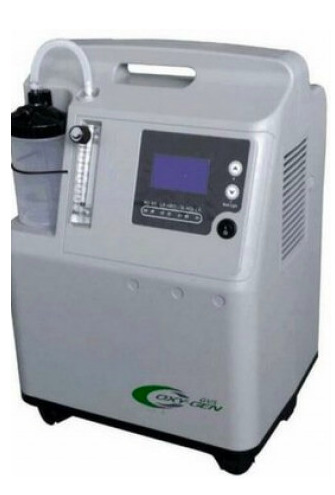
- Brand
- GVS
- Category
- 5 LPM
₹33,599.04₹34,560
Indicative pricing based on market intelligence. Varies by dealer, city, bundle, and period — confirm with a local authorised seller before buying.
HHZ SCORE 6.4/10
Philips Everflo 5 Liter Oxygen Concentrator
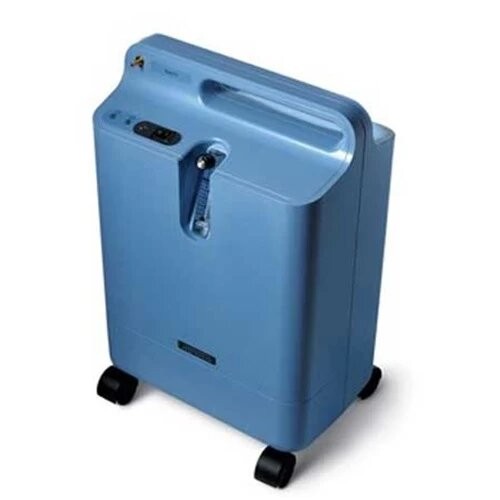
- Brand
- Philips Respironics
- Category
- 5 LPM
Discontinued
Indicative pricing based on market intelligence. Varies by dealer, city, bundle, and period — confirm with a local authorised seller before buying.
HHZ SCORE 8.2/10
Specifications compared
| Specification | GVS Oxypure 5 LPM | Philips Everflo 5 Liter Oxygen Concentrator |
|---|---|---|
| Overview | ||
| Brand | GVS | Philips Respironics |
| Category | 5 LPM | 5 LPM |
| Price | ₹33,599.04 | — |
| MRP | 34,560.00 | — |
| Stock | Out of stock | DISCONTINUED WORLDWIDE |
| Key features | ||
| Purity | 90-95% | 90-96% |
| Type | Home Stationary | Home Stationary |
| Continuous Flow | 0.5-5LPM | 1-5LPM |
| Weight | 16kg | 14kg |
| Oxygen Purity Indicator (OPI) | No | Yes |
| Power consumption | 300watts | 350watts |
| Technical details | ||
| Purity | 90-95% | 90-96% |
| Type | Home Stationary | Home Stationary |
| Continuous Flow | 0.5-5LPM | 1-5LPM |
| Weight | 16kg | 14kg |
| Oxygen Purity Indicator (OPI) | — | Yes |
| Power consumption | 300watts | 350watts |
| Sound level | 43db | 45db |
| Dimensions | 20H x 13.7W x 11Dinch | 23H x 15W x 9.5Dinch |
| Operating altitude | 7500feet | 7500feet |
| Outlet pressure | 10psi | 5.5psi |
| Additional details | ||
| Loss of Power Alarm | — | Yes |
| System Malfunction Alarm | — | Yes |
| No Flow Alarm | — | Yes |
| Indian Voltage Model | Yes | Yes |
| Company Headquarters | China | USA |
| US FDA Approved | — | Yes |
| CE Certified | Yes | Yes |
Analysis
Editor’s note — Everflo discontinued. Philips has discontinued the Everflo worldwide; it is no longer in production and remaining units are end-of-line stock. For an in-production 5 LPM alternative available in India, consider the Home Medix HM-KV (up to 5 L/min, 93% ±3%, ≤40 dB, 3-year warranty). The comparison below is retained for reference.
The matchup
The GVS Oxypure 5 LPM and the Philips Everflo 5 LPM compete in the sub-₹45,000 5 LPM stationary segment for Indian buyers who want a mainstream machine but are price-sensitive. The GVS Oxypure is a China-origin, CE-certified unit at ₹33,599 indicative retail with published 300 W power draw (50 W below the Everflo), a compact 20H x 13.7W x 11D inch footprint, 43 dB sound, and 7,500 ft altitude envelope — specs that make it a reasonable-looking alternative to the Everflo on paper. The Philips Everflo at ₹43,699 (since discontinued) indicative retail brings FDA approval, a deeper service network, a full alarm suite, and a published OPI. The price gap is ₹10,100. The GVS is published Out of Stock at the time of this review. Our verdict: the Everflo wins on the clinical and service dimensions that matter most for long-horizon Indian use; the GVS Oxypure is a defensible pick for short-duration, price-bound buyers in metros with viable GVS channel support.
At-a-glance spec differences
- Price (indicative retail): GVS Oxypure ₹33,599 vs Everflo ₹43,699 (since discontinued) — a ₹10,100 gap favouring the GVS
- Power draw (published): GVS 300 W vs Everflo 350 W — GVS is 14% more efficient at nameplate
- Sound (published): GVS 43 dB vs Everflo 45 dB — GVS is 2 dB quieter on paper
- Weight (published): GVS 16 kg vs Everflo 14 kg — Everflo is 2 kg lighter
- OPI: Everflo “Yes”; GVS “No”
- Certifications: Everflo US FDA approved and CE certified; GVS CE certified only
- Alarm suite: Everflo publishes loss-of-power, system-malfunction, and no-flow alarms all “Yes”; GVS publishes none of these as “Yes” in its additional-details table
- Altitude envelope (published): Both 7,500 ft — identical
- Dimensions (published): GVS 20H x 13.7W x 11D inches (compact); Everflo 23H x 15W x 9.5D inches — GVS is modestly more compact
- Stock status: Everflo In Stock; GVS Out of Stock at time of review
Where the GVS Oxypure 5 LPM wins
Price is the single biggest advantage. At ₹33,599 indicative retail vs ₹43,699 (since discontinued) on the Everflo, the GVS saves ₹10,100 upfront — roughly 23% cheaper. For self-funded Indian buyers without DME insurance, this is a real saving that buys backup cylinders, a year of filter replacements, a pulse oximeter, and spare cannulas. For short-duration use (post-surgical recovery, seasonal COPD exacerbation) where the machine will be used for weeks to a few months, this upfront saving is directly the value proposition.
Power draw is 50 W lower at nameplate. 300 W vs 350 W is a 14% efficiency advantage at full flow. On a 24x7 commercial-tariff prescription at ₹9/kWh, the gap is roughly ₹325/month, or ₹11,700 over three years — which fully covers the upfront price gap and turns the GVS into a net-cheaper machine over a three-year horizon. For commercial-tariff and 24x7 use cases, this is a real financial advantage.
Sound is 2 dB quieter. 43 dB vs 45 dB is a modest but real sound advantage. Both sit below the 50 dB bedroom-disruption threshold, but the GVS is nominally the quieter unit.
Compact footprint. 20H x 13.7W x 11D inches is a meaningfully smaller footprint than the Everflo’s 23H x 15W x 9.5D inches. For Indian homes with constrained bedroom space, a compact machine is easier to place without blocking walkways or doorways.
Real-time outlet pressure display. The GVS publishes a screen that displays real-time outlet pressure — a useful monitoring feature the Everflo does not match. For caregivers who want visible confirmation of delivered pressure, this is a real GVS benefit.
Where the Philips Everflo 5 LPM wins
FDA and CE certifications. The Everflo is US FDA approved and CE certified; the GVS is CE only. For buyers where FDA is a physician-specified or institutional requirement, the Everflo is the required choice. This closes the question for a meaningful subset of Indian prescriptions where the prescribing physician is channeling toward FDA-approved equipment.
Service network is the Everflo’s defining Indian advantage. Philips Respironics India has the deepest authorised service footprint of any respiratory-equipment brand — 100+ cities, same-day metro dispatch, reliable parts chain. GVS’s Indian distribution is narrower and concentrated in tier-1 metros; the product description itself flags “poor network dealer” as a documented con. For buyers outside Mumbai, Delhi-NCR, Bangalore, Chennai, Pune, the Everflo’s service chain is substantially more reliable.
Full alarm suite on the Everflo. The Everflo publishes loss-of-power, system-malfunction, and no-flow alarms all as “Yes.” The GVS publishes all four categories as blank in its additional-details table — no published alarm coverage beyond what may be implicit in the hardware. For unattended overnight operation, the Everflo catches failure modes the GVS documentation does not commit to.
OPI is published on the Everflo. Oxygen Purity Indicator “Yes” on the Everflo; “No” on the GVS. Without alarming OPI, a GVS user has no audible signal if sieve-bed purity drifts below prescribed thresholds. This is a long-horizon clinical risk specifically for year-2 and year-3 use when sieve-bed aging becomes relevant.
Weight at 14 kg vs 16 kg. A 2 kg gap — 12.5% lighter on the Everflo. For single-caregiver households, the Everflo is the more ergonomic daily-handling machine.
Brand depth. Philips Respironics has been in the Indian respiratory-equipment market for over a decade, with established hospital fleet presence, home rental subscriptions, and clinical-education channels. GVS is a newer entrant — the product description itself notes “became popular only in the recent past- durability cannot be claimed.” For buyers who value long-term brand track record, Philips wins cleanly.
Stock and channel reliability. The Everflo is consistently In Stock; GVS Oxypure is published Out of Stock, which signals thin inventory and possibly uncertain channel replenishment. Buying a machine whose stock is marginal is a risk on parts and warranty.
Indian-market context
Both machines are Indian Voltage Models on 230 V / 50 Hz. Both publish 7,500 ft altitude envelopes. Neither is FAA approved. Both are stationary home units.
On service: the Everflo runs through Philips Respironics India’s dealer and service network with 100+ city coverage. The GVS runs through a narrower distribution channel with the product’s own published cons flagging “poor network dealer” — this is an unusually direct admission from within the product description itself. For a 3-year home oxygen prescription, this difference is material. A failed GVS compressor in Indore or Ranchi is a substantially harder service problem than a failed Everflo compressor in the same city.
On pricing mechanics: the Everflo lists at ₹63,228 MRP and discounts to ₹43,699 (since discontinued) online — 31% consistent discount. Dealer-channel pricing runs at online parity. The GVS lists at ₹34,560 MRP and discounts to ₹33,599 indicative — a very shallow 3% discount that suggests MRP is close to realistic retail. Dealer pricing can vary more. The GVS Out of Stock status at the time of review is a real concern for buyers who need the machine immediately.
Hospital rental fleets in Indian metros carry the Everflo extensively; the GVS Oxypure is largely absent from rental markets — reflecting implicit commercial judgment on its durability and serviceability.
On certifications: the GVS is CE certified, which for Indian buyers is a partial quality signal but does not clear the FDA bar where that specifically matters. The Everflo’s FDA-plus-CE dual certification is the stronger institutional posture.
GST at 12% on Class B medical devices is included in listed prices. Both carry 3-year manufacturer warranties in theory; Everflo fulfilment through Philips India is established, GVS fulfilment is less tested at scale.
Verdict
Our recommendation is the Philips Everflo 5 LPM for any long-horizon Indian home oxygen prescription. The ₹10,100 upfront saving on the GVS is offset by the electricity gap over three years (roughly ₹11,700 at commercial tariff), the FDA approval advantage, the service-network depth, the full alarm suite, the published OPI, and the 2 kg weight advantage. On a total-cost-of-ownership three-year basis, the Everflo is either equivalent or cheaper than the GVS, with materially lower service risk.
Buy the GVS Oxypure 5 LPM instead in specific circumstances. First, when the use case is short-duration (weeks to three months post-surgical recovery) where the ₹10,100 upfront saving is directly captured and the three-year running-cost gap doesn’t materialise. Second, when the buyer is in a tier-1 metro (Mumbai, Delhi-NCR, Bangalore, Chennai, Pune) with viable GVS channel support, and FDA approval is not a binding constraint. Third, when compact footprint is a real placement requirement — the GVS is 3 inches shorter and 1.3 inches narrower than the Everflo, which matters for small Indian bedrooms.
For the ambiguous case — adult prescription, 2–4 LPM, long-horizon expected use, tier-2 city — the Everflo wins cleanly on service network and certification. The GVS is a budget-and-short-duration pick; the Everflo is the default long-horizon pick. B gets the recommendation, with the GVS reserved for specific cost-and-duration-bound cases.