GVS Oxypure 5 LPM vs Home Medix HM-KV 5 LPM
GVS Oxypure 5 LPM
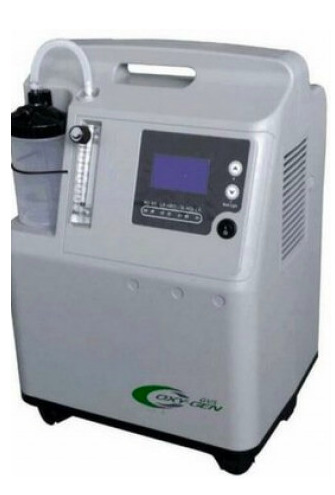
- Brand
- GVS
- Category
- 5 LPM
₹33,599.04₹34,560
Indicative pricing based on market intelligence. Varies by dealer, city, bundle, and period — confirm with a local authorised seller before buying.
HHZ SCORE 6.4/10
EDITORIAL PICK
Home Medix HM-KV 5 LPM
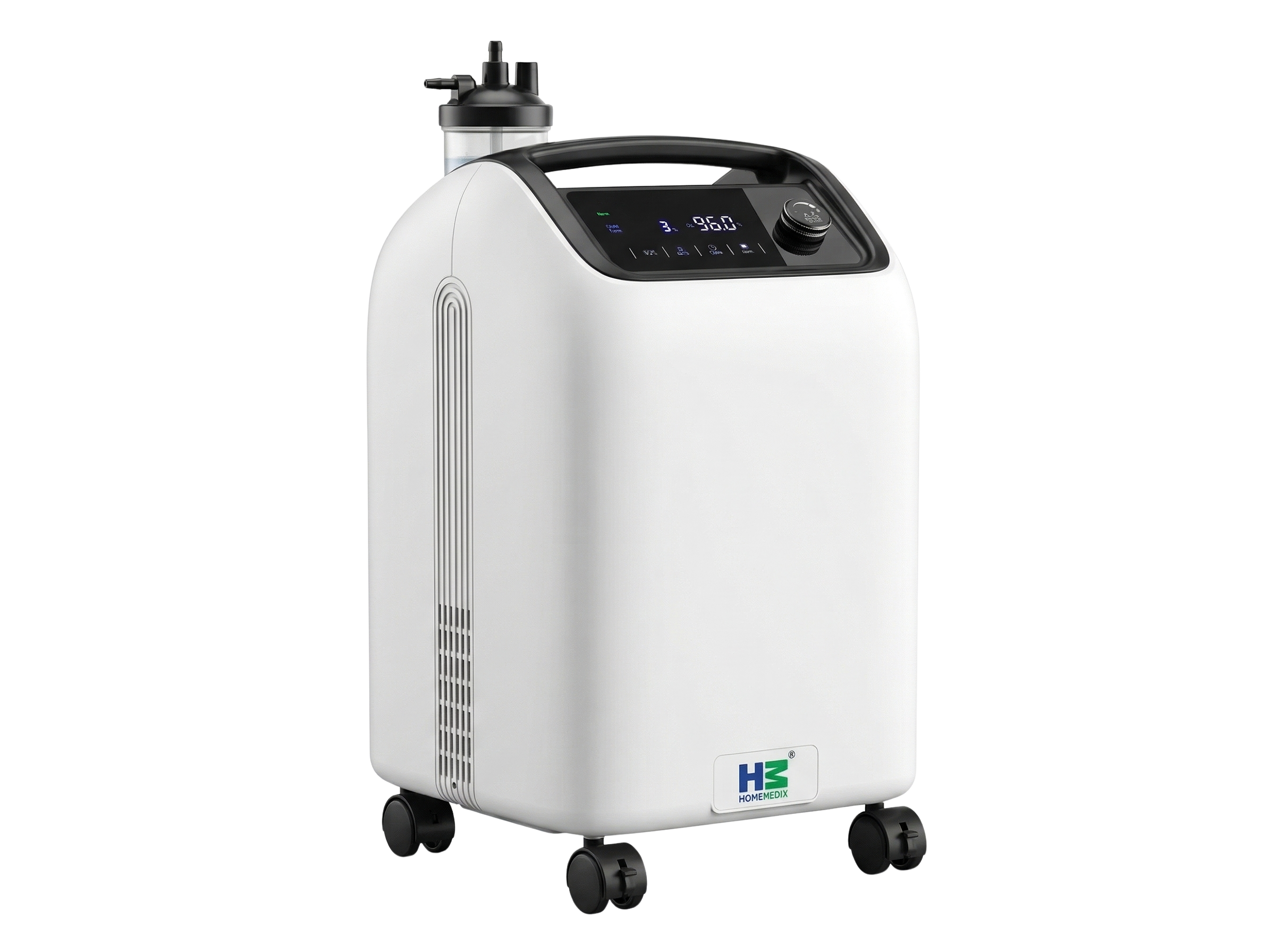
- Brand
- Home Medix
- Category
- 5 LPM
₹37,800₹54,000
Indicative pricing based on market intelligence. Varies by dealer, city, bundle, and period — confirm with a local authorised seller before buying.
HHZ SCORE 7.7/10
Specifications compared
| Specification | GVS Oxypure 5 LPM | Home Medix HM-KV 5 LPM |
|---|---|---|
| Overview | ||
| Brand | GVS | Home Medix |
| Category | 5 LPM | 5 LPM |
| Price | ₹33,599.04 | ₹37,800 |
| MRP | 34,560.00 | 54,000 |
| Stock | Out of stock | In Stock |
| Key features | ||
| Purity | 90-95% | 93% ± 3% |
| Type | Home Stationary | Home Stationary |
| Continuous Flow | 0.5-5LPM | 0.5–5 L/min |
| Weight | 16kg | 13 kg (lightest in the 5 LPM class) |
| Oxygen Purity Indicator (OPI) | No | Yes |
| Power consumption | 300watts | 320 VA |
| Technical details | ||
| Purity | 90-95% | 93% ± 3% |
| Type | Home Stationary | Home Stationary |
| Continuous Flow | 0.5-5LPM | 0.5–5 L/min |
| Weight | 16kg | 13 kg (lightest in the 5 LPM class) |
| Oxygen Purity Indicator (OPI) | — | Yes |
| Power consumption | 300watts | 320 VA |
| Sound level | 43db | ≤ 40 dB (field-verified) |
| Dimensions | 20H x 13.7W x 11Dinch | Compact floor-standing form factor |
| Operating altitude | 7500feet | — |
| Outlet pressure | 10psi | 0.04–0.06 MPa |
| Additional details | ||
| Oxygen Purity % Analyzer | — | Yes |
| Loss of Power Alarm | — | Yes |
| System Malfunction Alarm | — | Yes (High Temperature) |
| No Flow Alarm | — | Yes (Low/No Flow) |
| Indian Voltage Model | Yes | Yes |
| Company Headquarters | China | India |
| CE Certified | Yes | — |
| Home Medix differentiators | ||
| Integrated Nebulization | — | Yes |
| Precise Electronic Flowmeter | — | Yes |
| One-Touch SOS Alert | — | Yes — high-volume audible alarm button for summoning a nearby attendant (local siren; no mobile app or telecom channel) |
| Hour Counter | — | User-visible running-hour display |
| Working Voltage | — | AC 230V / 50Hz, ±10% tolerance (207–253 V) |
| Industrial-Grade Compressor | — | Yes |
| ISO 9001 | — | Yes |
| ISO 13485 | — | Yes |
| CDSCO | — | Approved |
| Warranty | — | 3 years or 10,000 hours of operation, whichever comes first |
Analysis
A CE badge vs an Indian-spec bedside
The GVS Oxypure 5 LPM and the Home Medix HM-KV 5 LPM target adjacent slices of the Indian mid-tier 5 LPM segment. Both are pitched at home LTOT, both ship Indian-voltage, both publish 5 L/min continuous flow at medical-grade purity. The Oxypure is the cheaper unit by ~₹4,200 and carries a CE-certification badge the HM-KV does not. The HM-KV is the spec leader on weight, sound floor, alarms, voltage tolerance, and warranty length.
The differentiating axis the buyer should weigh most — and the one this writeup leans on — is service-network depth. GVS is a growing entrant in the Indian respiratory-equipment channel; the brand’s dealer footprint is still building out, and the published spec lists GVS’s Company Headquarters as China (despite the GVS group’s European origin and Italian brand heritage). For a buyer in a Tier-1 metro, both brands have reachable service; for a buyer in a Tier-2 / Tier-3 city, the service-depth gap is the question that matters most.
This comparison is closer than some of the value-tier contests but still resolves in the HM-KV’s favour for the median retail buyer.
At-a-glance differences
- Price: GVS ₹33,599.04 (listed MRP ₹34,560) vs HM-KV ₹37,800 (listed MRP ₹54,000) — GVS is ₹4,201 cheaper (~13% less)
- Weight: HM-KV 13 kg vs GVS 16 kg — HM-KV is 3 kg lighter (~19% less)
- Sound: HM-KV ≤ 40 dB field-verified vs GVS 43 dB published — HM-KV is ~3 dB quieter at the published floor
- Oxygen flow: Both 0.5–5 L/min continuous (rare parity at this tier)
- Oxygen concentration: GVS 90–95%; HM-KV 93% ± 3% (same practical band)
- Outlet pressure: GVS 10 psi (higher); HM-KV 0.04–0.06 MPa (~5.8–8.7 psi)
- Power draw: GVS 300 W vs HM-KV 320 VA — practical parity
- Operating altitude (published): GVS 7,500 ft (~2,290 m — covers Shimla, Manali, Mussoorie, Ooty); HM-KV — not published
- Oxygen Purity Indicator (OPI): HM-KV — yes, with live percent readout; GVS — no OPI documented in the published spec
- Alarms: HM-KV — Loss of Power, System Malfunction (High Temperature), Low/No Flow. GVS — alarm bundle not documented in the published spec table
- AC voltage tolerance: HM-KV — documented AC 230V / 50Hz ±10% (207–253 V); GVS — not published
- Warranty: HM-KV 3 years or 10,000 hours; GVS — not published in the indicative spec
- Company HQ: GVS — listed as China in the published spec (despite the GVS group’s Italian / European brand origin); HM-KV — India
- Regulatory: GVS — CE Certified, Indian-voltage. HM-KV — CDSCO approved, ISO 9001, ISO 13485, Indian-voltage. Neither US FDA, neither FAA on record
- Stock: GVS — Out of Stock at the time of review; HM-KV — In Stock
Where the GVS Oxypure wins
₹4,201 cheaper at retail. At ~13% below the HM-KV, the Oxypure is the cheaper unit in this pair. The price advantage is smaller than the Dr Diaz delta and larger than no-difference; for a budget-anchored buyer, ₹4,201 covers a year of stabiliser-and-spare-cannula running costs.
Genuine CE certification. The Oxypure carries a documented CE certificate. The HM-KV does not. CE certification matters for specific institutional procurement tracks — export-facing tenders, hospital supply chains with a CE prerequisite, multi-country NGO deployments. For these buyers, the CE badge is a procurement-compliance gate the HM-KV cannot clear. For a retail home buyer, CE adds no clinical capability beyond what CDSCO already requires — both gates have been cleared — but it is genuinely useful as a compliance artefact for the institutional channel.
Italian / European brand origin in the badge. The GVS group is an established Italian filtration and respiratory-equipment manufacturer with European roots. For buyers who weight European-brand origin as a quality signal — particularly export-shop buyers and brand-conscious metro buyers — the GVS badge carries that signal. The published India-channel spec lists China as the manufacturing HQ (which is consistent with the group’s Asian manufacturing footprint for the Indian-distribution variant of the SKU), but the brand badge remains GVS / Italian-origin.
Published 7,500 ft (~2,290 m) operating altitude. The Oxypure publishes an altitude ceiling that covers the main Indian hill stations — Shimla (~2,200 m), Manali (~2,050 m), Mussoorie (~2,000 m), Darjeeling (~2,000 m), Ooty (~2,200 m). It does not cover Leh (~3,500 m). The HM-KV does not publish an altitude figure at all. For a hill-station installation up to ~2,200 m, the GVS’s published headroom is a real argument.
10 psi outlet pressure. The Oxypure’s 10 psi outlet is on the higher end of the 5 LPM class, useful for long cannula runs and humidifier-plus-nebulizer combined setups. The HM-KV’s 0.04–0.06 MPa is adequate but tighter.
Compact form factor and screen-displayed outlet pressure. The product description calls out a real-time outlet pressure readout on the front screen, a compact chassis, and “power efficient” operation. These align with the published 300 W draw and the 20H x 13.7W x 11D inch dimensions — slightly smaller footprint than the typical 5 LPM. For a small-room installation where every inch counts, the compactness is a usability win.
Where the Home Medix HM-KV wins
3 kg lighter — 13 kg vs 16 kg. Same handling story as the Dr Diaz comparison: the HM-KV’s 13 kg is the published lightest in the Indian 5 LPM class, and the 3 kg gap is real for daily room-to-room relocation. Both fit in a small sedan boot.
~3 dB quieter at the published floor — ≤ 40 dB field-verified vs 43 dB. This is the closest sound contest of the HM-KV head-to-heads in this batch. A 3 dB gap is at the threshold of human perception in a typical bedroom but still audible. More importantly, the HM-KV’s spec carries the “field-verified” qualifier — an honest framing the GVS’s data sheet does not include. Both units are quieter than the Niscomed and BPL Dual at 50–55 dB, and both are usable for overnight bedside operation; the HM-KV is the marginally quieter choice at the published floor.
In-built oxygen purity analyzer with live readout. The HM-KV documents an OPI feeding a live percent readout. The GVS spec table does not document an OPI — and the product description explicitly calls this out as a negative (“Does not have oxygen purity analyzer”). For home LTOT, the live readout is the meaningful audit channel; its absence on the Oxypure is a material gap.
Full alarm coverage documented. The HM-KV’s alarm bundle includes Loss of Power, System Malfunction (High Temperature), and Low/No Flow. The GVS spec table does not document any of these three alarms explicitly in the published Additional Details section. This may reflect spec-sheet incompleteness rather than alarm absence — confirm with the dealer at point of purchase — but the published spec gap matters for the buyer doing comparison shopping.
Documented AC 230V / 50Hz ±10% tolerance (207–253 V). The HM-KV publishes an explicit voltage tolerance band; the Oxypure spec does not publish an equivalent envelope. In Indian mains conditions this is a real spec-sheet completeness gap.
3-year / 10,000-hour warranty with user-visible hour counter. The HM-KV publishes a clear warranty term and exposes a running-hour display. The Oxypure indicative spec does not call out an equivalent warranty length in the data sheet — typical Indian-channel GVS warranties run 1–2 years through the standard retail channel.
ISO 9001 + ISO 13485 documentation. The HM-KV publishes both ISO certifications on its data sheet. The Oxypure’s published spec lists CE certification but not equivalent ISO certifications. Different paperwork bundles for different procurement contexts.
Indian-HQ service handling. The HM-KV is an Indian-HQ brand — warranty claims and service replacements are coordinated within the Indian dealer-service network directly. The Oxypure’s published spec lists China as the manufacturing HQ, and the brand’s India distribution is comparatively newer; major-service events can route through the importer for non-stocked parts.
The service-network argument, examined directly
Service-network depth is the decisive axis for this comparison, and it deserves a section of its own. Both brands are growing in the Indian channel; neither has the dealer footprint of a BPL or a long-tenured Oxymed / Nareena. But the gap between them is meaningful.
Home Medix service footprint. Concentrated in South and West India — Tamil Nadu, Karnataka, Maharashtra, Gujarat, with thinner coverage in the North, North-East, and the hill belt. For buyers in those primary regions, authorised-service response is reasonable. The Indian-HQ parent owns warranty escalations directly.
GVS service footprint. Newer in India. The product description itself notes “Poor network dealer” as a negative the brand has not yet solved at scale. GVS / Oxypure dealer presence is concentrated in metros and select Tier-1 cities, with thinner Tier-2 / Tier-3 coverage than even the Home Medix footprint, and a smaller service-engineer pool. The “Italian brand growing in India” framing is accurate — and the service-depth gap is the operational consequence of that growth phase.
What this means at the warranty-claim window. For a Tier-2 / Tier-3 buyer, the realistic question is: when the compressor fails at month 18, how many weeks before a service engineer is at the installation? For an established Indian-HQ brand with a regional service depot, that is typically 5–10 working days. For a brand still building out its dealer network, it can extend to 3–4 weeks or longer if the unit needs to ship to the importer for evaluation. The HM-KV’s Indian-HQ parent and broader (though imperfect) Indian dealer base reduces this risk relative to the Oxypure’s still-building network. This is the single most important practical axis for the median Indian buyer — more important than the ₹4,201 sticker delta or the CE badge.
The exception. For Tier-1 metro buyers (Mumbai, Delhi, Bangalore, Hyderabad, Chennai, Pune, Kolkata) where both brands have reachable service, the service-depth gap narrows and the comparison comes back to spec-sheet axes. For institutional buyers with their own biomed-engineering staff who handle compressor swaps in-house, dealer-service-depth matters less and CE-paperwork-availability matters more.
Indian-market considerations
Stock and availability. The Oxypure is shown as Out of Stock at the time of review; the HM-KV is In Stock. This may resolve quickly — verify at point of purchase — but a quoted-but-not-available unit is not a unit you can deploy this month.
Stabiliser sizing. Both units want similar stabilisers — 500 VA minimum, 750 VA for unstable Tier-2 / Tier-3 mains. Budget ₹3,500–5,500 for a credible servo stabiliser. Without one, neither unit’s spec covers Indian rural mains swings.
Altitude. The Oxypure’s 7,500 ft (~2,290 m) published ceiling covers the main Indian hill stations except Leh. The HM-KV does not publish an altitude figure; for any installation above 2,000 m, verify delivered purity in-use with a handheld analyzer regardless of which unit is chosen.
GST and reimbursement. 12% GST applies to both. CGHS / ECHS / ESIC reimbursement requires GST-compliant invoicing from an authorised dealer. The Oxypure’s CE certification may ease reimbursement through certain private-insurance pathways that prefer CE-marked devices, but CDSCO is the mandatory Indian gate and both units clear it.
Power-cost arithmetic. GVS at 300 W and HM-KV at 320 VA are within rounding of each other on running cost — ~₹1,150/month vs ~₹1,229/month at ₹8/kWh and 16 hours/day. Not a meaningful axis between these two units.
Who should pick which
Pick the GVS Oxypure 5 LPM if: you need CE certification specifically for institutional tender compliance or a hospital supply chain that requires it; or you are a Tier-1 metro buyer where GVS service is reachable and the ₹4,201 saving is material; or your installation is at hill-station altitude up to ~2,200 m and the published 7,500 ft ceiling matters; or you weight European-brand badge origin as a quality signal and accept the service-network growth-phase reality.
Pick the Home Medix HM-KV 5 LPM if: you are a Tier-2 / Tier-3 buyer where the service-network depth gap shifts the decision materially in favour of the established Indian-HQ brand; or you want the in-built OPI, full no-flow alarm coverage, documented voltage tolerance, and 3-year / 10,000-hour warranty in the published spec; or you value the 13 kg single-person-carry chassis for daily room-to-room relocation; or you are a retail home buyer for whom CE certification is not a procurement requirement and the spec-sheet depth matters more than the badge.
Verdict
This is closer than the Niscomed contest but still a clear call for the HM-KV in the median retail case. The Oxypure has two real arguments: CE certification (for institutional buyers) and a ₹4,201 sticker advantage (for budget-anchored buyers). The HM-KV has spec-sheet depth across weight, sound, OPI, alarms, voltage tolerance, and warranty length — and an Indian-HQ service handling story that is materially more developed than GVS’s still-building India dealer network.
For the institutional buyer with a CE prerequisite, the Oxypure is the correct answer regardless of the other axes. For the Tier-1 metro retail buyer who weights the European-brand badge and accepts the service-depth gap, the Oxypure is defensible. For the median Indian home LTOT buyer — Tier-2 / Tier-3 city, single patient, overnight bedside use, expects to call dealer service at some point in the next three years — the HM-KV is the safer mid-tier pick.
Consult your treating pulmonologist before finalising the prescription flow rate — 5 LPM buys clinical headroom, and titration is what matters at the bedside.