Dynmed 5LPM vs Philips Everflo 5 Liter Oxygen Concentrator
Dynmed 5LPM
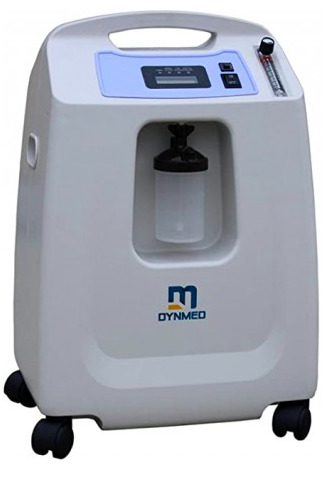
- Brand
- Dynmed
- Category
- 5 LPM
₹39,360
Indicative pricing based on market intelligence. Varies by dealer, city, bundle, and period — confirm with a local authorised seller before buying.
HHZ SCORE 5.7/10
Philips Everflo 5 Liter Oxygen Concentrator
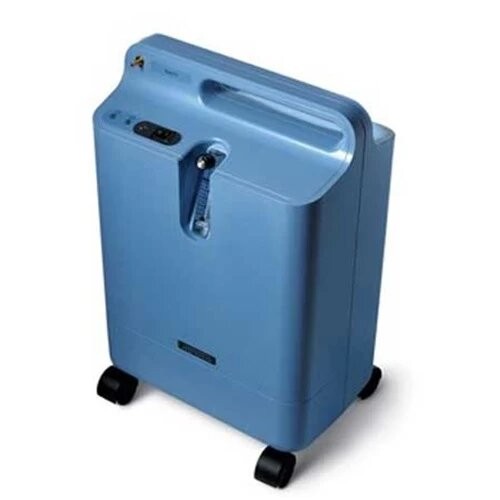
- Brand
- Philips Respironics
- Category
- 5 LPM
Discontinued
Indicative pricing based on market intelligence. Varies by dealer, city, bundle, and period — confirm with a local authorised seller before buying.
HHZ SCORE 8.2/10
Specifications compared
| Specification | Dynmed 5LPM | Philips Everflo 5 Liter Oxygen Concentrator |
|---|---|---|
| Overview | ||
| Brand | Dynmed | Philips Respironics |
| Category | 5 LPM | 5 LPM |
| Price | ₹39,360.00 | — |
| Stock | Out of stock | DISCONTINUED WORLDWIDE |
| Key features | ||
| Type | Home Stationary | Home Stationary |
| Continuous Flow | 0.5-5LPM | 1-5LPM |
| Price | 60999 | — |
| Weight | 15.9kg | 14kg |
| Oxygen Purity Indicator (OPI) | No | Yes |
| Power consumption | 320watts | 350watts |
| Purity | — | 90-96% |
| Technical details | ||
| Type | Home Stationary | Home Stationary |
| Continuous Flow | 0.5-5LPM | 1-5LPM |
| Price | 60999 | — |
| Weight | 15.9kg | 14kg |
| Oxygen Purity Indicator (OPI) | — | Yes |
| Power consumption | 320watts | 350watts |
| Sound level | 45db | 45db |
| Dimensions | 24.4H x 16.9W x 12.5Dinch | 23H x 15W x 9.5Dinch |
| Operating altitude | 7500feet | 7500feet |
| Outlet pressure | 8.4psi | 5.5psi |
| Purity | — | 90-96% |
| Additional details | ||
| Loss of Power Alarm | — | Yes |
| System Malfunction Alarm | — | Yes |
| No Flow Alarm | — | Yes |
| Modes | 1 | — |
| Company Headquarters | China | USA |
| US FDA Approved | — | Yes |
| CE Certified | — | Yes |
| Indian Voltage Model | — | Yes |
Analysis
Editor’s note — Everflo discontinued. Philips has discontinued the Everflo worldwide; it is no longer in production and remaining units are end-of-line stock. For an in-production 5 LPM alternative available in India, consider the Home Medix HM-KV (up to 5 L/min, 93% ±3%, ≤40 dB, 3-year warranty). The comparison below is retained for reference.
The Dynmed 5LPM and the Philips Respironics Everflo sit in different tiers of the Indian 5 LPM segment despite being priced relatively close. The Everflo at ₹43,699 (since discontinued) is the long-standing category reference in India; the Dynmed at ₹39,360 is an imported Chinese-origin alternative targeting the price-sensitive buyer. The ₹4,339 price gap (about 10% saving on the Dynmed) is modest, and the question for the buyer is whether the Dynmed’s spec-sheet trade-offs are justified by that relatively small upfront saving. Our honest reading: they are not. The Dynmed’s spec sheet shows significant gaps on monitoring, alarms, and certifications that the Everflo covers comfortably, and the Everflo’s service-network depth is in a different league. For clinical home oxygen use, the Everflo is the correct buy.
At-a-glance
Weight is 14 kg on the Everflo versus 15.9 kg on the Dynmed — a 1.9 kg Everflo advantage. Flow range is 1–5 LPM on the Everflo and 0.5–5 LPM on the Dynmed — a marginal Dynmed edge for paediatric or low-flow use. Purity is 90–96% on the Everflo; the Dynmed spec sheet does not list a purity figure, which is itself a significant omission. Noise is 45 dB on both — a wash. Power consumption is 350 W on the Everflo versus 320 W on the Dynmed — a marginal 30 W Dynmed advantage, translating to roughly ₹250–400 per year of electricity savings at typical Indian tariffs.
Monitoring and certification is where the gap becomes stark. The Everflo has “Yes” on OPI and “Yes” on all three alarms (loss of power, system malfunction, no flow). The Dynmed has empty OPI, empty purity analyzer, and empty rows on all three alarms (loss of power, system malfunction, no flow) — that is zero flagged monitoring or alarm features on the Dynmed. FDA approval is “Yes” on the Everflo and empty on the Dynmed. CE certification is “Yes” on the Everflo and empty on the Dynmed. Operating altitude is 7,500 ft on both. Company HQ is USA for Everflo and China for Dynmed. Stock is In Stock for the Everflo and Out of Stock for the Dynmed. Warranty is a published 3 years on the Everflo; not specified on the Dynmed.
Where the Everflo wins
The monitoring gap is the disqualifying issue for the Dynmed in clinical use. Everflo ships with OPI — the purity indicator that alarms if sieve-bed purity falls below roughly 82%. Dynmed does not have OPI. For any machine that will run continuously for years, silent sieve-bed degradation is a real failure mode, and only a machine with OPI alerts the caregiver to it. The Dynmed does not.
Alarm coverage is the second major gap. The Everflo alarms on all three failure modes — loss of power, system malfunction, and no flow. The Dynmed’s spec sheet shows empty rows on all three. A compressor fault at 3am on the Dynmed generates no alert. A kinked tube generates no alert. A power loss with failed battery backup generates no alert. The Dynmed is essentially an unmonitored machine. For residential medical equipment running 10+ hours per day, this is a serious safety shortfall.
Certifications compound this. US FDA approval on the Everflo signals manufacturer-level design-validation testing; CE certification signals EU compliance. Both are on the Everflo per manufacturer brochures. Neither is on the Dynmed. For a ₹39,000+ residential medical device, documented compliance to international standards is a reasonable buyer expectation, and the Dynmed does not clear it.
Purity specification is a structural omission on the Dynmed. The Everflo’s 90–96% purity is published; the Dynmed spec sheet leaves the purity field blank. That is unusual for a 5 LPM PSA concentrator and makes it difficult for a clinician or a pharmacy-rental supplier to verify that the machine is meeting prescribed purity targets. A machine that does not publish its purity rating is not one we can responsibly recommend for clinical home oxygen.
Weight is a small but real Everflo advantage: 14 kg versus 15.9 kg, 12% lighter. For single-caregiver room moves, the Everflo is more practical.
The Everflo’s 3-year published warranty versus the Dynmed’s unspecified length is a significant financial advantage over a multi-year ownership horizon. One out-of-warranty compressor event on the Dynmed (₹12,000–18,000) more than erases the ₹4,339 upfront saving.
Service network is the structural Everflo advantage. Philips Respironics has operated in India for over a decade with factory-aligned service centres in every metro and most tier-2 cities, broad parts inventory, and factory-trained technicians. The Dynmed’s Indian service footprint is thin — distributed through third-party channels with unpredictable service access. For year-2 and year-3 service events on a machine running 10+ hours per day, the Everflo’s service depth is a major quality-of-ownership advantage.
Stock position favours the Everflo: In Stock versus Out of Stock for the Dynmed.
Where the Dynmed wins
The Dynmed’s honest advantages are small. Price is ₹39,360 versus ₹43,699 (since discontinued), a ₹4,339 saving — genuine but modest at 10% below the Everflo. Power draw is 320 W versus 350 W, saving ~30 W which over typical use patterns translates to roughly 130 kWh per year and ₹900–1,300 over 3 years of domestic slab tariffs — minor.
The 0.5 LPM flow minimum is a real advantage over the Everflo’s 1 LPM floor for paediatric prescriptions or low-flow overnight titration. This is a narrow window but a legitimate edge.
Operating altitude of 7,500 ft is rated on both, so no advantage.
That is the full Dynmed case. The machine has one narrow flow-range advantage and a small price and power-draw saving. On every other dimension — monitoring, alarms, certifications, service depth, warranty, stock, weight, purity specification — the Everflo is materially better.
Indian-market context
The price-saving case is the only argument for the Dynmed, and it is weak when examined closely. ₹4,339 saved on purchase is 10% of the price. At the same time, the Everflo’s 3-year warranty versus Dynmed’s unspecified warranty means a reasonable expected-value calculation for service events in years 2–3 favours the Everflo by ₹5,000–10,000 (assuming typical compressor-related service rates for imported 5 LPM machines). Combined with the Everflo’s documented service network reducing mean repair time and out-of-pocket parts costs, the total cost of ownership over 3 years almost certainly favours the Everflo despite its higher sticker.
The monitoring gap is harder to financialise but is the central issue. A home-oxygen installation without OPI and without alarm coverage is not delivering the same safety profile as one with both. The clinical cost of silent purity degradation — prolonged sub-therapeutic oxygen delivery, unnecessary hypoxic stress on the patient, delayed detection of equipment failure — is real even if it does not show up on a receipt. For Indian buyers with chronic oxygen prescriptions, this alone is typically enough to push the decision toward machines with full monitoring.
Indian ambient conditions — 35–42°C summer, 60–80% monsoon RH, high dust — stress both machines. The Everflo has decade-plus field history in Indian conditions with documented failure modes and parts paths. The Dynmed does not have equivalent field history; what the machine looks like at month 18 or 30 of Indian residential operation is an open question.
Service network also has direct financial consequences. An Everflo service call in Nagpur or Vijayawada can be scheduled within 48–72 hours through Philips’s dealer network, with factory-originated parts. A Dynmed service call in the same city may require a parts shipment from Mumbai or direct negotiation with the importer, with lead times running into weeks and parts sourcing uncertain. Over a 3-year horizon, this delta shows up as either longer downtime (during which the patient may need alternative supplemental oxygen) or higher service costs.
Resale: Everflo units 2–3 years old transact at ₹22,000–30,000 on the Indian secondary market. Dynmed resale is effectively zero — the brand does not have a transparent secondary market in India, and units that do surface transact at heavy discounts.
Stock: Everflo In Stock; Dynmed Out of Stock. For immediate prescriptions, this is the end of the comparison.
Verdict
The Philips Everflo 5 LPM wins this matchup decisively. The Dynmed’s ₹4,339 upfront price advantage is small, and its small power-draw saving (30 W) is further diluted by the total cost of ownership calculation — the Everflo’s 3-year warranty, deeper service network, and documented parts paths almost certainly make the Everflo cheaper to own over any multi-year horizon. More importantly, the Dynmed’s spec sheet shows empty rows on OPI, all three alarms, FDA and CE certifications, and the purity specification itself is unlisted. That is a significant monitoring and safety gap that no responsible buyer recommendation can overlook.
For any Indian buyer comparing these two machines for a clinical oxygen prescription, the Everflo is the correct choice. Pay the ₹4,339 more, get the OPI, the full alarm suite, the FDA and CE approvals, the published 3-year warranty, the deep Indian service network, and the published 90–96% purity specification. The Dynmed’s only legitimate buyer profile is someone who is willing to accept an effectively unmonitored concentrator in exchange for a modest saving and does not require the documented compliance paperwork — a narrow and in our view unadvisable buyer profile for medical-grade home oxygen.
The broader Indian 5 LPM market offers better sub-₹40,000 options than the Dynmed if the buyer’s primary goal is price savings — the Oxymed Mini at ₹35,400 has OPI, a live purity analyser, full alarms, a 3-year warranty, and the largest Indian service network in the category. The BPL Oxy 5 Neo at ₹31,966 has OPI, two of three alarms, and Indian HQ. The GVS Oxypure at ₹33,599 is CE certified. Against any of these alternatives, the Dynmed does not compete on value. Against the Everflo specifically, the comparison is not close.