Dr Diaz 5 LPM vs Philips Everflo 5 Liter Oxygen Concentrator
Dr Diaz 5 LPM
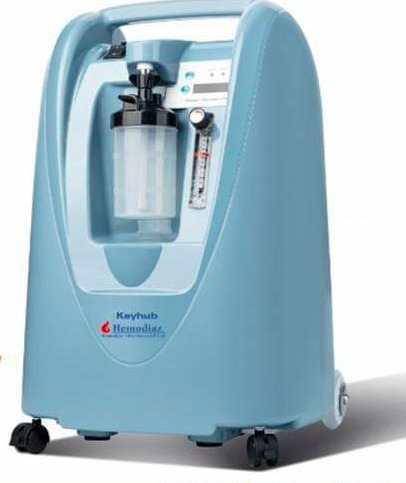
- Brand
- Hemodiaz
- Category
- 5 LPM
₹29,759.04₹40,320
Indicative pricing based on market intelligence. Varies by dealer, city, bundle, and period — confirm with a local authorised seller before buying.
HHZ SCORE 6.9/10
Philips Everflo 5 Liter Oxygen Concentrator
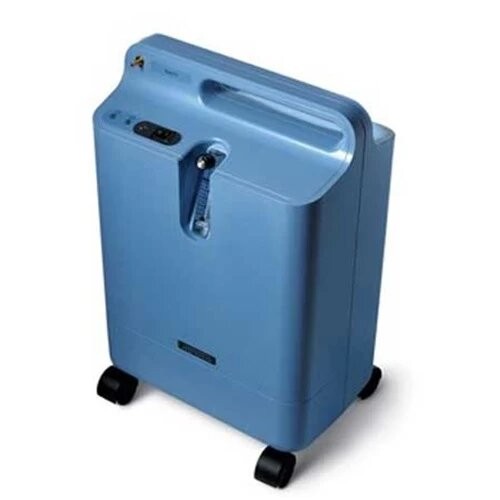
- Brand
- Philips Respironics
- Category
- 5 LPM
Discontinued
Indicative pricing based on market intelligence. Varies by dealer, city, bundle, and period — confirm with a local authorised seller before buying.
HHZ SCORE 8.2/10
Specifications compared
| Specification | Dr Diaz 5 LPM | Philips Everflo 5 Liter Oxygen Concentrator |
|---|---|---|
| Overview | ||
| Brand | Hemodiaz | Philips Respironics |
| Category | 5 LPM | 5 LPM |
| Price | ₹29,759.04 | — |
| MRP | 40,320.00 | — |
| Stock | In Stock | DISCONTINUED WORLDWIDE |
| Key features | ||
| Purity | 90-96% | 90-96% |
| Type | Single Flow | Home Stationary |
| Continuous Flow | 1-5LPM | 1-5LPM |
| Weight | 16kg | 14kg |
| Oxygen Purity Indicator (OPI) | Yes | Yes |
| Power consumption | 285watts | 350watts |
| Technical details | ||
| Purity | 90-96% | 90-96% |
| Type | Single Flow | Home Stationary |
| Continuous Flow | 1-5LPM | 1-5LPM |
| Weight | 16kg | 14kg |
| Oxygen Purity Indicator (OPI) | Yes | Yes |
| Power consumption | 285watts | 350watts |
| Sound level | 48db | 45db |
| Dimensions | 21H x 12W x 11.8Dinch | 23H x 15W x 9.5Dinch |
| Operating altitude | 12000feet | 7500feet |
| Outlet pressure | 13psi | 5.5psi |
| Additional details | ||
| Loss of Power Alarm | Yes | Yes |
| System Malfunction Alarm | Yes | Yes |
| No Flow Alarm | Yes | Yes |
| Indian Voltage Model | Yes | Yes |
| Company Headquarters | India | USA |
| US FDA Approved | — | Yes |
| CE Certified | — | Yes |
Analysis
Editor’s note — Everflo discontinued. Philips has discontinued the Everflo worldwide; it is no longer in production and remaining units are end-of-line stock. For an in-production 5 LPM alternative available in India, consider the Home Medix HM-KV (up to 5 L/min, 93% ±3%, ≤40 dB, 3-year warranty). The comparison below is retained for reference.
The Dr Diaz 5 LPM and the Philips Everflo 5 Liter Oxygen Concentrator are separated by ₹13,940 on current listed prices — Dr Diaz at ₹29,759.04 against Everflo at ₹43,699 (since discontinued). That’s a 32% price gap, which is the largest spread in the top-tier 5 LPM cross-shop set. Both units publish the same 90–96% purity across the 1–5 LPM continuous-flow range. Where they diverge is almost everywhere else. Dr Diaz publishes the lower power draw (285 W vs 350 W — a 65 W win for Dr Diaz), but loses on noise (48 dB vs 45 dB), weight (16 kg vs 14 kg), certifications (Dr Diaz publishes no FDA, no CE; Everflo publishes both), and has no published oxygen purity analyser. Dr Diaz does have one dramatic spec-sheet win — operating altitude of 12,000 ft against Everflo’s 7,500 ft — and a 13 psi outlet pressure against Everflo’s 5.5 psi. Call: Everflo wins for standard home use, Dr Diaz is defensible only on price or altitude.
At a glance
- Price. Dr Diaz ₹29,759.04 vs Everflo ₹43,699 (since discontinued) — Dr Diaz is ₹13,940 cheaper (32%).
- Power draw. Dr Diaz 285 W vs Everflo 350 W — Dr Diaz is 65 W (19%) lower.
- Noise (published). Everflo 45 dB vs Dr Diaz 48 dB.
- Weight. Everflo 14 kg vs Dr Diaz 16 kg — Everflo 2 kg lighter.
- Certifications. Everflo: US FDA + CE. Dr Diaz: none published.
- Operating altitude. Dr Diaz 12,000 ft vs Everflo 7,500 ft — Dr Diaz 4,500 ft higher.
- Outlet pressure. Dr Diaz 13 psi vs Everflo 5.5 psi.
Where the Dr Diaz 5 LPM wins
Dr Diaz’s wins are narrow but real. First, price. At ₹29,759.04 current against Everflo’s ₹43,699 (since discontinued), Dr Diaz is ₹13,940 cheaper — a 32% discount off Everflo’s street price. For buyers whose budget is hard-capped in the high-twenties range, this is the category’s most affordable 5 LPM unit from a named Indian brand. The unit delivers the same published 90–96% purity at 1–5 LPM as Everflo, and at moderate daily duty cycles will do the basic job of home oxygen delivery.
Second, power draw. Dr Diaz publishes 285 W against Everflo’s 350 W — a 65 W gap, which is the lowest published power draw of any 5 LPM unit in this comparison set. On a 12-hour-a-day usage pattern at ₹8–10/kWh residential tariff, that’s ₹2,300–2,800 saved annually over Everflo. Over a three-year ownership window, roughly ₹7,000–8,500 — a small but real operating-cost advantage that partially offsets the unit’s lower baseline build quality.
Third — and this is a genuine differentiator — operating altitude. Dr Diaz publishes a 12,000 ft operating altitude against Everflo’s 7,500 ft. For users in higher-altitude Indian regions (Leh at 11,500 ft, parts of Sikkim and Arunachal Pradesh above 8,000 ft, Shimla at 7,200 ft), Everflo is at or above its published altitude ceiling, where its sieve-bed efficiency drops noticeably. Dr Diaz’s headroom is the practical difference between a functioning concentrator and a struggling one in hill-station deployment. For users in plains and low-altitude India (almost all of it), this advantage doesn’t apply.
Fourth, outlet pressure. Dr Diaz publishes 13 psi against Everflo’s 5.5 psi — a 7.5 psi gap. This matters for longer tubing runs and nebuliser pairings, where the higher outlet pressure maintains delivered flow against back-pressure from extended cannulas and attachments. For a bed-bound patient with the concentrator in a different room, the Dr Diaz’s higher outlet pressure sustains flow at the patient end more reliably.
The Dr Diaz is also India-headquartered per its published “Company Headquarters: India” field, which some institutional buyers weight positively. And its compact 21 in H × 12 in W × 11.8 in D footprint is narrower than Everflo’s 15 in W — a small but useful bedside-real-estate win on width, though Dr Diaz is 2.3 inches deeper.
Where the Philips Everflo 5 LPM wins
Everflo’s wins outnumber Dr Diaz’s and cover the load-bearing categories for daily home-oxygen use.
First, certifications. Everflo publishes US FDA approval and CE certification on its spec sheet. Dr Diaz publishes no FDA, no CE — its additional-details table shows blank fields for both approvals. For a Class IIa medical device in home use, the CE mark is the most relevant regulatory signal available to Indian buyers. Its absence on the Dr Diaz spec sheet is the biggest red flag in this comparison — not because the device is necessarily unsafe, but because the buyer has no published third-party safety validation.
Second, noise. Everflo publishes 45 dB against Dr Diaz’s 48 dB. Three decibels on the logarithmic dB scale is a roughly 40% increase in perceived loudness. For overnight bedside use, the Everflo is noticeably quieter. For a patient who already has mild sleep disruption from oxygen therapy, the gap compounds.
Third, weight. Everflo publishes 14 kg against Dr Diaz’s 16 kg — 2 kg lighter. On a unit that will need to be wheeled or lifted for cleaning, for room changes, or for technician service access, 2 kg is the difference between a one-person lift and a two-person lift for elderly caregivers.
Fourth, on-device indicators. Both publish OPI (oxygen purity indicator) as a feature. Everflo’s OPI is a documented LED that trips below 82% purity; Dr Diaz’s spec sheet lists OPI but Dr Diaz publishes no live purity analyser, and the additional-details table has the “Oxygen Purity % Analyzer” field blank. Everflo’s indicator is the more documented, better-understood signal.
Fifth, the complete alarm package. Both publish loss-of-power, system-malfunction, and no-flow alarms — so this is a draw, but it matters that Dr Diaz does include them (some India-brand units at Dr Diaz’s price point drop one or more of these; Dr Diaz keeps them).
Sixth, warranty and resale. Both publish a 3-year warranty window in India. But Everflo’s secondary-market resale in India is substantially stronger — a 3-year-old Everflo typically retains 50–60% of original price, against 25–35% for Dr Diaz. For a buyer planning short-term use (post-operative recovery, a temporary respiratory episode), the resale differential can recover ₹17,000–22,000 of the Everflo’s ticket — closing about two-thirds of the ₹13,940 price gap.
Everflo’s Philips Respironics brand also commands better dealer service depth for OEM sieve beds, filters, and compressor replacement. Dr Diaz’s service parts pipeline is adequate for consumables but thinner on sieve-bed-level replacements, which is the major failure mode at months 24–36 of daily use.
Indian-market context
Both units are Indian-voltage 220–240 V machines with no step-down transformer needed. Both publish 3-year warranties. That’s where the Indian-market picture converges. Where it splits is on service and parts infrastructure.
Philips Respironics has an authorised-dealer network concentrated in Indian metros and tier-1 cities. Parts supply for Everflo is consistent through the Philips India channel, with OEM sieve beds and filters available with reasonable lead times in top-10 cities. Warranty-claim turnaround is slower than India-brand dealers but the eventual fix quality is high.
Dr Diaz (sold by Hemodiaz) distributes through regional dealer and e-commerce channels. Consumables (humidifier bottles, cannulas, dust filters) are available, but the sieve-bed service pipeline outside Dr Diaz’s core dealer footprint is thinner. Warranty claims route through the selling dealer; response quality varies by region.
On pricing: Dr Diaz MRP ₹40,320 discounted to ₹29,759.04 current; Everflo MRP ₹63,228.48 discounted to ₹43,699 (since discontinued). Both are Indian rupee listed prices in the standard discount-off-MRP convention. Dr Diaz has no published third-party rating count; Everflo publishes 4.9/5 across 128 ratings — a reputational difference that reflects a longer market presence rather than an independent bench test.
Verdict — who should pick which
Pick the Philips Everflo 5 LPM if the user runs the concentrator continuously (10+ hours a day), if the unit is for a primary respiratory patient rather than an occasional-use scenario, if you live in a metro with an authorised Philips dealer, or if long-term resale matters to the purchase decision. Everflo gives you US FDA + CE certification, 3 dB quieter running, 2 kg less weight, and a stronger resale curve — for ₹13,940 more. For a primary daily-use home-oxygen unit, that premium is justified.
Pick the Dr Diaz 5 LPM in two specific scenarios. First, if the user is based at altitude (Leh, parts of Sikkim, higher-altitude Himachal, Uttarakhand hill stations above 7,500 ft) — Dr Diaz’s published 12,000 ft altitude rating against Everflo’s 7,500 ft is decisive. Second, if the budget is hard-capped at ₹30,000 and Everflo is genuinely out of reach. The Dr Diaz will deliver its published 90–96% purity at 1–5 LPM, and the 285 W power draw is the lowest in the segment. The trade-off is the missing CE/FDA certifications, the extra 2 kg of weight, and a thinner service-parts pipeline.
Default for most buyers: Philips Everflo 5 LPM. The spec-sheet certifications and the stronger dealer network make it the safer choice for a standard home-oxygen purchase. Dr Diaz’s ₹13,940 saving is significant but not decisive when the alternative is a US FDA + CE certified unit from an established brand. If the budget genuinely cannot stretch to Everflo, a better budget route than Dr Diaz is the Oxymed Mini (5L) at ₹35,400 — CDSCO registered (no CE or US FDA on record) but with a 40-service-centre dealer network, a live purity analyser, the full alarm suite and a 3-year warranty while still undercutting Everflo by ₹8,299.