Dr Diaz 5 LPM vs Home Medix HM-KV 5 LPM
Dr Diaz 5 LPM
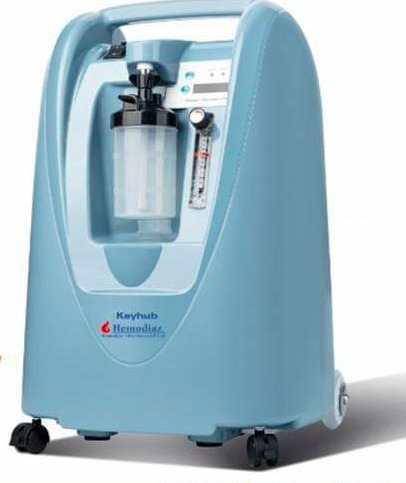
- Brand
- Hemodiaz
- Category
- 5 LPM
₹29,759.04₹40,320
Indicative pricing based on market intelligence. Varies by dealer, city, bundle, and period — confirm with a local authorised seller before buying.
HHZ SCORE 6.9/10
EDITORIAL PICK
Home Medix HM-KV 5 LPM
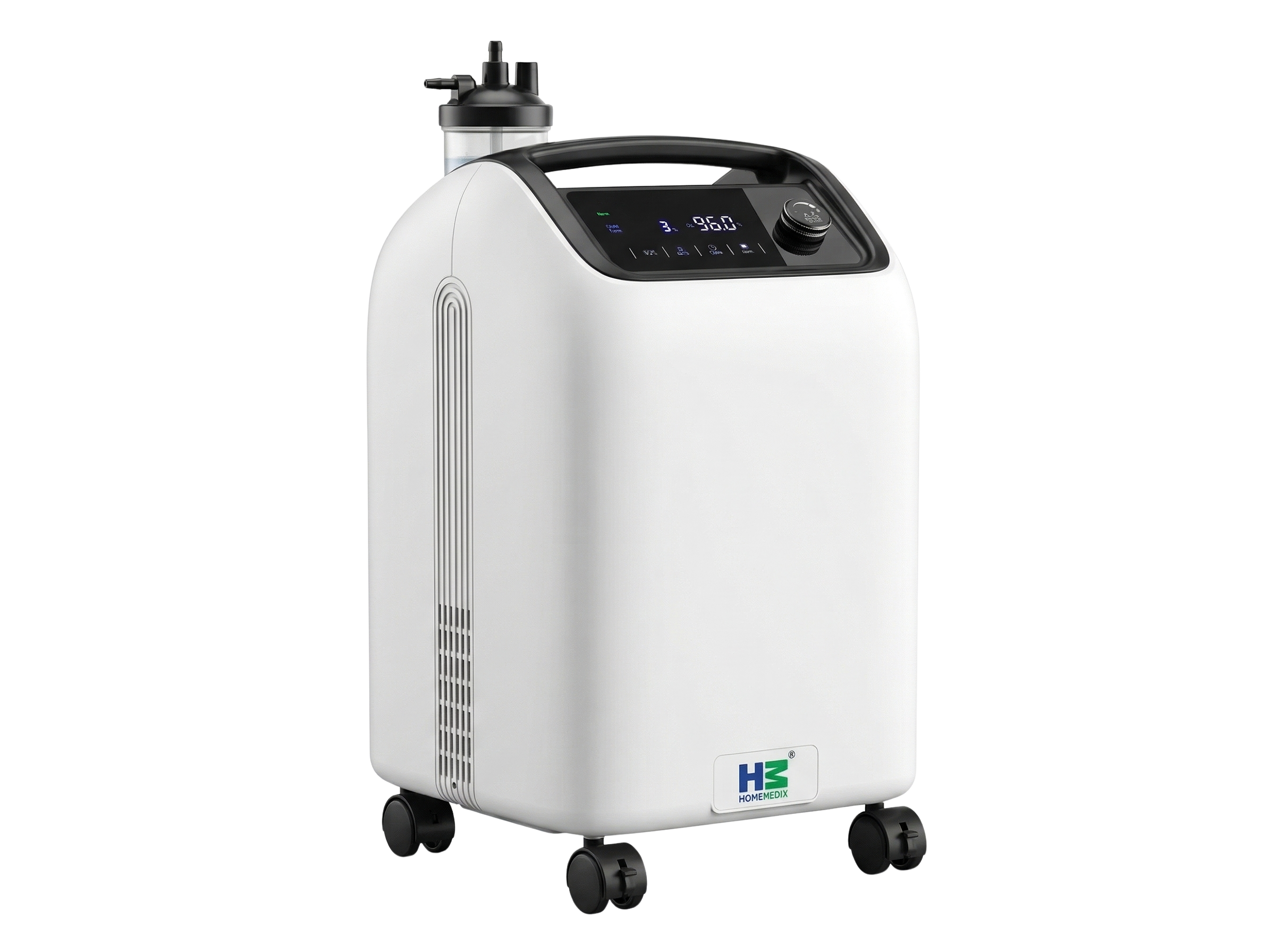
- Brand
- Home Medix
- Category
- 5 LPM
₹37,800₹54,000
Indicative pricing based on market intelligence. Varies by dealer, city, bundle, and period — confirm with a local authorised seller before buying.
HHZ SCORE 7.7/10
Specifications compared
| Specification | Dr Diaz 5 LPM | Home Medix HM-KV 5 LPM |
|---|---|---|
| Overview | ||
| Brand | Hemodiaz | Home Medix |
| Category | 5 LPM | 5 LPM |
| Price | ₹29,759.04 | ₹37,800 |
| MRP | 40,320.00 | 54,000 |
| Stock | In Stock | In Stock |
| Key features | ||
| Purity | 90-96% | 93% ± 3% |
| Type | Single Flow | Home Stationary |
| Continuous Flow | 1-5LPM | 0.5–5 L/min |
| Weight | 16kg | 13 kg (lightest in the 5 LPM class) |
| Oxygen Purity Indicator (OPI) | Yes | Yes |
| Power consumption | 285watts | 320 VA |
| Technical details | ||
| Purity | 90-96% | 93% ± 3% |
| Type | Single Flow | Home Stationary |
| Continuous Flow | 1-5LPM | 0.5–5 L/min |
| Weight | 16kg | 13 kg (lightest in the 5 LPM class) |
| Oxygen Purity Indicator (OPI) | Yes | Yes |
| Power consumption | 285watts | 320 VA |
| Sound level | 48db | ≤ 40 dB (field-verified) |
| Dimensions | 21H x 12W x 11.8Dinch | Compact floor-standing form factor |
| Operating altitude | 12000feet | — |
| Outlet pressure | 13psi | 0.04–0.06 MPa |
| Additional details | ||
| Oxygen Purity % Analyzer | — | Yes |
| Loss of Power Alarm | Yes | Yes |
| System Malfunction Alarm | Yes | Yes (High Temperature) |
| No Flow Alarm | Yes | Yes (Low/No Flow) |
| Indian Voltage Model | Yes | Yes |
| Company Headquarters | India | India |
| Home Medix differentiators | ||
| Integrated Nebulization | — | Yes |
| Precise Electronic Flowmeter | — | Yes |
| One-Touch SOS Alert | — | Yes — high-volume audible alarm button for summoning a nearby attendant (local siren; no mobile app or telecom channel) |
| Hour Counter | — | User-visible running-hour display |
| Working Voltage | — | AC 230V / 50Hz, ±10% tolerance (207–253 V) |
| Industrial-Grade Compressor | — | Yes |
| ISO 9001 | — | Yes |
| ISO 13485 | — | Yes |
| CDSCO | — | Approved |
| Warranty | — | 3 years or 10,000 hours of operation, whichever comes first |
Analysis
Two budget-to-mid-tier Indian 5 LPMs ₹8,000 apart
The Hemodiaz Dr Diaz 5 LPM and the Home Medix HM-KV 5 LPM compete for the same Indian-market buyer — the home LTOT patient who wants a CDSCO-registered concentrator at the lower end of the mid-tier price band, well clear of the Philips EverFlo / Nidek Nuvo Lite premium-import shelf. Both are Indian-HQ brands. Both ship Indian-voltage. Both publish 5 L/min continuous flow at medical-grade purity. The price gap is ₹8,041 at current indicative retail — small in absolute rupees, meaningful at ~21% of the cheaper unit’s sticker.
The Dr Diaz wins on price and on documented altitude ceiling. The HM-KV wins on weight, on published sound floor, on AC voltage tolerance, and on warranty length. The real question for the buyer with a fixed budget is whether the ₹8,041 saving is worth the spec gap, or whether the spec gap is worth the ₹8,041 to close.
At-a-glance differences
- Price: Dr Diaz ₹29,759.04 (listed MRP ₹40,320) vs HM-KV ₹37,800 (listed MRP ₹54,000) — Dr Diaz is ₹8,041 cheaper (~21% less)
- Weight: HM-KV 13 kg vs Dr Diaz 16 kg — HM-KV is 3 kg lighter (~19% less)
- Sound: Dr Diaz 48 dB published vs HM-KV ≤ 40 dB field-verified — HM-KV is ~8 dB quieter at the published floor
- Oxygen flow: Dr Diaz 1–5 L/min; HM-KV 0.5–5 L/min — HM-KV extends down to 0.5 L/min for low-titration cases
- Oxygen concentration: Dr Diaz 90–96%; HM-KV 93% ± 3% (same practical band)
- Outlet pressure: Dr Diaz 13 psi (higher); HM-KV 0.04–0.06 MPa (~5.8–8.7 psi)
- Power draw: Dr Diaz 285 W vs HM-KV 320 VA — Dr Diaz roughly 10–15% lower draw at full load
- Operating altitude (published): Dr Diaz 12,000 ft (~3,660 m — covers Leh); HM-KV — not published
- Oxygen Purity Indicator (OPI): Both yes — both list OPI in the key-features block
- Alarms: Dr Diaz — Loss of Power, System Malfunction, No Flow. HM-KV — Loss of Power, System Malfunction (High Temperature), Low/No Flow — alarm parity
- AC voltage tolerance: HM-KV — documented AC 230V / 50Hz ±10% (207–253 V); Dr Diaz — not published
- Warranty: HM-KV 3 years or 10,000 hours; Dr Diaz — not published in the indicative spec
- Regulatory: Both CDSCO-registered Indian-HQ brands. Neither US FDA, neither FAA, neither CE on record per the published spec
- Stock: Both In Stock through primary Indian e-commerce channels
Where the Dr Diaz wins
₹8,041 cheaper at retail. This is the headline argument. At ~21% below the HM-KV, the Dr Diaz is one of the cheaper CDSCO-registered Indian-brand 5 LPMs with a documented OPI and full alarm coverage. For a buyer on a fixed budget — pensioner-funded LTOT, joint-family cost-sharing, or a deployment where two units are being bought for elderly parents — the ₹8,041 saving per unit is real money. Across a two-unit purchase, that’s ₹16,082, comfortably enough to buy a servo stabiliser per unit and a pure-sine UPS for one of them.
Documented 12,000 ft (~3,660 m) operating altitude. This is the Dr Diaz’s strongest under-the-radar spec. The published altitude ceiling covers Leh (~3,500 m), Spiti, Tawang, and the Sikkim high-altitude belt without an explicit derating caveat from the manufacturer. PSA concentrators always lose some purity at altitude — typically 2–4 percentage points per 1,000 m of elevation — but the Dr Diaz’s published 12,000 ft figure is higher than most Indian-market 5 LPMs publish, and meaningfully higher than the HM-KV’s silence on altitude. For a hill-station installation, this matters (ATS/ERS statement).
13 psi outlet pressure. Dr Diaz publishes a 13 psi outlet, on the higher end of the 5 LPM class. This gives headroom for longer cannula runs (≥ 7 ft tubing), humidifier-plus-nebulizer combined setups, and back-pressure tolerance for users on high-flow nasal cannulas. The HM-KV’s 0.04–0.06 MPa (~5.8–8.7 psi) is adequate for standard cannula delivery at 5 L/min but tighter on headroom.
Marginally lower power draw — 285 W vs 320 VA. At ~10–15% lower draw, the Dr Diaz costs slightly less per month to run continuously. At ₹8/kWh and 16 hours/day of use, the Dr Diaz costs roughly ₹1,095/month vs the HM-KV’s ~₹1,229/month — about ₹134/month delta. Modest but cumulative over a multi-year deployment.
Where the Home Medix HM-KV wins
3 kg lighter — 13 kg vs 16 kg. The HM-KV’s 13 kg is the published lightest in the Indian 5 LPM class, and the 3 kg gap is the difference between a comfortable single-person carry up a flight of stairs and a slightly awkward one. For a patient who moves the unit between bedroom and living room daily, or who travels with the unit to a relative’s home occasionally, the 13 kg chassis is the more practical choice. Both fit in a small sedan boot; neither is genuinely portable for travel.
~8 dB quieter at the published floor — ≤ 40 dB field-verified vs 48 dB. The HM-KV’s ≤ 40 dB sound floor sits below the 45 dB bedside threshold that home-LTOT comfort literature treats as the overnight-sleep-disturbance ceiling. The Dr Diaz’s 48 dB published figure is loud for a patient bedroom and noticeably loud for an adjacent sleeper — not unusable, but a difference the patient hears every night. An 8 dB gap is roughly half the perceived loudness to a human listener. For an overnight-use installation, this is the single biggest comfort axis where the two units diverge.
Documented AC 230V / 50Hz ±10% tolerance (207–253 V). The HM-KV publishes an explicit voltage tolerance band — the buyer knows exactly when the unit will shut down rather than damage the compressor. The Dr Diaz spec sheet does not publish an equivalent envelope. In Indian Tier-2 / Tier-3 mains conditions where voltage routinely dips below 200 V or surges above 250 V, the HM-KV’s published envelope reduces installation guesswork and dealer-discretion. Both units want a servo stabiliser; only the HM-KV publishes the spec the stabiliser is being sized against.
Lower flow floor — 0.5 L/min vs 1 L/min. The HM-KV’s 0.5–5 L/min range extends a half-litre lower than the Dr Diaz’s 1–5 L/min. For paediatric LTOT, low-titration COPD maintenance, or post-pulmonary-rehab tapering, the 0.5 L/min floor matters. Most adult LTOT prescriptions sit between 2 and 4 L/min, where both units overlap; the lower floor is an edge case but a real one.
3-year / 10,000-hour warranty with user-visible hour counter. The HM-KV publishes a 3-year or 10,000-hour warranty (whichever first) and exposes a running-hour display on the front panel. The Dr Diaz indicative spec does not call out an equivalent warranty length or hour counter — typical Indian-market home-stationary warranties at this tier run 1–2 years through the dealer channel, with paid AMC available for extension. For a patient running the unit 16 hours/day, 10,000 hours is roughly 20 months of wall-clock time — meaningful planning information that the HM-KV makes visible to the user.
ISO 9001 + ISO 13485 documentation. The HM-KV publishes ISO 9001 (quality management) and ISO 13485 (medical device quality management) certifications on its data sheet. The Dr Diaz spec sheet does not list equivalent ISO certifications in the indicative published spec. Both are CDSCO-compliant — the Indian regulatory gate — but the HM-KV documents a deeper quality-management paper trail (ISO 13485).
Indian-market considerations
The altitude question, reframed. The Dr Diaz’s 12,000 ft (~3,660 m) published altitude is genuinely useful for Leh-class installations — a small but real fraction of Indian home LTOT prescriptions. The HM-KV does not publish an altitude figure, which is not the same as a low altitude ceiling, but it does leave the buyer in derating-by-measurement territory rather than derating-by-spec. For installations below 2,000 m (which covers most Indian cities including Bangalore, Pune, Hyderabad, and all coastal metros), the altitude axis is a non-factor and the HM-KV’s other advantages dominate. For installations above 2,500 m, the Dr Diaz’s published headroom becomes a meaningful argument, and a delivered-purity check with a handheld analyzer remains advisable regardless of which unit is chosen.
Stabiliser sizing. Both units want a servo stabiliser at 1.5× rated draw — Dr Diaz at 285 W wants a 450–500 VA stabiliser, HM-KV at 320 VA wants a 500 VA stabiliser minimum, 750 VA for unstable Tier-2 / Tier-3 mains. Budget ₹3,500–5,500 for a credible servo stabiliser (V-Guard, Microtek, APC). Without a stabiliser, neither unit’s published voltage tolerance covers Indian rural / Tier-3 mains swings.
GST and reimbursement. 12% GST applies to both. CGHS / ECHS / ESIC reimbursement requires GST-compliant invoicing from an authorised dealer. Both brands are familiar enough to the Indian medical-equipment channel to clear reimbursement without paperwork friction.
Service network reach. Hemodiaz / Dr Diaz operates through a dealer network that varies by region — confirm the nearest authorised service depot before buying, and confirm whether sieve beds and compressor replacements are stocked locally vs require factory return. The HM-KV’s service footprint is more concentrated in South and West India with thinner coverage in the North-East. For either brand, a 2–3 week downtime for a major service event is the default in regions where the dealer doesn’t carry parts inventory.
Power-cost arithmetic. Dr Diaz at 285 W running 16 hours/day at ₹8/kWh costs roughly ₹1,095/month; HM-KV at 320 VA (assume 320 W) costs roughly ₹1,229/month. The ₹134/month gap is small. Over a three-year deployment, that’s ~₹4,800 — well under half the ₹8,041 sticker gap, so the operating-cost arithmetic does not close the price gap on its own.
Who should pick which
Pick the Dr Diaz 5 LPM if: ₹8,041 of upfront saving is material to the household budget; or the deployment is at altitude above 2,500 m where the published 12,000 ft ceiling materially matters; or the installation needs the higher 13 psi outlet pressure for long cannula runs or combined humidifier-plus-nebulizer setups; or you are buying two units for a multi-patient household where the ₹16,082 combined saving funds stabilisers and a pure-sine UPS.
Pick the Home Medix HM-KV 5 LPM if: the unit will live at the patient’s bedside during overnight use where the ~8 dB quieter sound floor is the difference between sleep and not; or you value the 13 kg single-person-carry chassis for daily room-to-room relocation; or you need the 0.5 L/min flow floor for paediatric or low-titration use; or you want the documented AC ±10% voltage tolerance, the 3-year / 10,000-hour warranty, the user-visible hour counter, and the ISO 9001 + ISO 13485 paper trail.
Verdict
The HM-KV is the stronger mid-tier 5 LPM on the spec sheet — lighter, quieter, with documented voltage tolerance, a longer warranty, and a deeper certification paper trail. The Dr Diaz is the stronger choice on price and on the specific altitude-published-headroom axis. For a typical Indian home LTOT installation below 2,000 m of elevation, the HM-KV’s spec advantages compound in ways that justify the ₹8,041 premium — especially the sound floor and the warranty length, both of which the patient experiences every day of use.
The Dr Diaz remains defensible for the strictly budget-anchored buyer, for the high-altitude installation where its 12,000 ft ceiling is doing real work, or for the multi-unit purchase where the combined saving funds material accessories. Both are competent CDSCO-registered Indian-brand 5 LPMs at the lower end of the mid-tier band; neither is a wrong answer, but the HM-KV is the better answer for the median buyer.
Consult your treating pulmonologist before finalising the prescription flow rate — 5 LPM buys clinical headroom, and titration is what matters at the bedside.