Nareena 5 LPM Single Flow vs Yuwell 9F Touchscreen 5LPM
EDITORIAL PICK
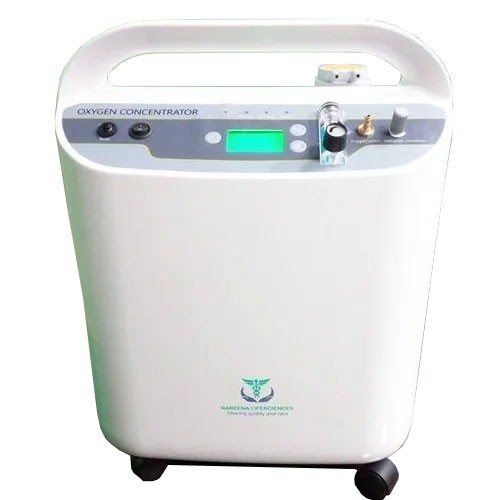
Nareena 5 LPM Single Flow
- Brand
- Nareena Lifesciences
- Category
- 5 LPM
₹35,510.40₹67,200
Indicative pricing based on market intelligence. Varies by dealer, city, bundle, and period — confirm with a local authorised seller before buying.
HHZ SCORE 7.0/10
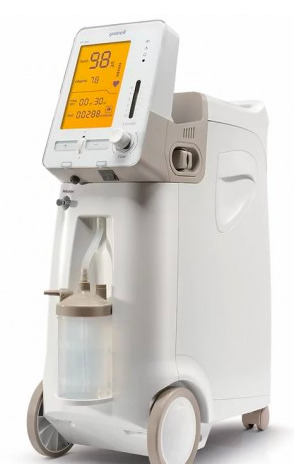
Yuwell 9F Touchscreen 5LPM
- Brand
- Yuwell
- Category
- 5 LPM
₹45,120
Indicative pricing based on market intelligence. Varies by dealer, city, bundle, and period — confirm with a local authorised seller before buying.
HHZ SCORE 6.0/10
Specifications compared
| Specification | Nareena 5 LPM Single Flow | Yuwell 9F Touchscreen 5LPM |
|---|---|---|
| Overview | ||
| Brand | Nareena Lifesciences | Yuwell |
| Category | 5 LPM | 5 LPM |
| Price | ₹35,510.40 | ₹45,120.00 |
| MRP | 67,200.00 | — |
| Stock | In Stock | Out of stock |
| Key features | ||
| Purity | 90-96% | 90-95% |
| Type | Home Stationary | Home Stationary |
| Continuous Flow | 1-5LPM | 0.5-5LPM |
| Weight | 15kg | 18kg |
| Oxygen Purity Indicator (OPI) | Yes | No |
| Power consumption | 550watts | 400watts |
| Technical details | ||
| Purity | 90-96% | 90-95% |
| Type | Home Stationary | Home Stationary |
| Continuous Flow | 1-5LPM | 0.5-5LPM |
| Weight | 15kg | 18kg |
| Oxygen Purity Indicator (OPI) | Yes | — |
| Power consumption | 550watts | 400watts |
| Sound level | 50db | 52db |
| Dimensions | 23.6H x 14.7W x 14.3Dinch | 19.6H x 15.35W x 24.5Dinch |
| Outlet pressure | — | 10psi |
| Additional details | ||
| Loss of Power Alarm | Yes | Yes |
| System Malfunction Alarm | — | Yes |
| No Flow Alarm | — | Yes |
| Indian Voltage Model | Yes | Yes |
| Company Headquarters | India | China |
Analysis
Two middle-tier 5 LPMs with very different trade-offs
The Nareena 5 LPM Single Flow and the Yuwell 9F Touchscreen 5LPM both target the middle of the Indian 5 LPM price band — above the budget Chinese imports (Veayva, Vandelay, Dynmed) but below the premium US-origin options (Philips Everflo, Drive DeVilbiss, Airsep Visionaire). They share surprisingly little else. The Nareena is an Indian-manufactured unit at 15 kg with an OPI light and a conventional ball-type flow meter; the Yuwell is a China-origin legacy platform at 18 kg with a touchscreen UI, remote control, built-in pulse oximeter, but no OPI. The ₹9,610 price gap between them (₹35,510 vs ₹45,120 indicative retail) is meaningful, and at that delta neither unit makes an overwhelming case.
Headline specs: Nareena 5 LPM Single Flow at 15 kg, 550 W, 50 dB, 90–96% purity, OPI light only (no live analyzer), loss-of-power alarm only (no system-malfunction or no-flow alarms documented), 1-year warranty, India-HQ, In Stock. Yuwell 9F Touchscreen at 18 kg, 400 W, 52 dB, 90–95% purity, touchscreen control panel with built-in pulse oximeter and remote control, no OPI or purity analyzer, full alarm suite (loss-of-power / system-malfunction / no-flow), China-HQ, currently Out of Stock.
HHZ’s verdict: the Nareena is the pick at its current pricing, but neither unit is HHZ’s first-choice recommendation in the 5 LPM segment. The Oxymed Mini (₹35,400) is the reference domestic pick at the Nareena’s price point; the Philips Everflo (₹43,699) is the reference FDA-approved pick near the Yuwell’s price point — both are better than the Nareena-vs-Yuwell contest directly.
At-a-glance differences
- Price: Nareena ₹35,510 vs Yuwell ₹45,120 — Nareena is ₹9,610 (21%) cheaper
- Weight: Nareena 15 kg vs Yuwell 18 kg — Nareena is 3 kg lighter (17% less)
- Power draw: Yuwell 400 W vs Nareena 550 W — Yuwell draws 27% less, worth roughly ₹370 per month
- UI: Yuwell has touchscreen, built-in oximeter, and remote control; Nareena has analog ball-type flow meter with digital display
- Purity monitoring: Nareena has OPI light; Yuwell has neither OPI nor analyzer (relies on pulse oximeter feedback instead)
- Alarm suite: Yuwell runs three alarms (loss-of-power / system-malfunction / no-flow); Nareena runs only loss-of-power
- Warranty: Nareena 1 year; Yuwell warranty not published on Indian listings
- Stock status: Nareena In Stock, Yuwell Out of Stock
Both are Indian-voltage, both lack FDA and CE certification. Nareena is India-HQ (Nareena Lifesciences); Yuwell is China-HQ with Indian distribution.
Where the Nareena wins
Price — ₹9,610 cheaper. The central Nareena advantage. At ₹35,510, it’s positioned against the Oxymed Mini (₹35,400) rather than the Yuwell. The 21% price gap to the Yuwell is large enough to change the value calculation decisively — the buyer saves ₹9,610 upfront on hardware that is lighter and easier to service in India.
Lighter — 15 kg vs 18 kg. 3 kg is meaningful ergonomic margin. The Yuwell’s 18 kg places it among the heaviest 5 LPMs in India (BPL Oxy 5 Neo is the exception at 25 kg). The Yuwell additionally lacks a top handle per its spec documentation, and its front wheels are described as “very large” and bulky, making it awkward to move between rooms. The Nareena’s 15 kg with standard handles and wheels is manageable by a single adult caregiver.
Indian manufacturer with direct support. Nareena Lifesciences is an India-HQ respiratory-equipment manufacturer with direct-channel support and a growing authorised-dealer network. Warranty claims go through the Indian manufacturer rather than a retailer importing from China. For any post-sale issue, that path is materially shorter than the Yuwell’s retailer-mediated import-support route.
OPI light. The Nareena has an oxygen purity indicator that triggers if purity drops below 86%. The Yuwell has no OPI and no purity analyzer — the built-in pulse oximeter gives patient oxygen saturation but not concentrator output purity. These are different metrics: SpO2 measures blood oxygen, purity measures gas-stream oxygen. Degraded sieve-beds can deliver sub-spec purity to a patient who is still maintaining adequate SpO2 because of residual respiratory reserve; the OPI catches this before the clinical signal appears. The Yuwell’s missing OPI is a real gap that the pulse-oximeter integration does not address.
In Stock. The Yuwell 9F Touchscreen is currently listed as Out of Stock on primary Indian e-commerce channels, has been for most of 2024–2025, and Yuwell’s Indian distribution has thinned over the past three years. The Nareena is actively stocked.
Where the Yuwell 9F Touchscreen wins
Power draw — 400 W vs 550 W. The Nareena’s 550 W continuous draw is genuinely high for a 5 LPM stationary — well above the Indian-class median of 350–400 W. The Yuwell at 400 W is within the class median. At 24-hour use on Indian tariffs, the Yuwell saves roughly ₹370 per month, or ₹13,300 over 3 years — a figure that substantially exceeds the ₹9,610 purchase-price gap. On pure electricity-cost math over a 3-year window, the Yuwell wins.
Full alarm suite. Loss-of-power, system-malfunction, and no-flow alarms on the Yuwell — all three documented. The Nareena runs only the loss-of-power alarm; the other two are missing from its spec table. For unattended or night-time use, the Yuwell’s complete alarm coverage is a real safety advantage.
Touchscreen UI and built-in pulse oximeter. The Yuwell 9F Touchscreen is one of the few 5 LPM stationaries in the Indian market with an integrated patient monitoring touchscreen — displays current flow rate, cumulative operating hours, current mains voltage, and SpO2 from the built-in pulse oximeter. Remote control allows adjusting flow from bedside without reaching the machine. These are genuine conveniences for home-care deployments where the patient wants to adjust flow themselves or where the caregiver checks saturation without a separate pulse oximeter.
Higher outlet pressure — 10 psi. Same as the Oxymed Mini, and higher than most Chinese imports in the budget class. Good headroom for long cannula runs.
Established Chinese brand with documented reliability. Yuwell is one of the oldest Chinese respiratory-equipment brands, with a 25+ year product history globally. The 9F platform specifically has been in production since roughly 2012 with incremental updates — “many satisfied customers in India,” as the Indian e-commerce listing accurately notes. Platform maturity is a real asset in a class where compressor-failure modes take years to surface.
Indian-market context
The Nareena vs Yuwell decision is shaped by availability as much as by specs. The Yuwell 9F Touchscreen is currently unavailable across primary Indian e-commerce channels, and Yuwell’s Indian distribution has contracted substantially since 2022 — the brand now competes primarily in the adjustable-flow and high-flow segments (Yuwell 7F-5, Yuwell 10 LPM, Yuwell 8F with nebulizer) rather than at the 9F Touchscreen midpoint. A buyer wanting a Yuwell 9F in 2026 may need to accept retailer-level stock-outs and wait 30–60 days for inventory replenishment, or accept a different Yuwell SKU.
Nareena Lifesciences has grown its India presence steadily since 2020, focusing on the 5 LPM and 10 LPM segments with Indian manufacturing. Nareena’s 5 LPM Single Flow and Nareena 10 LPM are both reliably stocked; warranty claims go through Nareena’s direct channel. The 1-year warranty is shorter than competitors offering 2–3 years — this is a notable weakness that Nareena has not yet upgraded.
For service network, neither brand has the footprint of Oxymed’s 40+ authorised centres. Nareena has a growing Tier-1 city presence; Yuwell’s Indian distribution is dealer-mediated and coverage outside Mumbai/Delhi/Bengaluru is thin. For service-network depth specifically, Oxymed beats both.
GST at 12% applies to both. CDSCO registration: Nareena under domestic-manufacturer route, Yuwell under importer route (CDSCO). Both are Indian-voltage, both need a 1.5–2 kVA stabiliser in areas with sub-180V mains drops.
Nareena’s 550 W power draw is the stand-out negative spec — at that level, running the concentrator 24/7 costs roughly ₹1,320–₹1,480 per month in Indian domestic tariffs, about 40% more than the Yuwell’s 400 W. Over 3 years that’s ₹15,000–₹17,000 in cumulative electricity — genuinely enough to change the verdict on a price-based recommendation.
Verdict — who should pick which
Pick the Nareena 5 LPM Single Flow if: you need an Indian-manufactured 5 LPM that is currently stocked, you prioritise the lighter chassis (15 kg vs 18 kg), you want warranty service routed through an Indian manufacturer rather than a retailer-import path, or you want the OPI light as a minimum purity-monitoring mechanism. At ₹35,510 the Nareena is competitive against the Oxymed Mini (₹35,400) on price but loses on features (the Oxymed has a live analyzer, full alarms, a 3-year warranty). HHZ’s recommendation in the domestic-brand 5 LPM segment is the Oxymed Mini; the Nareena is a viable but second-tier pick.
Pick the Yuwell 9F Touchscreen if: you can find it in stock in 2026 (currently difficult), you specifically value the touchscreen + built-in pulse oximeter + remote control package for elder-care self-adjustment use cases, you prioritise 3-year power cost over 3-year capital cost, and you can accept the Yuwell brand’s thinning India presence and heavier 18 kg chassis. For self-adjusting home patients who want per-bedside control without calling a caregiver, the Yuwell’s UI is genuinely better than anything else in the Indian 5 LPM market.
Skip both and consider the Oxymed Mini or Philips Everflo if: the buyer does not have a specific reason to prefer Nareena or Yuwell. At the Nareena’s ₹35,510 price point, the Oxymed Mini at ₹35,400 is 1.1 kg lighter, has a live percent analyzer (vs Nareena’s OPI only), runs the full three-alarm suite (vs Nareena’s single alarm), and ships with a 3-year warranty (vs Nareena’s 1-year). For the Yuwell’s ₹45,120 price point, the Philips Everflo at ₹43,699 is FDA-approved, 14 kg (vs 18 kg), 350 W (lower than either Nareena or Yuwell), and carries Philips Respironics India service depth that neither Nareena nor Yuwell matches.
HHZ’s pick in the Nareena vs Yuwell direct comparison is the Nareena 5 LPM Single Flow — but the real advice is to step outside this matchup. The Oxymed Mini beats the Nareena at the same price; the Philips Everflo beats the Yuwell at a lower price. This comparison is an opportunity to pick the better options on either side. Consult your treating pulmonologist before finalising the prescription flow rate — the 5 LPM class buys headroom, and the hardware choice here is one of multiple acceptable configurations.