DeVilbiss 5 LPM vs Nareena 5 LPM Single Flow
EDITORIAL PICK
DeVilbiss 5 LPM
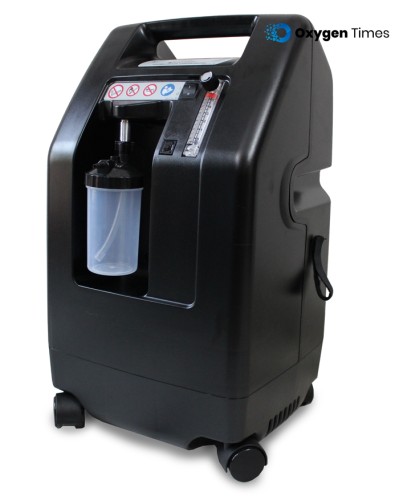
- Brand
- Drive DeVilbiss
- Category
- 5 LPM
₹45,984₹86,400
Indicative pricing based on market intelligence. Varies by dealer, city, bundle, and period — confirm with a local authorised seller before buying.
HHZ SCORE 8.0/10
Nareena 5 LPM Single Flow
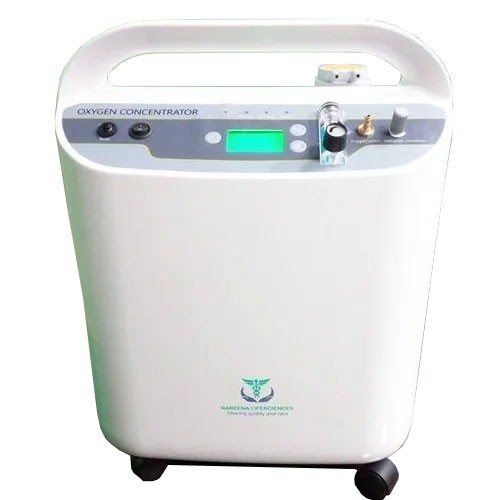
- Brand
- Nareena Lifesciences
- Category
- 5 LPM
₹35,510.40₹67,200
Indicative pricing based on market intelligence. Varies by dealer, city, bundle, and period — confirm with a local authorised seller before buying.
HHZ SCORE 7.0/10
Specifications compared
| Specification | DeVilbiss 5 LPM | Nareena 5 LPM Single Flow |
|---|---|---|
| Overview | ||
| Brand | Drive DeVilbiss | Nareena Lifesciences |
| Category | 5 LPM | 5 LPM |
| Price | ₹45,984.00 | ₹35,510.40 |
| MRP | 86,400.00 | 67,200.00 |
| Stock | In Stock | In Stock |
| Key features | ||
| Purity | 90-96% | 90-96% |
| Type | Home Stationary | Home Stationary |
| Continuous Flow | 1-5LPM | 1-5LPM |
| Weight | 16.3kg | 15kg |
| Oxygen Purity Indicator (OPI) | Yes | Yes |
| Power consumption | 310watts | 550watts |
| Technical details | ||
| Purity | 90-96% | 90-96% |
| Type | Home Stationary | Home Stationary |
| Continuous Flow | 1-5LPM | 1-5LPM |
| Weight | 16.3kg | 15kg |
| Oxygen Purity Indicator (OPI) | Yes | Yes |
| Power consumption | 310watts | 550watts |
| Sound level | 48db | 50db |
| Dimensions | 24.4H x 13.4W x 12Dinch | 23.6H x 14.7W x 14.3Dinch |
| Operating altitude | 13123feet | — |
| Outlet pressure | 8.5psi | — |
| Additional details | ||
| Loss of Power Alarm | Yes | Yes |
| System Malfunction Alarm | Yes | — |
| No Flow Alarm | Yes | — |
| Indian Voltage Model | Yes | Yes |
| Company Headquarters | USA | India |
| US FDA Approved | Yes | — |
| CE Certified | Yes | — |
Analysis
The DeVilbiss 5 LPM (Drive DeVilbiss Compact 525) and the Nareena 5 LPM Single Flow are separated by ₹10,474 on listed prices — DeVilbiss at ₹45,984 against Nareena at ₹35,510.40. That’s a meaningful gap, but it’s the kind of gap that resolves in one direction once you read the spec sheets carefully. Both publish 90–96% oxygen purity across 1–5 LPM continuous flow, and both are Indian-voltage 220–240 V machines. On every other load-bearing spec DeVilbiss opens substantial leads: US FDA + CE certification (Nareena publishes neither), 240 W lower power draw (310 W vs 550 W), 2 dB lower noise (48 dB vs 50 dB), a documented 13,123 ft altitude ceiling (Nareena publishes no altitude rating), the full three-alarm package (Nareena publishes only loss-of-power), and a 3-year warranty against Nareena’s 1-year. Call: DeVilbiss wins, and the ₹10,474 premium is justified by the operating-cost savings alone.
At a glance
- Price. Nareena ₹35,510.40 vs DeVilbiss ₹45,984 — Nareena is ₹10,474 cheaper.
- Power draw. DeVilbiss 310 W vs Nareena 550 W — DeVilbiss is 240 W (44%) lower.
- Noise (published). DeVilbiss 48 dB vs Nareena 50 dB.
- Weight. Nareena 15 kg vs DeVilbiss 16.3 kg — Nareena 1.3 kg lighter.
- Certifications. DeVilbiss: US FDA + CE. Nareena: none published.
- Altitude rating. DeVilbiss 13,123 ft; Nareena unpublished.
- Alarms. DeVilbiss: loss-of-power, system-malfunction, no-flow. Nareena: loss-of-power only.
- Warranty. DeVilbiss 3 years; Nareena 1 year.
Where the DeVilbiss 5 LPM wins
DeVilbiss’s wins span the full load-bearing spec-sheet footprint.
First, certifications. DeVilbiss publishes US FDA approval and CE certification on its additional-details table. Nareena publishes neither — both fields are blank. For a Class IIa medical device sold for home use in India, the CE mark is the single most important third-party safety validation the buyer has access to. Its absence from Nareena’s spec sheet is a meaningful red flag. DeVilbiss carrying both FDA and CE puts it firmly in the internationally-regulated-device category; Nareena sits outside that.
Second, power draw. DeVilbiss publishes 310 W against Nareena’s 550 W — a 240 W gap, 44% lower at rated output. And DeVilbiss’s published “turn-down technology” means the unit reduces power consumption at sub-5 LPM prescribed flow rates rather than running the compressor flat-out. Against Nareena’s higher baseline, DeVilbiss’s real-world power advantage widens further at low-flow prescriptions. On a 12-hour-a-day usage pattern and residential tariff of ₹8–10/kWh, the 240 W gap translates to ₹8,400–10,500 saved per year in electricity. Across DeVilbiss’s 3-year warranty window: ₹25,000–31,500 — which by itself exceeds the ₹10,474 upfront price premium and actually turns the DeVilbiss into the cheaper machine to own over 3 years of ownership.
Third, altitude. DeVilbiss publishes a 13,123 ft operating altitude ceiling — the highest in this comparison set. Nareena’s spec sheet does not publish an altitude rating at all. For any buyer at altitude — hill stations, Himalayan regions — DeVilbiss is the only one with a specified ceiling that extends into high-altitude territory. Nareena’s silence on altitude is not just missing data; it’s a reason not to deploy Nareena above low-altitude plains settings.
Fourth, the alarm package. DeVilbiss publishes all three of loss-of-power, system-malfunction, and no-flow alarms. Nareena publishes only loss-of-power; the other two fields are blank. The no-flow alarm specifically catches cannula kinks, disconnected tubing, and humidifier-bottle leaks — the real failure modes that silently cut oxygen delivery without the patient noticing. A unit without a no-flow alarm is materially less safe for an elderly or semi-mobile patient. This is a safety-critical gap, not a feature-level preference.
Fifth, warranty. DeVilbiss publishes a 3-year warranty in the standard Indian-market convention. Nareena publishes 1 year. The expected failure window for 5 LPM concentrators in daily use clusters at months 18–36. Nareena exits warranty before that window opens; DeVilbiss is covered through it. This is a 3× warranty difference that directly affects the ownership-risk math.
Sixth, noise. DeVilbiss publishes 48 dB against Nareena’s 50 dB. A 2 dB gap is narrower than some matchups on this page, but it still sits on the right side of the perceived-loudness threshold for bedside use. DeVilbiss is the quieter machine.
Seventh, outlet pressure. DeVilbiss publishes 8.5 psi; Nareena does not publish an outlet pressure value. For long tubing runs or nebuliser pairings, DeVilbiss has a specified pressure to engineer around; Nareena does not.
Eighth, Oxygen Purity Indicator behaviour. DeVilbiss’s OPI is documented as emitting a yellow light below 86% purity. Nareena’s spec sheet lists OPI but does not specify the trip threshold. DeVilbiss’s indicator is more documented and predictable.
Ninth, auxiliary oxygen port. DeVilbiss publishes an inbuilt auxiliary port for cylinder-filling with FDA-cleared filling devices. Nareena does not publish this feature.
Tenth, circuit-breaker reset. DeVilbiss’s product listing specifies a circuit breaker that auto-resets the unit after electrical overload — relevant in Indian mains conditions with voltage spikes. Nareena does not publish an equivalent feature.
Where the Nareena 5 LPM Single Flow wins
Nareena has two spec-sheet wins in this matchup, both narrow.
First, price. At ₹35,510.40 current against DeVilbiss at ₹45,984, Nareena is ₹10,474 cheaper upfront — a 23% saving. That’s a real rupee-denominated advantage at the point of purchase. The problem is that DeVilbiss’s 240 W lower power draw recovers that gap in electricity savings over roughly 12–15 months of 12-hour daily use. On total cost of ownership across a 3-year horizon, the Nareena is actually the more expensive machine to own. The upfront saving is real; the long-run saving is negative.
Second, weight. Nareena publishes 15 kg against DeVilbiss’s 16.3 kg — 1.3 kg lighter. On a unit that will need periodic repositioning, 1.3 kg is noticeable but not transformative. Both sit in the “two-person-assist for elderly caregivers” range; the 1.3 kg gap does not change that threshold.
And that’s the full Nareena case. No certification win, no power win, no noise win, no altitude win, no alarm win, no warranty win. Just 23% cheaper upfront and 1.3 kg lighter. Against DeVilbiss’s load of load-bearing spec-sheet advantages, these two wins do not close the gap.
In-box, Nareena does bundle extra HEPA and HEMA filters plus a spare fuse — marginally more consumables than DeVilbiss’s standard filter set. This is a small bonus but not a reason to prefer the unit.
Indian-market context
Both units are 220–240 V Indian-voltage machines. DeVilbiss is US-designed by Drive DeVilbiss Healthcare; Nareena is India-manufactured by Nareena Lifesciences. Both sold through Indian dealer and e-commerce channels.
On service infrastructure, DeVilbiss distributes through authorised-dealer networks concentrated in major Indian metros with slower pipelines to tier-2 and tier-3 cities. Nareena distributes through regional dealer and e-commerce channels without a publicised service-centre footprint. Neither brand matches Oxymed’s published 40-plus service-centre reach; for a buyer in non-metro India, both require more diligence on “is there a technician reachable” than the Oxymed or Philips alternatives.
Spare-parts availability for consumables is adequate for both brands. For sieve-bed-level replacement, DeVilbiss’s OEM channel runs through authorised dealers and the supply is predictable; Nareena’s sieve-bed supply depth is thinner outside its primary regional footprint.
Rupee pricing: DeVilbiss MRP ₹86,400 discounted to ₹45,984 current; Nareena MRP ₹67,200 discounted to ₹35,510.40 current. Both follow India-market MRP-to-street discount conventions.
The warranty gap — 3 years vs 1 year — is especially significant in this pairing. With Nareena exiting warranty at month 12 and the typical failure window for 5 LPM units being months 18–36, a Nareena failure in month 18 is a full out-of-pocket repair cost. A DeVilbiss failure at the same time is an in-warranty claim through the authorised dealer. For a 3-year ownership horizon, this is a genuine risk-profile difference.
Verdict — who should pick which
Pick the DeVilbiss 5 LPM for essentially every primary-use home-oxygen scenario where DeVilbiss is on the shortlist. The ₹10,474 upfront premium is justified by the US FDA + CE certifications, the 240 W lower power draw (which recovers the price gap in 12–15 months of use), the 13,123 ft altitude ceiling, the complete three-alarm safety package, the 3-year warranty, the auxiliary oxygen port, and the circuit-breaker reset. On operating cost, DeVilbiss is the cheaper machine to own over 3 years. On safety, DeVilbiss has alarms that Nareena is missing. On regulatory credentials, DeVilbiss has the paperwork Nareena does not.
Pick the Nareena 5 LPM Single Flow only if the budget is hard-capped at ₹36,000 and DeVilbiss is genuinely out of reach. Even then, a better budget pick than Nareena is the Oxymed Mini (5L) at ₹35,400 (roughly the same money as Nareena but with a live purity analyser, complete alarm package, 3-year warranty, CDSCO registration, and a 40-service-centre dealer network) or the Dr Diaz 5 LPM at ₹29,759.04 (₹5,751 cheaper than Nareena with lower power draw, full alarm package, and 3-year warranty). The specific scenario where Nareena is the right choice is vanishingly narrow — essentially limited to institutional procurement contracts that specifically list Nareena as an approved supplier.
Default for most buyers: DeVilbiss 5 LPM. The spec-sheet load of advantages and the operating-cost arithmetic make it the correct answer for any buyer whose budget can stretch to ₹46,000. For buyers below that threshold, do not buy the Nareena — buy Oxymed Mini or Dr Diaz instead. The Nareena 5 LPM Single Flow does not earn its ₹35,510 sticker price in this comparison or in the broader 5 LPM segment at current listed prices.