Nareena 5 LPM Single Flow vs S.Cure 5 LPM
EDITORIAL PICK
Nareena 5 LPM Single Flow
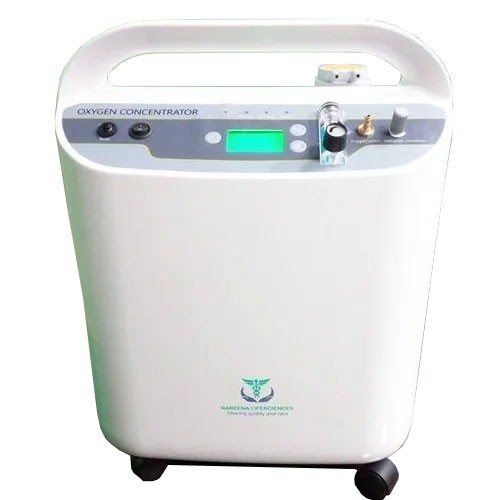
- Brand
- Nareena Lifesciences
- Category
- 5 LPM
₹35,510.40₹67,200
Indicative pricing based on market intelligence. Varies by dealer, city, bundle, and period — confirm with a local authorised seller before buying.
HHZ SCORE 7.0/10
S.Cure 5 LPM
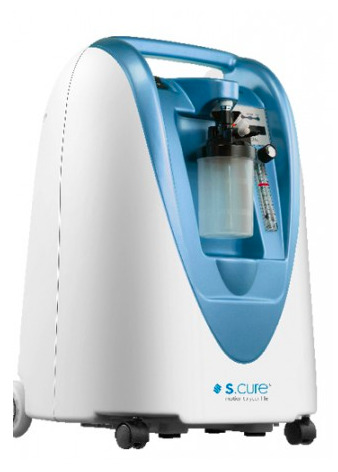
- Brand
- S. Cure
- Category
- 5 LPM
₹44,160
Indicative pricing based on market intelligence. Varies by dealer, city, bundle, and period — confirm with a local authorised seller before buying.
HHZ SCORE 6.0/10
Specifications compared
| Specification | Nareena 5 LPM Single Flow | S.Cure 5 LPM |
|---|---|---|
| Overview | ||
| Brand | Nareena Lifesciences | S. Cure |
| Category | 5 LPM | 5 LPM |
| Price | ₹35,510.40 | ₹44,160.00 |
| MRP | 67,200.00 | — |
| Stock | In Stock | Out of stock |
| Key features | ||
| Purity | 90-96% | 90-95% |
| Type | Home Stationary | Home Stationary |
| Continuous Flow | 1-5LPM | 0.5-5LPM |
| Weight | 15kg | 16kg |
| Oxygen Purity Indicator (OPI) | Yes | No |
| Power consumption | 550watts | 285watts |
| Technical details | ||
| Purity | 90-96% | 90-95% |
| Type | Home Stationary | Home Stationary |
| Continuous Flow | 1-5LPM | 0.5-5LPM |
| Weight | 15kg | 16kg |
| Oxygen Purity Indicator (OPI) | Yes | — |
| Power consumption | 550watts | 285watts |
| Sound level | 50db | 48db |
| Dimensions | 23.6H x 14.7W x 14.3Dinch | 21H x 12W x 11.8Dinch |
| Additional details | ||
| Loss of Power Alarm | Yes | Yes |
| System Malfunction Alarm | — | Yes |
| Indian Voltage Model | Yes | Yes |
| Company Headquarters | India | China |
Analysis
The Nareena 5 LPM Single Flow and the S.Cure 5 LPM are both budget-tier Indian 5 LPM concentrators, but they diverge sharply on provenance and on which safety features appear on the published spec sheet. The Nareena is manufactured in India by Nareena Lifesciences and carries an Oxygen Purity Indicator as a headline feature. The S.Cure is a Chinese-origin unit branded for Indian e-commerce, notable for very low power draw (285 W) and a system-malfunction alarm, but with no OPI on its sheet. These two machines are separated by roughly Rs. 8,650 on street price, and the gap goes in the opposite direction to what the feature count might suggest.
Price and availability
Nareena 5 LPM Single Flow: Rs. 35,510.40 street price against an MRP of Rs. 67,200. In Stock on the surveyed Indian e-commerce listing. 26 verified customer ratings at 4.2 average.
S.Cure 5 LPM: Rs. 44,160 street price, no MRP listed. Out of stock at time of survey. No customer ratings on the listing.
The Nareena is Rs. 8,649.60 cheaper. The Nareena is in stock. The S.Cure is not. For a post-discharge LTOT purchase where the patient needs oxygen at home within 48-72 hours of prescription, stock availability is the immediate binding constraint, and only the Nareena clears that bar.
Flow, purity, and weight
Nareena delivers 1 to 5 LPM continuous at 90-96% purity. S.Cure delivers 0.5 to 5 LPM continuous at 90-95% purity. The S.Cure’s lower 0.5 LPM floor is useful for paediatric and titration-sensitive cases; for the median Indian adult LTOT prescription (2-4 LPM nocturnally), either flow range suffices. Nareena’s upper 96% on the purity band is a marginal claim over the S.Cure’s 95%, within PSA noise.
Weight: Nareena 15 kg, S.Cure 16 kg. The Nareena is 1 kg lighter — a modest advantage for single-caregiver repositioning.
Footprint: Nareena 23.6H x 14.7W x 14.3D inch; S.Cure 21H x 12W x 11.8D inch. The S.Cure is smaller on every dimension — meaningfully so on depth, which is the dimension that matters most in narrow Indian bedrooms.
Noise
Nareena at 50 dB; S.Cure at 48 dB. Two decibels is at the threshold of perceptibility. Both machines are tolerable for bedroom use with habituated occupants but will be noticed by light sleepers. Neither approaches the quieter end of the market (Philips Everflo at 40 dB, Nidek Nuvo Lite at 40 dB, GVS Oxypure at 43 dB). The S.Cure has a small but real edge here.
Power: the biggest spec delta in the matchup
Nareena draws 550 W. S.Cure draws 285 W. The Nareena’s draw is 93 percent higher.
At 14 hours per day of use on Mumbai residential electricity rates (roughly Rs. 12 per kWh in the higher slabs), the Nareena runs at approximately Rs. 1,850 per month. The S.Cure runs at approximately Rs. 960 per month. The monthly difference is approximately Rs. 890, or roughly Rs. 10,700 per year.
Over a typical three-to-five-year LTOT horizon, the power-cost delta between these two machines is Rs. 32,000 to Rs. 53,000 — larger than the purchase price of either unit, and substantially larger than the Rs. 8,650 price gap at purchase. If operating cost were the only variable, the S.Cure would be the long-run winner over a multi-year horizon.
But power cost is not the only variable, and the next section is where the calculation shifts.
OPI and alarms: a split decision
Nareena 5 LPM Single Flow spec sheet: Oxygen Purity Indicator Yes, Loss of Power Alarm Yes. System Malfunction Alarm blank, No Flow Alarm blank, Oxygen Purity Analyzer blank. Indian Voltage Model Yes.
S.Cure 5 LPM spec sheet: Oxygen Purity Indicator blank, Oxygen Purity Analyzer blank. Loss of Power Alarm Yes, System Malfunction Alarm Yes, No Flow Alarm blank. Indian Voltage Model Yes.
The two units split on different axes. The Nareena has OPI and loss-of-power; the S.Cure has loss-of-power and system-malfunction. Both are missing the other two fields (no-flow for both, system-malfunction for Nareena, OPI for S.Cure).
The Nareena’s OPI is the most clinically consequential feature in this comparison. An OPI warns the family when sieve-bed degradation has dropped the concentrator’s output purity below a typical 82-86% threshold — in other words, it catches the failure mode that home LTOT is most susceptible to: invisible purity drift over the multi-year lifetime of a PSA bed. The S.Cure does not list an OPI. Without one, the patient receives progressively weaker oxygen over 18-30 months of use with no equipment-based warning signal; clinicians have to catch it through falling SpO2 at pulse-ox checks.
The S.Cure’s system-malfunction alarm is useful — it catches fault conditions the compressor controller identifies (over-temperature, pressure-switch trip, flow imbalance) and alerts the user before the unit continues running in a degraded state. But it is not a substitute for OPI, because sieve-bed degradation is typically outside the scope of fault-condition alarms — it is a slow decay, not an event.
Both units carry a loss-of-power alarm. This is the single most important alarm for Indian LTOT given the frequency of overnight grid interruptions, and it is a relief that both machines at least claim this feature.
Certifications and provenance
Nareena: US FDA blank, FAA blank, CE blank. India HQ. Indian Voltage Model Yes.
S.Cure: US FDA blank, FAA blank, CE blank. China HQ. Indian Voltage Model Yes.
Neither carries Western certifications. Neither is CE-certified. Neither is US FDA approved. On this axis, both sit in the same uncertified budget tier.
Country of origin differs, and this matters for service reachability over a three-to-five-year LTOT horizon. Nareena is Indian-manufactured with a domestic dealer and service pipeline accessible through normal Indian medical-device distribution channels. The S.Cure is a Chinese-origin unit sold through re-labelled importer channels; the brand does not operate visible Indian factory support. When a compressor fails in year two or a sieve bed needs replacement in year three, the Nareena buyer contacts an Indian manufacturer; the S.Cure buyer contacts whichever individual importer-dealer handled the original sale.
Warranty
The Nareena lists a 1-year manufacturer warranty per the brochure. The S.Cure does not state a warranty period on the surveyed sheet. Neither is class-leading — a 1-year warranty is below the 3-year warranties offered by Philips Everflo, Nidek Nuvo Lite, and Oxymed Mini — but at least the Nareena has a documented period. The S.Cure’s paperwork gap is concerning.
Rating signal
The Nareena carries 26 verified customer ratings at 4.2 average. Not a strong signal on its own, but material.
The S.Cure has no ratings visible on the surveyed listing. Zero purchase-experience data.
Which trade-off for which household
If the buyer’s primary concern is long-run operating cost and the household is willing to compensate for the missing OPI with disciplined weekly pulse-oximetry checks on the patient to detect purity drift, the S.Cure’s 265 W lower draw produces meaningful savings. For a patient on 14-hour daily use, the power savings recover the S.Cure’s Rs. 8,650 purchase premium in roughly 10 months.
If the buyer cannot reliably commit to weekly SpO2 monitoring, or if the patient is on nocturnal oxygen where a silent purity drift is harder to catch through daytime observation, the Nareena’s OPI is worth the Rs. 8,650 purchase premium and the higher ongoing power bill.
Verdict
The Nareena 5 LPM Single Flow wins this matchup for most Indian home LTOT buyers because the clinical value of an OPI exceeds the operational value of the power savings for a typical household that cannot guarantee weekly SpO2 monitoring discipline. The Nareena is also cheaper at purchase, in stock, manufactured in India with a visible service pipeline, and backed by 26 customer ratings — all of which reduce risk for a first-time buyer.
The S.Cure 5 LPM is defensible only in a narrow set of circumstances: a household with a highly engaged caregiver, regular SpO2 monitoring, tolerance for the Rs. 8,650 purchase premium, and a multi-year use horizon where the 50 percent lower power draw can pay back. For those buyers, the system-malfunction alarm that the Nareena lacks is also a modest feature advantage.
Neither unit sits in the recommended tier for multi-year heavy LTOT use. Buyers with Rs. 35,000-Rs. 45,000 budget should seriously consider the Oxymed Mini 5 LPM (Rs. 35,400, full alarm coverage, CDSCO-registered, 3-year warranty, 1,062 verified ratings, 40+ city service network) — which is, on paper, a clearly better unit than either the Nareena or the S.Cure, at the Nareena’s price.
Provenance note: all product specifications referenced in this writeup are drawn from the respective manufacturer brochures and Indian e-commerce product listings surveyed in April 2026. No bench testing has been conducted by HHZ Editorial; no clinical claims are made beyond what manufacturer documentation supports. Indian LTOT decisions should be made in consultation with the prescribing physician.