Jumao 5LPM vs Nareena 5 LPM Single Flow
Jumao 5LPM
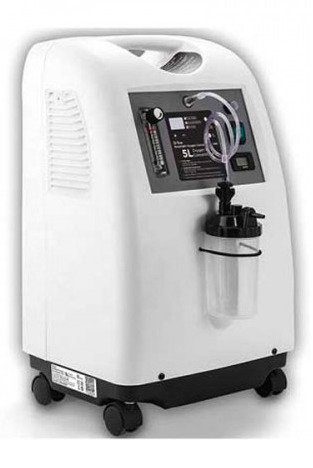
- Brand
- Jumao
- Category
- 5 LPM
₹40,320
Indicative pricing based on market intelligence. Varies by dealer, city, bundle, and period — confirm with a local authorised seller before buying.
HHZ SCORE 5.5/10
EDITORIAL PICK
Nareena 5 LPM Single Flow
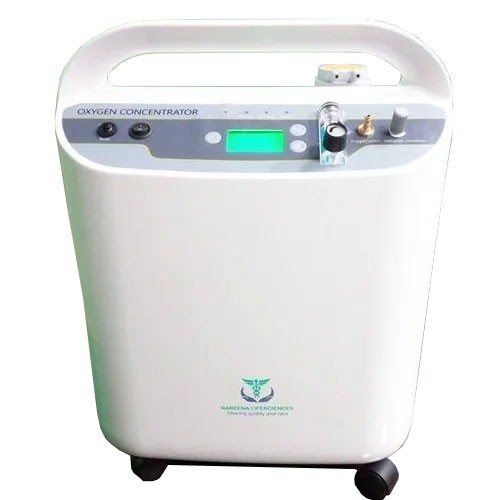
- Brand
- Nareena Lifesciences
- Category
- 5 LPM
₹35,510.40₹67,200
Indicative pricing based on market intelligence. Varies by dealer, city, bundle, and period — confirm with a local authorised seller before buying.
HHZ SCORE 7.0/10
Specifications compared
| Specification | Jumao 5LPM | Nareena 5 LPM Single Flow |
|---|---|---|
| Overview | ||
| Brand | Jumao | Nareena Lifesciences |
| Category | 5 LPM | 5 LPM |
| Price | ₹40,320.00 | ₹35,510.40 |
| MRP | — | 67,200.00 |
| Stock | Out of stock | In Stock |
| Key features | ||
| Purity | 90-95% | 90-96% |
| Type | Home Stationary | Home Stationary |
| Continuous Flow | 0.5-5LPM | 1-5LPM |
| Weight | 16kg | 15kg |
| Oxygen Purity Indicator (OPI) | No | Yes |
| Power consumption | 390watts | 550watts |
| Technical details | ||
| Purity | 90-95% | 90-96% |
| Type | Home Stationary | Home Stationary |
| Continuous Flow | 0.5-5LPM | 1-5LPM |
| Weight | 16kg | 15kg |
| Oxygen Purity Indicator (OPI) | — | Yes |
| Power consumption | 390watts | 550watts |
| Sound level | 52db | 50db |
| Dimensions | 22.8H x 12.2W x 16.1Dinch | 23.6H x 14.7W x 14.3Dinch |
| Outlet pressure | 8.4psi | — |
| Additional details | ||
| Loss of Power Alarm | — | Yes |
| Indian Voltage Model | Yes | Yes |
| Company Headquarters | China | India |
Analysis
Both the Jumao 5 LPM and the Nareena 5 LPM Single Flow are stationary home oxygen concentrators aimed at the Indian 5 LPM budget segment. They share the same headline flow rating, but the paperwork behind the two machines tells very different stories — one is an Indian-manufactured unit with at least minimum-baseline safety features on the spec sheet, and the other is an unbranded Chinese import with blanks where the OPI, alarms, and certifications should be. For Indian home LTOT buyers, the difference is not a nuance.
The price tells the wrong story at first glance
The Jumao 5 LPM carries a street price of Rs. 40,320, against the Nareena 5 LPM Single Flow’s current selling price of Rs. 35,510.40 (down from an MRP of Rs. 67,200). The Nareena is Rs. 4,809.60 cheaper — roughly twelve percent lower than the Jumao. This is already an inversion of what you would expect if brand recognition translated into pricing: the lesser-known Chinese-origin Jumao is priced above the Indian-made unit with a discernible service chain.
That Rs. 4,810 savings is not earned through cost-cutting on features. The Nareena actually delivers more on paper — the OPI is present, a loss-of-power alarm is listed, India is the country of manufacture, and the stock status reads In Stock rather than Out of Stock. For the buyer, this means the cheaper machine on this matchup is also the better-equipped machine.
Flow, purity, weight: where they diverge
The Jumao lists continuous flow at 0.5 to 5 LPM; the Nareena lists it at 1 to 5 LPM. The Jumao’s lower floor of 0.5 LPM could theoretically suit paediatric or titration-sensitive use cases, but in practice, most adult LTOT prescriptions in India sit between 1 and 4 LPM, and the missing lower-end tuning range on the Nareena is a real gap only for a narrow slice of users. For the median Indian adult prescribed 2-3 LPM nocturnally, either machine’s flow range is sufficient.
Purity settings differ meaningfully. The Jumao’s 90-95% band is narrower on the upper end than the Nareena’s 90-96%. A one-percent upper-end difference in datasheet purity rarely produces a clinically different saturation at the cannula, but it does tell you something about sieve-bed quality — the Nareena’s upper-end claim implies a sieve-bed design tuned slightly closer to the ceiling of what PSA chemistry allows, which in turn tends to correlate with more conservative QC.
Weight is where the Nareena pulls meaningfully ahead. At 15 kg against the Jumao’s 16 kg, the Nareena is one kilogram lighter. For a stationary concentrator the absolute number isn’t load-bearing — neither is truly portable — but the lighter unit is easier to reposition room-to-room when a caregiver is managing it alone, and it tends to correlate with a more efficient compressor design.
Sound, power, footprint
The Nareena runs at 50 dB; the Jumao at 52 dB. Two decibels is at the edge of perceptible for most bedroom settings, but 50 dB sits just on the tolerable side of “bedroom-acceptable for habituated users”, while 52 dB is firmly on the “louder-than-you-want” side. Given that a large share of Indian LTOT is nocturnal, this gap is not trivial. Neither machine approaches the near-silence of a Philips Everflo at 40 dB or a Nidek Nuvo Lite at 40 dB, but between these two, the Nareena is the quieter housemate.
Power consumption inverts the story: the Nareena pulls 550 W against the Jumao’s 390 W. At 14 hours per day on Mumbai residential electricity rates, the Nareena will cost roughly Rs. 1,850 per month to run, versus about Rs. 1,310 per month for the Jumao — a difference of around Rs. 540 per month, or Rs. 6,500 per year. Over a three-to-five-year LTOT horizon, that difference narrows and eventually exceeds the purchase-price gap. This is the one category where the Jumao genuinely has an advantage, though a Chinese-origin unit’s real-world efficiency in year three after sieve-bed degradation is not something its manufacturer brochure can honestly forecast.
Footprint is broadly similar. The Jumao measures 22.8H x 12.2W x 16.1D inches; the Nareena measures 23.6H x 14.7W x 14.3D inches. The Jumao is slightly shorter but deeper; the Nareena is taller but narrower. For a typical Indian bedside placement against a wall, the Nareena’s smaller depth is slightly more practical, since depth is what crowds a narrow room. Neither is unreasonably large for a domestic setting.
Alarms, OPI, and the certification blanks
This is where the comparison stops being close. The Jumao spec sheet leaves the Oxygen Purity Indicator field blank. It leaves the Loss of Power Alarm, System Malfunction Alarm, No Flow Alarm, and Oxygen Purity Analyzer fields all blank. The US FDA, FAA, and CE certification fields are all blank. Only the Indian Voltage Model row reads Yes. Company Headquarters: China.
The Nareena spec sheet reads differently. Oxygen Purity Indicator: Yes. Loss of Power Alarm: Yes. System Malfunction Alarm and No Flow Alarm are blank, which is not perfect. Oxygen Purity Analyzer is blank. But the two most safety-critical fields — OPI presence and loss-of-power warning — are filled in. Company Headquarters: India. Indian Voltage Model: Yes.
For an Indian LTOT context where overnight power outages remain common in many cities, a loss-of-power alarm is not decorative — it is the single feature that wakes a caregiver when the grid drops and the patient’s delivery stops. The Jumao does not list one. The Nareena does. If the patient or caregiver sleeps through a silent machine shutdown, the clinical consequences can be severe.
OPI presence is the second line of defence. A PSA sieve bed degrades gradually, and the purity drop is invisible at the cannula — the patient just gets progressively less oxygen-enriched gas. An OPI lights up when purity falls below a manufacturer-defined threshold (typically 82-86%), giving the family a repair trigger before the decay becomes clinically significant. The Jumao has no OPI listed. The Nareena has one, and the Nareena manufacturer’s description states that the OPI lights up if purity falls below 86%.
Certifications: both units leave US FDA and FAA blank. Neither is CE-certified on the surveyed sheet for this pair. The Nareena is made in India and carries no Western certification; the Jumao is made in China and carries no Western certification. On that axis both are equal, though for Indian institutional procurement (hospitals, NGOs) the Indian-origin unit generally clears procurement paperwork more easily, because CDSCO-registered Indian manufacturers tend to be more accessible for documentation verification than unbranded Chinese importers.
Stock, service, and practical buyability
The Jumao is flagged Out of stock across surveyed Indian e-commerce listings at the time of this writeup. The Nareena is flagged In Stock. For a patient who needs a machine within 48 to 72 hours of prescription (the typical urgency window after discharge with home-oxygen orders), stock availability is not a secondary concern. An out-of-stock listing for an unbranded Chinese unit often means either an indefinite wait or a substitution to a different SKU from the same importer — neither outcome is reassuring.
Service reachability matters over a three-to-five-year LTOT horizon. Nareena Lifesciences operates as an Indian manufacturer with a dealer network visible through the normal Indian medical-equipment distribution channels. Jumao, as a Chinese OEM sold through re-labelled importer channels, has no visible Indian service infrastructure on the surveyed collateral — when a compressor fails in year two, the sieve-bed needs replacement in year three, or a flow-meter needs calibration, the buyer is dependent on whichever individual dealer happened to sell the unit. That dealer may or may not still stock the brand, and if not, spares become scarce quickly.
The Nareena carries a 1-year manufacturer warranty according to the brochure. The Jumao’s warranty period is not visible on the surveyed sheet — another paperwork gap that matters.
What about the rating signal?
The Nareena has 26 verified ratings on the Indian e-commerce listing at a 4.2 average. The Jumao has no ratings visible. For a budget-segment purchase, a couple of dozen reviews is not a strong signal by itself, but it is infinitely more information than zero reviews. The Nareena has at least been bought, installed, and lived with by some number of Indian households who then came back to rate it. The Jumao has no comparable track record visible.
Verdict
The Nareena 5 LPM Single Flow is the better purchase for Indian home LTOT by every practical measure: it is Rs. 4,810 cheaper, 1 kg lighter, 2 dB quieter, equipped with an OPI and a loss-of-power alarm, manufactured in India with a visible service pipeline, in stock at the time of review, and backed by at least 26 verified customer ratings. Its only real weaknesses are the missing system-malfunction and no-flow alarms on the spec sheet, and the higher 550 W power draw.
The Jumao 5 LPM offers a lower power draw (390 W), a slightly lower flow floor (0.5 LPM versus 1 LPM), and a marginally smaller bedroom depth. Against those three modest wins, it loses on price, weight, noise, OPI presence, alarm coverage, warranty visibility, stock availability, rating signal, and service network.
For an Indian home LTOT buyer in the Rs. 35,000-45,000 budget band, the Nareena 5 LPM Single Flow is the straightforward pick over the Jumao 5 LPM. The Nareena is not a premium unit — it sits below the Philips Everflo, Nidek Nuvo Lite, and Oxymed Mini tier on alarm coverage, service network and warranty depth — but within this particular matchup, it decisively beats its Chinese-origin competitor.
Provenance note: all product specifications referenced in this writeup are drawn from the respective manufacturer brochures and Indian e-commerce product listings surveyed in April 2026. No bench testing has been conducted by HHZ Editorial; no clinical claims are made beyond what manufacturer documentation supports. Indian LTOT decisions should be made in consultation with the prescribing physician.