GVS Oxypure 5 LPM vs Nareena 5 LPM Single Flow
GVS Oxypure 5 LPM
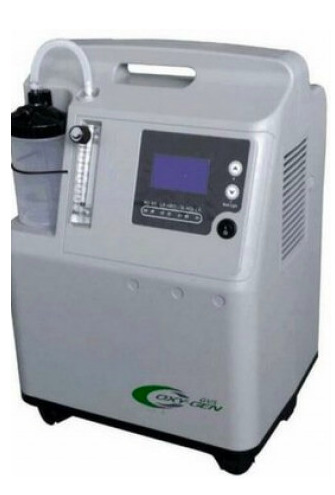
- Brand
- GVS
- Category
- 5 LPM
₹33,599.04₹34,560
Indicative pricing based on market intelligence. Varies by dealer, city, bundle, and period — confirm with a local authorised seller before buying.
HHZ SCORE 6.4/10
EDITORIAL PICK
Nareena 5 LPM Single Flow
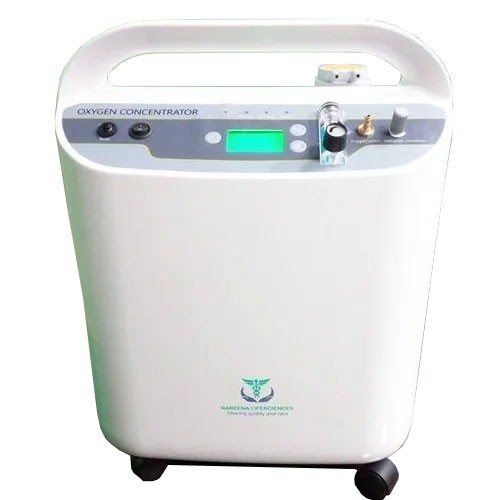
- Brand
- Nareena Lifesciences
- Category
- 5 LPM
₹35,510.40₹67,200
Indicative pricing based on market intelligence. Varies by dealer, city, bundle, and period — confirm with a local authorised seller before buying.
HHZ SCORE 7.0/10
Specifications compared
| Specification | GVS Oxypure 5 LPM | Nareena 5 LPM Single Flow |
|---|---|---|
| Overview | ||
| Brand | GVS | Nareena Lifesciences |
| Category | 5 LPM | 5 LPM |
| Price | ₹33,599.04 | ₹35,510.40 |
| MRP | 34,560.00 | 67,200.00 |
| Stock | Out of stock | In Stock |
| Key features | ||
| Purity | 90-95% | 90-96% |
| Type | Home Stationary | Home Stationary |
| Continuous Flow | 0.5-5LPM | 1-5LPM |
| Weight | 16kg | 15kg |
| Oxygen Purity Indicator (OPI) | No | Yes |
| Power consumption | 300watts | 550watts |
| Technical details | ||
| Purity | 90-95% | 90-96% |
| Type | Home Stationary | Home Stationary |
| Continuous Flow | 0.5-5LPM | 1-5LPM |
| Weight | 16kg | 15kg |
| Oxygen Purity Indicator (OPI) | — | Yes |
| Power consumption | 300watts | 550watts |
| Sound level | 43db | 50db |
| Dimensions | 20H x 13.7W x 11Dinch | 23.6H x 14.7W x 14.3Dinch |
| Operating altitude | 7500feet | — |
| Outlet pressure | 10psi | — |
| Additional details | ||
| Loss of Power Alarm | — | Yes |
| Indian Voltage Model | Yes | Yes |
| Company Headquarters | China | India |
| CE Certified | Yes | — |
Analysis
The GVS Oxypure 5 LPM and the Nareena 5 LPM Single Flow sit within Rs. 2,000 of each other on the Indian 5 LPM budget shelf, but they make opposite trade-offs on the two dimensions that matter most for Indian LTOT: operational cost and safety alarm coverage. The GVS is the quieter, more power-efficient, CE-certified option without in-built safety alarms. The Nareena is the louder, more power-hungry, uncertified option with an OPI and a loss-of-power alarm. For an Indian household making this purchase for a relative just discharged on home oxygen, the right pick depends on which risk the family can manage and which they cannot.
Price positioning and the stock question
The GVS Oxypure 5 LPM is listed at Rs. 33,599.04 (MRP Rs. 34,560) — a slim 2.8 percent discount on the sheet, which tells us the brand is not running a heavy sale but the unit is positioned firmly at the bottom of the 5 LPM market. The Nareena 5 LPM Single Flow is at Rs. 35,510.40 against an MRP of Rs. 67,200 — a 47 percent “discount” that makes the MRP effectively fictional, a pattern common on Indian medical-device listings.
On street price, the GVS is Rs. 1,911 cheaper than the Nareena. That is real money but not decisive at this price band — roughly the cost of two months of electricity running the heavier-draw of the two machines.
Stock is where a practical wrinkle shows up. The GVS Oxypure is flagged Out of stock on the surveyed Indian e-commerce listing. The Nareena is In Stock. For a post-discharge buyer who needs a machine within 72 hours, the GVS availability risk is not theoretical — it can mean waiting two to three weeks for a replacement shipment, during which time the patient is either renting at Rs. 300-500 per day or going without.
Flow, purity, and weight
Both units sit in the 5 LPM class but differ in flow range. The GVS delivers 0.5 to 5 LPM continuous; the Nareena delivers 1 to 5 LPM continuous. The GVS’s lower 0.5 LPM floor is useful for titration-sensitive cases and for paediatric use, but for the median Indian adult LTOT prescription (typically 2-3 LPM at night), either flow range is adequate. Anyone whose prescription sits at 0.5 LPM should look harder at this difference; anyone at 2 LPM or above can ignore it.
Purity claims differ on the upper end: GVS at 90-95%, Nareena at 90-96%. A one-percent upper-end difference on the brochure is within the noise of PSA variability and rarely shows up clinically in SpO2 readings. Both units claim 90% as the floor, which is the number that matters for LTOT compliance.
Weight is a tie-going-to-Nareena: the Nareena is 15 kg, the GVS is 16 kg. At this difference a caregiver will struggle to tell the two apart when repositioning, but the Nareena is marginally lighter on the sheet.
Noise: this is where the GVS makes a real case
The GVS Oxypure runs at 43 dB. The Nareena runs at 50 dB. Seven decibels of difference is not a marginal spec-sheet quibble — it is close to perceptual doubling. For a bedroom setting with a patient on nocturnal oxygen, 43 dB sits in “quiet conversation” territory, comparable to a running ceiling fan on a low setting. 50 dB is closer to a window air-conditioner cycling, or a loud refrigerator.
For an Indian LTOT prescription delivered primarily during sleep, the GVS’s quieter operation is the single biggest quality-of-life argument for it. A louder machine means a patient who tosses, a caregiver who doesn’t sleep well, and a household that starts to unplug the concentrator at night — a compliance failure with direct clinical consequences.
Power: GVS is substantially cheaper to run
The GVS Oxypure draws 300 W. The Nareena draws 550 W. That is an 83 percent higher draw on the Nareena. At 14 hours per day of use on Mumbai residential electricity rates (roughly Rs. 12 per kWh in the higher slabs), the GVS runs at around Rs. 1,010 per month. The Nareena runs at around Rs. 1,850 per month. The monthly difference is approximately Rs. 840, or Rs. 10,000 per year.
Over a typical three-to-five-year LTOT horizon, the power-cost delta between these two machines is Rs. 30,000 to Rs. 50,000 — more than the purchase price of either unit. This is a genuinely material number for Indian households, and it pushes strongly in favour of the GVS for any buyer who expects multi-year daily use.
If the patient is on 8-hour nocturnal oxygen, the Rs. 840 per month becomes around Rs. 480 per month, or Rs. 6,000 per year — still meaningful over the horizon.
OPI and alarms: where Nareena pulls back ahead
The GVS Oxypure spec sheet leaves the Oxygen Purity Indicator field blank. All four alarm fields — Oxygen Purity Analyzer, Loss of Power Alarm, System Malfunction Alarm, No Flow Alarm — are blank on the spec sheet. The only “Yes” entry in the Additional Details block is Indian Voltage Model and CE Certified.
The Nareena spec sheet lists OPI as Yes and Loss of Power Alarm as Yes. System Malfunction Alarm and No Flow Alarm remain blank. Indian Voltage Model is Yes. CE is blank, US FDA is blank, FAA is blank.
For LTOT use, an OPI is the mechanism that warns the family when sieve-bed degradation has dropped the concentrator’s purity below a clinically acceptable level. Without one, the patient gets progressively weaker oxygen over 18-30 months of use, invisibly, with symptoms that look like disease progression rather than equipment drift. The GVS does not list an OPI; the Nareena does.
A loss-of-power alarm wakes the family when a power cut interrupts oxygen delivery overnight. The GVS does not list one; the Nareena does.
These two features are, in the opinion of most respiratory clinicians, the minimum acceptable baseline for a home LTOT machine. The GVS sits below that baseline on its spec sheet; the Nareena sits at it (and not above — the Nareena is still missing no-flow and system-malfunction alarms).
Certifications and country of origin
GVS carries CE certification and is manufactured in China. The Nareena is manufactured in India with no Western certifications listed. Neither is US FDA approved.
CE marking indicates the unit has passed European Union conformity testing to EN 55011 (EMC) and IEC 60601-1 (general medical safety), which is a genuine engineering benchmark. It does not, however, tell you anything about in-use alarm behaviour or about how the manufacturer will respond when a sieve bed fails in year three — that is about service infrastructure, not certification.
The Nareena’s Indian manufacturing base means a more accessible service chain for Indian buyers. In practice, Indian-manufactured units have a clearer dealer pipeline for spares and compressor replacements. The GVS’s China origin plus CE certificate gives stronger engineering conformity but weaker service reachability once the unit is out of factory warranty.
Altitude and outlet pressure
The GVS lists operating altitude at 7,500 feet — standard for the class. The Nareena does not state operating altitude on the surveyed sheet. For plains and low-hill use, neither is a concern; for hill-station use (Shimla, Darjeeling, parts of Uttarakhand and Himachal), the GVS has a documented cap and the Nareena has a paperwork gap.
The GVS lists outlet pressure at 10 psi, which is high enough to support 50-60 feet of cannula tubing without material flow loss. The Nareena does not state outlet pressure on the surveyed sheet.
Rating signal
The Nareena has 26 verified ratings at 4.2 average on the Indian e-commerce listing. The GVS has no ratings visible on the surveyed listing. This is a modest signal but tilts in the Nareena’s favour — at least some Indian households have bought, installed, and returned to rate the Nareena. The GVS has no comparable track record visible on the sheet.
Which trade-off for which household
If the patient is on 8-hour nocturnal LTOT only, lives in a quiet residential setting where 43 vs 50 dB is audible, and has a caregiver physically present during oxygen delivery (so a loss-of-power alarm is less critical because a conscious caregiver will notice a silent machine), the GVS Oxypure is the reasonable pick. The quieter operation and lower power draw deliver consistent value; the OPI gap can be managed by periodic pulse-oximetry checks on the patient to catch any purity drift.
If the patient is on 14-24 hour LTOT, sleeps alone or with a caregiver who may not wake during a nocturnal power cut, is in a household where the family cannot reliably check SpO2 weekly, or lives in a region with frequent power interruptions, the Nareena is the safer pick. The OPI and loss-of-power alarm are direct mitigations for the failure modes that make home oxygen silently dangerous.
Verdict
The Nareena 5 LPM Single Flow wins this matchup on balance for typical Indian home LTOT, because the OPI and loss-of-power alarm coverage reduces silent-failure risk in ways that the GVS’s better noise and power specs do not compensate for. The Nareena is not a premium unit — it sits well below the Philips Everflo, Nidek Nuvo Lite, and Oxymed Mini tier — but within this specific matchup, the safety-feature delta is the deciding factor.
The GVS Oxypure is a defensible choice for cost-sensitive buyers with short daily oxygen hours, a conscious daytime caregiver, and a household routine that includes weekly pulse-oximetry checks. It is cheaper, substantially quieter, and meaningfully more power-efficient. For that profile it represents a reasonable trade.
Neither unit is in the recommended tier for multi-year heavy LTOT use. Buyers able to stretch to Rs. 43,000-Rs. 57,000 should look at the Philips Everflo or Nidek Nuvo Lite instead; both carry full alarm coverage, FDA and CE certification where applicable, and established Indian service networks.
Provenance note: all product specifications referenced in this writeup are drawn from the respective manufacturer brochures and Indian e-commerce product listings surveyed in April 2026. No bench testing has been conducted by HHZ Editorial; no clinical claims are made beyond what manufacturer documentation supports. Indian LTOT decisions should be made in consultation with the prescribing physician.