Dynmed 5LPM vs Nareena 5 LPM Single Flow
Dynmed 5LPM
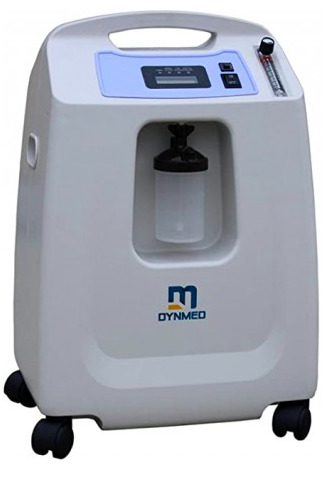
- Brand
- Dynmed
- Category
- 5 LPM
₹39,360
Indicative pricing based on market intelligence. Varies by dealer, city, bundle, and period — confirm with a local authorised seller before buying.
HHZ SCORE 5.7/10
EDITORIAL PICK
Nareena 5 LPM Single Flow
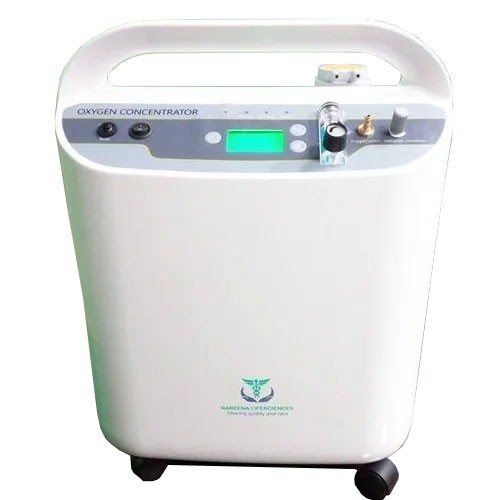
- Brand
- Nareena Lifesciences
- Category
- 5 LPM
₹35,510.40₹67,200
Indicative pricing based on market intelligence. Varies by dealer, city, bundle, and period — confirm with a local authorised seller before buying.
HHZ SCORE 7.0/10
Specifications compared
| Specification | Dynmed 5LPM | Nareena 5 LPM Single Flow |
|---|---|---|
| Overview | ||
| Brand | Dynmed | Nareena Lifesciences |
| Category | 5 LPM | 5 LPM |
| Price | ₹39,360.00 | ₹35,510.40 |
| MRP | — | 67,200.00 |
| Stock | Out of stock | In Stock |
| Key features | ||
| Type | Home Stationary | Home Stationary |
| Continuous Flow | 0.5-5LPM | 1-5LPM |
| Price | 60999 | — |
| Weight | 15.9kg | 15kg |
| Oxygen Purity Indicator (OPI) | No | Yes |
| Power consumption | 320watts | 550watts |
| Purity | — | 90-96% |
| Technical details | ||
| Type | Home Stationary | Home Stationary |
| Continuous Flow | 0.5-5LPM | 1-5LPM |
| Price | 60999 | — |
| Weight | 15.9kg | 15kg |
| Oxygen Purity Indicator (OPI) | — | Yes |
| Power consumption | 320watts | 550watts |
| Sound level | 45db | 50db |
| Dimensions | 24.4H x 16.9W x 12.5Dinch | 23.6H x 14.7W x 14.3Dinch |
| Operating altitude | 7500feet | — |
| Outlet pressure | 8.4psi | — |
| Purity | — | 90-96% |
| Additional details | ||
| Loss of Power Alarm | — | Yes |
| Modes | 1 | — |
| Company Headquarters | China | India |
| Indian Voltage Model | — | Yes |
Analysis
The Dynmed 5 LPM and the Nareena 5 LPM Single Flow share a general market position — mid-budget 5 LPM stationary concentrators for Indian home use — but diverge on something that cannot be split the difference on: the presence of safety alarms and an Oxygen Purity Indicator. The Dynmed spec sheet is unusual in how completely it omits safety-feature entries: OPI, OPI analyzer, loss-of-power, system-malfunction, and no-flow are all blank. The Nareena documents two of five (OPI Yes, loss-of-power Yes). For home LTOT, this is not a decorative distinction.
Price and stock
Dynmed 5 LPM: Rs. 39,360 street price. Out of stock on the surveyed Indian e-commerce listing. No customer ratings visible. The key-features block lists a “Price: 60999” field that appears to be a legacy MRP, but only the Rs. 39,360 is the current selling price on collateral.
Nareena 5 LPM Single Flow: Rs. 35,510.40 street price against an MRP of Rs. 67,200. In Stock. 26 verified customer ratings at 4.2 average.
The Nareena is Rs. 3,849.60 cheaper than the Dynmed and actually buyable today — the Dynmed’s out-of-stock flag is a practical wrench in any LTOT purchase with post-discharge urgency. A machine you cannot buy on a 72-hour timeline is effectively not in the running for an immediate decision.
Flow, purity, weight
Dynmed delivers 0.5 to 5 LPM continuous. The surveyed Dynmed sheet does not list an explicit purity claim (the Purity field is absent from the surveyed spec block, though the normalised purity fields are blank). The Nareena delivers 1 to 5 LPM continuous at 90-96% purity.
The absence of a published purity claim on the Dynmed sheet is a notable paperwork gap — it is the single most important clinical parameter for an oxygen concentrator, and a unit sold into the LTOT market without a stated purity range is hard to assess. The Nareena’s 90-96% is on the upper end of what PSA chemistry delivers and is documented.
Weight: Dynmed 15.9 kg, Nareena 15 kg. The Nareena is 0.9 kg lighter — a modest advantage.
Footprint: Dynmed 24.4H x 16.9W x 12.5D inch; Nareena 23.6H x 14.7W x 14.3D inch. The Dynmed is the larger of the two on the overall profile — 24.4 inches tall and nearly 17 inches wide is noticeably bulkier than the Nareena’s 23.6 x 14.7 profile. In narrow Indian bedrooms, the Dynmed’s width is the dimension that tends to intrude.
Sound and power: the Dynmed’s strongest case
Dynmed runs at 45 dB. Nareena runs at 50 dB. Five decibels is a perceptible difference — close to perceptual halving, in the sense that 50 dB sounds distinctly louder than 45 dB to most ears. For nocturnal LTOT patients, the Dynmed’s lower noise floor is a real quality-of-life advantage.
Power consumption: Dynmed 320 W, Nareena 550 W. The Nareena’s draw is 72 percent higher. At 14 hours per day of use on Mumbai residential electricity rates, the Dynmed runs at approximately Rs. 1,080 per month. The Nareena runs at approximately Rs. 1,850 per month. The monthly difference is approximately Rs. 770, or Rs. 9,200 per year.
Over a typical three-to-five-year LTOT horizon, the power-cost delta is Rs. 28,000 to Rs. 46,000 — substantially more than the Rs. 3,850 Nareena price advantage, and a real economic argument for the Dynmed if the buyer can tolerate the safety-feature gap.
If the Dynmed’s operational economics were the only axis, it would be the multi-year cheaper option. But operational economics are not the only axis.
OPI and alarms: the blank Dynmed sheet
Dynmed 5 LPM spec sheet (Additional details block): Oxygen Purity Indicator blank. Oxygen Purity % Analyzer blank. Loss of Power Alarm blank. System Malfunction Alarm blank. No Flow Alarm blank. Company Headquarters China. US FDA blank. FAA blank. CE blank.
The Dynmed sheet has every safety-feature row unfilled. Not a single alarm. No OPI. No purity analyzer. No certification mark.
Nareena 5 LPM Single Flow spec sheet: Oxygen Purity Indicator Yes. Loss of Power Alarm Yes. System Malfunction Alarm blank. No Flow Alarm blank. Oxygen Purity Analyzer blank. Company Headquarters India.
The Nareena has two of five safety rows populated. Not a full complement, but the two most clinically important — OPI (for sieve-bed degradation over 18-30 months) and loss-of-power (for overnight grid interruptions) — are documented.
For a home LTOT machine, a spec sheet with no alarms at all is below the minimum clinical baseline. A power cut at 3 AM with the patient asleep on the Dynmed produces no warning — the machine stops, the cannula runs dry, and the first signal is either the patient waking from hypoxia or, worse, the patient not waking. The Nareena’s loss-of-power alarm at least triggers in that scenario.
Similarly, a sieve bed that has degraded to 78% purity over two years of use is invisible on the Dynmed — the machine continues to run, the flow meter continues to show 2 LPM, the patient continues to clip on the cannula, but the gas they receive is now only weakly enriched. The Nareena’s OPI catches that failure mode.
Certifications
Dynmed: US FDA blank, FAA blank, CE blank. China HQ.
Nareena: US FDA blank, FAA blank, CE blank. India HQ.
Neither carries Western certifications. Both sit in the uncertified budget tier. The country-of-origin difference matters for service reachability, as covered in the other Nareena comparisons in this review series: Indian manufacturing generally correlates with better spares access and dealer-pipeline visibility.
Altitude and outlet pressure
Dynmed: Operating altitude 7,500 feet (documented). Outlet pressure 8.4 psi (documented).
Nareena: Operating altitude not stated on the surveyed sheet. Outlet pressure not stated on the surveyed sheet.
The Dynmed’s documentation on altitude and outlet pressure is slightly better than the Nareena’s on these two axes. For plains and low-hill use, neither is a concern; for hill-region use, the Dynmed’s 7,500 feet cap is standard for the class. The Nareena’s paperwork gap on altitude is a minor annoyance.
Warranty and service
Dynmed: warranty period not visible on the surveyed sheet.
Nareena: 1-year manufacturer warranty per the brochure.
Neither is class-leading. The Nareena at least documents a warranty period; the Dynmed does not.
Rating signal
Dynmed: no ratings visible on the surveyed listing.
Nareena: 26 verified ratings at 4.2 average.
The Nareena has a modest but non-zero track record. The Dynmed has none.
Which trade-off for which household
If the household can commit to weekly pulse-oximetry checks on the patient (to catch sieve-bed degradation that the Dynmed’s missing OPI cannot signal), has an engaged caregiver physically present during all oxygen delivery hours (to notice a silent machine during a power cut, since the Dynmed has no loss-of-power alarm), and prioritises operating cost over purchase safety features, the Dynmed’s 5 dB quieter operation and Rs. 770 per month lower power cost make a real case over a multi-year horizon.
If the household cannot guarantee weekly SpO2 monitoring discipline, if the patient is on nocturnal oxygen where a silent failure during sleep is not caught, or if the caregiver is not consistently present during delivery hours, the Nareena’s OPI and loss-of-power alarm are worth the Rs. 3,850 purchase premium and the higher ongoing electricity bill.
Verdict
The Nareena 5 LPM Single Flow wins this matchup for Indian home LTOT because a spec sheet with every safety-feature row blank cannot be the baseline for a medical device purchase. The Dynmed’s lower noise and power draw are real advantages, but they describe how the machine runs, not what happens when it fails. The Nareena describes at least two of the key failure-mode detections — OPI and loss-of-power — which is the clinical minimum.
This is not a strong win for the Nareena in absolute terms. The Nareena is a mid-budget Indian unit with an incomplete alarm suite, a 1-year warranty, and no Western certifications. It is, however, unambiguously the better of these two.
For buyers in this price band, the Oxymed Mini 5 LPM at Rs. 35,400 is a materially better unit than either — full five-row alarm coverage, CDSCO-registered, 13.9 kg, 45 dB, 3-year warranty, 1,062 customer ratings, 40+ city service network. Any buyer genuinely considering the Dynmed or Nareena should compare both to the Oxymed Mini first, and most will find the Oxymed Mini the better purchase.
Provenance note: all product specifications referenced in this writeup are drawn from the respective manufacturer brochures and Indian e-commerce product listings surveyed in April 2026. No bench testing has been conducted by HHZ Editorial; no clinical claims are made beyond what manufacturer documentation supports. Indian LTOT decisions should be made in consultation with the prescribing physician.